
REVIEW · HAWAII
Haleiwa: North Shore Shark Cage Diving Experience
Sharks are closer than you think. This two-hour Haleiwa boat trip combines a close look at sharks with Hawaiian culture, ocean education, and the steady hand of local watermen. I especially like the chance to hear about Kamohoali‘i, the shark god, and the way the crew explains sharks as important caretakers of the sea. I also like that the company is locally owned and operated by Native Hawaiians.
The main consideration is simple: you need to feel comfortable entering a cage in open ocean near sharks. The experience is not a casual swim, and camera or GoPro rentals cost extra. Still, at $113 per person, the price is reasonable for a boat ride, cage encounter, Native Hawaiian guides, and a focused lesson about sharks.
Key points to know before booking
- Three miles from Haleiwa: The boat heads offshore from Haleiwa for a shark encounter in the North Shore waters.
- Guided by local watermen: Kala and Makua are Native Hawaiian big wave surfers and professional watermen.
- Culture comes with the wildlife: You hear stories about Kamohoali‘i and the role of sharks as ‘aumākua, or family gods.
- Sharks are treated with respect: The experience explains their role in removing sick, injured, and deceased animals from the sea.
- Two hours door to door: You leave from Haleiwa Shark Tours and return to the same location.
- Bring your own camera: Swimwear, sunscreen, a camera, and identification are listed as useful items. GoPro and camera rentals are not included.
Leaving Haleiwa for the North Shore
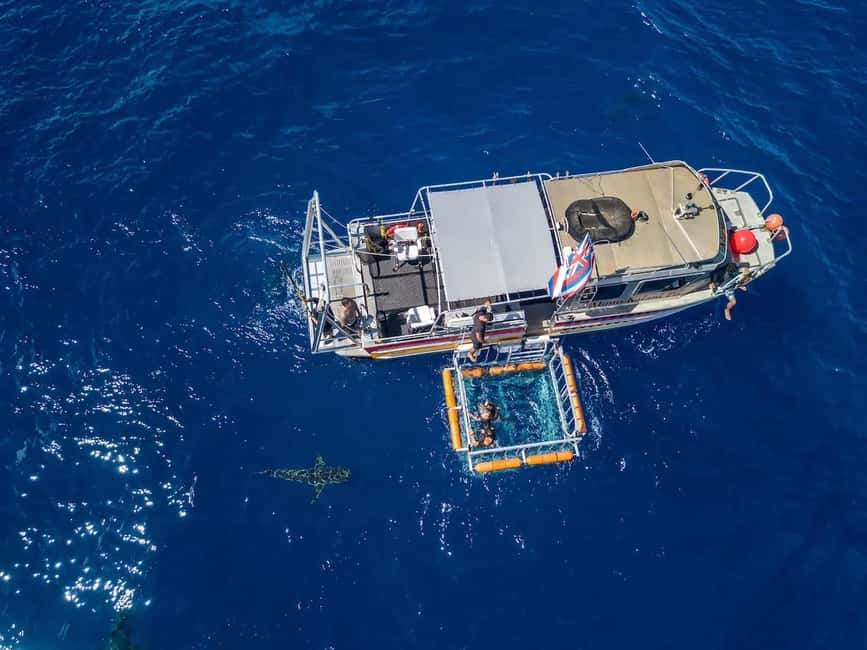
Your outing begins at Haleiwa Shark Tours, a useful starting point on Oahu’s North Shore. From there, the boat travels about three miles offshore. The ride is short enough to keep the experience focused, yet far enough from shore to place you in the open ocean.
That short trip is part of the appeal. You are not spending half a day on transfers or a long bus ride before reaching the water. The entire experience lasts about two hours, so it can fit neatly into a North Shore day that also includes Haleiwa, beaches, or other activities.
The boat ride also gives the guides time to set the tone. Kala and Makua are not simply there to point out sharks. They are Native Hawaiian big wave surfers and professional watermen, and the tour uses their connection to the sea in a meaningful way. You hear about the ocean as a living system, not just a backdrop for an exciting photograph.
I appreciate that balance. A shark encounter can easily become a simple thrill ride, with the animals treated like props. Here, the guides place the shark in a wider Hawaiian and ecological context before you reach the cage.
More Shark Dives in the USA
- Oahu Shark Dive
★ 5.0 · 2,903 reviews - Oahu: Shark Cage Dive on the North Shore
★ 4.8 · 1,485 reviews - Shark Cage Diving on Oahu’s North Shore
★ 5.0 · 1,391 reviews
Hearing the story of Kamohoali‘i
One of the most distinctive parts of this trip is the Hawaiian cultural teaching. During the ride, the guides share stories of Kamohoali‘i, the shark god, and explain why sharks have a special place in Hawaiian history.
In Hawaiian tradition, a shark may be an ‘aumakua, a family god or deified ancestor reborn in shark form. That idea changes how you look at the animal. The shark is not presented only as a predator or danger. It can also be a protector, counselor, and relative.
The stories include sharks protecting family members from drowning, helping fishing families find food, and guiding people through difficult moments. Sharks also appear in a creation story connected with the Hawaiian Islands. These details give the encounter a strong sense of place. You are not receiving a generic marine-life talk that could happen anywhere.
The tour also explains how ancient Hawaiians used every part of a shark after it was killed. Skin could become drums for music and ceremonies. Teeth could be made into weapons such as clubs. The mana, or spiritual energy, was understood to continue in another form.
That lesson deserves attention. It is not a message that sharks should be hunted for entertainment. Instead, it provides context for an earlier culture in which useful materials were respected and nothing was wasted.
Entering the cage near the sharks
At the offshore site, you enter the cage for the central part of the experience. The cage lets you get close to the sharks while keeping a physical barrier between you and the animals.
The wording matters here. You are not promised a particular shark species or a guaranteed number of animals. You are entering the natural habitat of wild creatures. That makes the encounter less predictable than an aquarium visit, but also gives it a stronger sense of reality.
Hawaii is home to about 40 shark species. The tour focuses on sharks as apex predators and on their role in maintaining a balanced marine ecosystem. They remove sick, injured, and deceased animals, which helps support healthier populations throughout the sea.
I like this part because it replaces the usual fear-based shark story with something more accurate. Sharks are powerful animals, but their importance is not limited to their teeth. They help keep marine life populations in balance.
You should also understand the rules. Touching marine life is not allowed. That protects both you and the animals, and it keeps the encounter based on observation rather than interference. Follow the crew’s instructions, stay aware of your surroundings, and treat the cage as a viewing platform rather than a place to reach toward the sharks.
What the water experience may feel like
The supplied details do not promise specific visibility, sea conditions, or shark species. Your experience can depend on the day’s weather and the condition of the ocean. One January outing was described as having perfect weather, with the crew making safety its top priority, but that does not guarantee the same conditions for every departure.
That is worth keeping in mind when deciding how to frame the trip. If you need a perfectly controlled wildlife encounter, this may feel less predictable than a visit to a marine park. If you like the idea of seeing an animal in its own environment, the uncertainty is part of the value.
The cage portion is also best suited to people who are comfortable around open water. The tour provides the cage experience and boat ride, but the information supplied does not specify swimming ability requirements, cage design, water temperature, or group size. If you have a concern about those details, ask the operator before booking.
The crew’s friendly, informative style is a real strength. A verified January booking praised the safety-first approach and found the cost reasonable for Hawaii. That is useful reassurance, especially for an activity where you want the guides to be calm, clear, and serious about procedures.
Same coastline, a very different dive:
- First-Time Scuba Diving in Honolulu + Free Videos
★ 5.0 · 3,123 reviews - Beginner Scuba Diving Experience with Video Package in Honolulu
★ 5.0 · 877 reviews - Safe and Educational Shark Dive from Haleiwa: Sharks Guaranteed
★ 5.0 · 553 reviews - 2 Tank Lanai Cathedral Scuba Dive Via Boat for Certified Divers
★ 5.0 · 548 reviews
Why the local ownership matters
Haleiwa Shark Tours is operated by Three Local Boys LLC. The local ownership gives the experience a more personal character than a standard sightseeing trip. Kala and Makua bring Native Hawaiian identity, professional water experience, and cultural knowledge into the same two-hour outing.
That combination is important. A person can know how to run a boat without being able to explain Hawaiian beliefs about sharks. Another guide might know marine biology but not the cultural meaning of an ‘aumakua. Here, the experience connects practical water skills with stories that belong to the islands.
You are also supporting a company that presents sharks as part of Hawaii’s living ocean rather than as a simple attraction. The emphasis on respect, education, and no contact with marine life gives the trip a responsible foundation.
I would not book this solely for the chance to take a dramatic photo. The better reason is the mix of wildlife, local voices, and cultural interpretation. The photograph is a bonus, not the whole point.
Is $113 a fair price?
At $113 per person, this is not a budget beach activity, but it is fair for the amount packed into two hours. The fee includes the boat ride, cage experience, Native Hawaiian guides, and shark education. You are paying for a specialized offshore trip rather than simply renting equipment at the beach.
The value improves if you care about the cultural side of the outing. You receive stories about Kamohoali‘i, ‘aumākua, traditional shark use, and the role of sharks in ocean health. A less educational trip might offer the same basic wildlife encounter without that local context.
The price does not include GoPro or camera rentals. Bring your own camera if you have one, along with swimwear and sunscreen. You should also bring identification, and a copy is accepted.
Because the total visit lasts two hours, you do not need to sacrifice an entire day. That makes the cost easier to justify for visitors building a full North Shore itinerary. The main value question is how much you want a close shark encounter with cultural interpretation. If that combination appeals to you, the price is sensible for Hawaii.
Who will enjoy this Haleiwa experience?
I would recommend this trip to adults, families, and curious visitors who want more than a quick wildlife photo. It suits people who enjoy hearing local stories and learning why an animal matters before seeing it up close.
It is also a good choice if you are staying on Oahu and want a North Shore activity that begins and ends in Haleiwa. The short transfer to the offshore site and the two-hour duration make it easier to combine with other plans.
You may want to choose something else if you dislike open-water cage experiences or want complete control over conditions. The supplied details do not promise a particular species, number of sharks, or water visibility. This is a meeting with wild animals, not a scheduled show.
The no-touch rule should also be clear. You are there to observe marine life, not handle it. That is the right approach, and anyone hoping for physical contact should not book this activity.
Practical tips for a smoother outing
Wear swimwear from the start. The tour includes an in-water cage experience, so ordinary sightseeing clothes are not the practical choice.
Bring sunscreen and a camera if you want photographs. Camera and GoPro rental are not included, so check your equipment before leaving. You also need identification, though a copy is accepted.
Listen closely during the cultural explanation. The stories about Kamohoali‘i and ‘aumākua are not filler while the boat moves offshore. They are one of the features that make this experience specific to Hawaii.
Keep your expectations realistic. The tour gives you a chance to see sharks in their natural habitat, but it does not state that a particular species or exact number will appear. Natural conditions can change, and the crew’s first job is safety.
The experience is offered in English with a live guide. Free cancellation is available up to 24 hours before departure for a full refund, and you can reserve now and pay later. Check the available start times when planning your day.
Should you book the Haleiwa shark cage experience?
Book it if you want a short, locally operated North Shore outing that combines a close shark encounter with Hawaiian cultural stories. The strongest features are Kala and Makua’s local water background, the lesson about Kamohoali‘i and ‘aumākua, and the clear explanation of why sharks matter to ocean health.
At $113, the price is reasonable for the boat ride, cage experience, and guided education. Go in expecting wild conditions rather than a guaranteed performance, bring your own camera, and remember that touching marine life is not allowed.
If you are comfortable in open ocean and want to see sharks with respect rather than fear, this is a worthwhile Haleiwa activity.
FAQ
Where does the shark cage experience begin?
It begins at Haleiwa Shark Tours in Haleiwa on Oahu’s North Shore.
How long does the experience last?
The experience lasts two hours, including the boat ride and shark viewing.
How far offshore does the boat travel?
The boat travels about three miles from Haleiwa to the shark viewing area.
Who guides the experience?
The guides are Kala and Makua, Native Hawaiian big wave surfers and professional watermen.
What is included in the price?
The price includes the cage experience, boat ride, Native Hawaiian guides, and shark education.
Are camera or GoPro rentals included?
No. GoPro and camera rentals are not included.
What should I bring?
Bring swimwear, a camera if you want photographs, sunscreen, and identification. A copy of your identification is accepted.
Can I touch the sharks or other marine life?
No. Touching marine life is not allowed.
What language is the tour offered in?
The live guided experience is offered in English.
Can I cancel the booking?
Yes. You can cancel up to 24 hours in advance for a full refund. You can also reserve now and pay later.
New dives around the USA
- Oahu: Waikiki Discovery Scuba Diving for Beginners★ 4.8 · 99 reviews
- West Palm Beach: Beginner Scuba Diving Adventure with Videos★ 4.8 · 99 reviews
- Private Scuba Diving Expert-Led Excursion Training with Tour★ 4.5 · 9 reviews
- Santa Fe Deep Dive History Walking Tour★ 4.5 · 14 reviews
- No Experience Required to Discover Scuba in Florida★ 5.0 · 51 reviews
- Scuba Certification★ 5.0 · 77 reviews
- Small Group Guided Shore Dives in St. Andrews State Park, Florida★ 5.0 · 52 reviews
- Two Tank Wreck and Drift Dive in Oahu★ 4.5 · 7 reviews
Shark Dives & Cage Diving, compared.
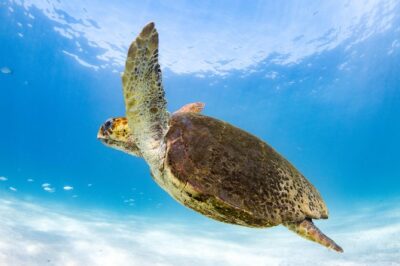
Swim with Whale Sharks in the Ningaloo Reef: 3 Island Shark Dive
Read our review →
From Hermanus or Cape Town: Shark Cage Diving Experience
Read our review →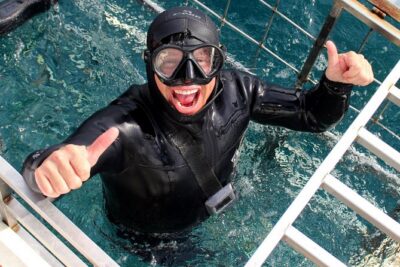
Shark Cage Diving and Viewing with transport from Cape Town
Read our review →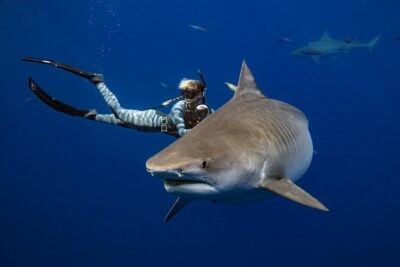
Safe and Educational Shark Dive from Haleiwa: Sharks Guaranteed
Read our review →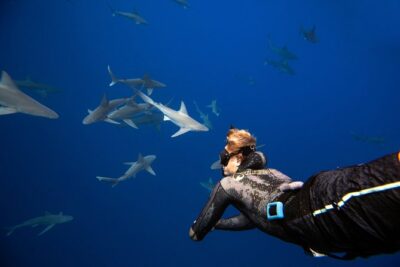
Dive with Sharks in Hawaii: Shark Tour from Haleiwa
Read our review →Browse the lists this tour appears in