
REVIEW · ARUBA
Aruba PADI Scuba Diving Program Non Certified Divers
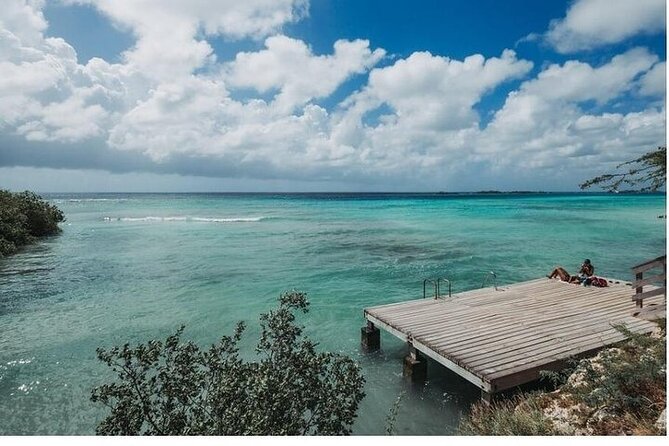
Curious about scuba? This three-hour Aruba program gives you a careful first look at life underwater at Mangel Halto Reef, without requiring a scuba certificate. I like the maximum group size of four, which gives your instructor time to watch each person closely, and I like that the price includes equipment, water, and a small snack.
The main thing to consider is that this is not a certification course. You receive a PADI completion certificate, but you cannot use it as an Open Water qualification. I also recommend confirming pickup details and any special requests before the day, since communication and transport caused problems for a small number of participants.
Key points to know before you book
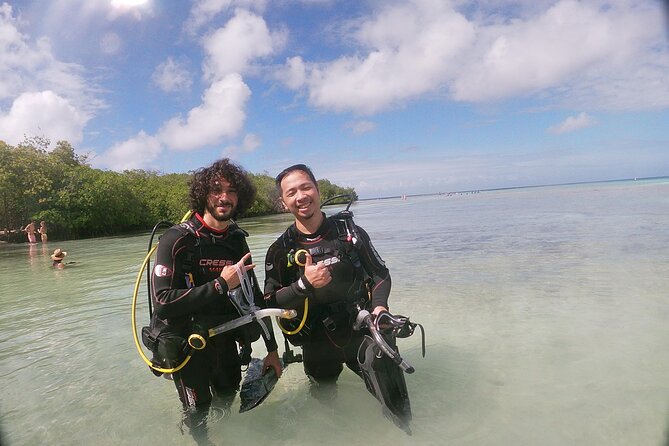
- The session begins on land and in shallow water: You learn the basic equipment and safety skills before heading into deeper water.
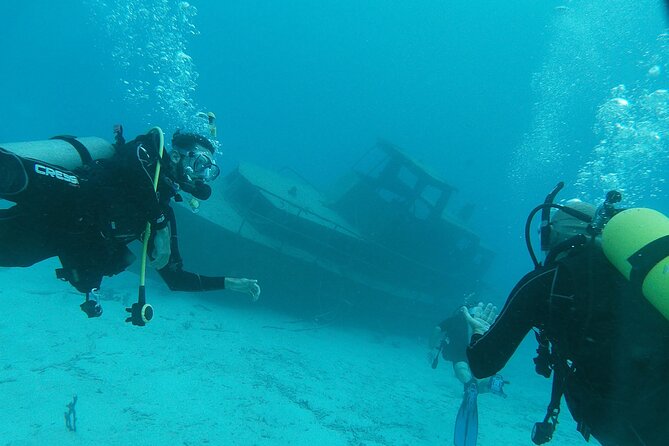
- Mangel Halto Reef is the main attraction: Expect coral, fish, and the possibility of seeing a shipwreck site.
- Groups are limited to four people: This is especially useful if you feel nervous or need extra help with breathing and pressure.
- All scuba equipment is supplied: You do not need to arrange tanks, masks, or other basic gear yourself.
- Pickup is available: You can meet at Ir. Luymesstraat 3 in Savaneta or request transportation, but confirm the exact meeting point.
- The $99 price includes a full introduction: Instruction, gear, the underwater session, refreshments, and roughly three hours of activity are included.
What the $99 Aruba experience actually includes
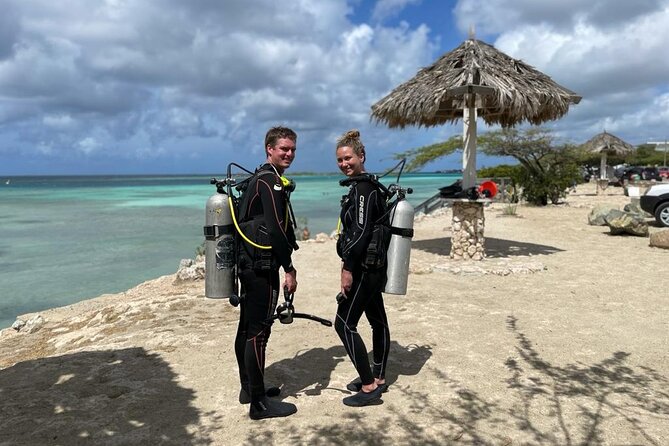
At $99 per person, this is priced as an introductory experience rather than a full course. You are paying for instruction, equipment, supervision, transport options, refreshments, and time in the water at Mangel Halto Reef.
I think the value is strongest for someone who has always wanted to try scuba but does not want to commit to a multi-day certification program. You get a proper introduction to the basic skills, rather than simply being fitted with equipment and sent into the sea.
The small group is important here. With no more than four people, the instructor can focus on breathing, equipment use, comfort, and pressure equalization. Several participants needed extra time before going farther from shore, and instructors such as Carlos, Javier, Sebastian, Gio, and Izhar were repeatedly praised for staying calm and patient.
You also receive water, bananas, or chocolate. These are modest additions, but they make sense after physical activity in the Caribbean heat. Bring your own towel and personal items unless the provider tells you otherwise, since those items are not listed as included.
More Dive Courses in Aruba:
- Half-Day Aruba Intro Diving Course for Beginners
★ 4.5 · 97 reviews - Guided Padi Discover Scuba Diving for Non-Certified Divers
★ 5.0 · 33 reviews - Barcelona: PADI Discover Scuba Diving
★ 4.7 · 1,016 reviews
Starting at Ir. Luymesstraat 3 in Savaneta
The activity begins at Ir. Luymesstraat 3, Savaneta, Aruba, and returns to the same meeting point. You can arrange pickup instead, which is useful if you are staying elsewhere or visiting Aruba from a cruise ship.
Pickup has been particularly helpful for cruise passengers, with one participant describing an easy pickup near the cruise terminal. Still, the meeting instructions have not always been clear. Another participant had trouble learning the exact port pickup location until the day before.
For that reason, I would not wait until the last minute to confirm:
- The precise pickup point
- The pickup time
- Whether the return will be to the same place
- Any extra transportation charge
- Whether a hotel or cruise port transfer is included
The listed experience offers pickup, but one complaint described conflicting information about a $20 transportation charge. That does not erase the strong record of successful outings, but it is a good reason to keep all arrangements in writing through the booking channel.
The first 20 minutes: video, reading, and a short quiz
The formal instruction starts with about 20 minutes of video. You then read the PADI program material and complete a quiz.
This may feel slow when you are eager to reach the water, but it serves a purpose. Scuba requires more than swimming with an air tank. You need to understand how to breathe from the regulator, how to handle basic equipment, and how to respond if something feels uncomfortable.
You receive a certificate of completion after finishing the program. Keep the distinction clear: this certificate confirms that you completed the introductory session, but it does not qualify you to scuba independently or replace an Open Water certification.
If you already completed part of a PADI course years ago, this format can work as a refresher. One participant who had taken the course long before but never completed the open-water portion found the session useful and left ready to pursue formal certification.
Learning the equipment before entering deeper water
Once the land portion is done, the instructor moves to skills in shallow water. This is where the experience becomes practical.
You learn to use the mask, regulator, and other supplied equipment while standing or working in shallow water. The instructor checks that you can breathe comfortably and respond to basic instructions before moving on.
This gradual approach matters. First-time scuba participants often need a few minutes to get used to breathing through a regulator. You may also need help clearing your ears as you go down. Several participants had trouble with pressure, and the instructor took time to let them settle before continuing.
I like that the program does not treat nervousness as a problem to overcome quickly. The better instructors, especially Carlos, Javier, Sebastian, and Gio, were praised for explaining each step clearly and keeping people relaxed.
You should still expect to need a moderate level of physical fitness. The program is not presented as a strenuous athletic event, but you will handle equipment, move through water, and remain attentive for several hours.
More Beginner Dives in Aruba:
- Small-Group Aruba Scuba Diving for Non-Certified Divers
★ 5.0 · 194 reviews - Private First-Time Dive on Aruba’s Reef and Wreck Site
★ 5.0 · 192 reviews - First-Time Scuba Diving in Honolulu + Free Videos
★ 5.0 · 3,123 reviews - Beginner Scuba Diving with Turtles and Videos, San Juan
★ 5.0 · 1,743 reviews
Mangel Halto Reef and the main underwater session
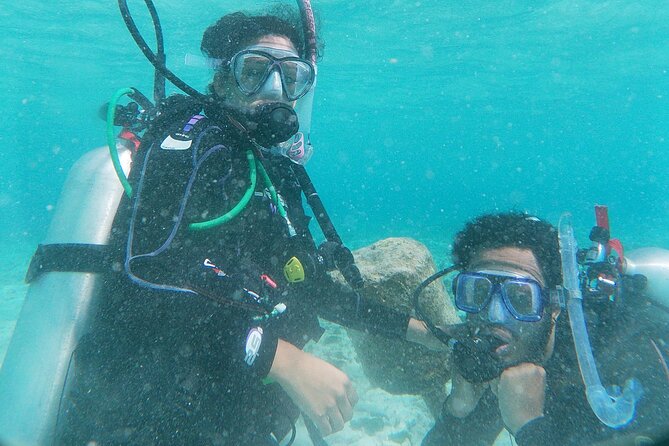
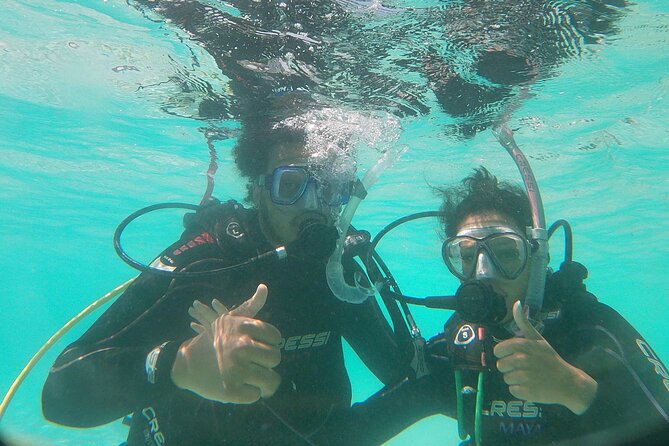
After the shallow-water practice, you head into the larger body of water at Mangel Halto Reef. The underwater portion can last about 45 minutes, according to one detailed account, though the total program generally takes three to four hours.
The reef is the reason to choose this experience instead of practicing only in a pool. Participants described coral, fish, and good visibility for photographs. Some also saw a shipwreck site, adding a bit of history and exploration to the session.
Your instructor remains close and points out marine life as you move. This is not a free-swimming excursion where you simply follow a distant guide. The direct supervision is the core safety feature, especially for a first-time participant.
One instructor carried a GoPro and recorded underwater video for the group. Do not treat that as guaranteed, however. Camera availability appears to vary, and one complaint involved conflicting information about photographs and video. Ask before booking if personal footage is important to you.
The reef itself is better suited to a first experience than an ambitious technical outing. You get a taste of underwater movement, breathing, coral, fish, and wreck viewing without needing prior certification. If you already have extensive scuba experience, the session may feel basic.
How the instructors handle nerves and small problems
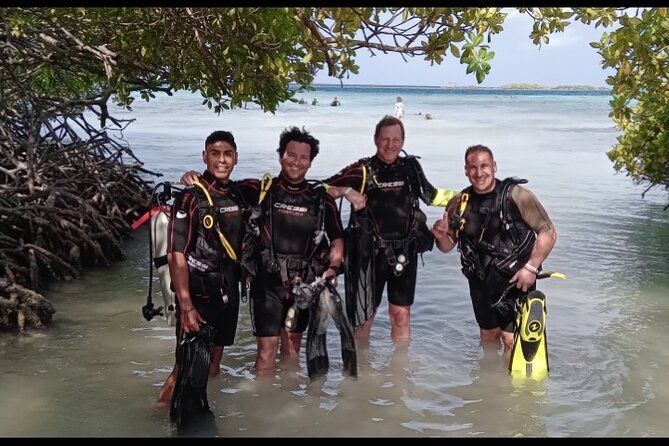
The strongest part of this program is the human attention. Several participants described instructors who made them feel safe, explained rules carefully, and waited until everyone was ready.
That matters because a first scuba session can become stressful quickly. A leaking mask, trouble clearing your ears, or the simple strangeness of breathing underwater can make you want to stop. In one case, an instructor brought a participant back in as soon as she had enough. That is the right call for an introduction: comfort and control matter more than reaching a certain distance.
The instructors named in the feedback include Carlos, Javier, Sebastian, Gio, Jolene, Izhar, and David. Carlos received especially warm praise for patient instruction, careful supervision, and clear explanations. Sebastian helped participants who struggled with the basic skills, while Gio was described as calm and steady with a nervous beginner.
There was also an example of staff caring for someone who felt unwell after the session. That is reassuring, though you should still tell the instructor immediately if you feel dizzy, anxious, short of breath, or uncomfortable.
Timing, organization, and the occasional wait
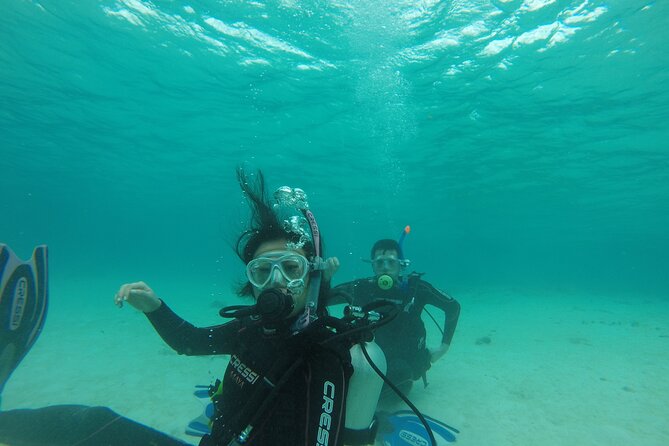
The stated duration is about three hours, but the full process can take three to four hours. That includes video, reading, the quiz, equipment preparation, shallow-water practice, and the reef session.
Do not schedule a tight activity immediately afterward. One participant felt the organization was slow and waited too long for the return to the meeting point, causing problems with another planned outing. Another noted that equipment setup and required video took longer than expected.
The tradeoff is clear. The preparation may feel inefficient if you are watching the clock, but it gives beginners time to understand the equipment. I would leave a generous buffer after the activity, especially if you need to return to a cruise ship or catch another scheduled tour.
The small group can help the actual instruction move at a comfortable pace, but it does not guarantee a perfectly quick day. Equipment, transport, and several participants getting ready can all affect the schedule.
Pickup, communication, and booking advice
Pickup is a useful option, but it needs careful handling. The published information says pickup is offered, while the experience begins and ends in Savaneta. If you are not meeting there, contact the provider before the activity and confirm the arrangement.
Cruise passengers should be especially careful. Ask exactly where the driver will wait, not simply which port. One person had no clear meeting instructions until the day before and was lucky to have ship internet available.
I would also avoid paying the provider directly outside the booking platform. One unhappy participant described being asked to pay $120 per person directly, despite the listed price being $99, along with uncertainty about transportation costs and schedule changes. The account is only one side of the story, but the practical lesson is sound: keep payment, pickup details, and changes on the official booking record.
The cancellation terms are simple but strict. You can receive a full refund if you cancel at least 24 hours before the start time. Changes or cancellations inside that 24-hour window are not accepted for a refund. If illness or a change in companions is possible, decide early and contact the provider before the cutoff.
Who will enjoy this most
This program is a good match for you if:
- You have never tried scuba and want a supervised introduction
- You want a small group instead of a large boat operation
- You are curious about Mangel Halto Reef, coral, fish, and wreck sites
- You may pursue formal certification later
- You value patient instruction more than a fast schedule
- You are comfortable with a moderate level of physical activity
It can also suit someone who completed a PADI course long ago but never made it into open water. The land and shallow-water practice can help rebuild confidence.
I would be more cautious if you have a very tight schedule, need guaranteed hotel or port transportation, or expect a full scuba qualification at the end. This is a first taste, not a license.
The information about swimming ability deserves special care. One participant said the provider confirmed that no prior experience was required, even though the program lists moderate physical fitness. Do not assume that no experience means no physical demands. Ask the provider directly about your swimming ability, medical concerns, and comfort in open water before booking.
Is this Aruba scuba program worth booking?
For $99, I think this is a strong choice for a first scuba experience, especially because the group is capped at four and the equipment is supplied. The reef setting, possible wreck viewing, refreshments, and patient instruction give the session more substance than a quick equipment demonstration.
I would book it if you want a careful introduction and can leave plenty of time around the activity. I would also confirm transportation, camera availability, and physical requirements before paying.
Choose this program for personal attention and a gentle start. Skip it if you need a formal qualification, a guaranteed photo package, or a tightly timed outing. For the right beginner, Mangel Halto Reef offers a memorable first look at Aruba below the surface.
FAQ
Is this a scuba certification course?
No. It is a PADI Discover Scuba Diving experience and provides a certificate of completion, but it is not an Open Water scuba certification.
How long does the Aruba scuba program last?
The activity lasts about three hours, and the full program may take three to four hours depending on instruction, equipment preparation, and the water session.
Where does the experience begin and end?
The meeting point is Ir. Luymesstraat 3 in Savaneta, Aruba. The activity ends back at the meeting point.
Is pickup available?
Yes. Pickup is offered, but you should confirm the exact location, time, and any transportation details before the activity.
Is scuba equipment provided?
Yes. The program provides the equipment needed for the session.
How many people are in each group?
The maximum group size is four participants.
What can I see at Mangel Halto Reef?
The underwater area includes coral and fish, and some sessions also visit a shipwreck site. Availability of particular marine life or wreck viewing is not guaranteed.
More Dives for Certified Divers in Aruba
- Aruba 2-Tank Dive Excursion for Certified Divers
★ 4.5 · 230 reviews - Aruba Certified Scuba Diving
★ 5.0 · 182 reviews - Aruba 2-Tank Guided Dive for Certified Divers / rental equipment
★ 4.5 · 70 reviews - Shore Dive Aruba for Certified Divers
★ 4.5 · 33 reviews
New dives around Aruba
- Private Dive at Shipwreck + Beautiful Reef Spot(Certified divers)★ 3.0 · 2 reviews
- Private Dive + videographer/Photographer (Certified divers only)★ 5.0 · 11 reviews
- Shore Dive Aruba for Certified Divers★ 4.5 · 33 reviews
- Night Shore Diving Mangel Halto Aruba for Certified Divers★ 5.0 · 6 reviews
- Half-Day Aruba Intro Diving Course for Beginners★ 4.5 · 97 reviews
- Aruba Flyboarding & Jetovator Experience: Fly Like a Bird & Dive Like a Dolphin★ 4.5 · 64 reviews
- Guided Padi Discover Scuba Diving for Non-Certified Divers★ 5.0 · 33 reviews
- Boat Dive Shipwreck/ Airplanes/ Reef /2 tanks★ 4.0 · 13 reviews
PADI Courses & Certification, compared.
Tossa de Mar: PADI Discovery Scuba Diving in Costa Brava
Read our review →
Full-Day Beginner Scuba Course with Private Tuition, Racha Yai
Read our review →
Beginner Scuba Diving Lesson with PADI Instructor
Read our review →
Discover Scuba Diving with No Certification in St Thomas
Read our review →
Try Dive – PADI Discover Scuba Diving in Tenerife
Read our review →
Browse the lists this tour appears in