
REVIEW · ST THOMAS
Discover Scuba Diving with No Certification in St Thomas
Breathe underwater without taking a full course. This St. Thomas experience gives beginners a short scuba lesson, equipment practice, and a first open-ocean outing from a boat. I especially like the small four-person group, which gives your instructor room to slow down and help when nerves appear. I also like that snorkeling, snacks, water, and soft drinks are included after the underwater session.
The main catch is the medical screening. Some health answers require written approval from your doctor before you arrive, and you may snorkel only if that paperwork is missing. The $225 price is fair for a three-and-a-half-hour private activity, though a second scuba session costs extra.
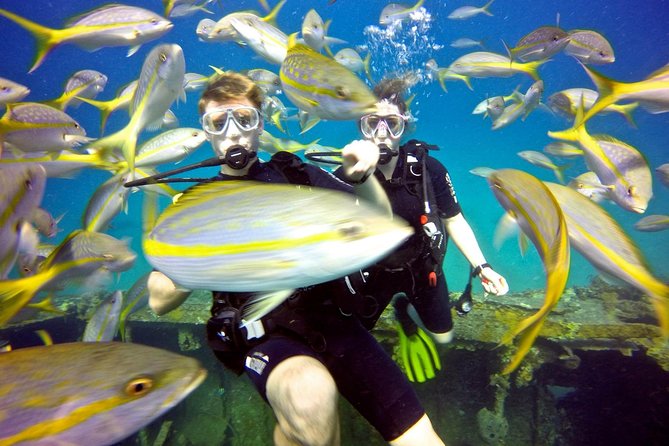
This is a gentle introduction rather than a certification course. You can see tropical fish, coral, rays, turtles, sea stars, and other marine life, but the experience depends on your comfort in the water, sea conditions, and the site chosen that day.
Key points to know before you book
- Four students per instructor: The small group makes it easier to ask questions and get help with breathing, equipment, and nerves.
- One open-ocean scuba session included: You learn basic theory on land and on the boat before entering the water.
- Snorkeling is part of the plan: You can snorkel after your scuba time instead of paying for a second underwater session.
- Doctor approval may be required: Surgery, prescription medication, asthma, heart concerns, diabetes, some ear problems, and other conditions can trigger extra paperwork.
- The boat leaves from Saga Haven Marina: You meet Aqua Marine Dive Center at 6117 Estate Frydenhoj, Saga Haven Marina, St. Thomas.
- Plan around your flight: You are advised to allow at least 18 hours between scuba and flying.
What the three-and-a-half-hour St. Thomas outing feels like
You meet the crew at Aqua Marine Dive Center in Saga Haven Marina. The activity ends back at the same marina, and transportation to the meeting point is not included, so you need to arrange your own ride.
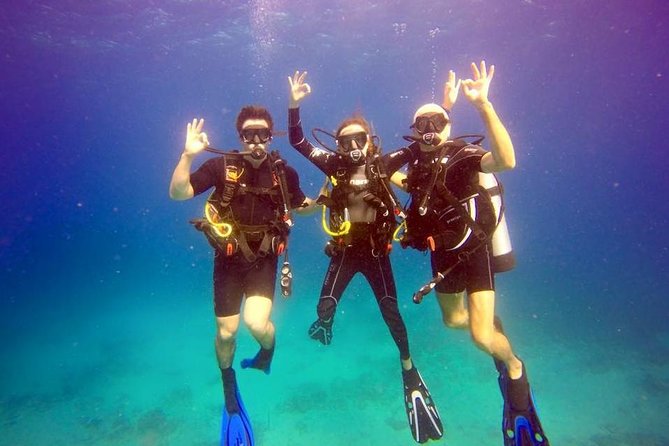
The opening lesson covers basic scuba theory, equipment, and underwater hand signals. This is not a long classroom course. It is a practical introduction designed to give you enough information to use the gear and communicate below the surface.
That short format suits a vacation. You do not spend a full day in a classroom, but you still get a proper briefing before entering the sea. The instructor also handles the paperwork and checks that you understand the basic safety steps.
Once aboard the boat, the instructor explains how the mask, regulator, tank, fins, and other equipment work. You learn how to breathe through the regulator and how to communicate with hand signals. For a first-timer, this part matters more than it may sound. The equipment can feel strange at first, and calm instruction makes it easier to focus.
The boat carries a maximum of four students for each instructor. That ratio is one of the strongest reasons to choose this outing. If you feel anxious, need a skill explained again, or want help adjusting your equipment, you are not one person in a large crowd waiting for attention.
More Dive Courses in the world:
- Barcelona: PADI Discover Scuba Diving
★ 4.7 · 1,016 reviews - PADI Open Water Diver Course
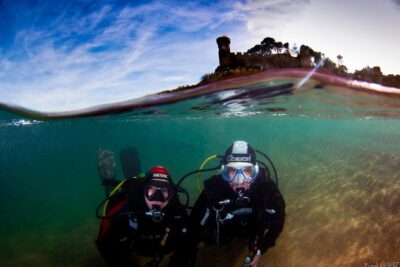
★ 5.0 · 626 reviews - Tossa de Mar: PADI Discovery Scuba Diving in Costa Brava
★ 4.7 · 392 reviews
The first underwater session: calm instruction matters
The first ocean session is the heart of the experience. You leave from the boat rather than walking in from shore, then enter the open water with the instructor’s guidance.
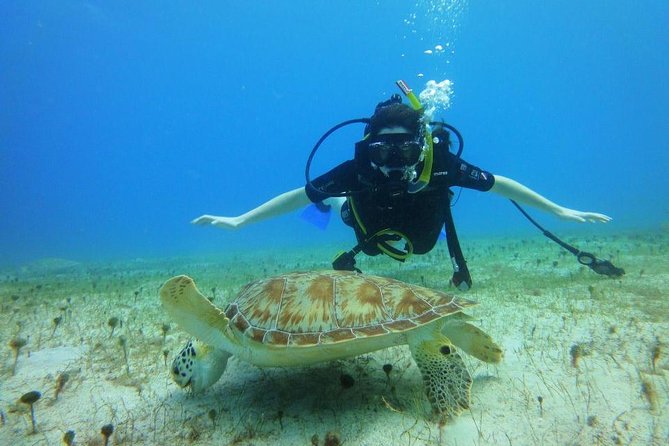
The exact marine life and site can vary. You might see tropical fish, coral, a turtle, a ray, sea stars, urchins, nudibranchs, or an octopus. One outing produced sightings of a turtle, a stingray, and about a dozen sea stars. Another included fish, coral, urchins, rays, nudibranchs, and an octopus.
Those sightings are possible highlights, not guarantees. Marine life moves, visibility changes, and conditions affect the route. Still, St. Thomas gives you a strong setting for a first ocean experience, and the trip focuses on showing you how to look around rather than rushing through a checklist.
Nerves are normal. Several people found breathing underwater overwhelming at first, and one person chose not to finish the session. That is useful information, not a warning sign about the company. Scuba is not comfortable for everyone, and you should feel free to stop if your body or mind says no.
The instruction style appears particularly helpful for nervous beginners. In one account, instructor Jamie offered steady encouragement. Another beginner credited Ana with allowing her to move at her own pace, helping her return to the surface when she felt overwhelmed, and staying close until she felt ready to continue.
That kind of patience is more valuable than a cheerful sales pitch. You are trying an unfamiliar activity in open water, and the right instructor gives you control over the pace.
Snorkeling, snacks, and the optional second session
After the first underwater session, you can use the provided snorkeling equipment. This gives you a lower-pressure way to keep seeing the reef if scuba does not feel right, or if you simply want more time in the water.
Snorkeling also makes the outing workable for mixed groups. One person may enjoy scuba while another prefers to remain at the surface. The activity includes snorkeling equipment, water, soft drinks, and snacks, so the time after the main session is not an afterthought.
You can also pay extra for a second scuba session. The extra outing is repeatedly recommended by people who enjoyed the first one. That makes sense: once you understand the equipment and settle your breathing, the second session may feel more natural than the first.
Still, do not add the second session automatically. If you are seasick, tired, anxious, or unsure about the first session, snorkeling may be the better choice. One account describes the crew taking good care of someone who became very seasick, which is reassuring, but motion on the boat remains a real possibility.
Some outings include time around Christmas Cove, and the setting may add a pleasant snorkeling stop. One group even encountered live music nearby. That detail is not guaranteed, but it shows how the day can include more than a strict out-and-back schedule.
Why the four-to-one group size makes a difference
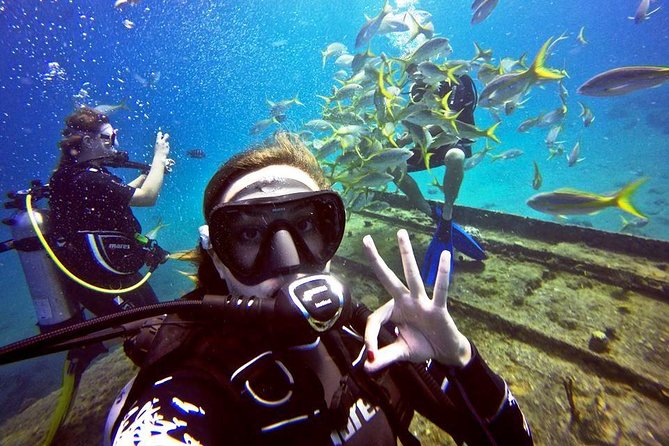
A four-to-one instructor ratio changes the feel of a beginner activity. You are not simply following a guide through the water. You receive direct help with your mask, breathing, buoyancy, and hand signals.
The crew names praised in the feedback include Spencer, David, Jamie, Ana, Steph, Tommy, Jared, Audrey, Erika, Steve, Billy, Cora, Abby, Floyd, Wolfgang, Quinton, and Justin. The exact team varies, but the consistent theme is patient support from both instructors and boat crew.
That support is particularly useful for families. The minimum age is 10, and children must be accompanied by an adult. A parent and child can share the experience while still receiving close supervision, provided both can swim and pass the required medical screening.
The small group also helps if your experience levels differ. One person might be trying scuba for the first time while another has already tried it. The instructor can spend more time with the beginner without turning the whole group into a waiting room.
More First-Time Dives in the world:
- Discover Scuba Diving
★ 5.0 · 1,676 reviews - Discover Diving in Curacao
★ 5.0 · 886 reviews - Mallorca: Discover Scuba Diving for Beginners
★ 4.7 · 805 reviews - Lanzarote Introductory Scuba Diving Experience
★ 5.0 · 766 reviews
Marine life and the question of the dive site
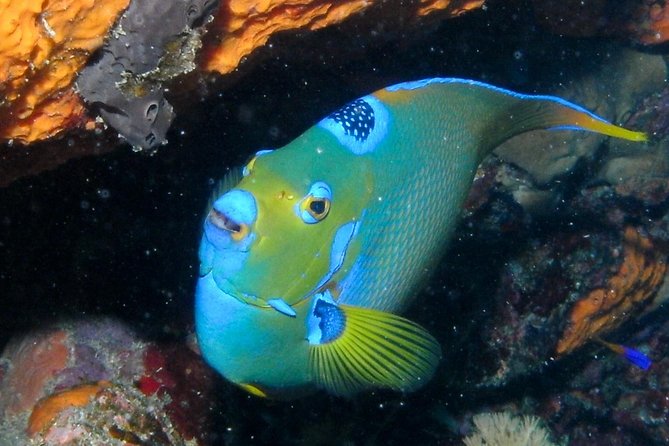
You may visit sites around St. Thomas with coral, fish, rays, turtles, and other reef life. One location mentioned in the feedback is the Ledges of Little Saint James, a site associated with a notorious private island.
The underwater setting itself can be appealing, but the public conversation around that island may make some people uncomfortable. One person specifically objected to repeated discussion of Jeffrey Epstein and the island’s history during the boat ride.
If that topic concerns you, keep it in mind before booking. The operator said crew members cannot control every conversation among people aboard, though you can raise a concern during the trip. The marine setting may be excellent, but the social atmosphere on a small boat depends partly on who else is present.
That is one of the few clear cautions in an otherwise strongly positive set of feedback. The activity has a 5.0 rating from 223 reviews, with 100 percent recommending it. Most praise centers on safety, patience, and friendly instruction rather than on flashy promises.
Is $225 good value?
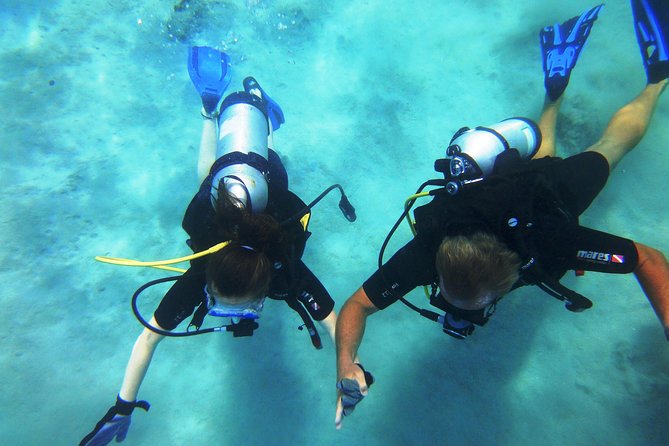
At $225 per person, this is not a cheap add-on. You are paying for a boat-based introduction, equipment, instruction, one open-ocean scuba session, snorkeling access, snacks, drinks, and a high instructor-to-student ratio.
I think the price is reasonable if you want a carefully supervised first attempt and do not want to commit to certification. A full certification course requires far more time, study, and planning. This experience lets you find out if breathing underwater suits you before making that larger commitment.
The value is strongest for nervous beginners. A large group might cost less, but it can leave you waiting for assistance. Here, the small group helps explain the price.
The value is weaker if you already know that you only want to snorkel. You can still use the snorkeling equipment, but the main purpose of the outing is to introduce you to scuba. If you have no interest in using a tank and regulator, choose a snorkeling trip instead.
The second scuba session costs extra, so check the added price before deciding. It may be worthwhile once you are comfortable, but the first session already gives you the central experience.
Health rules you should read before paying
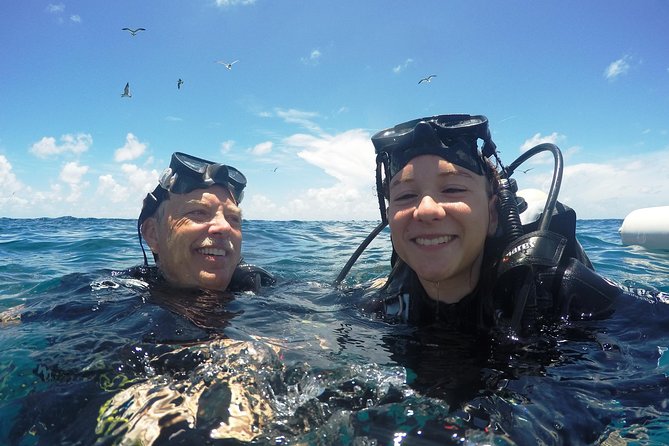
The medical questionnaire is the most important practical detail. Every non-certified participant completes a standard Diver Medical Questionnaire, and certain answers require a doctor’s signed approval before the activity.
Approval may be needed if you have had surgery in the past 12 months, have ongoing problems from earlier surgery, take prescription medication other than birth control or certain anti-malarial drugs, or are over 45 and smoke or have high blood pressure or high cholesterol.
You may also need approval if you have diabetes, recent gestational diabetes, ear disease, recurring sinusitis, asthma, severe allergies, breathing trouble, angina, or other heart problems.
This does not automatically mean you cannot participate. It means the operator will not make a medical decision for you. If the form flags your answer and you arrive without the required approval, you can snorkel, but you will not be allowed to scuba.
Read the health questions before booking and contact your doctor early if needed. Last-minute paperwork can turn an expensive activity into a snorkeling-only outing.
You must also be able to swim and have a moderate level of physical fitness. The minimum age is 10. Service animals are allowed, and the meeting point is near public transportation.
Who should choose this experience?
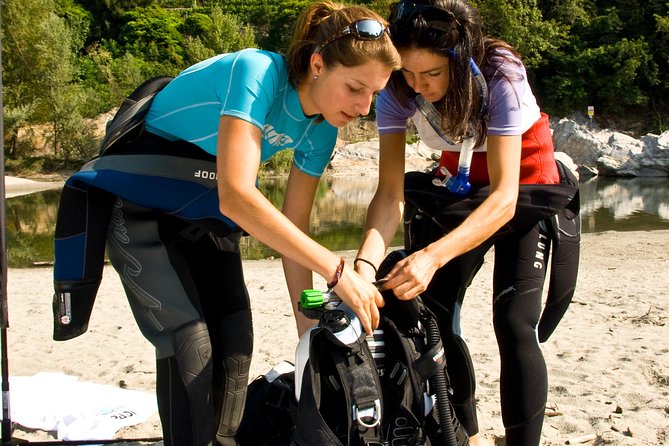
I would choose this for an adult or older child who is curious about scuba but does not want to take a certification course during a short vacation. It also works well for a couple or family where one person is new to the activity and wants close help.
It is especially suited to you if you:
- Can swim comfortably
- Feel reasonably fit for boat and water activity
- Want a small group rather than a large class
- Are willing to complete the medical questionnaire honestly
- Want the option to snorkel if scuba is not for you
- Hope to pursue certification later
I would think twice if you dislike boat motion, have serious anxiety about breathing through equipment, or cannot obtain required doctor approval in advance. You can still enjoy snorkeling, but you may not receive the full experience you expected.
Timing, cancellations, and practical planning
The activity lasts about three hours and 30 minutes. Build in extra time around it if you have a cruise departure, dinner reservation, or another fixed appointment.
The meeting point is Aqua Marine Dive Center at Saga Haven Marina, 6117 Estate Frydenhoj, St. Thomas, VI 00802. Transportation to and from the marina is not included.
You are advised to wait at least 18 hours after scuba before flying. That rule matters if St. Thomas is your final stop and you plan to fly home soon after the activity.
The booking is non-refundable and cannot be changed for any reason. If bad weather cancels the outing, you receive the choice of another date or a full refund. If the minimum number is not met, you receive another date or experience, or a full refund.
Should you book the St. Thomas Discover Scuba experience?
Book it if you want a real first taste of scuba, prefer close instruction, and are comfortable with the medical and swimming requirements. The four-person limit, patient instructors, reef setting, and included snorkeling make it a well-rounded choice for beginners.
I would book the second session only after seeing how you feel in the water. The first outing may leave you eager for more, or it may confirm that snorkeling is your better fit.
The strongest reason to choose this activity is not a promise of spectacular marine life. It is the chance to try scuba with an instructor who can slow down, steady your nerves, and help you make an informed decision about certification later.
FAQ
Where does the activity begin?
You meet at Aqua Marine Dive Center, 6117 Estate Frydenhoj, Saga Haven Marina, St. Thomas, VI 00802.
Where does the activity end?
It ends back at the meeting point at Saga Haven Marina.
How long does the experience last?
The activity lasts approximately three hours and 30 minutes.
How much does it cost?
The listed price is $225 per person. A second scuba session is available for an additional cost.
Do I need scuba certification?
No. This experience is designed for people without certification.
How many people are in each group?
The maximum is four students per instructor.
What age can participate?
The minimum age is 10. Children must be accompanied by an adult.
Do I need to know how to swim?
Yes. All participants must be able to swim.
What happens if my medical questionnaire requires approval?
You must provide a doctor’s signed approval before the activity. Without it, you can snorkel but cannot scuba.
Can I fly soon after the activity?
You are advised to allow at least 18 hours after scuba before flying.
Is transportation included?
No. Transportation to and from the marina is not included.
What happens if bad weather cancels the activity?
You are offered another date or a full refund if poor weather causes the cancellation.
New dives around the world
- Villasimius: Scuba Dive in Capo Carbona without Certificate★ 4.9 · 23 reviews
- Vila Franca do Campo: Try Scuba Diving for the first time!★ 5.0 · 3 reviews
- Villasimius: Capo Carbonara First Time Dive with Instructor★ 4.9 · 50 reviews
- Villefranche-sur-Mer: Experience an introduction to scuba diving★ 5.0 · 2 reviews
- Tučepi: Adriatic Sea Diving Lessons with Guided Dive & Gear★ 4.8 · 9 reviews
- Tenerife: 2 Diving Sessions for Certified Divers★ 4.2 · 7 reviews
- Underwater Museum Musa : SCUBA DIVING FOR BEGINNERS★ 4.3 · 4 reviews
- Tulum : Dos Ojos cenote 2 scuba dives (certified divers)★ 5.0 · 3 reviews
PADI Courses & Certification, compared.
Tossa de Mar: PADI Discovery Scuba Diving in Costa Brava
Read our review →
Full-Day Beginner Scuba Course with Private Tuition, Racha Yai
Read our review →
Beginner Scuba Diving Lesson with PADI Instructor
Read our review →
Try Dive – PADI Discover Scuba Diving in Tenerife
Read our review →
Browse the lists this tour appears in