
REVIEW · AUSTRALIA
Quicksilver Dive 4 Day PADI Learn to Dive Course
Your first reef certification can begin in a pool. This four-day Quicksilver course pairs two days of patient instruction in Port Douglas with two days at the Agincourt Ribbon Reefs on the Great Barrier Reef. I like the small maximum of eight people and the six open water sessions, including two extra fun sessions after the required skills are complete.
I also like that the package covers equipment, logbook, meals, reef tax, and Port Douglas hotel transfers. The main consideration is the pace: you need moderate fitness, must swim 200 meters and float for 10 minutes, and should not fly for 24 hours after your final underwater session.
Key points to know before booking
- Two pool days first: Learn theory and practical skills at the Quicksilver training center on Warner Street, including work in a heated 4-meter pool.
- Six reef sessions included: Four are required for certification, followed by two additional fun sessions.
- Small classes matter: The course allows a maximum of eight people, giving instructors more room to help with nerves and technique.
- Agincourt Ribbon Reefs are the classroom: Your final two days take place on the outer Great Barrier Reef from Port Douglas.
- Named instructors earn strong praise: India, Adam, Emma, Haylie, Gordon, Chris, and Jade are all singled out for calm teaching, safety, and personal care.
- Plan your flights carefully: The final scheduled session finishes by about 2:30 pm, but you should wait at least 24 hours before flying.
Two pool days in Port Douglas
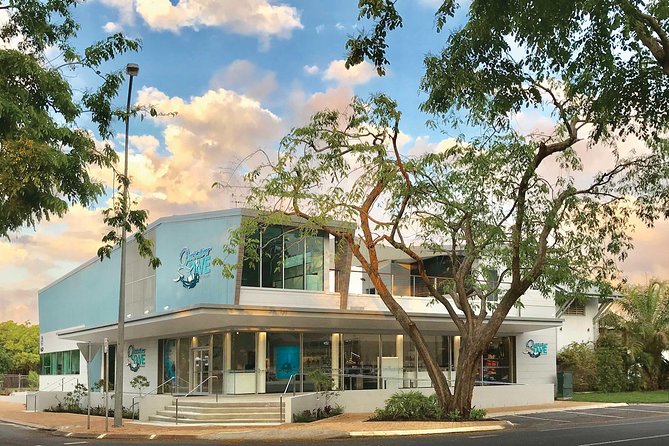
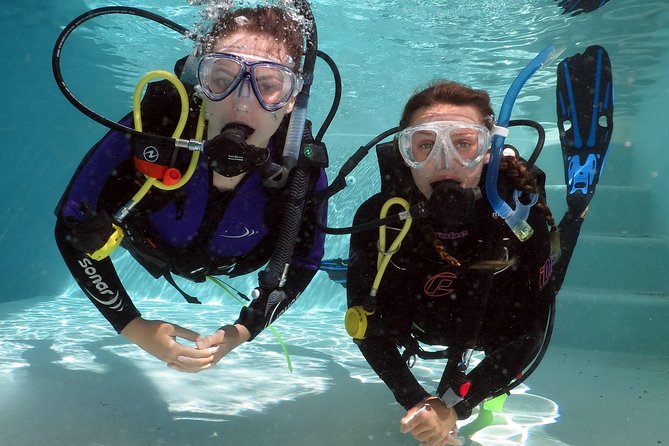
The course begins at 8:30 am at 19 Warner Street, Port Douglas. The first two days stay at the Quicksilver training center, where you work through the classroom material and practice skills in a heated pool.
That order makes good sense. You can learn how to use the equipment, control your breathing, clear a mask, and manage basic underwater problems before heading offshore. You are not being asked to learn everything while standing on a moving boat in open water. For a first certification, that calmer start is a real advantage.
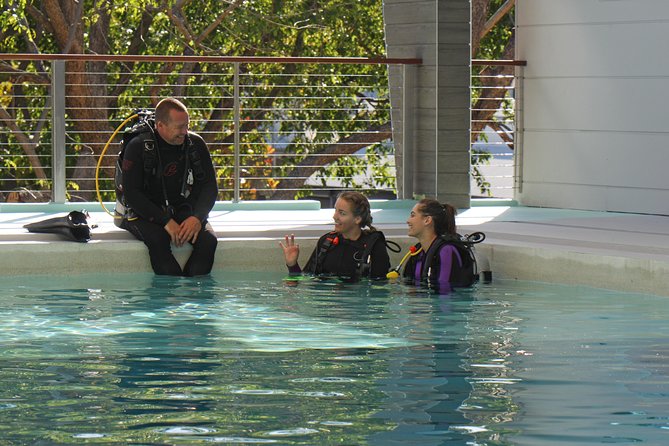
A heated 4-meter pool is listed as part of the training setup. The depth gives you room to practice skills that feel more realistic than they would in a shallow hotel pool, while the controlled setting lets you stop, ask questions, and try again.
The course is still work. PADI certification requires attention, repetition, and the ability to follow instructions underwater. You should expect a serious training program rather than a casual introduction followed by a quick reef outing.
The maximum group size is eight. That is small enough to give instructors time to watch your technique and respond when a skill does not click right away. The personal support seems to be one of Quicksilver’s strongest points. India is praised for building confidence and keeping instruction fun, while Emma is singled out for checking that everyone felt safe and ready before moving ahead. Haylie is also praised for a gradual teaching style that helped a nervous beginner feel prepared.
That gradual approach matters. Many first-time students worry about breathing underwater, clearing a mask, or dealing with unfamiliar equipment. A good instructor will not treat those concerns as silly. The repeated emphasis on calm instruction, safety, and confidence suggests this course is well suited to adults who want the proper qualification but feel unsure at the start.
More PADI Courses in Australia
- Cairns: 4-Day PADI Open Water Course
★ 4.8 · 44 reviews - Gold Coast: 3-Day PADI Open Water Course
★ 4.8 · 28 reviews - 4-Day PADI Open Water Dive Course – Learn to Dive on the Great Barrier Reef
★ 5.0 · 27 reviews
Six reef sessions across two outer-reef days
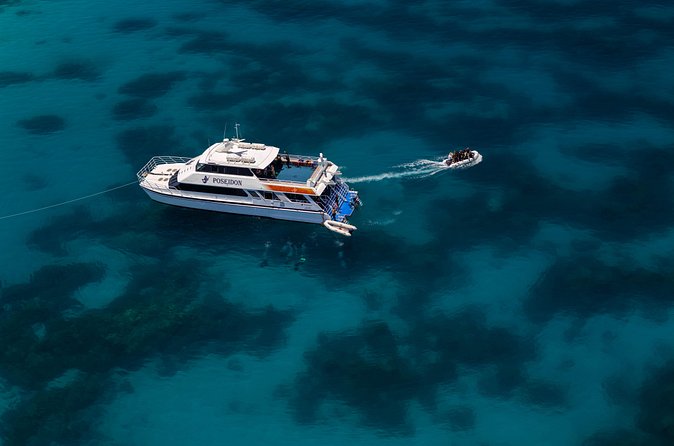
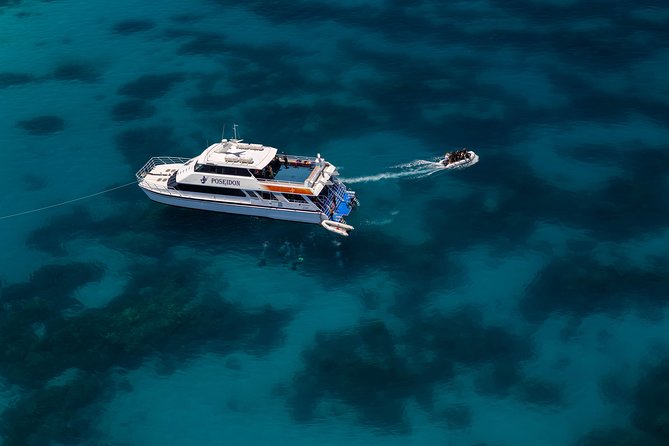
Days three and four move from the training center to the Agincourt Ribbon Reefs. These are day trips to the outer Great Barrier Reef, with the reef itself serving as the final test area and the reward for the first two days of preparation.
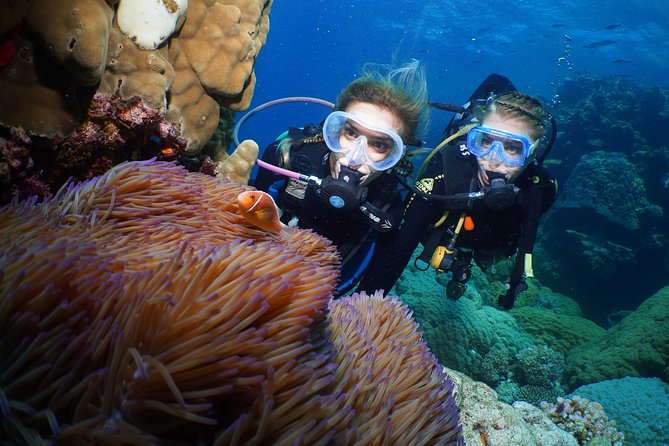
Four open water sessions are required for the PADI Gold Open Water Certification. Two more are included as fun sessions. That gives you more than the bare minimum needed to finish the qualification. You can keep practicing your buoyancy, breathing, and equipment handling while spending more time looking at the reef rather than concentrating only on a checklist.
The Agincourt Ribbon Reefs are the key reason to choose a Port Douglas course. You are not completing certification in a generic local pool or at a small training site. Your final sessions take place on the Great Barrier Reef, at a location named in the itinerary as both Agincourt Reef and the Agincourt Ribbon Reefs.
The two-day format also gives you a better chance to settle into the experience. On the first reef day, your attention may be fixed on procedures and basic control. By the second day, you may have more mental space to enjoy the surroundings and use the extra sessions for pleasure.
There is a practical limit here. Reef conditions can vary, and the supplied information does not promise a particular animal sighting, visibility level, or exact underwater route. You should book this for the training and access to the reef, not for a guaranteed encounter with a turtle, ray, or particular coral formation.
Lunch, morning tea, and afternoon tea are included on each day. That matters because the reef outings are full-day excursions, and you will be using physical and mental energy. The environmental management charge, often called the reef tax, is also included, so that required conservation fee should not appear as a surprise add-on.
Souvenir photos are not included. If you want professional images from the reef days, budget separately for them.
What the teaching feels like
The strongest pattern in the instructor feedback is personal attention. Adam is praised by families completing the qualification together, including a parent and a 16-year-old son. Another family highlights Adam, India, Chris, and Jade for treating younger students with care.
That is useful if you are booking as a family. The minimum age is 10, but age alone does not determine readiness. A child still needs to meet the swimming and floating requirements, manage the equipment, and remain calm enough to follow directions.
The course also appears suitable for older beginners. One account describes a couple in their mid-fifties who worried before starting and then found the instruction reassuring. That does not remove the need for fitness or medical clearance, but it shows that this is not presented only as a program for athletic teenagers.
The Quicksilver office team can help with registration, forms, and medical questions. That support is valuable because the medical declaration is not a minor formality. You must complete the Student Diver Medical Declaration before beginning. If you answer yes to any question, you may need a medical certificate confirming that you are fit for scuba activity.
Conditions such as asthma, heart problems, or diabetes may affect eligibility. If a medical examination is required, it must be completed within 90 days of the course start. Handle this early. A last-minute medical issue could disrupt an otherwise carefully planned holiday.
Gear, meals, and transfers included
The course includes all diving equipment and a logbook. Prescription masks are available if you need one. That makes the package easier for a first-timer because you do not need to buy a full set of equipment before knowing if scuba is for you.
You may still choose to bring personal swimwear and any preferred small items, but the supplied information does not list a personal packing checklist. Ask Quicksilver what clothing and personal gear they recommend before arrival.
Return coach transfers are included from Port Douglas accommodation. This is convenient if you are staying in town and do not want to arrange early transport to Warner Street. Transfers from Cairns and the Northern Beaches cost extra, so compare that additional charge with the cost and hassle of arranging your own transport.
The course begins at the training center, and the activity ends back at the meeting point. Course dates begin every Tuesday and may also be arranged on request. Since the program takes four days, check that your accommodation covers the full period without a rushed departure.
The displayed price in the supplied details is $0 per person. Treat that as a placeholder or booking-system figure, not proof that the course is free. A four-day PADI program with reef boat trips, six open water sessions, equipment, meals, transfers, instruction, and reef fees would normally require a confirmed current rate. Check the live price directly before making plans.
At the stated price, the value would be extraordinary. At the actual confirmed price, judge it against what you would otherwise pay for the certification, equipment rental, two reef day trips, food, transport, and the environmental charge. Bundling those costs makes the comparison fairer than looking only at the headline figure.
More Dive Courses in Australia:
- Great Keppel Island PADI Discover Scuba Dive with Keppel Dive
★ 5.0 · 25 reviews - PADI Open Water Course
★ 4.5 · 11 reviews - Gold Coast Learn to Dive – Open Water Certification Course
★ 5.0 · 5 reviews - Cairns: Pro Dive 5 Day Learn to Dive Great Barrier Reef
★ 5.0 · 5 reviews
Timing your flights and holiday
The final scheduled open water session finishes by about 2:30 pm. Even so, you should not fly for 24 hours after scuba activity. This rule affects both the end of the course and the rest of your Australian itinerary.
If you finish on Friday afternoon, a Saturday afternoon flight may still be too close depending on the exact timing. Leave a full buffer rather than trying to squeeze the course between flights. Port Douglas is better suited to a relaxed stay before or after the program than to a tightly packed schedule.
You also need enough time to recover between course days. The program is four days in total, and the first two days are not optional warm-ups. They build the skills needed for the reef sessions. A longer stay gives you room to manage weather changes, medical paperwork, or a missed day without losing the whole plan.
Free cancellation is available if you cancel at least 24 hours before the start time. Changes or cancellations made inside that window are not accepted for a refund. The cut-off follows local time.
Who should choose this course
I would recommend it to you if you want a proper first certification in a famous reef setting and prefer a guided program with equipment and meals arranged. It is especially appealing for small groups, couples, and families who want to learn together.
It also suits you if you are nervous but motivated. The heated pool, small class size, and repeated praise for instructors such as India, Emma, Haylie, and Adam point to a teaching style that values confidence and safety rather than rushing people through skills.
You should think twice if you dislike structured training, have limited time, or cannot meet the swim and floating test. This is not a one-hour try-out. You are committing four days and six open water sessions, along with the study and practice required for certification.
It may also be a poor fit if you need to fly immediately after the course. The 24-hour no-fly period is a firm planning issue, not a small inconvenience.
Is the Great Barrier Reef setting worth it?
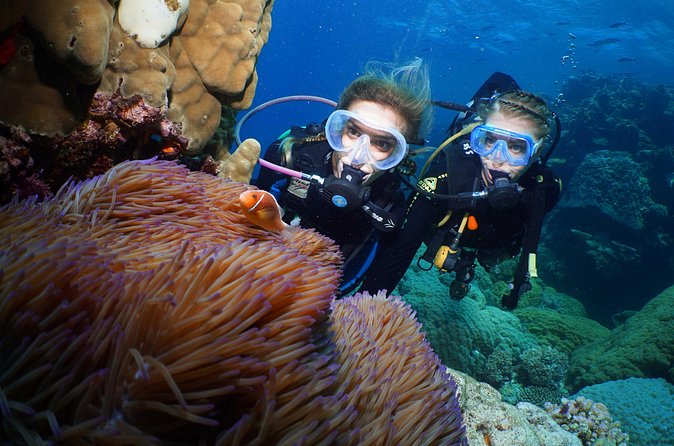
For many beginners, yes. The reef setting gives the qualification a clear purpose. You learn the skills in Port Douglas, then use them at Agincourt Reef while the experience is still fresh.
The setting also makes the course more memorable than certification completed entirely at home. You are learning a practical skill in the same region that attracts experienced scuba visitors from around the world. Just keep expectations sensible. The course promises access to the Agincourt Ribbon Reefs and six open water sessions, not a specific list of wildlife or a particular type of visibility.
The best part is the balance between instruction and real sea time. The first two days build control. The last two days let you apply it. That progression is worth paying for if you want a certificate you can use beyond Port Douglas.
Should you book the Quicksilver four-day course?
Book it if you want PADI Gold Open Water Certification with two pool-training days, two reef days, a small maximum group, and six open water sessions. The strongest reasons are the patient instructor support, the extra two fun sessions, and the fact that equipment, meals, reef fees, and Port Douglas transfers are included.
Before paying, confirm the current price, your medical requirements, transport costs if staying outside Port Douglas, and the 24-hour flight restriction. If you can meet the fitness requirements and give the course four unhurried days, this is a practical way to begin scuba at the Great Barrier Reef.
FAQ
Where does the course begin?
It begins at the Quicksilver Dive Training Centre at 19 Warner Street, Port Douglas, Queensland 4877.
What time does the course start?
The stated start time is 8:30 am.
How long does the course take?
The course lasts approximately four days. The first two days are at the Port Douglas training center, followed by two reef day trips.
How many open water sessions are included?
Six open water sessions are included. Four are mandatory for certification, and two are additional fun sessions.
Where do the reef sessions take place?
The reef days visit the Agincourt Ribbon Reefs and the Great Barrier Reef.
Is equipment included?
Yes. All dive equipment and a dive logbook are included. Prescription masks are available if required.
Are meals included?
Yes. Lunch, morning tea, and afternoon tea are included each day.
Are hotel transfers included?
Return coach transfers are included from Port Douglas accommodation. Transfers from Cairns and the Northern Beaches cost extra.
What fitness and medical requirements apply?
You must swim 200 meters, or 300 meters with a mask, fins, and snorkel, and tread water or float for 10 minutes. You must also complete the Student Diver Medical Declaration. Some medical conditions may require a medical certificate before the course begins.
More 4-Day Experiences in Australia
- Ko Tao: Open Water Scuba Diving 4-Day Course
★ 4.7 · 60 reviews - 4 Day Certified PADI Open Water Scuba Diver in Dubai
★ 5.0 · 37 reviews - Protaras: 3-4 Day PADI Open Water Diver in Protaras
★ 5.0 · 2 reviews
New dives around Australia
- Scuba Dive the S.S. Yongala Wreck on the Great Barrier Reef.★ 4.0 · 35 reviews
- Scuba Dive With Grey Nurse Sharks in Bushrangers Bay★ 5.0 · 7 reviews
- Wave Break Island Scuba Diving on the Gold Coast★ 4.5 · 81 reviews
- Half-Day Private Discover Dive at Australia’s Iconic Beach★ 5.0 · 4 reviews
- Great Keppel Island PADI Discover Scuba Dive with Keppel Dive★ 5.0 · 25 reviews
- Premium Guided Dive Trip – Outer Great Barrier Reef★ 5.0 · 63 reviews
- Poseidon Outer Great Barrier Reef Snorkeling and Diving Cruise from Port Douglas★ 4.5 · 101 reviews
- Try Scuba Diving at Cook Island – Guided Ocean Dive with Turtles★ 4.5 · 6 reviews
PADI Courses & Certification, compared.
Tossa de Mar: PADI Discovery Scuba Diving in Costa Brava
Read our review →
Full-Day Beginner Scuba Course with Private Tuition, Racha Yai
Read our review →
Beginner Scuba Diving Lesson with PADI Instructor
Read our review →
Discover Scuba Diving with No Certification in St Thomas
Read our review →
Try Dive – PADI Discover Scuba Diving in Tenerife
Read our review →
Browse the lists this tour appears in