
REVIEW · TENERIFE
PADI Open Water course in Playa de las Americas
Make your underwater dream practical. This three-day PADI Open Water course in Playa de las Americas gives beginners a clear route into scuba, with qualified instructors, full equipment, certification fees, and four open-water sessions included. I like the small maximum group of six and the mix of boat and shore sessions. I also like that you complete the theory online in your own time, rather than spending the whole first day in a classroom.
The main consideration is the schedule. Each day runs about five to six hours, and you must finish the online theory before the practical training begins. You also need moderate physical fitness, must complete a health questionnaire, and should not plan to fly within 24 hours after your final underwater session.
Key points to know before booking
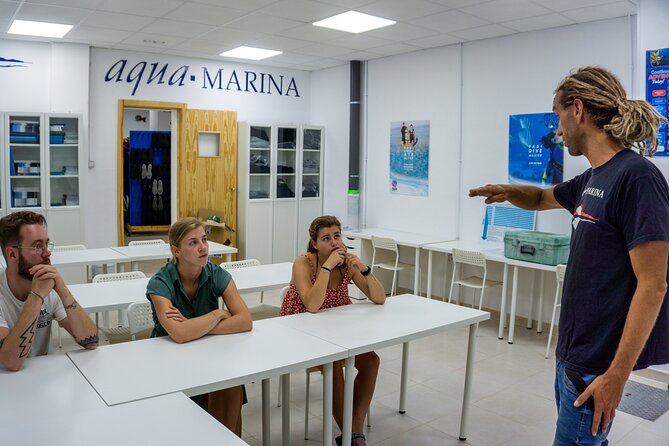
- Three days from theory to certification: Complete online study first, then train in confined water before four open-water sessions.
- Small groups of up to six: The limited group size should allow more direct attention from the instructors.
- A mix of boat and shore sessions: You get two different ways to reach the water, rather than repeating the same setup each day.
- Equipment and certification included: The $504.41 price covers local taxes, scuba equipment, and certification fees.
- Start at 9:00 a.m. in Playa de las Americas: The course begins at Paseo Verode and returns there when finished.
- Hotel pickup can be arranged: Pickup is available on request, but food and drinks are not included.
Turning a Tenerife holiday into a real qualification
This is not a quick try-scuba session. The PADI Open Water course is designed to give you basic qualifications for future recreational scuba, making it a better choice if you want more than a single underwater introduction.
You complete the academic work online before practical training. That format is useful on holiday because you can study in shorter blocks, at your own pace, rather than sitting through hours of theory after arriving in Tenerife. You will need to plan ahead, though. The practical course is not something you can simply book the night before and expect to finish without preparation.
The course is spread over three days. The first day focuses on basic skills in confined water, either a pool or a sheltered bay. This is where you learn how the equipment works and practise the essential techniques in a controlled setting before moving into open water.
That first session matters. New scuba students often need time to adjust to breathing through the regulator, managing buoyancy, and communicating underwater. A pool or calm bay gives you room to focus on those skills without the extra pressure of a full ocean session.
More PADI Courses in Spain
- Try Dive – PADI Discover Scuba Diving in Tenerife
★ 5.0 · 214 reviews - PADI Open Water Diver Course (OWD) – 2.5 days
★ 5.0 · 98 reviews - PADI Discover Scuba Diving Course in Tenerife
★ 4.8 · 64 reviews
Day one: learning the basics in confined water
The first practical day is about control and confidence. You will work with the instructor on the core skills needed for safe recreational scuba, using the supplied equipment rather than bringing your own.
The exact setting may be a pool or sheltered bay. A pool offers a very controlled environment, while a calm bay can give you an early feel for natural water conditions. Since the location is selected by the course provider, you should be ready for either format.
This is also the day when the small group size becomes useful. With a maximum of six students, the instructor has a manageable group to watch while you practise. That does not guarantee one-to-one teaching, but it is a more personal setup than a large class.
You should expect the day to involve concentration as well as physical effort. The course requires a moderate fitness level, and you will spend time handling equipment and working in the water. Wear practical swimwear and come prepared for a full morning and afternoon of instruction, although specific clothing or lunch arrangements are not provided.
Days two and three: four open-water sessions
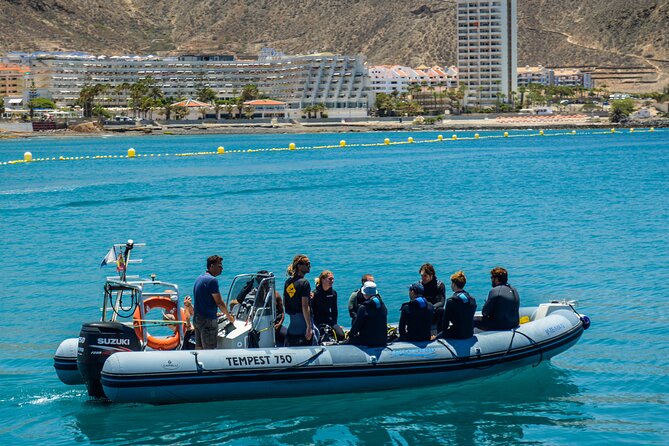
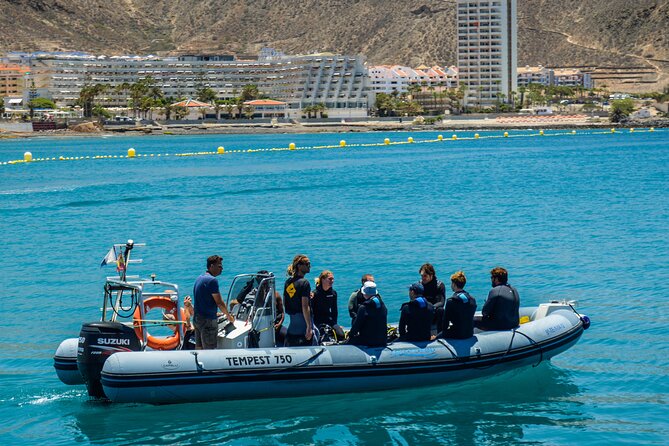
The second and third days take your training into open water. Across these two days, you complete four sessions, using a combination of boat and shore access.
That mix is one of the stronger features of the course. Shore access keeps part of the training simple and direct, while a boat session gives you a different way to reach the underwater area. It also means you are not spending all four sessions in exactly the same surroundings.
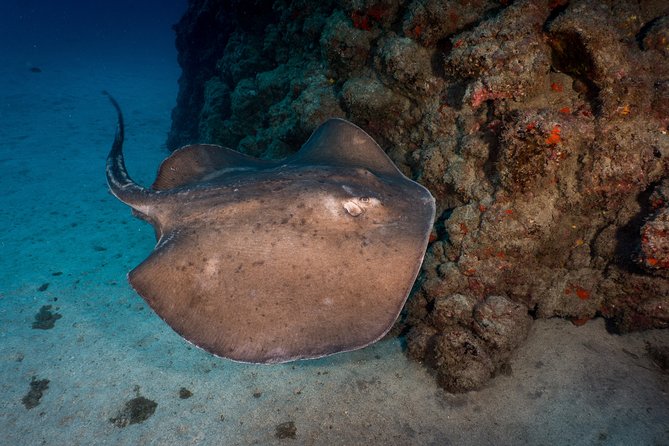
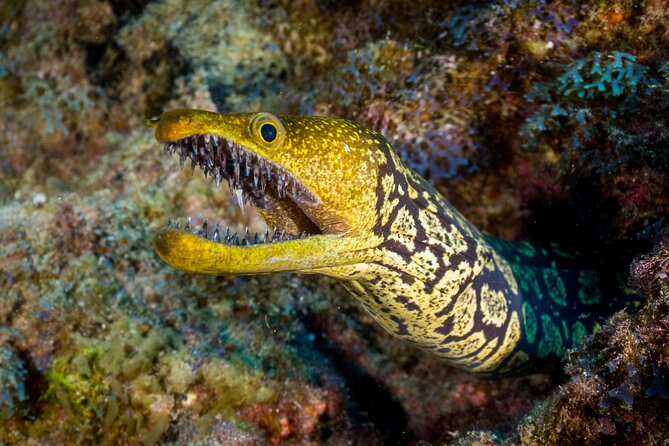
The supplied information does not name specific reefs, beaches, boat routes, or marine animals. That is worth keeping in mind if you are hoping for a particular sight. The appeal here is the chance to build real scuba ability in Tenerife, not a guaranteed wildlife itinerary.
Each day normally lasts five to six hours. That includes travel or preparation time, equipment use, instruction, and the underwater sessions. You should treat these as full course days, not as short add-ons to a beach holiday.
The course is structured to help you apply the skills from the first day. You will have already practised in confined water, so the later sessions are about using that training in a wider setting. The pace may feel demanding for a complete beginner, but the three-day format gives the instructor time to guide you through the progression.
What the small group changes
A maximum of six participants is a useful detail, especially for first-time students. Scuba training involves equipment checks, hand signals, body position, and safety routines. A smaller class gives the instructor fewer people to monitor at once.
It can also make questions easier to ask. If you are unsure about clearing your mask, adjusting your equipment, or managing your breathing, you are less likely to feel lost in a crowd.
Still, six is not a private lesson. Your time in the water will be shared, and the course will follow a set training plan. If you want completely personal instruction, confirm the teaching arrangement before booking.
The qualified instructors are central to the experience. The course is designed for beginners, but you should be willing to listen carefully and follow instructions. Scuba rewards calm, steady habits more than athletic speed.
More PADI Courses in Tenerife
- Basic Diver course for beginners with 1 dive in the Ocean
★ 5.0 · 41 reviews - PADI Scuba Diving Courses in Tenerife: All Specialities Until Divemaster
★ 5.0 · 39 reviews - DISCOVER SCUBA DIVING – First step to your certification
★ 5.0 · 29 reviews - Santa Cruz de Tenerife: PADI Introductory Dive
★ 4.8 · 23 reviews
Equipment, taxes, and certification value
The $504.41 price includes all scuba equipment, local taxes, and certification fees. That makes the cost easier to judge because several common extras are already covered.
For a beginner, included equipment is especially helpful. You do not need to purchase or rent a complete set of gear before knowing how often you will use it. The provider supplies the equipment for the course, so your main task is arriving prepared to learn.
Certification fees are also included. This is important because a lower headline price can become less attractive if you later discover extra charges for the qualification itself. Here, the stated price is closer to the final course cost, apart from food and drinks.
I see the price as reasonable for a three-day qualification course with four open-water sessions and equipment supplied. It is not the cheapest way to spend a morning in the sea, but it offers far more training than a short introductory experience. The value is strongest if you intend to use the certification again after leaving Tenerife.
If you only want to try scuba once, this course may be more commitment and expense than you need. If you have wanted an official entry-level qualification, the included fees and equipment make the package easier to justify.
Meeting at Paseo Verode in Playa de las Americas
The scheduled start time is 9:00 a.m. at Paseo Verode, 38660 Playa de la Américas, Santa Cruz de Tenerife. The activity ends back at the meeting point.
You should allow extra time to reach the start location, especially on the first morning. Arriving early gives you a calmer beginning and leaves room for any check-in or equipment preparation.
Hotel pickup can be arranged on request. Since pickup is not described as automatic, ask for it in advance rather than assuming it is included for every booking. This could be useful if you are staying outside the immediate Playa de las Americas area or do not want to organize local transport with scuba equipment.
The course begins and ends in the same general place, which keeps the daily routine simple. You do not need to arrange a separate return from the water after each session.
Food and drinks are not included. A five-to-six-hour course day is long enough that you should plan your own refreshments, but do not assume you can interrupt the training whenever you wish. Ask the provider about the day’s breaks if you need a firm meal plan.
Health rules and the 24-hour flight gap
Every participant must complete a health questionnaire before entering the water. Some medical conditions, including asthma and heart conditions, may prevent you from taking part.
Do not treat the questionnaire as a formality. If you have a relevant medical history, consult your doctor before booking. It is better to settle the question at home than arrive in Tenerife and find that you cannot train.
You should also avoid flying less than 24 hours after scuba. This rule affects your holiday schedule in a practical way. Do not place the final course session immediately before your flight home. Leave at least a full day between the last underwater session and air travel.
The same advice applies if you are moving between islands by air or catching another flight soon after the course. Build the 24-hour gap into your itinerary from the start.
The moderate fitness requirement is another useful warning. You do not need to be an elite athlete, but you should be comfortable with several hours of instruction and water activity across three days.
What makes the underwater experience worthwhile
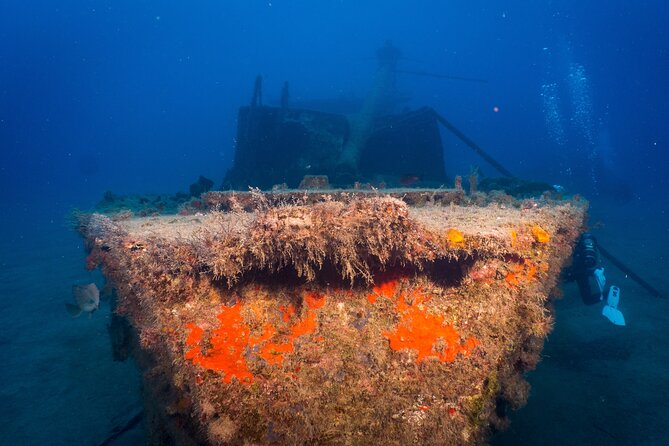
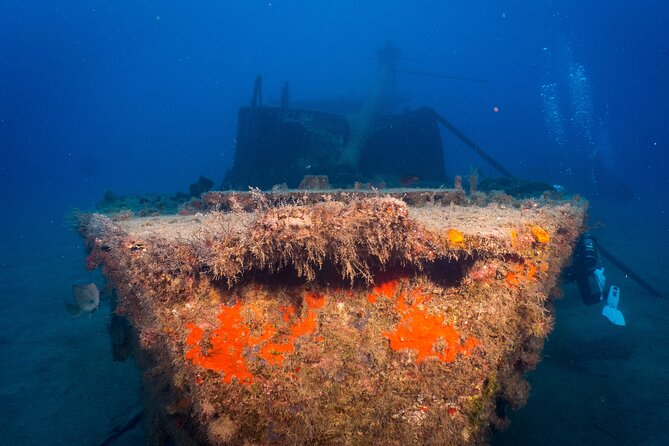
The strongest appeal is the chance to learn skills while seeing Tenerife from below the surface. One participant described gaining scuba skills and seeing beautiful places underwater, which captures the two sides of the course: training and discovery.
You should keep your expectations realistic. The supplied details do not promise a named reef, a particular species, or guaranteed visibility. Conditions can affect the choice between boat and shore access, and the provider may adjust the setting to suit the training.
That lack of a fixed sightseeing list is not necessarily a weakness. For a beginner, learning to control your equipment and stay comfortable underwater is more important than ticking off a famous location. The course is built around safe progress rather than a sightseeing race.
The mix of practical skills and real ocean sessions can also help you decide if scuba is something you want to continue. After three days, you will have a better sense of how the activity feels, what equipment involves, and whether future courses appeal to you.
For anyone hoping to turn a long-held dream into a skill, that is the real payoff. The course does not just give you an hour underwater. It gives you a structured start.
Who should book this course
I would recommend this course to a first-time student who wants formal PADI Open Water certification and has three consecutive days available. It suits someone who is comfortable with a full schedule and willing to complete the online theory before arriving.
It is also a good fit if you want equipment supplied and prefer a small group. The maximum of six is particularly helpful for beginners who want the chance to ask questions and receive direct supervision.
You should think twice if your holiday is tightly packed. Five to six hours per day leaves limited room for other activities, and the health and flight restrictions require careful planning.
This may also be the wrong choice if you only want a casual introduction. A shorter experience would likely require less study and less time, though it would not provide the same qualification.
Advanced Open Water and Rescue Diver courses are also available for people who already hold basic Open Water certification. Those options are for continuing your training, not substitutes for the beginner course.
Booking, cancellation, and practical planning
Confirmation is normally sent at booking. If you book within one day of the scheduled start, confirmation is sent as soon as possible and remains subject to availability.
The course offers free cancellation up to 24 hours before the local start time for a full refund. Cancellations or changes made less than 24 hours before the start are not accepted for a refund, so check your health, flight, and holiday schedule before the final day.
The experience is mobile-ticket friendly, which keeps the booking process simple. Bring the booking details with you, arrive at Paseo Verode for 9:00 a.m., and confirm any requested pickup in advance.
Should you book the Playa de las Americas PADI course?
Book it if you want a proper qualification rather than a one-off underwater outing. The price includes equipment, local taxes, and certification fees, while the three-day structure gives you time to practise before completing four open-water sessions.
I especially like the maximum group size of six, the mix of boat and shore access, and the chance to study theory online before the practical work. Those details make the course manageable for a prepared beginner.
Skip it if you cannot spare three full days, need a guaranteed list of underwater sights, or plan to fly home within 24 hours of the final session. For the right person, though, this is a practical way to turn a Tenerife holiday into a genuine new skill.
FAQ
How long is the PADI Open Water course?
The course lasts approximately three days. The first day covers confined-water skills, followed by four open-water sessions over days two and three.
What time does the course start?
The scheduled start time is 9:00 a.m.
Where does the course meet?
You meet at Paseo Verode, 38660 Playa de la Américas, Santa Cruz de Tenerife, Spain. The activity ends back at the meeting point.
Is hotel pickup available?
Hotel pickup can be arranged on request. It is best to ask about pickup before the course begins.
Is scuba equipment included?
Yes. All scuba equipment is included in the price, along with local taxes and certification fees.
Are food and drinks included?
No. Food and drinks are not included, so you need to plan your own refreshments for the five-to-six-hour course days.
Can I fly immediately after the course?
Flying less than 24 hours after scuba is not recommended. Plan your itinerary so that at least 24 hours separate your final underwater session and your flight.
More Dive Courses in Tenerife
- PADI Open Water Diver Course
★ 5.0 · 20 reviews - PADI Advanced Open Water Diver Course (AOWD) – 2 days
★ 5.0 · 18 reviews - PADI Open Water Course in Costa Adeje
★ 4.5 · 17 reviews - PADI Open Water Course in 3 Days
★ 5.0 · 9 reviews
New dives around Tenerife
- Tenerife: 2 Diving Sessions for Certified Divers★ 4.2 · 7 reviews
- Beginner Scuba Dive with Scubapoint Tenerife in Turtle Area★ 4.7 · 8 reviews
- Scuba Experience in Tenerife with Guide★ 5.0 · 30 reviews
- Try Scuba Diving Puerto Colon★ 5.0 · 2 reviews
- Scuba Diving in Turtle and Ray Area★ 5.0 · 7 reviews
- Scuba Night Dive on Tenerife★ 5.0 · 6 reviews
- First Dive Experience in Tenerife★ 4.5 · 69 reviews
- Scuba Adventure – 2 Guided Dives from Our Boat in Tenerife★ 5.0 · 12 reviews
PADI Courses & Certification, compared.
Tossa de Mar: PADI Discovery Scuba Diving in Costa Brava
Read our review →
Full-Day Beginner Scuba Course with Private Tuition, Racha Yai
Read our review →
Beginner Scuba Diving Lesson with PADI Instructor
Read our review →
Discover Scuba Diving with No Certification in St Thomas
Read our review →
Try Dive – PADI Discover Scuba Diving in Tenerife
Read our review →
Browse the lists this tour appears in