
REVIEW · PUERTO RICO
Experience Scuba Diving / NO certification Needed
Your first breaths underwater happen from shore. This Rincón experience gives you a gentle introduction to scuba without committing to a full certification course. I like the small maximum group of six and the close help from PADI instructors such as Hayden, Roxanne, Chandler, Shane, Robert, and Karla. I also like that the $119 price covers the practical essentials, including the mask, fins, buoyancy jacket, and tanks.
The main drawback is that this is a shore-based outing, so rough surf and weather can affect the experience. You also need to wait at least 12 hours before flying, and the strict no-refund policy makes it wise to choose your date carefully.
Key points to know before booking
- No certification is needed: You learn basic scuba skills on land before entering the water.
- Shore access, not a boat trip: The group enters from the beach, with alternate Rincón locations available within about 10 minutes if conditions are poor.
- Small groups matter: A maximum of six people allows the instructor to stay close, especially useful when someone feels nervous.
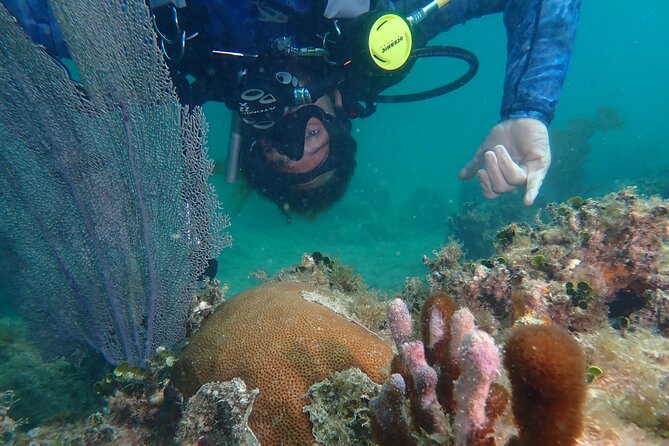
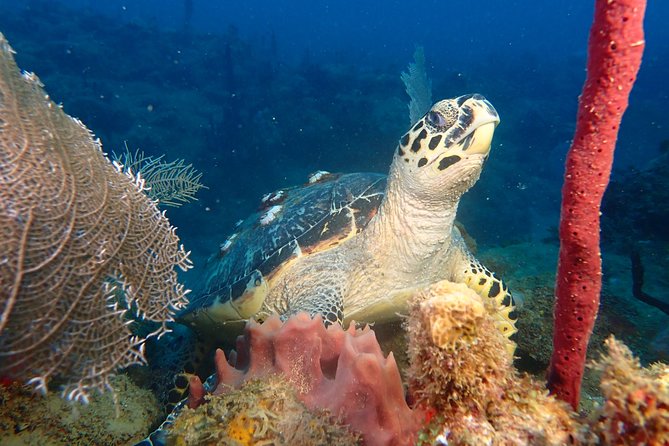
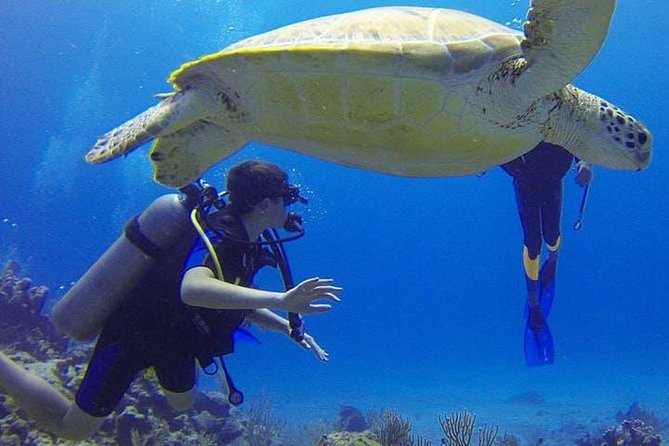
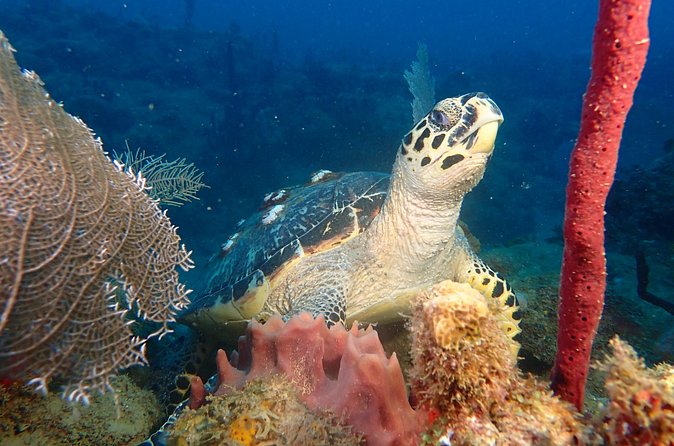
- Marine life is part of the appeal: You may see coral, turtles, clownfish, lionfish, moray eels, and other tropical fish.
- The full basic setup is included: Fins, mask, buoyancy control jacket, tanks, and related equipment are provided.
- Plan around your flight: You cannot fly for at least 12 hours after the session.
A two-and-a-half-hour introduction to scuba
This Rincón activity lasts about two hours and 30 minutes, though your exact time in the water can vary with conditions and group comfort. It begins at 75 Cll 10, Rincón, Puerto Rico, and finishes at the same meeting point.
The experience follows a sensible order. You start at a pavilion with basic scuba theory and an equipment briefing. Then you put the information into practice from the beach, with the instructor nearby throughout the session.
That order is important. Breathing through a regulator for the first time can feel strange, even if you are a strong swimmer or regular snorkeler. The land lesson gives you a chance to hear the instructions, ask questions, and get familiar with the equipment before dealing with waves and salt water.
You should expect a real beginner lesson, not just a quick swim with a tank. The instructors cover the basics of using the equipment and help you get comfortable breathing underwater. Several participants have found the first few minutes intimidating, but patient instruction helped them settle down and continue.
The length also gives the session more substance than a brief trial. One participant described spending a little over an hour underwater, while another said the group had a full hour in the water. The exact time depends on conditions, air supply, comfort, and how quickly the group handles the skills.
More Dive Courses in Puerto Rico:
- Private 2-Tank Dive with PADI Instructor for Certified Divers
★ 5.0 · 18 reviews - Barcelona: PADI Discover Scuba Diving
★ 4.7 · 1,016 reviews - PADI Open Water Diver Course
★ 5.0 · 626 reviews
Why the shore start can be both useful and difficult
There is no boat ride here. You walk into the water from the beach after the briefing, then make your way toward the nearby reef with the instructor.
I see two clear advantages. First, shore access keeps the price at $119, a reasonable rate for a guided introduction that includes equipment and instruction. Second, you avoid a boat trip, which can be tiring or uncomfortable if you are not used to open-water conditions.
The tradeoff is the entry itself. Getting into the water with fins and equipment requires some coordination, and rough waves can make the first minutes harder than the underwater portion. One low-rated account describes trouble getting on fins in rough surf, while the operator says the participant had been instructed to leave a camera behind and follow safety directions.
That disagreement points to a practical rule: listen closely during the beach entry and leave unauthorized cameras behind. When you are balancing in moving water, the instructor needs your full attention. Safety instructions are not optional decoration here.
If the marine conditions are not safe at the main location, the operator may use another site in Rincón within a 10-minute drive. That flexibility is useful, though it does not guarantee calm water or a particular reef.
What you may see around Rincón’s reef
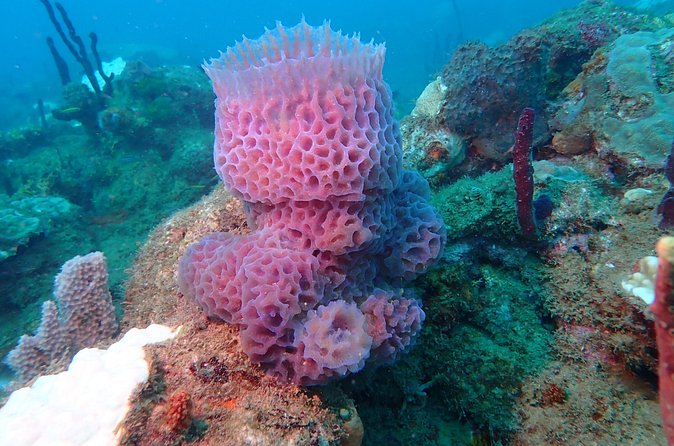
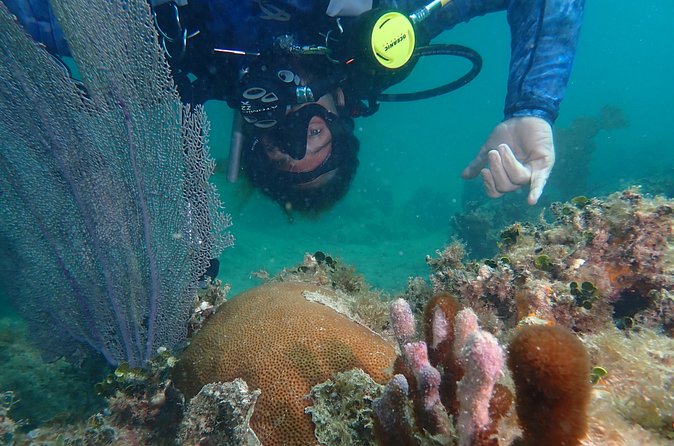
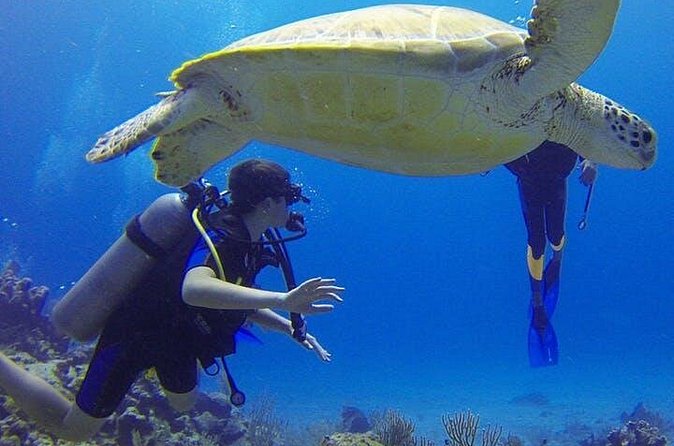
The underwater portion takes you toward a tropical coral reef near the beach. The experience is not advertised as a wildlife guarantee, but the possible sightings include turtles, clownfish, lionfish, moray eels, coral, and other reef fish.
The appeal is less about checking off a famous animal and more about getting a first look at the reef while breathing underwater. A moray eel was spotted during one session, and other participants described seeing plenty of coral and fish during their first underwater outing.
That makes this a good choice if you are curious about scuba but unsure about paying for a certification course. You can find out whether the equipment, breathing, and underwater movement suit you before making a larger commitment.
You should keep your expectations measured. Rincón’s marine conditions change, and visibility and wildlife sightings can vary. A session with rough weather may feel less relaxed, and the reef experience can depend on where the group enters that day.
Still, the format gives you a meaningful taste of the sport. You are not simply floating over the reef for a few minutes. You learn how the equipment works, practice basic skills, and then use those skills in the ocean.
PADI instruction for first-timers
The strongest feature of this experience is the instructor support. The guides stay close and teach at a pace suited to beginners. Hayden received especially warm praise for explaining the equipment clearly, remaining patient, and helping first-time participants feel comfortable.
Chandler also made a strong impression by keeping the session encouraging and calm. Shane was praised for making sure first-time participants understood the basics, while Robert was described as patient when people needed extra time. Karla was noted for detailed instruction and steady attention.
Those details matter more than a polished sales pitch. A new scuba participant may need help with breathing, body position, fins, or simple nerves. A patient instructor can make the difference between a memorable first attempt and a frustrating one.
The group size helps. With no more than six participants, the instructor has a better chance of noticing when someone needs assistance. It is not private instruction, but it is far more personal than being one person in a large crowd.
The experience is also suitable for mixed groups. One person can try it for the first time while another has some prior experience. The instructor still needs to keep the whole group together, so experienced participants should expect a slower, beginner-friendly pace.
A few more dives around Puerto Rico worth comparing
- Beginner Scuba Diving with Turtles and Videos, San Juan
★ 5.0 · 1,743 reviews - Fajardo 2-Tank Scuba Dive for Certified Divers Only
★ 5.0 · 191 reviews - Discover Fajardo: 2-Tank Scuba Diving
★ 4.5 · 91 reviews - Discover Scuba Diving in San Juan: Perfect for First-Time Divers
★ 4.5 · 70 reviews
Equipment, sizes, and what you need to provide
The price includes the core equipment: mask, fins, buoyancy control jacket, tanks, and related scuba gear. You do not need to rent the basic setup separately, which makes the total cost easier to understand.
You do need to provide your shoe size and buoyancy jacket size when booking. The available jacket sizes run from XS through XL, and the operator compares the fit to your usual winter coat size.
Give accurate information before the session. A poor fit can distract you during the beach entry and underwater practice. It is also worth checking the meeting instructions before leaving, since the day may involve a short drive to an alternate Rincón location.
The supplied information does not list a long personal packing list, so keep your preparations simple. Arrive ready for an ocean activity, follow the operator’s instructions about personal items, and do not bring a camera into the water unless the instructor specifically allows it.
The equipment is part of the value, but instruction is just as important. You are paying for a guided introduction, not merely for access to a tank and mask.
Is $119 a fair price?
At $119 per person, this sits in a useful middle ground. It costs more than a basic snorkeling outing, but you receive scuba equipment, a PADI instructor, a structured lesson, and guided time at the reef.
It is also much less of a commitment than a full certification course. If you only want to try scuba once during a Puerto Rico holiday, the shorter format makes financial sense. If you discover that you love it, the session can help you decide if formal certification is worth pursuing.
The maximum of six improves the value. Close instruction is especially important for a first underwater experience, and a small group can make the lesson feel less rushed.
The price becomes less attractive if weather disrupts the day or if you are uncertain about entering the water. This is not a casual activity you can treat like a walk along the beach. You need to be ready to participate, follow safety rules, and accept that ocean conditions may shape the outing.
A 4.6 rating from 104 ratings, with 90 percent recommending the experience, suggests that the overall value is strong. The lower scores point to the issues you should take seriously: possible scheduling problems, equipment preparation, rough conditions, and firm enforcement of safety rules.
Who will enjoy this experience most?
I would choose this for a first-time participant who is comfortable trying a new water activity and wants more than snorkeling. It also suits couples, families with eligible older children, and small groups considering scuba certification.
A 15-year-old successfully completed a non-certified underwater session with an instructor, showing that the experience can work well for teens who meet the operator’s participation requirements. The supplied information says most people can participate, but it does not provide a complete medical or age policy, so ask the operator if your group has a specific concern.
This is less suitable if you dislike salt water, feel very uneasy in waves, or need a guaranteed calm-weather schedule. It may also be a poor fit for anyone with a tight flight plan, since you must wait at least 12 hours before flying after the session.
The activity is not designed for people who want a private, highly customized lesson unless that arrangement is confirmed separately. The group cap is small, but up to six people may still have different comfort levels and learning speeds.
Timing your day in Rincón
The flight restriction deserves attention when planning your Puerto Rico itinerary. You must wait at least 12 hours after the session before boarding an aircraft, so schedule this activity early enough in your trip or well before your departure.
The average booking lead time is about 10 days. That does not mean you must always reserve exactly 10 days ahead, but it suggests that leaving this until the last minute may limit your choices.
The weather policy is fairly clear. The experience requires good weather, and if poor conditions cause cancellation, you are offered another date or a full refund. That is different from changing your mind: the normal policy says the experience is non-refundable and cannot be amended for personal reasons.
I would avoid placing this activity on the final morning of a short visit. Give yourself room for a weather change, an alternate date, or simply a slower day after your first underwater session.
Handling nerves and the first underwater minutes
The beginning can feel awkward. You are learning to breathe through equipment, wear unfamiliar gear, and respond to instructions while standing in the sea.
The best approach is to move slowly and speak up early. If you feel nervous, tell the instructor before entering the water. The guides have repeatedly been praised for patience and for helping people regain confidence instead of rushing them.
You may not feel completely relaxed at once. That is normal for a first attempt, and the point of a guided introductory session is to let you learn safely and decide how far you want to go.
One participant chose not to continue after becoming frightened, while the friend in the same booking had a good time. That is a useful reminder that people in the same group can have very different reactions. You should never feel pressured to continue beyond what you can manage safely.
Should you book the Rincón scuba experience?
I would book it if you want a genuine first taste of scuba, appreciate close instruction, and can keep your schedule flexible around weather. The strongest reasons are the small group, included equipment, shore-based simplicity, and patient instructors who know how to work with beginners.
I would hesitate if you need a guaranteed departure, dislike strict cancellation rules, or plan to fly soon afterward. Rough surf can also make the beach entry challenging, so a calm-weather forecast matters.
For the right person, $119 buys more than an hour in the sea. It buys a practical test of whether scuba suits you, plus a guided look at Rincón’s coral reef and marine life. Follow the safety directions, give yourself time, and this can be one of the more memorable ways to spend a morning in western Puerto Rico.
FAQ
Do I need scuba certification to join?
No. This is a PADI Discover Scuba experience designed for people without certification.
Is the activity conducted from a boat?
No. It is a shore-based activity. You enter the water from the beach after the land briefing.
Where does the experience begin and end?
It begins at 75 Cll 10, Rincón, Puerto Rico, 00677, and finishes back at the same meeting point.
How long does the experience last?
The listed duration is approximately two hours and 30 minutes.
What equipment is included?
The package includes the basic scuba equipment, including fins, mask, buoyancy control jacket, and tanks.
How soon can I fly after the session?
You must wait at least 12 hours after the activity before flying.
New dives around Puerto Rico
- Get SCUBA Certified at San Juan★ 5.0 · 35 reviews
- Discover Scuba Diving in San Juan: Perfect for First-Time Divers★ 4.5 · 70 reviews
- Discover Scuba Diving in San Juan★ 5.0 · 33 reviews
- Scuba Tour for Certified Divers in San Juan★ 5.0 · 31 reviews
- Guided Shore Diving Tour★ 5.0 · 53 reviews
- OCTOPUS DIVING (hookah diving) NO Experience Needed★ 4.0 · 9 reviews
- Discover Scuba Diving★ 5.0 · 66 reviews
- Beginner Scuba Diving Guided Tour – No Experience Required★ 4.5 · 67 reviews
PADI Courses & Certification, compared.
Tossa de Mar: PADI Discovery Scuba Diving in Costa Brava
Read our review →
Full-Day Beginner Scuba Course with Private Tuition, Racha Yai
Read our review →
Beginner Scuba Diving Lesson with PADI Instructor
Read our review →
Discover Scuba Diving with No Certification in St Thomas
Read our review →
Try Dive – PADI Discover Scuba Diving in Tenerife
Read our review →
Browse the lists this tour appears in