
REVIEW · JAPAN
Deep Dive: Osaka Food Markets from Local to Luxurious!
Come hungry for ideas, not included meals. This four-hour Osaka food-market tour links polished department-store food halls, local markets, Korea Town, Kuromon Market, and Namba. I like its wide cultural range and the way guides such as Ferdinand, Kevin, Thomas, Lito, and Damian adjust the outing to your interests. I also like that it teaches you how to shop and order on your own, rather than simply leading you from one snack to another.
The main catch is easy to miss: food, drinks, and tastings are not included in the $91 price. You can buy snacks and meals along the way, but you should bring extra yen and treat this as a guided market tour with food opportunities, not an all-inclusive eating tour. Expect a moderate amount of walking, plus about 330 yen for transportation during the tour.
Key points to know before you book
- Seven Osaka stops in about four hours: The route can include Takashimaya, Pulala Tenma, Tenjinbashi-suji, Tsuruhashi Korea Town, Kuromon Market, Doguyasuji, and Namba.
- Local shopping comes before famous sights: You see ordinary wet markets and supermarkets, not only tourist favorites.
- Kuromon Market is worth seeing, but costs more: The quality and presentation are good, while prices can be higher than elsewhere.
- Your guide shapes the experience: Ferdinand, Kevin, Thomas, Lito, Damian, Alejandro, and Oshi have been praised for cultural explanations, translation help, and flexibility.
- You pay for food separately: Snacks, restaurant stops, refreshments, and souvenirs are your responsibility.
- The route ends in Dotonbori: The finish at Ebisu Bridge puts you right in the heart of Osaka’s Minami district.
What this Osaka market tour is really about
Osaka is famous for eating well, but this experience is less about rushing between famous dishes and more about understanding how food moves through the city. You see ingredients, shopping habits, kitchen tools, neighborhood markets, and the cultural ties between Japanese and Korean communities.
That makes the tour useful early in your Osaka stay. You leave with a better sense of where locals shop, what different foods look like before they reach a restaurant, and how to approach markets without guessing at every sign. Guides also explain how to order and can help with translation when you want to buy something.
The route begins near Temma Station and ends at Ebisu Bridge in Dotonbori. That one-way design is practical. You do not spend the final part of the morning or afternoon retracing your steps, and you finish near one of Osaka’s best-known entertainment areas.
The experience is private, so only your group participates. That matters if you want to pause for photos, ask many questions, or spend extra time comparing foods. Past outings have also been adapted for children interested in mochi and gaming, though young children need to be accompanied by an adult and the walking can be tiring.
A few more dives around Japan worth comparing
- Dive into Tsukiji Fish Market Walking Friendly Food Tour
★ 5.0 · 3 reviews - Deep Dive: Osaka Food Markets from Local to Luxurious!
★ 5.0 · 2 reviews - PRIVATE Istanbul Food Tour – 10 Tastings including Raki & Padi
★ 5.0 · 75 reviews
Takashimaya’s depachika shows Osaka at its polished best
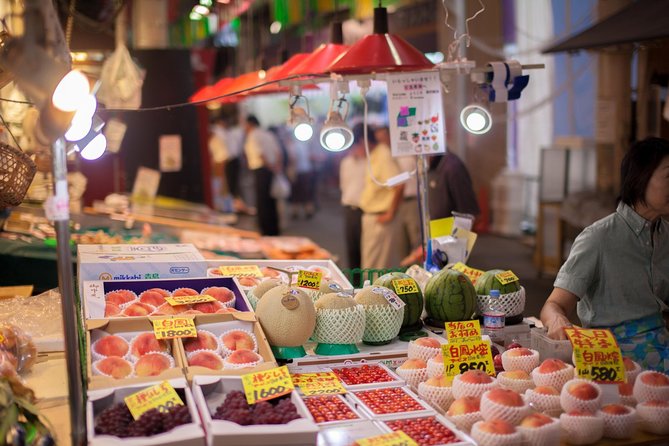
The first stop is the basement food hall at Takashimaya Osaka Store. In Japan, these department-store food halls are called depachika, and they offer a neat introduction to the country’s food presentation.
You can expect displays of raw ingredients, Japanese sweets, prepared foods, Western-style items, and carefully arranged gifts. It is less rough-and-ready than a street market, but that contrast is the point. Your guide can explain how department-store food halls fit into Japanese shopping culture and why presentation matters so much.
I like starting here because you see the luxurious end of the food spectrum before moving to more ordinary markets. It also gives you a chance to notice the difference in pricing, packaging, and service. The scheduled visit is about 20 minutes, so you will not have unlimited time to shop.
Do not assume that the attractive displays are part of the tour price. Food and drinks are not included. If you want to buy a sweet or prepared item, plan to pay separately.
Pulala Tenma brings you closer to everyday shopping
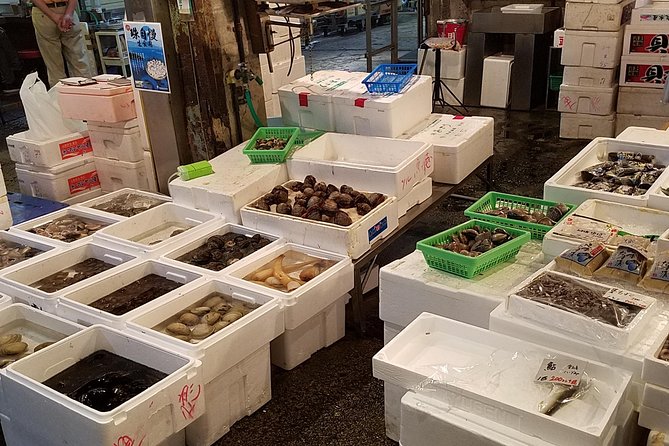
Pulala Tenma offers a more local market experience. Seafood, meat, vegetables, and other ingredients are displayed for everyday shoppers, giving you a useful look at what Osaka households might buy and cook.
This is where the tour becomes more than a sightseeing walk. A good guide can connect the ingredients to Japanese dishes and explain how the different pieces of a meal fit together. The stop lasts about 30 minutes, long enough for questions but not for a full shopping trip.
The setting is less designed for visitors than Kuromon Market. That can make it more interesting, but it also means you should follow your guide’s advice about where to pause and what to photograph. You are seeing a working market, not a staged attraction.
If you are hoping to eat immediately, this is one of the places where expectations matter. You might find something to purchase, but the tour does not promise included samples or a meal. Bring cash for anything you want to try.
Tenjinbashi-suji explains Osaka beyond the food stalls
Tenjinbashi-suji Shopping Street is the longest covered shopping street in Japan, and the tour spends about 40 minutes exploring its role in modern Osaka. This is a useful stop because it connects food shopping with daily life, small businesses, and the city’s long commercial tradition.
The covered arcade gives you a chance to see more than restaurants. You may encounter shops selling household goods, clothing, food, and other practical items. The guide also takes you into a very Osaka-style supermarket and explains how local shopping differs from the polished department-store experience.
I especially like this part for first-time visitors. Famous food streets can make Osaka seem like one giant dining district, but a supermarket tells you much more about ordinary habits. You can see packaged foods, ingredients, and prices in a setting used by local residents.
The stop is also a good place to buy something for later, though purchases are extra. The tour’s value here comes from interpretation. Without a guide, you might walk through the arcade and see plenty of products without understanding what makes the area important.
Same coastline, a very different dive:
- Naha, Okinawa: Kerama Islands Full-Day Intro-Diving Trip
★ 4.6 · 203 reviews - Okinawa:Naha:Kerama Island Experience 1Dive and Snorkeling
★ 4.4 · 99 reviews - Blue Cave Area Experience Diving!Free feeding & photo images Chinese guide available!1 group with a dedicated instructor
★ 4.5 · 89 reviews - From Naha Scuba Diving Trip in Kerama(for certified divers)
★ 5.0 · 46 reviews
Tsuruhashi Korea Town adds another side of Osaka
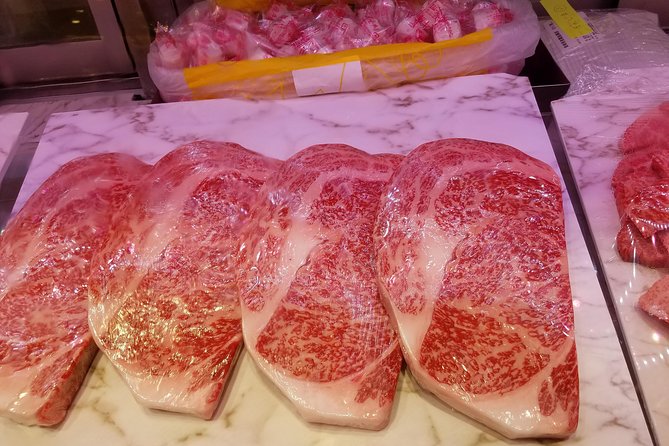
Osaka Tsuruhashi Ichiba introduces you to one of the city’s most interesting Korean communities. Food is a major part of the visit, but the area also includes clothing and other goods that reflect Korean cultural influence in Osaka.
This stop gives the tour a wider frame. Japanese food culture did not develop in isolation, and the guide can explain some of the Japanese, Chinese, and Korean connections that shape what you see and eat in the city. One guide, Kevin, was praised for explaining these cultural links in detail, while Ferdinand was appreciated for connecting foods with their development in Japan.
You might find a snack to buy here, and this can be a good moment to ask your guide for help choosing or ordering. Translation assistance is available when you want to try something but do not know what to say.
The scheduled time is about 30 minutes. That is enough for a guided introduction, but not enough to explore every lane or browse every shop. If Korean food and Osaka’s immigrant history are high priorities for you, this may be one of the most meaningful sections of the route.
Kuromon Market is famous, photogenic, and pricier
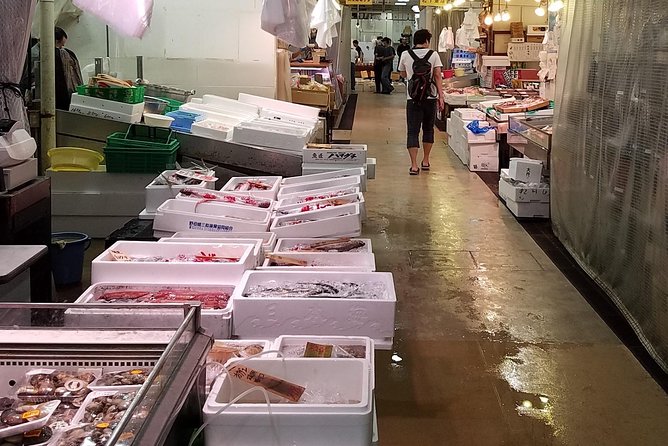
Kuromon Market is the best-known visitor stop on the route. It has an excellent range of food displays and a strong visual appeal, from seafood and produce to prepared items and other specialties.
The guide gives you context for the market while helping you understand what is worth looking at. The quality is generally good, but prices can be higher here than at less famous markets. That is important because Kuromon is often treated as if every purchase is automatically a bargain. It is not.
You have about 25 minutes at this stop. That is enough to look around and buy a small item, but you may need to move efficiently if you want to eat. The tour does not cover the cost of food, so a little advance planning helps. Decide if you want one substantial purchase or several small tastes rather than trying to sample everything.
Some participants have been disappointed when they expected formal tastings and found that they needed to buy their own food. I consider this the clearest point to understand before booking: the tour takes you to food markets and creates opportunities to eat, but it does not provide an included tasting menu.
Doguyasuji is a treat for cooks and curious shoppers
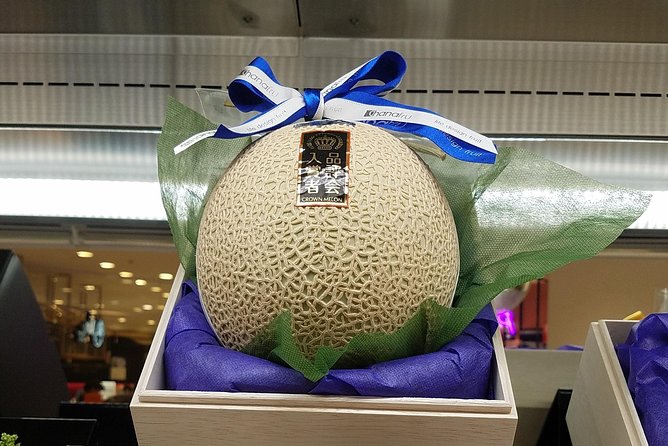
Sennichimae Doguyasuji Shopping Street shifts the focus from ingredients to the tools used to prepare and serve food. You can browse Japanese kitchen knives, ceramics, serving dishes, lacquer chopsticks, tea cups, and the famous wax models used to display restaurant dishes.
The stop lasts about 25 minutes. It is short, but it adds a practical shopping angle to the day. If you have wanted a Japanese cooking knife or distinctive tableware, this is the place to ask your guide about what you are seeing.
A knife purchase requires more thought than buying a snack. Ask questions about the item, and remember that you are responsible for your own shopping and souvenirs. The guide can help with language and local context, but the tour provider does not include purchases.
Even if you do not buy anything, the wax food models are fun to inspect. They show how restaurants communicate a dish to customers before anyone sits down to eat. This stop also helps explain why Osaka’s food culture depends on a whole network of cooks, sellers, tools, and displays.
Namba and Dotonbori provide a lively finish
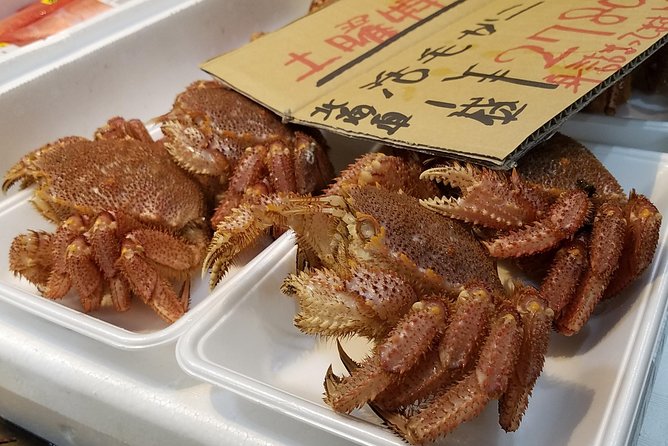
With time remaining, the guide explores parts of Minami, the Namba and Dotonbori area. The tour ends at Ebisu Bridge, a convenient finish for an evening meal or further sightseeing.
This final section is less structured than the market visits. It gives the guide room to point out notable sights or respond to your interests. If you are still hungry, Dotonbori offers plenty of places to continue eating, though those costs are also your responsibility.
Ending here works well because you finish in a part of Osaka that many people visit on their own anyway. After spending the day learning how the city shops and eats, the bright commercial center makes more sense. You can also ask your guide for suggestions before going your separate ways.
Guides make or break the four-hour route
The strongest part of this experience is the guide. Names praised for different strengths include Ferdinand, Kevin, Thomas, Lito, Damian, Alejandro, and Oshi.
Ferdinand has been especially effective at combining culinary training with explanations of ingredients, dishes, knives, and food history. Kevin has been valued for clear communication and explanations of Japanese, Chinese, and Korean culture. Thomas has adapted the outing for children, while Lito has been flexible about interests and timing.
Damian has been described as patient with shopping and photo stops. Alejandro has been appreciated for strong English and help with Japanese customs. Oshi has guided visitors through the food scene with energy and warmth, including a recommended breakfast stop and a cool drink at the end of a hot day.
Your exact guide will shape the experience, so it is best to arrive ready to ask questions. This is not a silent procession through markets. The more curious you are, the more useful the four hours become.
The $91 price requires a clear calculation
At $91 per person, this is not the cheapest way to see Osaka markets. You also pay about 330 yen per adult for transportation during the tour, and you buy your own snacks, meals, drinks, and souvenirs.
The value comes from access to several very different areas in one organized route. If you visited all these places alone, you would need to plan the sequence, understand local transport, identify what you were seeing, and manage language questions. The guide saves time and adds context.
Still, the price will feel high if you mainly want to eat. A self-guided visit to Tenjinbashi-suji, Kuromon, or Dotonbori can cost less, especially if you are comfortable navigating Osaka. I would book this for interpretation, cultural context, and the range of markets, not for included food.
The experience has a 4.8 rating and a 97 percent recommendation rate from 31 ratings. Those figures fit the main pattern of the experience: the guides receive the strongest praise, while the main criticism concerns the price and the confusion over food samples.
Walking, timing, and practical preparation
The tour lasts about four hours and offers morning or afternoon departures. The moderate walking is worth taking seriously, especially in hot weather or if you are bringing young children.
Wear comfortable shoes and avoid arriving hungry without a plan. You may have chances to buy breakfast, snacks, or a meal, but none is guaranteed as part of the price. Carry enough yen for food and transport, and leave room in your budget for a purchase that catches your eye.
The meeting point is the McDonald’s in front of Temma Station at 4-chome-12-1 Tenjinbashi, Kita Ward. The tour ends at Ebisu Bridge in Dotonbori, so arrange your evening plans around that location rather than expecting to return to the starting point.
Pickup is offered, and the activity is near public transportation. Confirmation is provided at booking. Most people can participate, but children must be with an adult, and the amount of walking may not suit every young child.
Free cancellation is available if you cancel at least 24 hours before the start time. Changes or cancellations inside that window are not accepted for a refund.
Who should book this experience
I would choose this tour if you want to understand Osaka’s food culture instead of simply collecting restaurant names. It suits first-time visitors, curious cooks, people interested in Japanese and Korean food connections, and anyone who wants a local guide to explain what markets are showing.
It is also a good choice for private groups that want a flexible pace. Families may appreciate the chance to tailor the outing, though the walking and four-hour duration require some stamina.
I would skip it if your main goal is an included feast, a short tasting crawl, or a bargain-priced activity. The food budget is separate, and Kuromon Market in particular can be expensive. If you accept that limitation, the tour offers a useful, broad introduction to how Osaka buys, prepares, displays, and enjoys food.
FAQ
How long does the Osaka market tour last?
The tour lasts approximately four hours.
What locations can the tour visit?
The route can include Takashimaya Osaka Store, Pulala Tenma, Tenjinbashi-suji Shopping Street, Osaka Tsuruhashi Ichiba, Kuromon Market, Sennichimae Doguyasuji Shopping Street, and Minami in Namba.
Are food samples included in the price?
No. Samples, food items, refreshments, snacks, and souvenirs are not included. You are responsible for purchasing anything you want to eat or drink.
Does the tour include transportation?
Transportation during the tour is not included. The listed cost is about 330 yen per adult.
Is the tour private?
Yes. Only your group participates in the activity.
Is pickup available?
Pickup is offered, but the stated starting point is the McDonald’s in front of Temma Station.
Where does the tour end?
The tour ends at Ebisu Bridge in Dotonbori.
Can I choose a morning or afternoon departure?
Yes. The tour offers a choice of morning or afternoon timing.
Is the tour suitable for children?
Children can participate, but they must be accompanied by an adult. You should also consider the moderate amount of walking.
What is the cancellation policy?
You can receive a full refund if you cancel at least 24 hours before the experience start time. Cancellations or changes made less than 24 hours before the start are not accepted for a refund.
Should you book this Osaka market tour?
Book it if you want a guide to explain Osaka’s food system, neighborhoods, and cultural connections while taking you through several contrasting markets. Skip it if you want a meal included or prefer to explore independently.
For the right visitor, the best payoff is not one snack. It is leaving Osaka able to recognize a depachika, compare a local market with Kuromon, navigate a supermarket, understand Tsuruhashi’s Korean influence, and order with more confidence. That is a useful souvenir, even after the last bite is gone.
New dives around Japan
- Dive into Tsukiji Fish Market Walking Friendly Food Tour★ 5.0 · 3 reviews
- Shared Scuba Diving Trip in Kushimoto★ 5.0 · 2 reviews
- Tokyo Ikebukuro Morning Tour Dive into Japanese Culture★ 5.0 · 5 reviews
- EDOCCO Tea House–A Quick Dive into Japanese Traditional Culture★ 5.0 · 34 reviews
- Tokyo Ikebukuro Evening Tour Dive into Japanese culture★ 5.0 · 15 reviews
- Deep Dive into the World of Daruma Dolls★ 5.0 · 4 reviews
- Boat entry diving at the Blue Cave in Onna Village, Okinawa!★ 5.0 · 4 reviews
- Blue Cave Introductory Dive–Private Guide, Boat Tour&Free Photos★ 5.0 · 34 reviews
Scuba Diving, compared.

Great Barrier Reef Snorkeling and Diving Cruise from Cairns
Read our review →
First-Time Scuba Diving in Honolulu + Free Videos
Read our review →

Silfra: Diving Between Tectonic Plates – Meet on Location
Read our review →
Ocean Freedom Great Barrier Reef Luxury Snorkel and Dive Cruise
Read our review →
Beginner Scuba Diving with Turtles and Videos, San Juan
Read our review →
Tenerife: Your First Scuba Diving Experience in Turtle Area
Read our review →
Browse the lists this tour appears in