
REVIEW · JAPAN
Dive into Tsukiji Fish Market Walking Friendly Food Tour
Fresh fish, old Tokyo, and plenty to eat. This four-hour tour makes Tsukiji easier to understand, pairing the Outer Market’s 400 shops with Japanese food traditions and nearby landmarks. I especially like the small group size, capped at 10, and the generous tasting list, which includes sushi, sashimi, grilled tuna, oysters, salmon, and tamagoyaki. The main consideration is the $173 price, which is fair only if you value both the food and the guiding.
I also like that the route does more than hop between snack stalls. You visit Tsukiji Hongwanji Temple, Kachidoki Bridge, and Namiyoke Inari Jinja, so the market has a setting and a story rather than becoming a four-hour eating stop. The tour is conducted in English or Japanese, and guides such as Amber and Akira have been praised for being flexible, thoughtful, and good at explaining what you are seeing.
Key points to know before booking
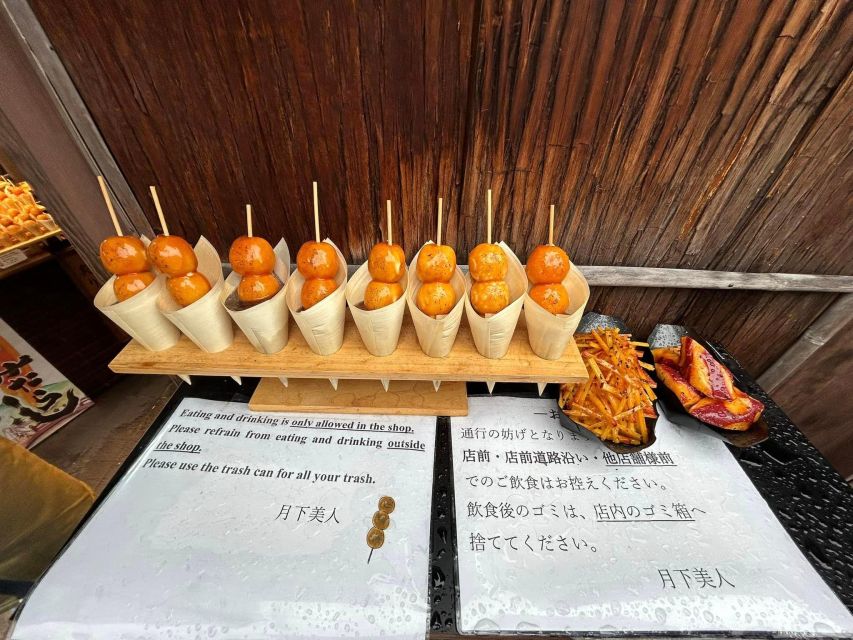
- The food is substantial: Tastings include sushi, fresh sashimi, grilled tuna and salmon, grilled oysters, tamagoyaki, desserts, snacks, soft drinks, and water.
- The group stays small: A maximum of 10 people gives the guide a better chance to answer questions and adjust the pace.
- The route begins at a temple: You meet in front of Tsukiji Hongwanji, just 50 meters from Tsukiji Station’s Hibiya Line Exit A1.
- The market is the main event: About 400 shops sell seafood, fresh foods, and kitchen utensils in the Outer Market.
- The tour adds local landmarks: Kachidoki Bridge and Namiyoke Inari Jinja give you more than a food crawl.
- The price needs some thought: At $173 per person, this suits anyone seeking a guided introduction rather than a quick, cheap market breakfast.
Why Tsukiji still matters after the wholesale market moved
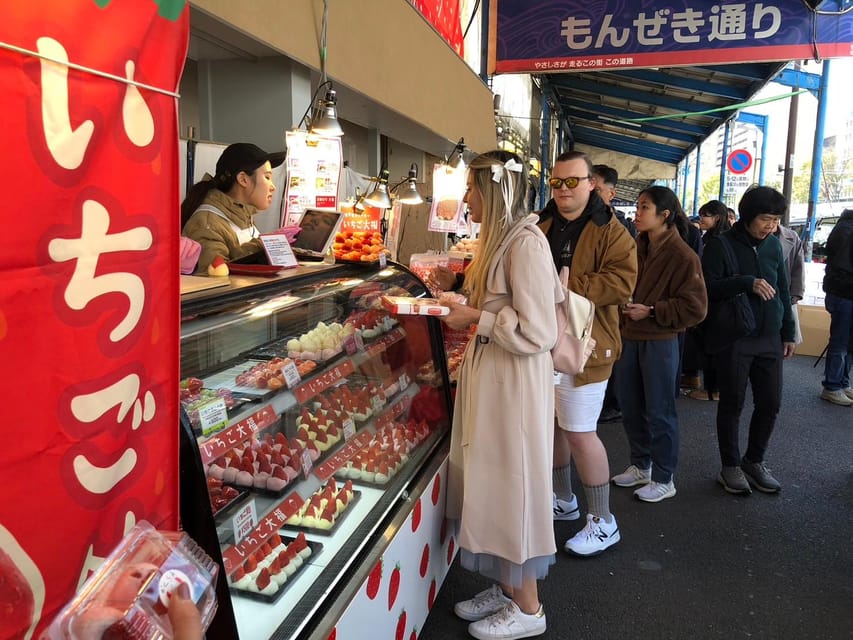
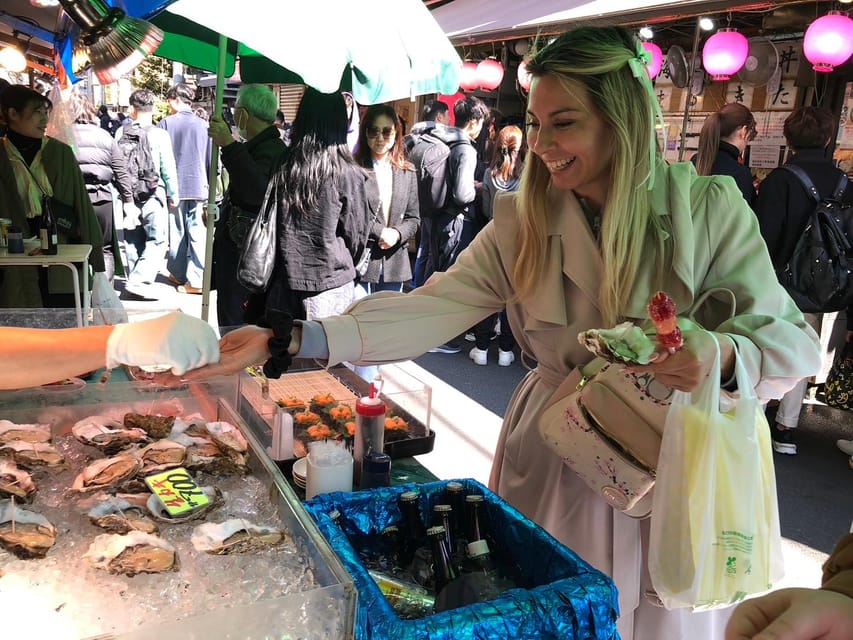
Tsukiji is often called a fish market, but that label is too narrow. The Outer Market is a network of roughly 400 shops lining the streets, selling seafood, fresh foods, cooking tools, and other supplies used in Japanese kitchens.
The famous wholesale auction activity moved away from Tsukiji, but the Outer Market remains a useful place to see Tokyo’s food culture up close. You are not simply looking at seafood behind glass. You are walking through a working food district where chefs shop for ingredients and where kitchen equipment is part of the scene.
That working quality is important. A market visit can otherwise feel like a row of tourist snacks. Here, the guide helps connect what you eat with Japanese cooking and the history of Tokyo. The result is more useful than wandering alone and wondering which stall is worth your time.
You should still set your expectations correctly. This is not a quiet museum visit. The streets can feel crowded, and shopping areas may be busy. The four-hour length gives you time to look around, but you will spend much of it on your feet.
A few more dives around Japan worth comparing
- Deep Dive: Osaka Food Markets from Local to Luxurious!
★ 5.0 · 31 reviews - Deep Dive: Osaka Food Markets from Local to Luxurious!
★ 5.0 · 2 reviews - PRIVATE Istanbul Food Tour – 10 Tastings including Raki & Padi
★ 5.0 · 75 reviews
Starting at Tsukiji Hongwanji Temple
The meeting point is in front of Tsukiji Hongwanji Temple. From Tsukiji Station on the Hibiya Line, take Exit A1 and turn left. The entrance is about 50 meters from the station, so this is a simple meeting point even if you are not familiar with the neighborhood.
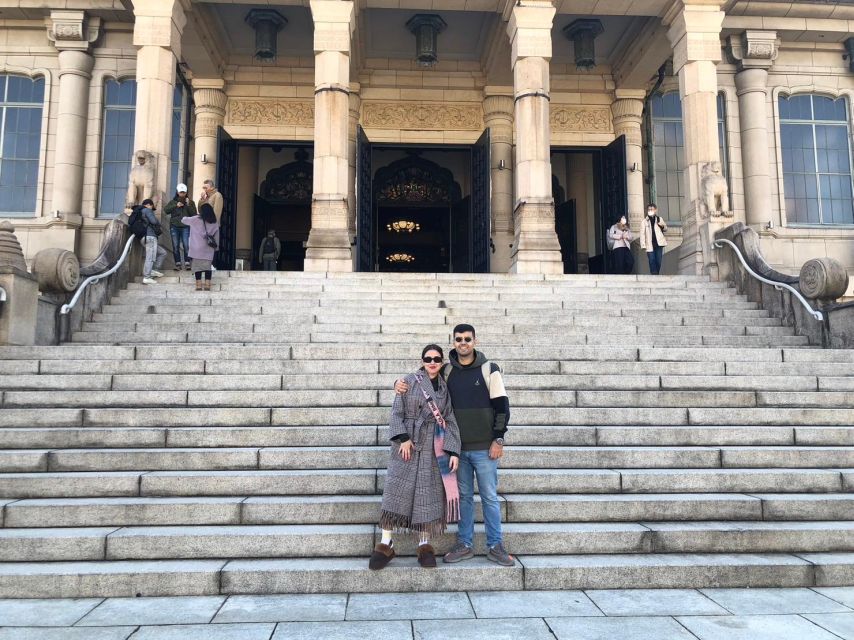
The temple receives a 30-minute guided visit at the start. That is a smart choice. Beginning here gives you a calm reference point before entering the market, and it shows that Tsukiji is not only about seafood.
Your guide can provide context about the temple and its place in the neighborhood. The tour information does not specify every feature covered during the temple walk, so you should treat this as a guided introduction rather than a guaranteed full architectural tour.
The temple stop also helps set the rhythm. You begin with sightseeing, move into food and shopping, and later return to historical and waterfront sights. I prefer this structure to a tour that places every major sight at the end, when your attention may be focused entirely on your next snack.
Eating through the Outer Market
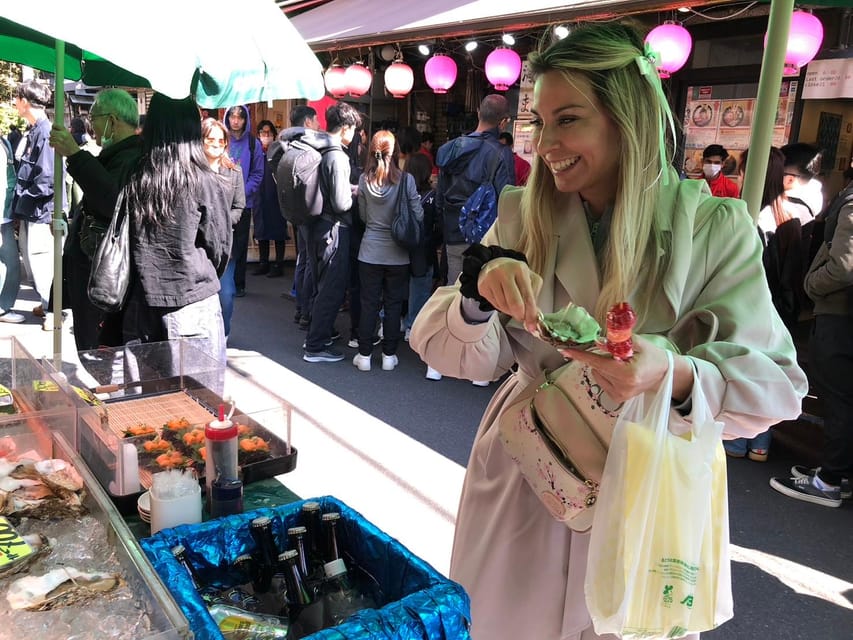
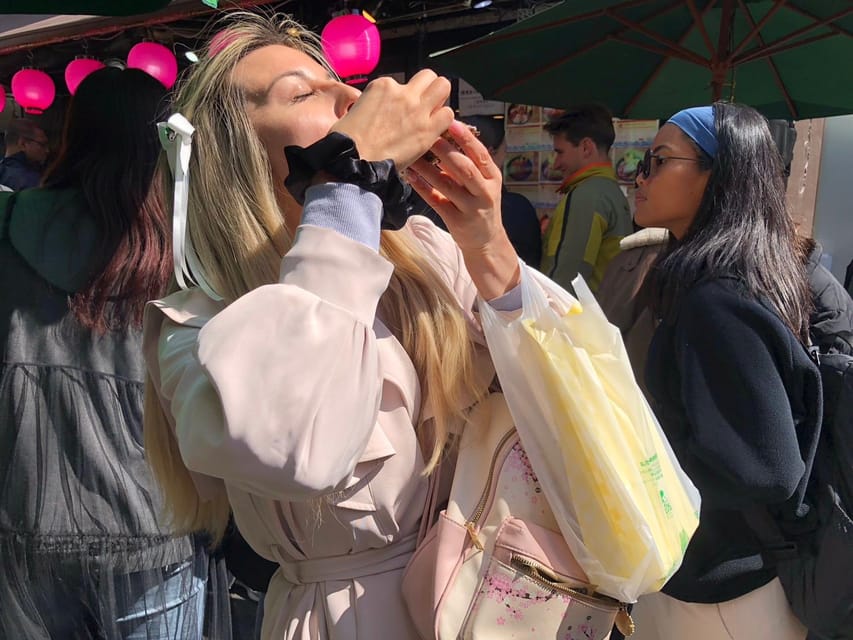
The first market segment includes about 30 minutes of guided touring, followed by another 30 minutes set aside for shopping. Together, these portions give you an hour to see how Tsukiji works and to sample its food.
The included tastings are the strongest part of the package:
- Sushi
- Fresh sashimi
- Grilled tuna
- Grilled salmon
- Grilled oysters
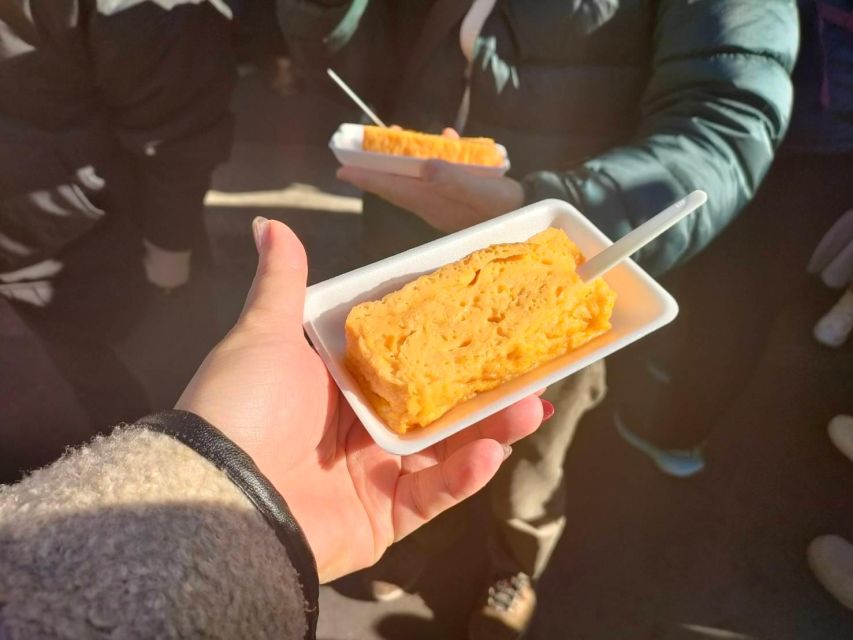
- Tamagoyaki
- Desserts and snacks
- Two soft drinks and water
That list makes the $173 price easier to assess. You are not paying only for a walk through the market. You are also paying for a series of food stops, a professional guide, and help making sense of unfamiliar dishes.
The variety matters. Sushi and sashimi show seafood in a relatively direct form, while grilled tuna, salmon, and oysters offer cooked options. Tamagoyaki, the sweet rolled omelet often found in Japanese meals and market stalls, adds a different texture and flavor.
The tour also avoids making seafood the only subject. Desserts and snacks give you a change of pace, and the drinks are useful during a four-hour walk. Alcohol is not included, though you can buy alcoholic drinks separately.
The market time is split between explanation and shopping. During the guided section, you can ask questions and learn what you are seeing. During the shopping section, you have more room to look at foods and kitchen utensils without treating every moment as a formal stop.
The exact amount you personally eat at each location may vary. Food tours often depend on shop operations and timing, and the supplied details do not promise a fixed number of individual pieces or portions. Still, the stated food list suggests a full tasting experience rather than a token sample.
What the small group changes
The group limit is 10 people. That is large enough to have some company but small enough for a guide to keep the group together in narrow market streets.
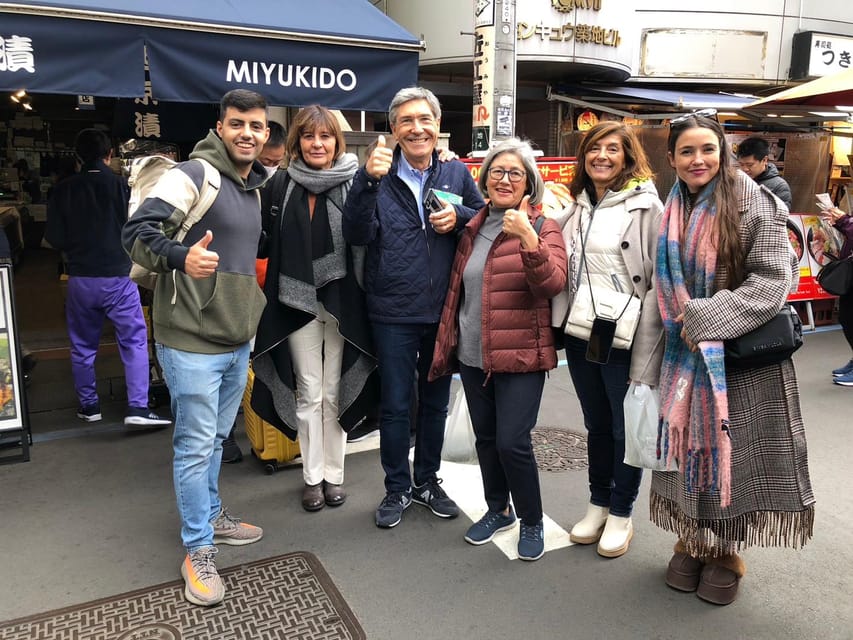
I like this format for Tsukiji because a large group would make it harder to hear explanations and harder to stop at food counters. A smaller group also gives you a better chance to ask about ingredients, preparation, or the history behind a sight.
The guide quality matters just as much as the group size. Amber was praised for being thoughtful and flexible with a teenage participant, which suggests a willingness to adjust when a family’s needs change. Akira was praised for explaining the context behind the food and sights, not simply pointing out what to eat.
Those names do not guarantee who will lead your tour. Guide assignments can change. But they show the kind of service this experience aims for: personal attention, flexibility, and clear explanations.
Same coastline, a very different dive:
- Naha, Okinawa: Kerama Islands Full-Day Intro-Diving Trip
★ 4.6 · 203 reviews - Okinawa:Naha:Kerama Island Experience 1Dive and Snorkeling
★ 4.4 · 99 reviews - Blue Cave Area Experience Diving!Free feeding & photo images Chinese guide available!1 group with a dedicated instructor
★ 4.5 · 89 reviews - From Naha Scuba Diving Trip in Kerama(for certified divers)
★ 5.0 · 46 reviews
Kachidoki Bridge and the waterfront pause
After the market, the tour goes to Kachidoki Bridge for about 30 minutes of guided sightseeing. This changes the setting from crowded food lanes to a major Tokyo crossing and waterfront view.
The bridge gives the route a wider sense of place. After spending time among stalls, signs, seafood, and cooking tools, you get a chance to look outward and understand Tsukiji as part of central Tokyo.
The provided details do not specify whether the guide gives a full engineering or wartime history of the bridge, so do not book the tour expecting a specialist bridge lecture. Think of this as a useful neighborhood stop that breaks up the eating and walking.
The timing is also practical. Food tours can become tiring when every stop involves standing at a counter. A sightseeing pause gives you a different kind of attention and helps the four-hour route feel varied.
Namiyoke Inari Jinja and the return to the temple
The final listed stop is Namiyoke Inari Jinja, with about 30 minutes of guided touring. The route then returns to Tsukiji Hongwanji Temple.
This shrine connects naturally with the market district. Its presence adds another layer to Tsukiji’s food culture, showing that the neighborhood includes religious sites as well as shops and restaurants. Your guide can help explain what you are looking at and why it belongs in a market-focused walk.
The return to the temple makes the route easy to follow. You start and finish in the same general place rather than ending at an unrelated station or leaving you to find your own way back.
The itinerary totals four hours, but it includes walking, food, sightseeing, and shopping. Wear comfortable shoes and leave room for a steady pace. The information provided does not state a separate accessibility plan, so anyone with mobility concerns should ask the operator before booking.
Is $173 a good value?
At $173 per person, this is a premium food tour. You can visit the Outer Market independently for much less if your goal is simply to buy one breakfast item and look around.
The value comes from the combination of food, interpretation, and structure. You receive a four-hour guided experience, a substantial list of tastings, two soft drinks and water, visits to several important sights, and a small-group setting.
I would consider the cost reasonable for someone visiting Tokyo for a short stay, especially if choosing food stalls alone feels uncertain. A guide can save you from spending your limited time guessing what to order or missing the connection between the market and the surrounding temples and bridge.
The price is harder to justify if you are mainly interested in shopping or if you want a quick, casual meal. You may also prefer an independent visit if you already know Tsukiji well and do not need explanations.
The reserve-now, pay-later option gives you some planning flexibility, and cancellation is free up to 24 hours in advance for a full refund. Those terms are useful when Tokyo plans are still changing.
Who will enjoy this tour most?
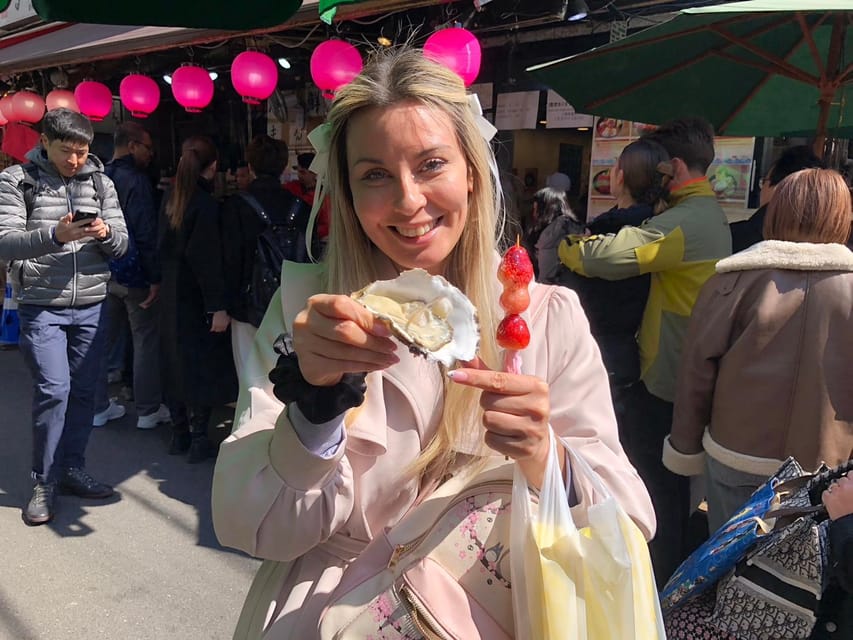
This tour suits first-time Tokyo visitors who want food and context in the same morning or afternoon. It is also a good fit for curious eaters who want to try sashimi, grilled seafood, tamagoyaki, and oysters without planning every stop themselves.
Families may appreciate the small group and the guide’s ability to adjust. The experience is not designed only for serious food fans, since the temple, bridge, and shrine provide sightseeing breaks.
It is less suitable for anyone who dislikes seafood. The food list is heavily focused on fish and shellfish, even though cooked options are included. It may also disappoint shoppers who want a long, unstructured buying session, since market time is only part of a guided four-hour route.
The tour is offered in English and Japanese. If you want a detailed introduction to Japanese culinary culture but do not speak Japanese, the English option is the practical choice.
Should you book the Tsukiji food tour?
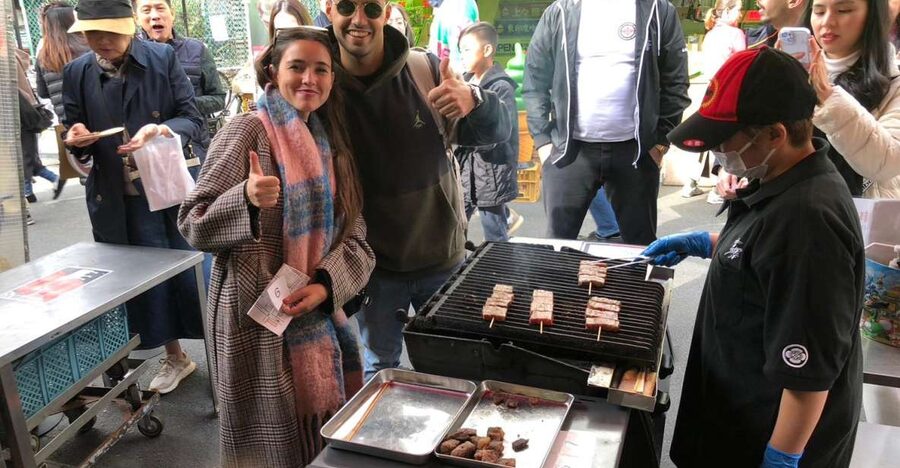
Book it if you want Tsukiji explained as a neighborhood, not just sampled as a collection of snacks. The combination of a maximum 10-person group, a strong seafood tasting list, temple and shrine visits, and a guide who can add context gives the tour real value.
I would be more cautious if $173 feels high for a food outing or if you prefer choosing your own stalls. In that case, visit the Outer Market independently and spend only what you want.
For most first-time visitors who want a reliable introduction to Tsukiji, this is a well-rounded choice. The best reason to book is not one particular dish. It is the way the tour links the food, the market, and the surrounding Tokyo neighborhood in one manageable four-hour walk.
FAQ
Where does the Tsukiji food tour meet?
The meeting point is in front of Tsukiji Hongwanji Temple. From Tsukiji Station on the Hibiya Line, take Exit A1 and turn left. The temple entrance is about 50 meters from the station.
How long does the tour last?
The tour lasts four hours.
What languages are available?
The tour is offered with a live guide in English or Japanese.
How many people can join the group?
The tour is limited to a maximum of 10 participants.
What food is included?
Included tastings are sushi, fresh sashimi, grilled tuna, grilled salmon, grilled oysters, tamagoyaki, desserts, and snacks.
Are drinks included?
Two soft drinks and water are included. Alcoholic drinks are not included, but they are available to purchase.
Which sights are visited?
The route includes Tsukiji Hongwanji Temple, Tsukiji Outer Market, Kachidoki Bridge, and Namiyoke Inari Jinja.
How much does the tour cost?
The listed price is $173 per person.
Can I cancel the booking?
You can cancel up to 24 hours in advance for a full refund. You can also reserve now and pay later, which keeps your plans flexible.
More Walking Tours in Japan
- Curacao Helmet Diving-Walk the Ocean Floor, No Swimming Required
★ 5.0 · 761 reviews - Aqua Safari Introductory Helmet Dive (Underwater Walk)
★ 5.0 · 428 reviews - Deep Dive into Denver: Small-Group Walking Tour
★ 4.8 · 119 reviews - Private Walking Tour of Delft: Dive into the Dutch Golden Age
★ 5.0 · 33 reviews
More Shopping Tours in Japan
- Scuba Diving and shopping on the Hipstrip.
★ 5.0 · 3 reviews
New dives around Japan
- Shared Scuba Diving Trip in Kushimoto★ 5.0 · 2 reviews
- Tokyo Ikebukuro Morning Tour Dive into Japanese Culture★ 5.0 · 5 reviews
- EDOCCO Tea House–A Quick Dive into Japanese Traditional Culture★ 5.0 · 34 reviews
- Tokyo Ikebukuro Evening Tour Dive into Japanese culture★ 5.0 · 15 reviews
- Deep Dive into the World of Daruma Dolls★ 5.0 · 4 reviews
- Deep Dive: Osaka Food Markets from Local to Luxurious!★ 5.0 · 31 reviews
- Blue Cave Introductory Dive–Private Guide, Boat Tour&Free Photos★ 5.0 · 34 reviews
- Boat entry diving at the Blue Cave in Onna Village, Okinawa!★ 5.0 · 4 reviews
Scuba Diving, compared.
Great Barrier Reef Snorkeling and Diving Cruise from Cairns
Read our review →
First-Time Scuba Diving in Honolulu + Free Videos
Read our review →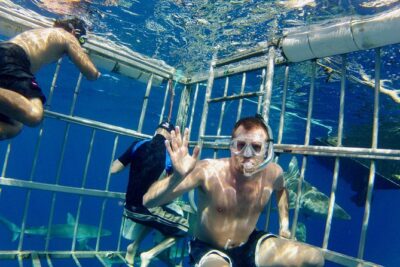
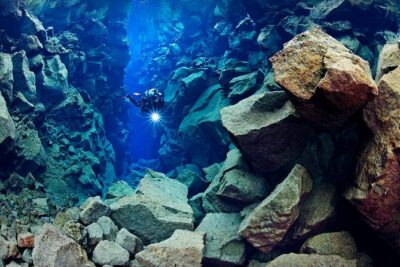
Silfra: Diving Between Tectonic Plates – Meet on Location
Read our review →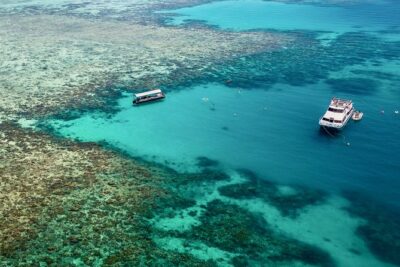
Ocean Freedom Great Barrier Reef Luxury Snorkel and Dive Cruise
Read our review →
Beginner Scuba Diving with Turtles and Videos, San Juan
Read our review →
Tenerife: Your First Scuba Diving Experience in Turtle Area
Read our review →
Browse the lists this tour appears in