
REVIEW · JAPAN
EDOCCO Tea House–A Quick Dive into Japanese Traditional Culture
Traditional Japan fits neatly into one hour here. EDOCCO Tea House brings together a matcha lesson, Japanese dance, kimono dress-up, calligraphy, and origami in a restored cultural setting. I especially like the friendly English guidance and the way the staff keep the program moving without making it feel like a rushed checklist. The small groups also mean you can ask questions and get help with each activity.
The main caution is the short running time. You receive a broad introduction rather than a long tea ceremony or a full performance. One review found the dance section under ten minutes, so anyone hoping for a major stage show may want more. For most visitors, though, this is a lively and practical first look at Japanese customs, priced at $72.48 per person.
Key points at a glance
- Four hands-on traditions in one hour: You make matcha, try Japanese calligraphy, fold origami, and wear a kimono.
- A short Japanese dance performance: The dance includes English explanation, so you learn what the gestures and props mean.
- Small-group attention: The maximum group size is 20, and sessions may be much smaller.
- Good for families: Children aged 8 and 11 were reported to enjoy the tea, calligraphy, origami, kimono, and dance activities.
- Two take-home memories: Your calligraphy work and origami give you something tangible beyond photographs.
- Easy Tokyo planning: The experience begins and ends at EDOCCO Studio in Sotokanda, close to public transportation.
What EDOCCO Tea House gives you in one hour
Many Tokyo cultural activities ask you to choose one subject. You might attend a tea ceremony, watch a dance, or take a calligraphy class. EDOCCO takes the sampler approach, combining several customs in a single visit.
That makes the experience especially useful early in a Tokyo trip. You get a quick introduction to ideas that appear again and again during your stay: careful presentation, respect for materials, formal movement, decorative writing, and patient handwork.
You should not expect a full academic lesson. Instead, the instructors explain the basics, let you try each activity, and keep the atmosphere relaxed. The English support matters here. You do not need prior knowledge of Japanese customs to follow along or enjoy the session.
The setting is a restored space designed around old and new Japan. That gives the activities a more suitable home than a plain classroom. You are not simply ticking off tourist activities. The surroundings help set the mood, even though the program itself remains accessible and informal.
A few more dives around Japan worth comparing
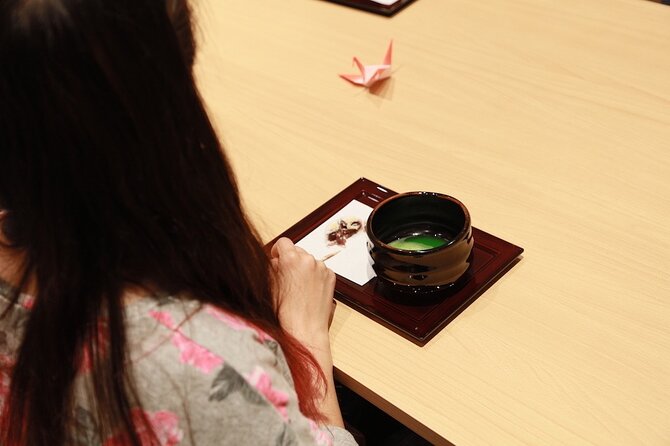
Starting with matcha and a Japanese sweet
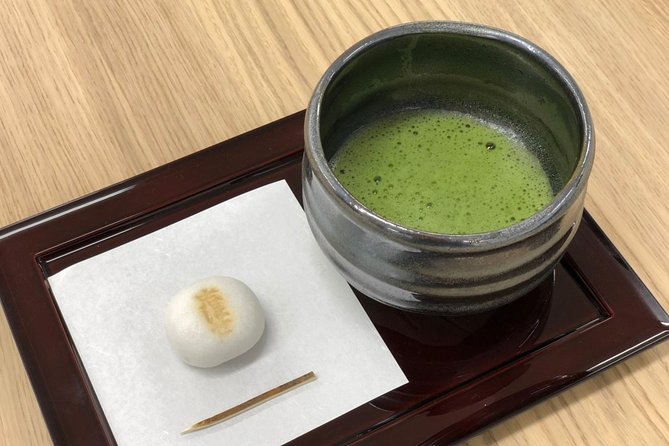
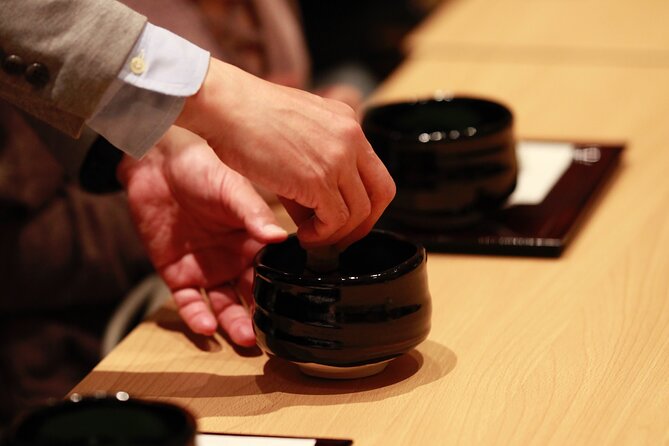
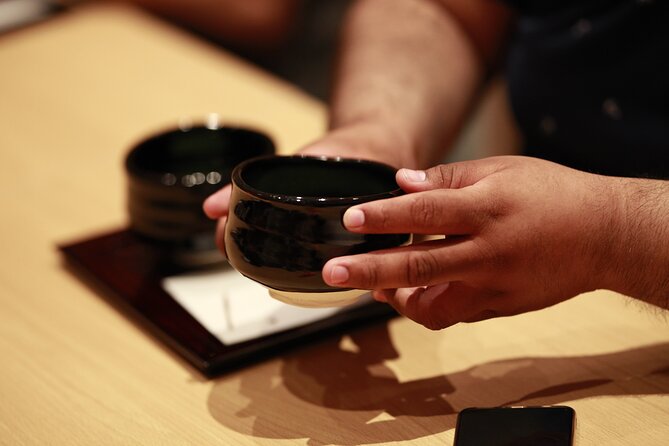
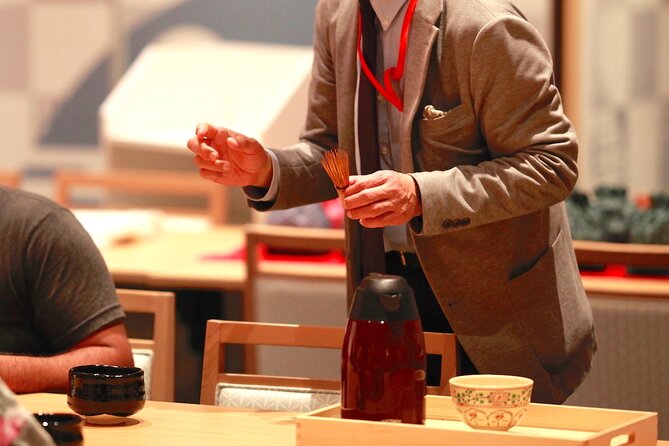
The tea portion begins with matcha and a Japanese sweet. An instructor guides you through the process of preparing and serving the tea, including the basic use of the bowl, powder, whisk, and other tools.
For many people, this will be their first time making matcha themselves. That hands-on element is more useful than simply watching a server prepare it. You learn that the experience is not only about drinking green tea. The order of actions, the handling of the utensils, and the presentation all matter.
The included snack set adds a small but important touch. Matcha can have a strong, grassy taste, and the sweet helps balance it. You can enjoy the tea and sweet during the dance presentation as well.
The session is an introduction, not a long formal tea ceremony. If you want to study tea utensils in detail or spend a quiet hour observing every movement, this program may feel brief. If you want an approachable first lesson that lets you participate, the timing works well.
A matcha set, including a tea bowl, matcha powder, bamboo whisk, and other tools, is available for purchase. It is not included in the ticket, so treat it as an optional extra rather than part of the advertised value.
The Japanese dance show and its cultural explanation
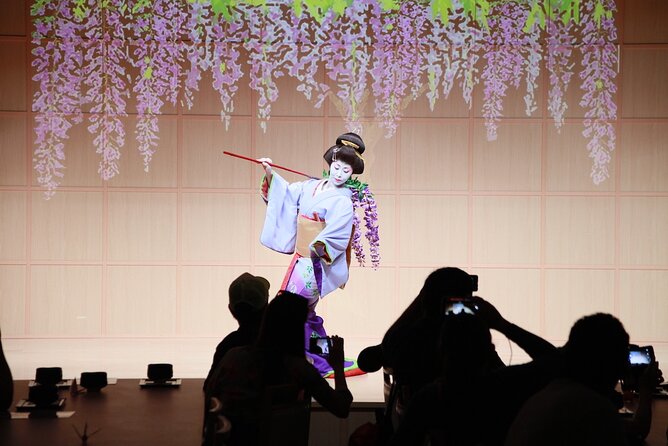
The dance performance gives the program a change of pace. After taking part in the tea activity, you sit back and watch a Japanese dance presented with explanation in English.
The explanation is important. Without it, you might appreciate the costumes, fans, gestures, and music without understanding the purpose behind them. The instructors help connect the movements with Japanese culture and artistic tradition.
The performance appears to be short. One detailed account placed it at less than ten minutes and felt that this did not allow enough time to appreciate the form fully. That is a fair limitation to keep in mind. You are getting a sample of the dance, not a complete evening performance.
Still, the short presentation works within this particular format. The program has several activities to fit into about an hour, and the dance breaks up the hands-on lessons. Families and first-time visitors may prefer this variety to sitting through a longer performance they do not yet understand.
The dance is also one of the moments that makes the experience feel more than a craft workshop. You see a polished performance, then return to activities where you can make and try things yourself.
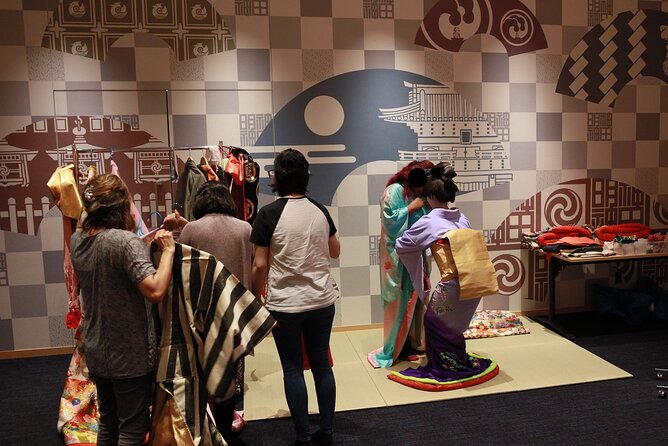
Kimono dress-up with time for photographs
The kimono activity lets you put on Japanese dress and pose for photographs. It is described as cosplay, so it is best understood as a fun cultural dress-up experience rather than a full historical costume study.
For children, this may be the highlight. A family with children aged 8 and 11 found the activity particularly enjoyable, with one child taking special interest in the kimono and traditional dance movements using a fan.
The dress-up also helps you notice how clothing changes posture and movement. You get a visual sense of the formal style associated with older Japanese settings, even within a short session.
Do not expect an extended dressing appointment or a detailed lecture on every part of the garment. The emphasis is on participation and photographs. That makes it a good fit for families, couples, and first-time visitors who want a memorable picture without committing to a longer kimono rental experience elsewhere in Tokyo.
Same coastline, a very different dive:
- Okinawa:Naha:Kerama Island Experience 1Dive and Snorkeling
★ 4.4 · 99 reviews - Blue Cave Introductory Dive–Private Guide, Boat Tour&Free Photos
★ 5.0 · 34 reviews - Okinawa: Scuba Diving Tour with Wagyu Lunch and English guide
★ 5.0 · 32 reviews - Deep Dive: Osaka Food Markets from Local to Luxurious!
★ 5.0 · 31 reviews
Calligraphy: a small lesson with a personal result
The calligraphy session is one of the most satisfying parts because you create something to keep. An instructor introduces the basic brush strokes and helps you write a Japanese character.
This is not simply writing with a different pen. Brush pressure, direction, spacing, and the shape of each stroke all affect the result. The activity gives you a quick appreciation for the control required in Japanese calligraphy.
The instructors are described as patient and willing to answer questions. That matters because first attempts can feel awkward. You do not need to produce a museum piece. The value is in learning how the marks are made and leaving with your own work.
Calligraphy also gives the hour a calmer moment. The dance is for watching, the tea is for tasting, and the kimono is for wearing. Here, you slow down and concentrate on the brush.
If you are traveling with children, this is a manageable creative activity. It has a clear result, but it does not require advanced artistic skill. Adults should enjoy it for the same reason: it turns a cultural idea into something your hands can understand.
Origami that works well for families
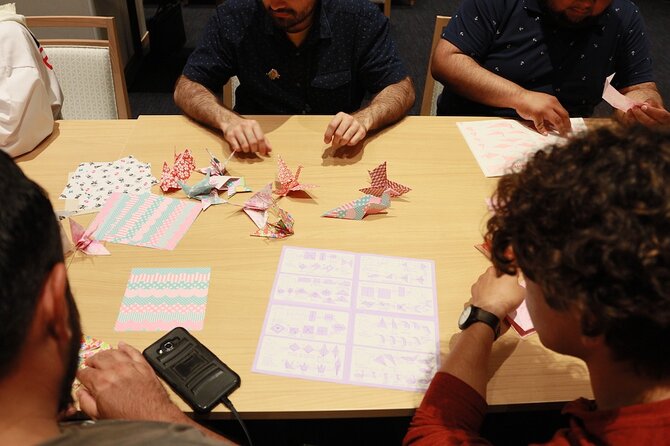
The origami lesson introduces the traditional Japanese art of folding paper. You may begin with a simple crane or another basic design before trying something more involved, depending on the session.
Origami is a useful addition because it is familiar to many people as a craft but has a strong place in Japanese culture. The instructor shows how one sheet of paper can become a recognizable object through careful folds.
This activity also suits mixed-age groups. Younger children can focus on the folding, while adults may enjoy the precision and patience it requires. The instructors guide you through the steps, so you are not left trying to copy a complicated figure from a printed diagram.
Like the calligraphy, the origami gives you a small souvenir made during the visit. That helps justify the price more than a program made only of watching and listening.
You should be prepared for a short workshop rather than a long craft class. The goal is to learn the basic idea and complete a design, not to master advanced paper sculpture.
Why the small group matters
The maximum group size is 20 people, which is large enough to create a social atmosphere but still manageable for a guided workshop. The actual group may be smaller. One couple had the session almost to themselves, and even a solo booking was not canceled.
That flexibility is useful, but you should not assume every departure will be private or nearly private. The stated maximum is 20, and the amount of personal attention will depend on the number booked that day.
Small groups help most during tea, calligraphy, and origami. You can ask for help with a brush stroke or folding step without waiting too long. They also make kimono photographs and demonstrations easier to organize.
The staff receive especially strong praise for their warmth, patience, and English ability. The names Ori and Mr. Bambu were singled out for cordial, informative help. English explanations are available, which makes this a sensible choice if you want cultural context rather than silent observation.
Is $72.48 good value?
At $72.48, this is not the cheapest one-hour activity in Tokyo. The price makes more sense when you count what is included: matcha and a Japanese sweet, a dance presentation, calligraphy, origami, and Japanese dress-up.
You also avoid spending separate time and money arranging each activity. A tea lesson, a kimono experience, and a calligraphy workshop booked independently could easily take much of a day. EDOCCO gives you a compact introduction that fits around sightseeing.
The value is strongest for first-time visitors, families, and anyone with limited time. You receive instruction, cultural explanation, and hands-on activities rather than only a performance. The included materials and snack set also mean you are not paying just for admission to a room.
The value is weaker if you already have a serious interest in tea ceremony or Japanese dance. The short format cannot provide the depth of a specialist class. You are paying for variety and convenience, not mastery.
I would also treat the optional matcha set as a separate purchase. If you want to recreate the tea preparation at home, it may be appealing. If not, the included tea experience is enough.
Getting to EDOCCO Studio in Sotokanda
The meeting point is EDOCCO Studio at 2-chome 16-2 Sotokanda, Chiyoda City, Tokyo 101-0021. The activity ends at the same location, which makes it easy to continue sightseeing afterward.
The venue is near public transportation. A practical route described for the area uses the Marunouchi Line to Ochanomizu Station, listed as M20. From there, cross the road, use the stairs to the pedestrian overpass, turn left, and take the first right at the intersection. The venue is a short distance away.
Allow time to find the studio, especially if you are unfamiliar with Tokyo station exits. Your mobile ticket is accepted, and confirmation normally arrives at booking. If you book within one day of the scheduled time, confirmation is sent as soon as possible, subject to availability.
The activity runs for about one hour. Since the beginning and ending point are the same, you can pair it with nearby plans without arranging a second pickup.
Who will enjoy this cultural sampler most?
This is a strong match for:
- First-time visitors who want a friendly introduction to Japanese customs
- Families with children
- Couples looking for a shared activity and photographs
- Visitors who prefer participation over simply watching
- People who want English explanations
- Anyone with only an hour to spare
It is less suitable if you want a long, formal tea ceremony, an extended dance performance, or advanced calligraphy instruction. The broad range is the main appeal, but it also means no single subject receives much time.
The format is particularly helpful at the beginning of a Japan trip. Afterward, tea bowls, kimono, brush writing, paper cranes, and formal dance gestures may feel less unfamiliar when you encounter them elsewhere.
Booking, cancellations, and practical details
You can cancel free of charge up to 24 hours before the local start time for a full refund. Changes or cancellations made less than 24 hours before the start are not accepted for a refund.
The activity may be canceled if poor weather affects the session or if the minimum number of participants is not reached. In those cases, you are offered another date or experience, or a full refund.
The experience is booked an average of 17 days in advance. That does not mean you must book exactly that early, but it is a useful sign that planning ahead is sensible, especially if your Tokyo dates are fixed.
Should you book EDOCCO Tea House?
I would book this if you want a warm, efficient introduction to several Japanese traditions in one sitting. The strongest features are the patient English guidance, small-group feel, hands-on instruction, and the mix of activities. You leave with new skills, photographs, and small creations rather than only a memory of watching a show.
Go in with the right expectations. The dance is short, the tea ceremony is an introduction, and each craft receives limited time. If that sounds like a fair trade for variety and convenience, the $72.48 price is reasonable, particularly for families and first-time visitors. If you want depth in one art form, choose a specialist class instead.
FAQ
How long does the EDOCCO Tea House experience last?
The experience lasts approximately one hour.
Where does the experience begin?
It begins at EDOCCO Studio, 2-chome 16-2 Sotokanda, Chiyoda City, Tokyo 101-0021, Japan.
Where does the experience end?
It ends back at the meeting point, EDOCCO Studio.
What is included in the price?
The price includes matcha and a Japanese sweet, appreciation of the Japanese dance show, a calligraphy experience, an origami experience, and Japanese dress-up.
Is the matcha-making equipment included?
The activity includes the matcha experience, but a separate matcha set containing a tea bowl, matcha powder, bamboo whisk, and other tools is available for purchase.
Is English available during the experience?
Yes. English explanations are provided, including explanations connected with the dance and cultural activities.
What is the maximum group size?
The maximum group size is 20 people.
Can children take part?
The supplied information does not give a minimum age, but the activities have been enjoyed by children aged 8 and 11.
Can I cancel for a full refund?
Yes. You can cancel at least 24 hours before the local start time for a full refund.
What happens if the activity is canceled?
If poor weather or an insufficient number of participants causes cancellation, you are offered another date or experience, or a full refund.
New dives around Japan
- Dive into Tsukiji Fish Market Walking Friendly Food Tour★ 5.0 · 3 reviews
- Shared Scuba Diving Trip in Kushimoto★ 5.0 · 2 reviews
- Tokyo Ikebukuro Morning Tour Dive into Japanese Culture★ 5.0 · 5 reviews
- Tokyo Ikebukuro Evening Tour Dive into Japanese culture★ 5.0 · 15 reviews
- Deep Dive into the World of Daruma Dolls★ 5.0 · 4 reviews
- Deep Dive: Osaka Food Markets from Local to Luxurious!★ 5.0 · 31 reviews
- Boat entry diving at the Blue Cave in Onna Village, Okinawa!★ 5.0 · 4 reviews
- Blue Cave Introductory Dive–Private Guide, Boat Tour&Free Photos★ 5.0 · 34 reviews
Scuba Diving, compared.

Great Barrier Reef Snorkeling and Diving Cruise from Cairns
Read our review →
First-Time Scuba Diving in Honolulu + Free Videos
Read our review →

Silfra: Diving Between Tectonic Plates – Meet on Location
Read our review →
Ocean Freedom Great Barrier Reef Luxury Snorkel and Dive Cruise
Read our review →
Beginner Scuba Diving with Turtles and Videos, San Juan
Read our review →
Tenerife: Your First Scuba Diving Experience in Turtle Area
Read our review →
Browse the lists this tour appears in