REVIEW · MAUI
Turtle & Shark Scuba Dive in Lahaina: Certified
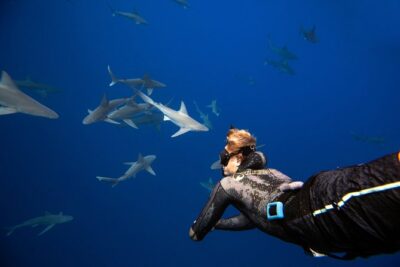
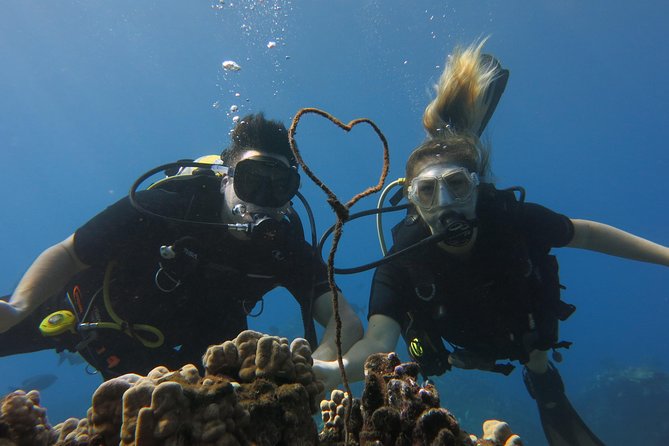
See Maui from below the surface. This Lahaina shore-based scuba experience pairs a small guided outing with the chance to spot Hawaiian green sea turtles, reef fish, and possibly white-tip reef sharks. I like the personal instruction and the fact that all scuba equipment is supplied. I also like that your guide adjusts the outing to your experience level. The main catch is simple: this is for certified scuba divers with recent experience, not beginners seeking an introductory lesson.
At $259 per person for about two hours, this is not a casual beach activity. You must carry roughly 30 pounds of gear for a short distance, manage a shore entry, and follow a strict 18-hour no-fly rule afterward. Still, the small maximum group of eight and strong safety focus give the experience real value, especially if seeing turtles underwater is high on your Maui wish list.
Key details before you book
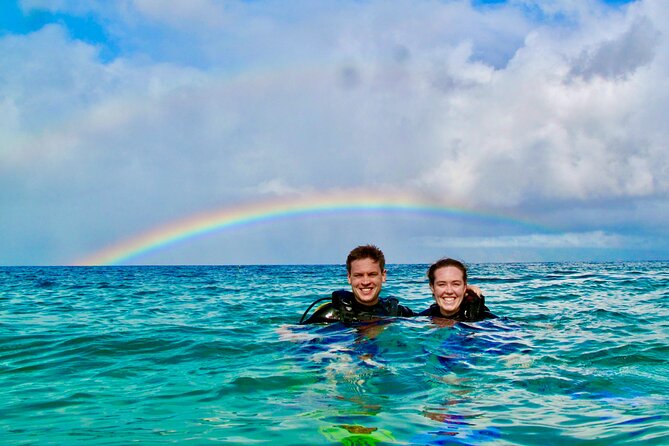
- Meet at the Lahaina scuba truck: Find it near the corner of Ala Moana Street and Front Street, then walk to the ocean after the briefing.
- Certified divers only: Bring proof of certification and have recent scuba experience.
- Turtles are the main attraction: The site can include a turtle cleaning station, along with reef fish and possible white-tip reef sharks.
- Personal guidance matters: The outing includes a private scuba instructor or guide, with groups capped at eight.
- Pack your own water: Granola bars are available on request, but bottled water is not supplied.
- Plan your post-scuba schedule carefully: You must wait at least 18 hours before flying, zip-lining, or going above 1,000 feet, including Haleakala.
What the Lahaina shore entry is really like
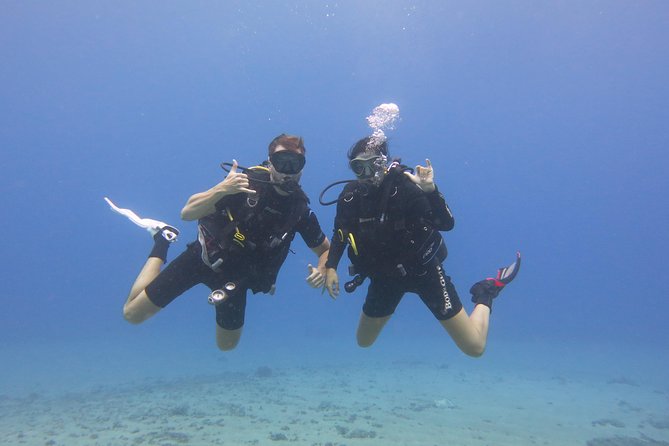
This is a shore-based outing, so you do not board a boat from a marina. You meet the operator’s scuba truck near the corner of Ala Moana Street and Front Street in Lahaina. That keeps the start simple, but it also means you should not expect a transport service from your hotel or resort.
After check-in, you show your scuba certification card and complete the required safety briefing. Then you walk from the truck to the ocean with your equipment. The short walk sounds easy, but a full setup can weigh about 30 pounds, and you must be able to carry it for that distance.
The shore format has two useful advantages. You avoid boat motion and a longer marine schedule, and the time is concentrated on preparation and underwater exploration. On the other hand, entering from shore requires some physical effort and may feel less polished than stepping directly from a boat into the water.
The exact underwater route can change with conditions and your experience. That flexibility is useful. One person may need a slower pace and extra attention, while another certified diver may be ready to spend more time observing marine life. The guide’s job is to keep the outing safe and suitable rather than force everyone into the same routine.
More Dives for Certified Divers in the USA
- 2 Tank Lanai Cathedral Scuba Dive Via Boat for Certified Divers
★ 5.0 · 548 reviews - Small-Group Shark and Turtle Dive for Certified Divers
★ 5.0 · 219 reviews - Maui Certified Shore Diving from Lahaina
★ 5.0 · 107 reviews
A safety briefing that deserves your attention
The safety talk is not filler. You receive guidance before entering the ocean, and several people have praised instructors for making them feel calm and prepared. Shane, Simon, Caitlin, Dave, Abby, Jen, Kevin, and David have all been singled out for clear instruction, patience, or a reassuring manner at different times.
That personal approach matters even if you already hold a certification card. Ocean conditions can feel different from a familiar training site, and a shore entry asks you to manage your equipment while moving over land and into the water. You should listen closely, ask questions, and tell the instructor if your recent scuba experience is limited.
The experience is advertised for certified divers with recent experience. That requirement is important. A few older accounts describe first-time participants receiving excellent instruction, but the current terms clearly say that this is not a training session for uncertified beginners. If you have never been certified, choose a proper introductory scuba program instead.
The small group limit also helps. With no more than eight people, the guide has a better chance of keeping track of everyone and responding to individual needs. Some bookings may involve a more private arrangement, but you should confirm the exact setup when booking rather than assume you will have the instructor alone.
Turtles, reef fish, and the possible shark encounter
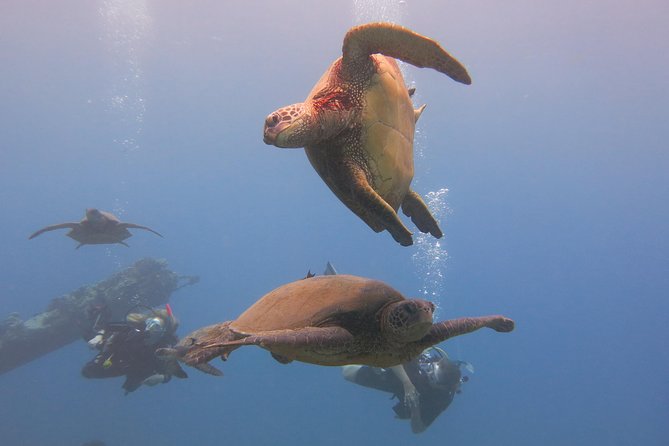
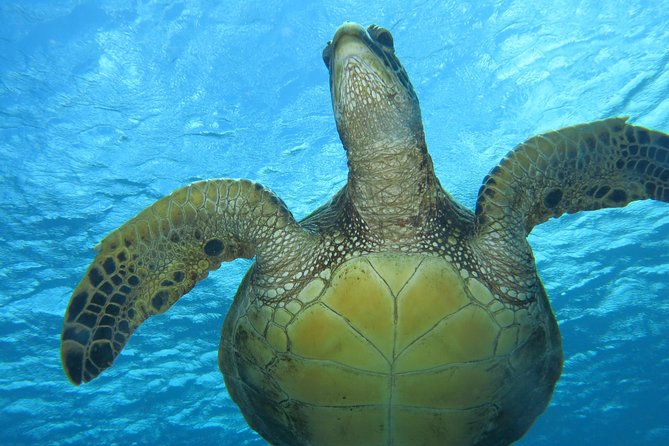
The name points to the two headline animals: turtles and sharks. The most consistent praise centers on Hawaiian green sea turtles, including close encounters near a turtle cleaning station. You may also see reef fish, coral, and other local marine life.
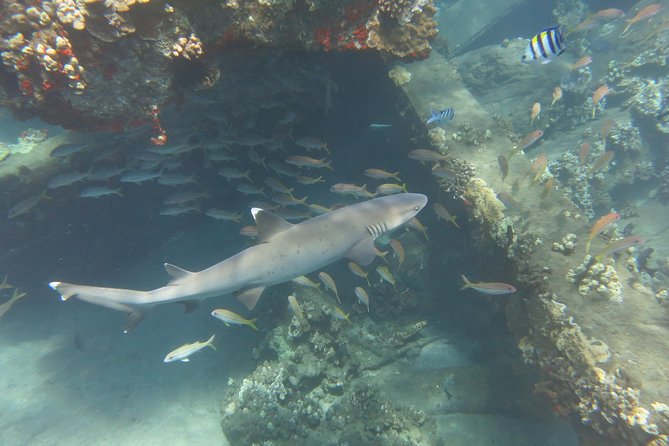
One particularly memorable outing included several turtles, white-tip reef sharks, and even a black seahorse. Another group saw about eight sharks after paying extra for two locations. These sightings show what the area can offer, but they are not a promise of a particular animal on a particular day.
A turtle cleaning station can be especially rewarding because it gives you a natural place to watch turtle behavior without chasing the animals. Your best role is a quiet observer. Keep a respectful distance, listen to the guide, and let the wildlife decide how close it wants to come.
Sharks add excitement, but you should book this for the complete marine setting, not just a shark count. Conditions, visibility, recent weather, and animal behavior can all change the experience. The strongest reason to go is the chance to spend focused time in a Hawaiian coastal habitat with an instructor who can help you notice what you might otherwise miss.
The marine life also gives the two-hour schedule its value. This is not a rushed photo stop. You have preparation, equipment setup, the walk to the water, the safety talk, and time below the surface, so the actual underwater portion is only one part of the total outing.
Why the guide can make or break the morning
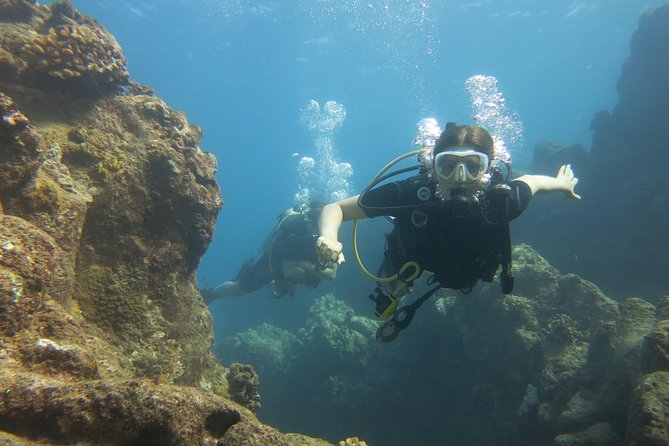
The instructors receive unusually strong praise for calm, friendly teaching. Simon is described as relaxed and reassuring. Shane helped one first ocean outing feel special and adapted well when storm conditions made the original plan less ideal. Caitlin was praised for patience and clear skills instruction, while Jen received credit for explaining both safety and equipment use carefully.
That matters because scuba is partly a technical activity and partly a confidence exercise. You need to monitor your breathing, equipment, surroundings, and buoyancy while staying aware of the group. A guide who communicates clearly can make the whole outing feel manageable.
You should also expect the guide to keep safety ahead of photography. One person appreciated the full attention on scuba technique and marine awareness but noted that underwater cameras were not provided. That is a fair trade. A camera is fun, but an instructor watching your position and comfort is more important.
One instructor, Shane, was also praised for taking excellent photographs on another outing. Do not treat that as a standard inclusion. The supplied equipment includes scuba gear, not guaranteed underwater photography or a camera service.
More Shark Dives in the USA
- Maui: Small Group Shark & Turtle Scuba Dive from Shore
★ 5.0 · 15 reviews - Oahu Shark Dive
★ 5.0 · 2,903 reviews - Oahu: Shark Cage Dive on the North Shore
★ 4.8 · 1,485 reviews - Shark Cage Diving on Oahu’s North Shore
★ 5.0 · 1,391 reviews
How $259 measures up
At $259 per person, the price is high for a two-hour activity, but it includes the major equipment and a private instructor or guide. You are not paying only for time in the water. The fee also covers equipment use, a structured safety briefing, and guided attention in a small group.
The value is strongest for a certified diver who wants a straightforward Lahaina outing without arranging tanks, weights, regulators, or local site knowledge. Buying or renting all that equipment separately would add cost and effort, and you would still need to choose a suitable site.
The value is weaker if you mainly want a quick look at turtles or have not been in the water recently. The certification rule, physical gear carry, and post-scuba restrictions make this a serious part of your itinerary. Snorkeling may suit you better if you are not ready to commit to the equipment and safety requirements.
Granola bars are available if requested, but they are not the reason to book. Bring your own reusable water bottle. The operator does not provide bottled water and encourages visitors to reduce plastic waste. That is practical advice, especially after carrying equipment and spending time in the sun.
Timing your day around the 18-hour rule
The most important scheduling rule is the 18-hour wait after scuba. You must not fly or ascend above 1,000 feet during that period. That includes zip-lining and going up Haleakala.
This rule can shape your entire Maui plan. Do not schedule this outing on the last morning before your flight. Do not place a Haleakala sunrise or high-elevation excursion soon afterward. The safest approach is to put the scuba session early enough in your trip that you have plenty of low-elevation time afterward.
The listed duration is about two hours, but allow extra time around it for check-in, the briefing, gearing up, and the walk to the ocean. The meeting point is in Lahaina, and transportation is not included, so you also need to plan how you will reach Ala Moana Street and Front Street.
Because weather can affect the activity, leave some flexibility in your vacation schedule if possible. Poor conditions can lead to a different date or a full refund, but a rescheduled outing may still affect later plans. A backup morning is especially useful if scuba is one of the main goals of your Maui visit.
What changes when conditions are not perfect
Ocean weather is never entirely under your control. One outing took place during a storm offshore, and the instructor moved the group to a better beach so they could still see marine life. That is the kind of adjustment you want from a local operator.
It also shows why you should judge the experience by safety and adaptability, not only by visibility or a list of animals. A rougher day may produce fewer ideal photographs, yet a flexible guide can still create a worthwhile session.
The weather policy is clear: if poor weather causes cancellation, you can choose another date or receive a full refund. If you cancel on your own, you need to do so at least 24 hours before the start time for a full refund. Changes or cancellations inside that window are not accepted and are not refunded.
Who will enjoy this Lahaina scuba outing
I would recommend it most strongly to:
- Certified scuba divers with recent ocean experience
- People who prefer a small, guided group rather than a large boat operation
- Wildlife lovers hoping to see Hawaiian green sea turtles
- Divers who want equipment supplied and local guidance
- Couples, families with certified older children, and solo divers comfortable joining a group
The outing may not suit you if you are uncertified, uneasy carrying 30 pounds, or looking for a relaxed activity with no physical demands. It is also a poor fit for anyone who wants to fly, zip-line, or visit Haleakala soon afterward.
Families should pay attention to the certification rule rather than rely on accounts from earlier participants. A 16-year-old certified diver may be able to take part, but every participant must meet the stated requirements and provide proof of certification.
Practical ways to get more from the experience
Complete the online scuba waiver before arrival. It saves time at check-in and lets you focus on the briefing and equipment.
Bring your certification card, reusable water bottle, and anything you need for a short walk carrying gear. Since snacks are available only on request, ask about a granola bar if you want one.
Tell the guide about your recent scuba history and comfort level. The activity is tailored to experience, so honest information helps the instructor set a sensible pace.
Protect the rest of your day from high-elevation plans. After the session, low-key coastal activities are a better match than Haleakala, zip-lining, or airport travel.
Keep your expectations centered on wildlife observation. Turtles are a strong possibility, and sharks have been seen, but nature does not follow a schedule. The best outing is one where you stay safe, remain calm, and pay attention to the life around you.
Should you book this Maui scuba experience?
Book it if you are certified, recently active in scuba, and want a guided Lahaina shore outing with a real chance to see turtles and other Hawaiian marine life. The strongest reasons are the small group size, supplied equipment, careful instruction, and guides who have shown patience when conditions or confidence levels vary.
Skip it if you are a beginner without certification, need hotel transportation, or have a flight or high-elevation activity within 18 hours. At $259, the cost makes sense for a serious certified diver who values support and convenience. It makes less sense for someone who simply wants a quick ocean wildlife encounter.
For the right person, this is a focused and personal way to spend a morning in Maui’s coastal waters. Just bring your certification card, your reusable bottle, and enough room in your schedule to let the ocean set the pace.
FAQ
Is this activity for beginners?
No. The activity is for certified scuba divers only, and divers must have recent experience. You must show proof of certification at check-in.
Where do you meet?
You meet at Ala Moana Street in Lahaina, near the corner of Ala Moana Street and Front Street. Look for the scuba truck.
Is transportation included?
No. Private transportation is not included. You are responsible for reaching the meeting point.
What is included in the price?
Scuba equipment and a private scuba instructor or guide are included. Granola bars are available upon request. Bottled water is not included.
How long must you wait before flying?
You must wait at least 18 hours after scuba before flying or ascending above 1,000 feet. This restriction also applies to zip-lining and ascending Haleakala.
What is the cancellation policy?
You can cancel at least 24 hours before the start time for a full refund. Cancellations or changes made less than 24 hours before the experience are not refunded or accepted. If poor weather causes the operator to cancel, you can choose another date or receive a full refund.
More Turtle Dives in Maui
- 2-Tank Maui Turtle Scuba Dive or Snorkel Boat Tour
★ 5.0 · 21 reviews - Beginner Scuba Diving with Turtles and Videos, San Juan
★ 5.0 · 1,743 reviews - Tenerife: Your First Scuba Diving Experience in Turtle Area
★ 4.7 · 1,679 reviews - Tenerife: Beginner’s Dive at a Spot with Turtle Sightings
★ 4.7 · 627 reviews
More Shark Dives in Maui
- Swim with Whale Sharks in the Ningaloo Reef: 3 Island Shark Dive
★ 5.0 · 919 reviews - From Hermanus or Cape Town: Shark Cage Diving Experience
★ 4.7 · 684 reviews - Shark Cage Diving and Viewing with transport from Cape Town
★ 4.5 · 576 reviews - Safe and Educational Shark Dive from Haleiwa: Sharks Guaranteed
★ 5.0 · 553 reviews
New dives around Maui
- Underwater Scooter Dive (Certified Divers Only) Makena Wailea★ 5.0 · 10 reviews
- South Maui Discover Scuba Dive★ 5.0 · 46 reviews
- 3-Tank Dive Featuring the Molokini Crater★ 5.0 · 5 reviews
- Private and Personalized Scuba Diving Adventures for All Experience Levels★ 5.0 · 62 reviews
- Scuba Diving in Maui with No Experience Needed★ 5.0 · 56 reviews
- PADI Scuba Lesson and Shore Dive in Maui★ 5.0 · 46 reviews
- Guided Scuba Dive in Lahaina: Certified★ 5.0 · 67 reviews
- 2-Tank Maui Turtle Scuba Dive or Snorkel Boat Tour★ 5.0 · 21 reviews
Shark Dives & Cage Diving, compared.
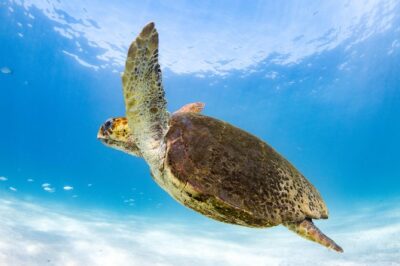
Swim with Whale Sharks in the Ningaloo Reef: 3 Island Shark Dive
Read our review →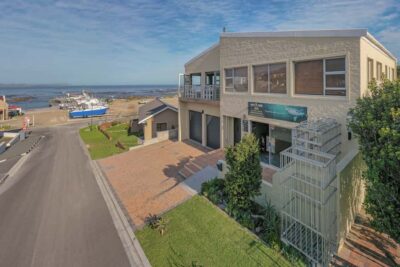
From Hermanus or Cape Town: Shark Cage Diving Experience
Read our review →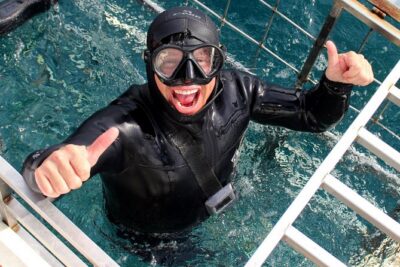
Shark Cage Diving and Viewing with transport from Cape Town
Read our review →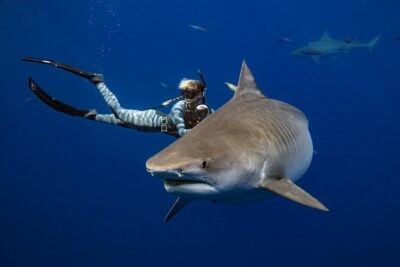
Safe and Educational Shark Dive from Haleiwa: Sharks Guaranteed
Read our review →