
REVIEW · MAUI
Scuba Diving in Maui with No Experience Needed
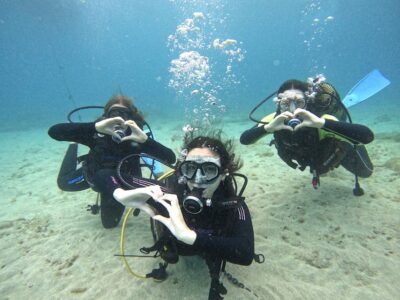
Maui makes a fine first underwater adventure. This beginner-friendly scuba experience takes you from a short lesson at Aloha Maui Diving in Lahaina to a shore entry on a coral reef, with PADI-certified instructors guiding you through each skill. No prior scuba experience is required, but you must swim, handle heavy equipment, and feel reasonably comfortable in the ocean.
I like the maximum group size of four, which gives instructors room to watch each person closely. I also like the easygoing teaching style praised by guests who worked with Sarah, Deborah, and Ted. The main drawback is the beach entry: carrying gear into the water and walking through the surf can be harder than a boat-based trip.
I like this for first-timers who want more personal care than a large snorkeling cruise provides. Just remember, this is not a certification course, and you may not complete the activity if you cannot manage the required skills or become too uncomfortable in the water.
Key Points to Know Before Booking
- Small groups of up to four: You get more individual attention during the lesson and underwater portion.
- Shore-based access: You walk into the ocean from the beach rather than boarding a boat.
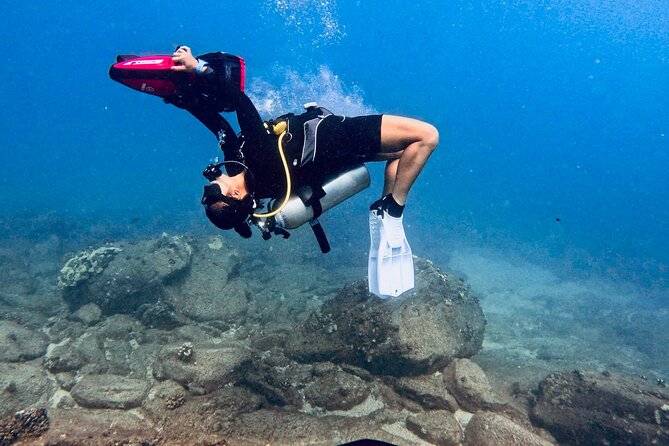
- Beginner instruction: PADI-certified professionals explain breathing, equipment, and basic underwater skills before you go farther from shore.
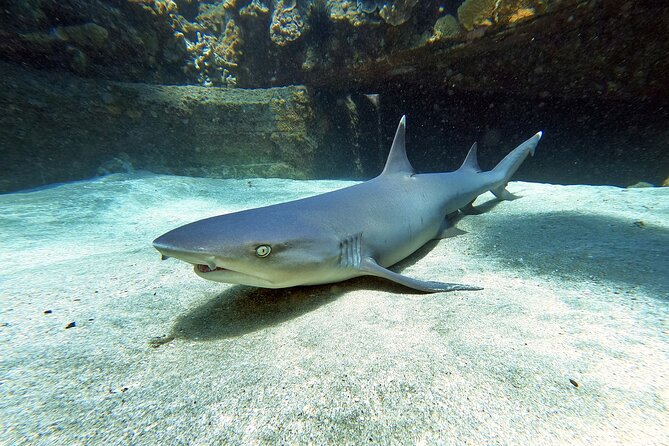
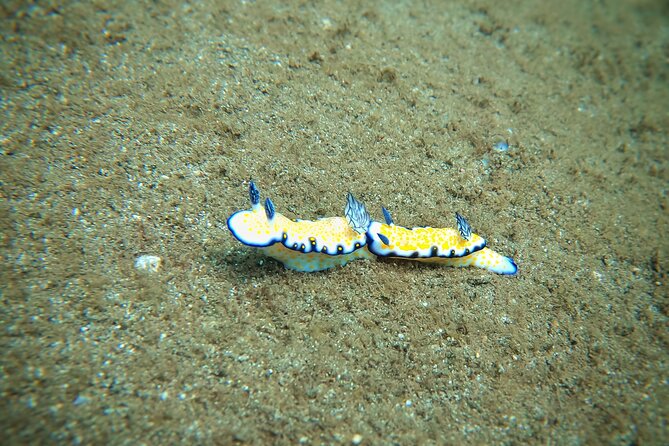
- Wildlife depends on conditions: Green turtles, reef fish, moray eels, eagle rays, octopus, and nudibranchs may appear.
- A shallow first look: One recent account described reaching about 25 feet, depending on comfort and conditions.
- Plan your day carefully: You must remain below 1,000 feet in elevation for 12 hours afterward, so skip Haleakala, upcountry Maui, helicopter tours, ziplining, and similar activities.
What Happens at Aloha Maui Diving in Lahaina
Your meeting point is Aloha Maui Diving at 130 Kupuohi Street, Unit D4, in Lahaina. The activity ends at the same location, and confirmation is provided when you book. The shop is near public transportation, though you should allow time to find the exact unit and get organized before the scheduled start.
The experience lasts about two hours. That sounds brief, but the clock includes important preparation, equipment fitting, basic instruction, water entry, and time on the reef. You are not simply handed a tank and sent into the sea. The practical value lies in learning enough to control your breathing, clear your mask, communicate underwater, and respond to the instructor.
The staff members most often praised by name are Sarah, Deborah, and Ted. Their teaching styles differ, but the common thread is patience. Sarah is repeatedly described as upbeat and reassuring, especially when someone feels nervous about breathing underwater. Deborah is praised for kindness and close attention, while Ted receives strong marks for clear instruction and calm guidance.
That matters more than flashy promises about wildlife. A new scuba participant needs to feel safe before noticing a turtle or octopus. The small group format helps here. With no more than four people, your instructor has a better chance of noticing trouble with your mask, breathing, buoyancy, or comfort level.
More Scuba Diving for Beginners in the USA
- Beginner Scuba Dive in Lahaina: Swimming Required
★ 5.0 · 219 reviews - Maui: Beginner Discovery Scuba Dive Excursion from Lahaina
★ 4.7 · 46 reviews - First-Time Scuba Diving in Honolulu + Free Videos
★ 5.0 · 3,123 reviews
Learning the Basics Before You Go Under
Expect a short classroom-style lesson and a skills session before the main underwater exploration. The exact order can vary, but you will learn how the equipment works and practice the basic tasks required to continue.
The instructors explain each step carefully, then check that you understand it. Several people who had never snorkeled or used scuba equipment before found this part reassuring. That makes this a good choice if you are curious about scuba but worried that you will not know what to do once your face is underwater.
You still need to take an active role. The instructor can explain and guide, but you must be able to follow directions, breathe through the regulator, and complete the required skills. If you are uncomfortable in the ocean, cannot swim, or cannot finish the skills, you may not be allowed to continue. The stated policy says there is no refund in that situation, so be honest about your comfort and fitness before paying.
You will also complete a medical waiver online. If your health requires physician approval, you are responsible for obtaining a clearance letter before the activity. The operator does not cover a refund if you arrive without the required medical approval and cannot take part.
Walking Into Maui’s West Maui Water
This is a shore-based activity, not a boat trip. You will carry your equipment and enter the water from the beach. That gives the experience a more direct, hands-on feel, but it also creates the physical challenge that boat passengers avoid.
The information provided gives two different equipment-handling figures: all participants must be able to carry at least 50 pounds, while the shore-entry note refers to a minimum of 40 pounds for entering and exiting the water. Treat the higher figure as the safer standard, and ask the operator to clarify if you have concerns.
Once you are in the water, the instructor helps you settle into the equipment and breathing rhythm. This is the point when patience matters most. Breathing underwater can feel strange at first, and a calm instructor like Sarah or Deborah can help you slow down instead of rushing through the nerves.
The beach entry is also useful for a first lesson because you can build confidence gradually. One account described beginning close to shore and moving into deeper water only after the group felt ready. Another reported reaching roughly 25 feet, but depth is not a fixed promise. Your comfort, ability, sea conditions, and the instructor’s judgment determine how far you go.
The Coral Reef and Its Residents
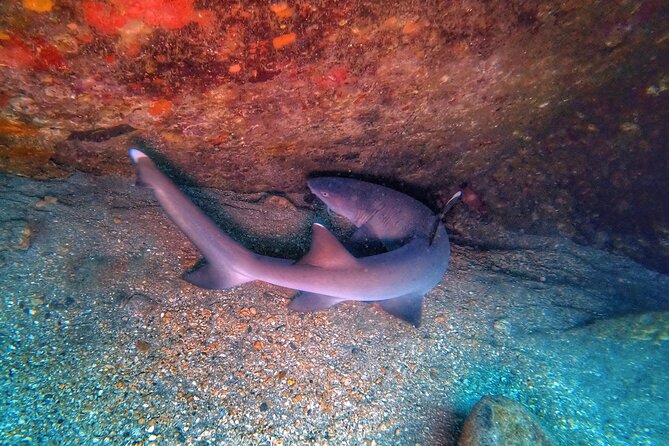
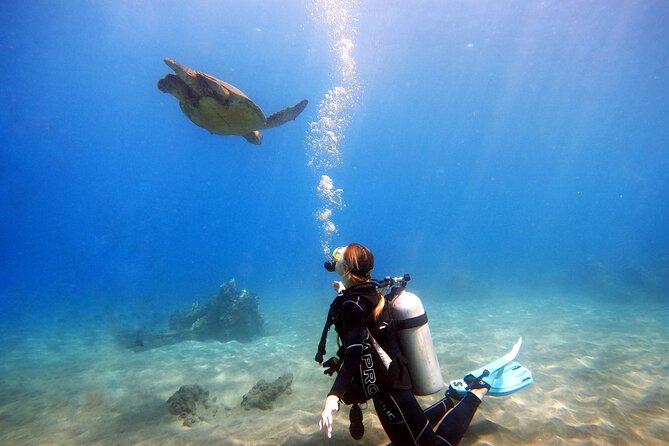
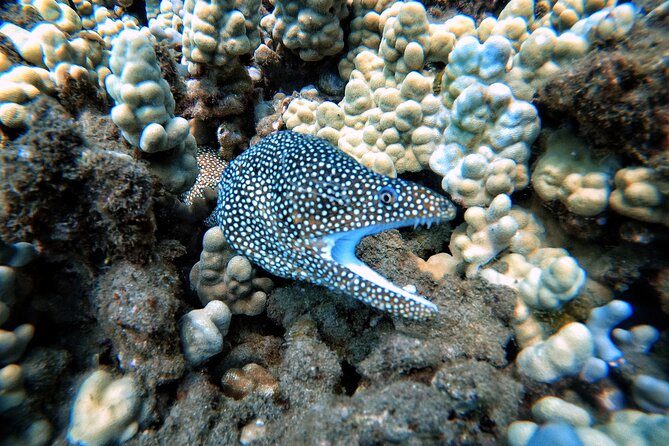
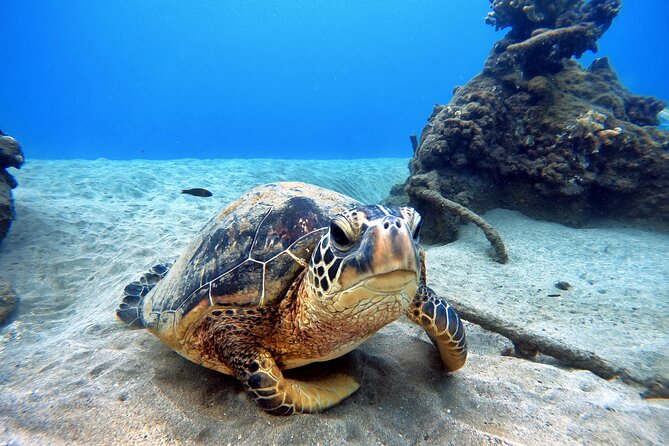
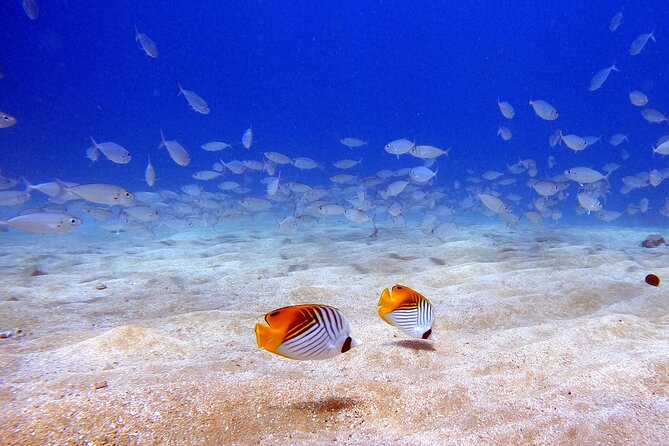
The underwater portion explores an extensive coral reef in the West Maui area. The stated wildlife list includes green turtles, moray eels, eagle rays, octopus, nudibranchs, and many colorful reef fish. You might also encounter other familiar reef creatures, but no wildlife sighting is guaranteed.
Green turtles are the headline attraction for many people. In Hawaii, the green sea turtle is called honu, and seeing one gliding over coral can be the moment that turns a nervous first attempt into a lasting memory. Keep your distance and let the animal move freely. The instructor can help you spot wildlife without chasing it.
The reef also rewards a slower pace. Moray eels may stay partly hidden in rock openings. Octopus can blend into coral and stone so well that you may miss one unless the guide points it out. Nudibranchs are tiny and often require a careful eye. A good guide does more than lead the group forward. The guide helps you notice the small life that you would likely swim past on your own.
Visibility and marine life change with weather and ocean conditions. It is wise to book this because you want the underwater lesson itself, not only because you expect a turtle. The reef, fish, and calm sensation of breathing underwater are the real reasons this works as an introduction.
More Beginner Dives in Maui:
- Beginner Scuba Diving with Turtles and Videos, San Juan
★ 5.0 · 1,743 reviews - Intro Diving 2 Stops For Beginners with Pick-up and Lunch – Hurghada
★ 5.0 · 1,146 reviews - Intro Diving Beginner and Discover Red Sea Underwater
★ 4.9 · 1,092 reviews - Beginner Scuba Diving Experience with Video Package in Honolulu
★ 5.0 · 877 reviews
Why the Four-Person Limit Matters
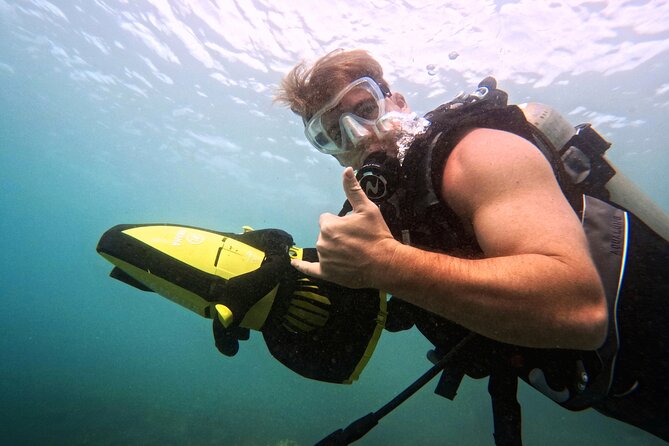
A maximum of four participants is one of the strongest features here. In a large group, a beginner may spend more time watching other people than receiving help. A small group lets the instructor check masks, hand signals, breathing, and general comfort without turning the activity into a crowded procession.
This also gives you a better chance to ask questions. If your ears do not feel right, your mask leaks, or you need a moment to settle down, you can signal the instructor without feeling lost in a crowd. Several people specifically appreciated that there was no pressure to move too quickly.
Families should still think about age, swimming ability, and confidence. The supplied information includes positive family outings with children and teenagers, including a 13-year-old and a 17-year-old, but it does not provide a formal minimum age. Ask before booking if you are bringing a child.
The small group is also useful for couples and friends. You may share the activity with people you know, but the operator can combine bookings unless you arrange otherwise. The maximum size is clear. A guaranteed private group is not stated.
Is $199 a Fair Price?
At $199 per person, this costs more than a basic beach snorkeling session. You are paying for scuba equipment, professional instruction, a small group, and access to a guided underwater session rather than simply borrowing a mask and looking down from the surface.
I think the price makes sense if you want a proper first taste of scuba without signing up for a multi-day certification course. Equipment rental alone does not teach you how to use it. Here, the instruction and close supervision are the main value.
The price is less compelling if you are already a certified scuba participant looking for a challenging site or a full day on the water. This is designed for beginners, and the roughly two-hour schedule is compact. Certified participants may find the pace and depth modest.
Photography may be available through the company, based on the service information, but it is not listed as included in the $199 price. Ask about any photography package before assuming underwater images are part of your booking.
Physical Requirements and Timing Rules
You must be able to swim and be in generally good physical health. You also need to carry the equipment into and out of the water. This is not a passive activity, even though the instructors do much of the teaching and navigation.
The post-activity altitude rule is easy to overlook. You must stay below 1,000 feet for 12 hours after scuba. That rules out Mount Haleakala, many upcountry hikes, Kula, Makawao, helicopter rides, paragliding, and ziplining during that window.
Schedule this for a day when you can keep things low and easy afterward. Lahaina plans, meals, rest, and sea-level sightseeing fit the rule better than a summit visit. Do not place this activity immediately before an excursion that climbs high above Maui.
You must also be fluent in English because instructors are not guaranteed to speak another language. If you have medical concerns, contact your physician before booking rather than waiting until the waiver is due.
Conservation and the Aloha Maui Approach
The company connects its work with local reef conservation and support for the Maui community. That is a welcome part of the experience, but the practical meaning comes from how you behave in the water.
Do not touch coral, stand on the reef, chase turtles, or handle marine life. Keep your fins under control and listen when the instructor gives distance or positioning instructions. Good buoyancy and gentle movement protect the reef while also making it easier to spot animals.
The operator’s own message emphasizes reef wildlife, coral, and local conservation. I would treat that as an invitation to be a careful participant, not as a guarantee that every conservation effort is included in the ticket price. The most direct way you help is by following the guide and leaving the reef exactly as you found it.
Weather, Cancellations, and Booking Advice
The activity requires suitable weather. If poor conditions cause a cancellation, you can receive a different date or a full refund. The same applies if the minimum number of participants is not reached.
You can cancel for a full refund up to 24 hours before the scheduled start time. Cancellations or changes made within 24 hours are not refunded or accepted, so avoid booking this too tightly around uncertain plans.
The experience is often reserved about 30 days ahead. That does not mean you must book exactly a month out, but the four-person limit makes advance planning sensible, especially if your schedule includes one specific morning.
Who Should Book This Maui Scuba Experience?
Book it if you have always wanted to try scuba but do not want to commit to certification yet. It also suits couples, families with suitable swimmers, and snorkeling fans who want to see the reef from below.
This is especially good for people who value calm instruction. Sarah, Deborah, and Ted receive repeated praise for patience, clear explanations, humor, and safety checks. Those qualities matter more than a fancy boat or a long list of possible animals.
Think twice if you dislike ocean entry, cannot swim, have trouble carrying heavy equipment, or want a deep or technical underwater trip. It is also a poor fit if you plan to visit Haleakala or take a high-elevation excursion soon afterward.
Should You Book It?
I would book this if you want a gentle introduction to scuba in Maui and you are comfortable with a beach entry. The small group, careful instruction, included equipment, and chance to reach a shallow coral reef make the $199 price reasonable for a first attempt.
Choose another activity if you want a relaxed, equipment-light outing. Snorkeling is simpler. But if the idea of breathing underwater excites you, and you want an instructor beside you rather than a crowd around you, Aloha Maui Diving offers a practical way to try it.
FAQ
Is scuba experience required?
No. The activity is designed for beginners, and no prior scuba experience is required.
Where does the activity begin?
It begins at Aloha Maui Diving, 130 Kupuohi St D4, Lahaina, Hawaii 96761.
Where does the activity end?
It ends back at the meeting point in Lahaina.
How long does the activity last?
The experience lasts approximately two hours.
How many people can join the group?
The maximum group size is four participants.
Do I need to know how to swim?
Yes. All participants must be able to swim.
Do I need to carry scuba equipment?
Yes. Shore entry requires you to carry the equipment. The information provided refers to both 40 pounds for entering and exiting the water and 50 pounds as the minimum carrying ability, so confirm the exact requirement before booking.
Can I visit Haleakala after the activity?
No. Participants must remain below 1,000 feet for 12 hours after scuba. Haleakala, some upcountry towns, high-elevation hikes, helicopter tours, paragliding, and ziplining should be avoided during that period.
What happens if bad weather cancels the activity?
You will be offered another date or a full refund if poor weather causes cancellation. A full refund is also available when you cancel at least 24 hours before the scheduled start time.
New dives around Maui
- Underwater Scooter Dive (Certified Divers Only) Makena Wailea★ 5.0 · 10 reviews
- South Maui Discover Scuba Dive★ 5.0 · 46 reviews
- 3-Tank Dive Featuring the Molokini Crater★ 5.0 · 5 reviews
- Private and Personalized Scuba Diving Adventures for All Experience Levels★ 5.0 · 62 reviews
- PADI Scuba Lesson and Shore Dive in Maui★ 5.0 · 46 reviews
- Guided Scuba Dive in Lahaina: Certified★ 5.0 · 67 reviews
- Turtle & Shark Scuba Dive in Lahaina: Certified★ 5.0 · 60 reviews
- 2-Tank Maui Turtle Scuba Dive or Snorkel Boat Tour★ 5.0 · 21 reviews
Scuba Diving for Beginners, compared.
First-Time Scuba Diving in Honolulu + Free Videos
Read our review →
Beginner Scuba Diving with Turtles and Videos, San Juan
Read our review →
Intro Diving 2 Stops For Beginners with Pick-up and Lunch – Hurghada
Read our review →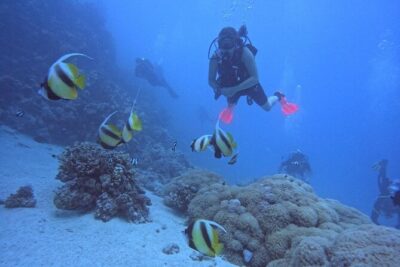
Intro Diving Beginner and Discover Red Sea Underwater
Read our review →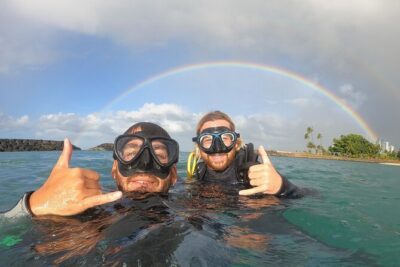
Beginner Scuba Diving Experience with Video Package in Honolulu
Read our review →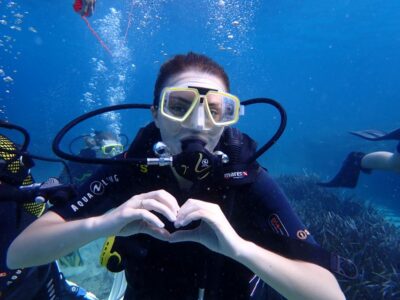
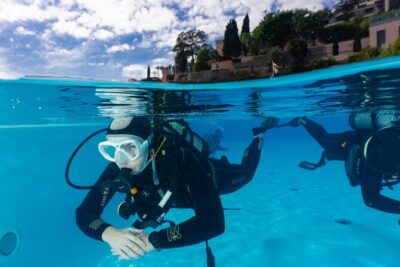
Tenerife: Beginner’s Dive at a Spot with Turtle Sightings
Read our review →Browse the lists this tour appears in