
REVIEW · BALI
Bali: 3-Days PADI Open Water Diving Course
Bali gets you underwater fast. This three-day PADI Open Water course combines classroom work, pool practice, and four ocean sessions at Padang Bai and Tulamben. I especially like the small groups, limited to four people, and the patient teaching style praised by customers who trained with Ari, Eka, Ketut, and Tunas.
I also like how much the $409 price covers: hotel transfers, equipment, marine park fees, boat and porter charges, lunches, refreshments, PADI study materials, certification, and DAN Insurance. The main drawback is the long final-day transfer to Tulamben for some pickup areas, plus the need to leave at least 18 hours between your last underwater session and a flight.
Key points to know before booking
- Four ocean training sessions: Two take place at the Blue Lagoon near Padang Bai, followed by two at Tulamben.
- The USAT Liberty is the big finale: Your last day includes training beside the famous wreck, a memorable setting for a first certification.
- Small groups matter: With no more than four participants, you should get close attention when learning skills and managing nerves.
- Most major costs are covered: Equipment rental, tanks, weight belts, transfers, meals, park fees, study materials, and certification are included.
- Plan your flights carefully: You need at least 18 hours of rest after the course before flying.
- Pickup is easiest from south Bali: Nusa Dua, Jimbaran, Kuta, Legian, Seminyak, and Sanur are covered, while Ubud, Canggu, and Uluwatu cost extra.
What $409 buys you in Bali
At $409 per person, this is not just a few guided swims with an instructor. You are paying for the full PADI Open Water training path over three days, including academic study, pool skills, four open-water training sessions, equipment, transport, food, and certification.
That package gives the price real weight. A customer who switched to this course after a canceled Labuan Bajo trip felt the cost was a fraction of what certification would have cost in the United States. Prices vary by country and operator, but the important point is simple: you are not adding separate charges for tanks, weights, park entry, boat use, or lunch.
The included hotel transfer is also useful. Pickup runs from major south Bali areas, usually between 7:00 and 7:15 in Nusa Dua, Jimbaran, Kuta, Legian, and Seminyak, and around 7:30 to 7:45 in Sanur. Your exact time is confirmed through WhatsApp the day before.
The location of your hotel still matters. Sanur is a sensible base for this course, since it can reduce the daily drive compared with staying farther west or south. Ubud, Canggu, Uluwatu, and Pecatu are not in the standard pickup zone and require an extra IDR 350,000 per group per day for transport.
More PADI Courses in Bali
- Padi Discover Scuba Diving In Amed Bali
★ 5.0 · 66 reviews - PADI Open Water Course
★ 5.0 · 16 reviews - Sanur Open Water Course learn diving in 3 Days – Get certified & Dive everywhere
★ 5.0 · 9 reviews
Day one: paperwork, lessons, and pool skills
The first morning begins at the dive center with registration and course paperwork. You then work through instructional videos, knowledge reviews, quizzes, and exams. This is the least glamorous part of the course, but it gives you the safety rules and basic theory needed for the ocean sessions.
Expect a full learning day rather than a quick resort introduction. You will study how scuba equipment works, how to use it correctly, and what a certified diver needs to understand before leaving the pool.
Lunch and refreshments break up the classroom work. The center provides free water, tea, and coffee, which is a small but useful touch during a long training day.
The afternoon moves to the swimming pool. Here you practice core skills with an instructor before dealing with waves, boats, and open water. The exact exercises are not listed, so I would not promise a particular skill sequence, but this is where you begin handling the equipment and getting comfortable in the water.
At the end of the day, the equipment you used is logged and the sign-off paperwork is completed. The center washes and stores the equipment for you, so you do not need to transport wet gear back to your hotel.
This first day is especially important for nervous beginners. Ari, Eka, Ketut, and Tunas receive repeated praise for being patient, clear, and reassuring. One person who started anxious said the pool work turned that nervousness into confidence before the ocean sessions began.
Day two: Blue Lagoon training at Padang Bai
Day two starts with equipment preparation and loading the vehicles. You then travel to Padang Bai, a port town on Bali’s east coast, and take a boat to the Blue Lagoon.
The boat ride changes the mood from classroom study to an actual sea outing. You complete your first open-water training session in the lagoon, then get a short break on deck or in the water before the second session.
That pause matters. Learning new skills while managing breathing, equipment, and buoyancy takes concentration. A short rest lets you settle down rather than rushing from one exercise to the next.
The Blue Lagoon is used here as a training setting, not merely as a scenic backdrop. You learn to apply pool skills in the sea, where conditions feel less controlled and your attention must stay on your instructor and equipment.
After the second session, you return to Padang Bai for lunch at Billabong Restaurant before heading back to the center. Lunch is included, as are light refreshments during the course.
This is a long day, and the early start makes sense. You should arrive ready to concentrate, not expecting a lazy beach morning. Bring swimwear, sunscreen, a change of clothes, and enough patience for a full training schedule.
Day three: Tulamben and the USAT Liberty
The final day takes you to Tulamben, home of the USAT Liberty wreck. This is the part that gives the course its strongest sense of place.
The Liberty was a US cargo ship that now rests underwater off Tulamben. You do not simply arrive and sightsee. The third and fourth open-water sessions are still training sessions, with the wreck providing the setting for your final skills and certification work.
The shipwreck gives a first certification an impressive finish. Customers describe being able to get close to the wreck, and one person particularly enjoyed swimming through it. Conditions and access can vary, so you should follow your instructor’s directions rather than treating the site like an independent exploration.
Between the two sessions, you stop for lunch. After the last one, the equipment is packed and you return to the center for final certification and sign-off.
The transfer to Tulamben can be tiring. One customer described the journey as about two and a half hours, but felt the wreck made it worthwhile. That is a useful way to judge the day: the road trip is part of the cost of reaching the site, and the reward is a memorable final training location.
More PADI Courses in Indonesia
- Bali: 2-Day PADI Advanced Open Water Course
★ 5.0 · 4 reviews - 2 PADI Certified Dives at Tulamben from Bali
★ 5.0 · 3 reviews - Bali Hai – PADI Advance Open Water Course in Menjangan
★ 5.0 · 2 reviews - Bali Hai – PADI Advance Open Water Course in Lembongan
★ 5.0 · 2 reviews
What instruction is like in a group of four
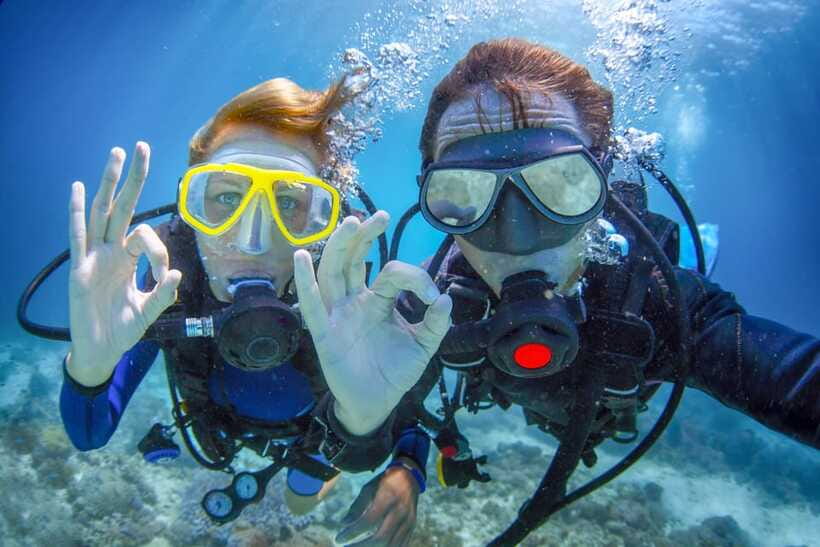
The course is limited to four participants, which is one of its strongest features. Scuba training is not a good place to feel anonymous. You want the instructor to notice when you are uncomfortable, confused, or moving too quickly.
Ari is repeatedly praised for being patient, funny, and attentive. Eka receives similar praise for explaining skills clearly and allowing people to take the time needed to master them. Ketut is described as friendly, responsible, and caring, while Tunas helped make the process easy to understand and comfortable in the water.
The instructor names matter because teaching style can shape your whole course. You cannot request a particular instructor based on the information provided, but the team has a strong record of calm, personal instruction.
One person trained with two dive masters in training and still felt safe, though the quality of a particular session can depend on the group and staff assigned that day. The small format should help, but you should still speak up if a skill needs repeating.
The course is available in English and Indonesian. Participants must be at least 10 years old. The activity is not suitable for pregnant women, people with heart or respiratory problems, or wheelchair users.
The underwater scenery and its limits
The Coral Triangle setting is a major reason to choose Bali for a first certification. The course gives you a chance to see fish and marine life while learning, rather than practicing in a featureless pool and postponing the real experience.
The USAT Liberty is the strongest visual attraction. Its size and history give the final two sessions a sense of adventure that an ordinary training site may lack.
Still, keep your expectations sensible. One customer found the sites crowded with other divers and did not consider the fish variety exceptional. That is a fair warning. This course is designed to qualify you safely in warm Bali waters, not to deliver a private expedition to untouched reef.
You may find the most value in the combination of skill training and scenery. The pool prepares you, Padang Bai gives you your first ocean practice, and Tulamben adds the wreck. Each setting marks a clear step forward.
Equipment, meals, and practical comfort
All standard rental equipment is included, along with tanks and weight belts. The equipment you use is washed and stored by the center, which removes a chore from a three-day course.
Bring your own swimwear, sunscreen, and a change of clothes. Sunscreen is not included, and neither is a GoPro, though you can rent a camera from the center if you want photos or video.
A towel is available if requested, so ask the team in advance rather than assuming one will be waiting. The center also provides water, tea, and coffee, while lunch and light refreshments are included during the course days.
One older complaint involved a wetsuit that was not clean enough and caused a rash. That is not the general picture presented by the course, but it is still sensible to inspect your equipment before entering the water and tell the staff immediately if something feels wrong.
Timing your course around a flight
The 18-hour flight rule is essential. After your last underwater session, you must have at least 18 hours before an upcoming flight to allow nitrogen levels in your body to reduce.
If you have less than 18 hours before flying, you will not be allowed to participate. Do not place the course on the final day of a Bali trip with an early departure the next morning.
Build in extra breathing room if you can. A later flight gives you more flexibility if transport runs long or the schedule changes. It also lets you enjoy the final day without watching the clock.
Who should book this PADI course?
This course suits first-time scuba students who want a recognized PADI certification without stretching training over a longer holiday. It is especially useful if you are staying in south Bali and want transport, meals, equipment, and certification handled in one package.
It is a good fit for people who enjoy structured learning. You will have videos, quizzes, exams, pool work, equipment checks, and sign-offs, not just sightseeing.
Families should note the minimum age of 10, but the course is not suitable for wheelchair users, pregnant women, or people with heart or respiratory issues. If any medical concern applies to you, check your suitability before booking.
The course may be less appealing if you have only two free days, dislike early starts, or want a relaxed beach activity. Day three also involves a substantial trip to Tulamben, so the wreck comes with road time.
Booking details that matter
Cancellation is free up to 24 hours before the activity for a full refund. You can also reserve now and pay later, which helps if your Bali schedule is still changing.
Pickup is included from central Nusa Dua, Jimbaran Beach, Kuta, Legian, Seminyak, and Sanur. The remote pickup fee is IDR 350,000 per group per day for Uluwatu or Pecatu, Canggu, and Ubud.
The activity has an overall rating of 4.8 from 98 ratings, with transport receiving a 90 percent perfect score. The strongest pattern is clear: people value the instructors, the calm safety focus, the small groups, and the smooth handling of transport and meals.
Should you book this course?
I would book it if you want to become PADI Open Water certified in three focused days and like the idea of finishing at the USAT Liberty. The $409 price is strong because it includes the costly pieces that can quietly add up elsewhere.
Choose it with realistic expectations. You are signing up for early starts, classroom study, equipment work, road travel, and busy training sites, not a private reef holiday.
Stay in Sanur if possible, confirm the pickup time through WhatsApp, pack swimwear and dry clothes, and protect the 18-hour post-course flight gap. If you want a serious first step into scuba with patient instruction and a memorable wreck setting, this course is a practical choice.
FAQ
How long is the PADI Open Water course?
The course lasts three days and includes academic work, pool training, four open-water training sessions, and final certification.
How much does the course cost?
The price is $409 per person.
Are hotel transfers included?
Yes. Hotel pickup and drop-off are included from major south Bali areas, including Nusa Dua, Jimbaran Beach, Kuta, Legian, Seminyak, and Sanur.
Does pickup from Ubud cost extra?
Yes. Pickup and drop-off from Ubud, Canggu, Uluwatu, or Pecatu cost IDR 350,000 per group per day.
How many people are in each group?
The group is limited to four participants.
Where does the ocean training take place?
The first two ocean training sessions take place at the Blue Lagoon near Padang Bai. The final two are held at Tulamben near the USAT Liberty wreck.
Are meals included?
Yes. Lunch and light refreshments are included. The course also provides free water, tea, and coffee at the dive center.
Is scuba equipment included?
Yes. Rental equipment, tanks, and weight belts are included. The center washes and stores the equipment used during the course.
What should I bring?
Bring swimwear, sunscreen, and a change of clothes. A towel is available if you ask the team, and a GoPro can be rented separately.
How much time should I leave before flying?
You must allow at least 18 hours between your last underwater session and your flight. If you have less time, you will not be permitted to take part.
More Dive Courses in Bali
- Barcelona: PADI Discover Scuba Diving
★ 4.7 · 1,016 reviews - PADI Open Water Diver Course
★ 5.0 · 626 reviews - Tossa de Mar: PADI Discovery Scuba Diving in Costa Brava
★ 4.7 · 392 reviews - Full-Day Beginner Scuba Course with Private Tuition, Racha Yai
★ 5.0 · 368 reviews
New dives around Bali
- Bali Hai – PADI Advance Open Water Course in Menjangan★ 5.0 · 2 reviews
- All Inclusive Bali Scuba Diving at Tulamben with Lunch -Transport★ 5.0 · 4 reviews
- Fun Diving Tulamben Bali – For Certified Divers★ 5.0 · 33 reviews
- Dive at Tulamben Bali USS Liberty Ship Wreck★ 4.5 · 7 reviews
- Nusa Penida Private Diving Tour by Speedboat★ 5.0 · 2 reviews
- Bali Hai – PADI Advance Open Water Course in Lembongan★ 5.0 · 2 reviews
- Try Scuba Diving at Tulamben Shipwreck★ 5.0 · 5 reviews
- Try Dive with Manta Rays in Bali★ 5.0 · 2 reviews
PADI Courses & Certification, compared.
Tossa de Mar: PADI Discovery Scuba Diving in Costa Brava
Read our review →
Full-Day Beginner Scuba Course with Private Tuition, Racha Yai
Read our review →
Beginner Scuba Diving Lesson with PADI Instructor
Read our review →
Discover Scuba Diving with No Certification in St Thomas
Read our review →
Try Dive – PADI Discover Scuba Diving in Tenerife
Read our review →
Browse the lists this tour appears in