
REVIEW · CYPRUS
Paphos: Discover Scuba Diving Half-Day Tour
The ancient harbour is hiding below Paphos. I like the careful pool practice before open water and the chance to see Roman amphorae, anchors, and perhaps a summer turtle at the Roman Wall. The small groups, limited to eight, also give instructors room to help nervous beginners.
The main drawback is that this is a first-taster, not a full certification course. You reach a maximum of 5 metres, and you must complete the online learning beforehand, swim comfortably, and pass a medical questionnaire. If you have a cold, heart or lung condition, epilepsy, or are pregnant, this activity is not suitable.
Key points to know before you book
- Your first open-water session reaches 5 metres, with pool training first.
- The Roman Wall site is a short walk from Cydive, so no boat transfer is needed.
- Ancient underwater sights include amphorae and lost anchors, with green turtles possible in summer.
- Groups are limited to eight people, with instruction in English or Greek.
- The $106 price includes scuba gear, wetsuit, boots, eLearning, drinks, and fruit, but not towels, sunscreen, or underwater photographs.
- Allow three hours, and do not schedule a flight for at least 12 to 24 hours afterward.
A gentle start at Cydive in Paphos
This half-day experience begins at Cydive, close to Paphos Harbour. The center is in a slightly tucked-away spot, so allow a few extra minutes to find it, especially if you are arriving by car or bus.
Drivers should head toward the Papantoniou Supermarket near the harbor. Turn onto the small road beside the supermarket, and you will find Cydive on the right, with parking to the left.
If you arrive by bus, use the Paphos Harbour stop. From there, cross toward the bakery and ECOSI ice cream shop, pass through the stone archway, and look for the center on the left. If you are walking along the seafront, find the steps with the metal railing, cross toward the restaurant side, and use the alley beside The Captains View.
The welcome begins with water, tea, coffee, and fresh fruit. This is a small but useful touch. You are about to spend time in unfamiliar equipment, so a calm arrival helps you settle before the serious instruction begins.
The group limit of eight matters here. Beginner scuba sessions can feel rushed when too many people share one instructor. At Cydive, the instructors can keep an eye on individual comfort levels, which is especially important if you are uneasy about breathing through a regulator or wearing a mask.
More Discover Scuba Diving in Cyprus
- Cyprus: Introductory Scuba Lesson and Dive with Transfer
★ 4.9 · 682 reviews - Half-Day Scuba Diving Tour – Discover Scuba Diving!
★ 5.0 · 669 reviews - Discover Scuba diving
★ 5.0 · 504 reviews
The 30-minute briefing makes the sea feel less mysterious
The first formal stage is a safety briefing of about 30 minutes. You learn how to equalize the air spaces in your ears, use hand signals underwater, and handle the basic equipment.
This is not filler. Underwater, you cannot simply ask a question in the usual way, so the hand signals and breathing practice give you a simple language before you leave the shore. Equalizing is also one of the key skills for a comfortable descent. If your ears feel pressure, you need to know how to respond rather than push through it.
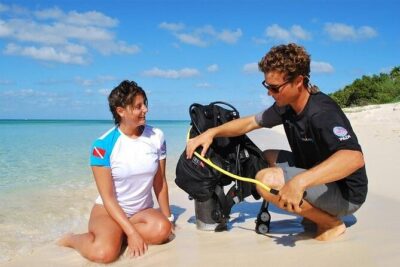
The staff explain what each item does and how the equipment fits into the session. You use a wetsuit, boots, mask, regulator, buoyancy equipment, and air tank, though the precise setup is introduced by the instructors during the briefing.
The instructors named in past sessions include Mick, Pavlos, Chris, Eva, Sophie, Emma, Kris, and Mike. The strongest pattern in the feedback is not one particular instructor, but the calm approach across the team. Pavlos helped reassure a nervous beginner, while Mick was praised for clear instructions and patience with someone finding the mask and breathing method difficult.
That matters more than cheerful chatter. A first underwater experience can turn quickly if you feel rushed. The instructors appear willing to pause, repeat an explanation, or give one person extra help while another staff member supports the rest of the group.
Pool practice before the open water
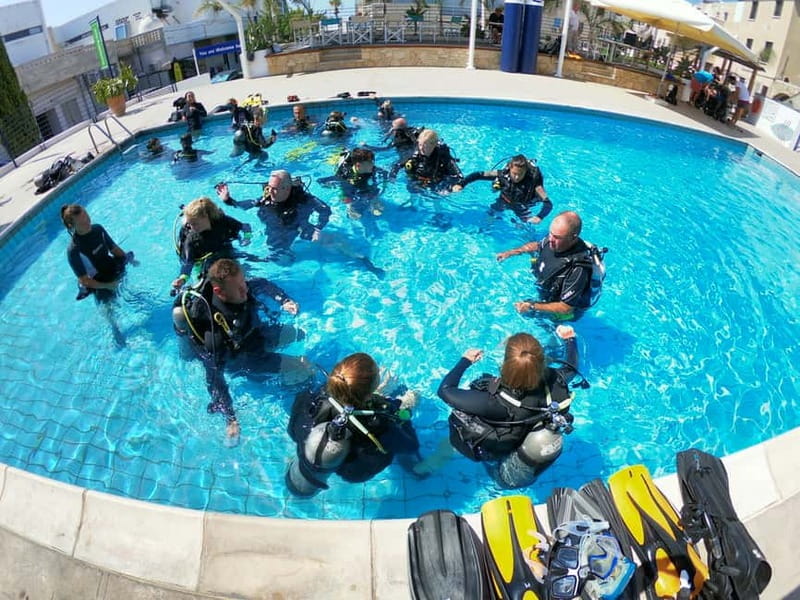
After the briefing, you spend about an hour in class and pool training. The first breath underwater happens in the pool, where the setting is controlled and you can focus on the unfamiliar feeling of breathing through scuba equipment.
You practise wearing the same type of gear used at the shore site. The session includes swimming around in full equipment, going to the deep end, and working on ear equalization.
This is the smartest part of the format. A swimming pool gives you time to notice how the mask feels, how the regulator works, and how your body responds to the gear without the added distraction of waves or open space. If you feel anxious, the pool is the place to say so.
The pool session is also where the experience separates itself from a quick tourist photo opportunity. You are not simply fitted with equipment and sent into the sea. You receive a basic introduction to the skills that make the later session safer and more comfortable.
Still, you should arrive with realistic expectations. You need to be a comfortable swimmer. This is not a lesson for someone who cannot swim, and an instructor cannot remove that basic requirement.
The short walk to the Roman Wall site
Once the pool work is finished, you walk for about three minutes to the training site. The Roman Wall is a shore-based location, so there is no boat ride, choppy transfer, or lengthy wait before entering the water.
That simple access helps keep the session within three hours. It also means you can move from the training room to the sea while the instructions are still fresh.
The site has an unusual appeal for a first scuba experience. You are not looking only at anonymous rock or sand. Below the surface, you might see ancient Roman amphorae, old anchors, and parts of the underwater Roman harbour area. The exact sights can vary, but the archaeological setting gives the hour in the sea a clear sense of place.
The maximum depth is 5 metres. That is shallow by scuba standards, but it is a sensible limit for a first open-water session. You can concentrate on breathing, signals, buoyancy, and staying close to the instructor rather than managing a demanding descent.
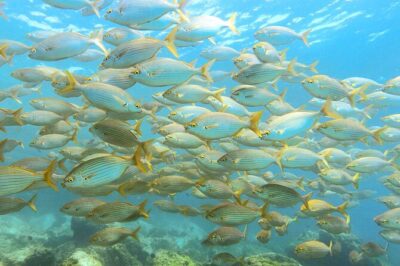
Summer may also bring green sea turtles. No sighting is guaranteed, and the experience should not be judged on turtle luck alone. The Roman remains and the feeling of moving through clear Mediterranean water are the dependable attractions.
More First-Time Dives in Cyprus:
- Discover SCUBA Diving with Pissouri Bay Divers
★ 5.0 · 182 reviews - Discover Scuba Diving
★ 5.0 · 43 reviews - Discover Scuba Diving Amathounta’s Ancient Port
★ 5.0 · 30 reviews - Green Bay Cyprus – Scuba diving – Guided Dive or Try Dive
★ 5.0 · 27 reviews
What the one-hour sea session feels like
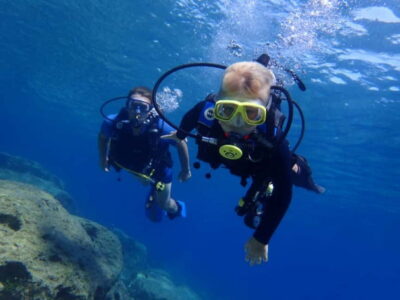
The open-water part lasts about an hour, though the time you spend actively moving underwater can vary with the group and each person’s comfort. You receive support from the instructor as you practise the basic skills in a real sea setting.
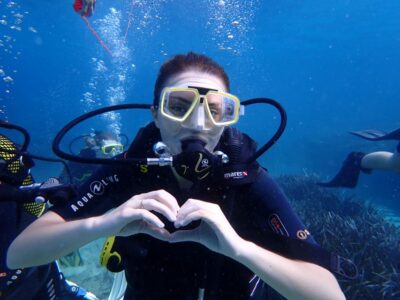
This is where the earlier pool hour pays off. You already know the basic equipment and signals, so you can pay more attention to the water around you. You might see pottery, anchors, Roman walls, and marine life while the instructor guides the group.
The clearest benefit of the shore site is control. Since it is only a short walk from the center, the staff can focus on the underwater session rather than coordinating a boat. For a first attempt, fewer moving parts usually means less stress.
You should also expect a physical adjustment period. The mask covers much of your face, the regulator changes how you breathe, and the equipment can feel bulky. One participant described being nervous about the mask and breathing, while another was more worried about the open sea and the depth. Both concerns are normal, which is why the staff’s patience is so important.
If you feel uncomfortable, tell the instructor early. The session is designed for beginners, but it is not a test of bravery. Completing the entire underwater section is rewarding, yet feeling safe and in control is more important than forcing yourself onward.
Photos, refreshments, and the final class
After the sea session, there is a 20-minute photo stop. Underwater photographs and videos are not included in the price, so treat them as an optional extra rather than part of the package.
A staff photographer named Charlie has been praised for taking pictures and videos during sessions. Some participants later bought the images, and one family received a discount. Ask about the cost before agreeing if you want to keep your budget clear.
The final return to the center includes another short class of about 15 minutes. This gives you time to review the experience, ask follow-up questions, and learn what further scuba training could involve.
That last conversation can be useful if this session sparks a serious interest. Several people finished the introduction wanting to continue, and one participant went on to book a full PADI course. The staff can give advice about further qualification, but this three-hour activity itself does not certify you.
The day ends with coffee or tea for about 15 minutes. Fresh fruit and drinks are included throughout the experience, which is welcome after physical activity in a wetsuit.
Is $106 a fair price?
At $106 per person, this is not the cheapest way to spend three hours in Paphos. The value depends on what you want from it.
You are paying for a guided first scuba session, a pool lesson, an open-water visit, scuba equipment, wetsuit, boots, PADI Discover Scuba Diving eLearning, drinks, fruit, and a small-group format. You also get a location with archaeological interest rather than a generic practice area.
The price looks more reasonable if you would otherwise need to arrange equipment rental and beginner instruction separately. The staff attention is another part of the value. If you are nervous, a patient instructor who gives clear explanations can make the difference between completing the session and leaving the water early.
The cost does not include towels, sunscreen, or underwater images. Bring your own towel and sunscreen, and decide in advance if photographs are worth adding. Cameras are not allowed during the activity, including waterproof cameras, so you cannot simply carry your own device.
You also need to value the eLearning requirement. It is included, but it must be completed before the activity date. This means the experience starts before you reach Cyprus, and you should not leave the online work until the last minute.
Who will enjoy this Paphos experience?
This suits first-time scuba participants who want a proper introduction without committing to a full certification course. It is also a good fit for families with children aged 10 and older, provided everyone can swim comfortably and meets the medical requirements.
The activity can work well for mixed-experience groups. A family aged 11 to 37 completed the session together, and the instructors adjusted their support to different ages and comfort levels. That does not mean every child will feel relaxed, so talk honestly with younger participants before booking.
It is also suitable for solo bookers. One person joined a very small group and felt safe and well supported, with time for detailed questions. The English and Greek instruction gives you a choice, though you should select the language that lets you follow safety instructions without hesitation.
You should skip this experience if you cannot swim, are pregnant, have epilepsy, heart problems, or respiratory conditions. A medical questionnaire is required before the session, and those restrictions are firm.
Avoid booking when congested. A cold can make ear equalization difficult, so rescheduling until you are clear-headed and breathing normally is sensible.
Practical timing and flight advice
The activity lasts three hours, but you should not plan it too tightly against another appointment. The schedule includes welcome refreshments, 30 minutes of safety instruction, an hour of class and pool work, the sea session, photos, a final class, and coffee or tea.
Bring swimwear, a towel, sunscreen, and a hair tie. Wear practical footwear for walking to the shore site. High-heeled shoes are not allowed, and smoking indoors, alcohol, drugs, and feeding animals are prohibited.
Most important, do not schedule a flight on the same day. The guidance is to wait at least 12 to 24 hours after scuba activity before flying. If your holiday ends with a flight, place this experience earlier in your itinerary.
Weather can also affect the schedule. The session may be moved if conditions are unsuitable, so keep a little flexibility in your Paphos plans.
Cancellation is flexible up to 24 hours before the start for a full refund, and you can reserve now and pay later. Check the available start times before booking, as the three-hour duration alone does not tell you when each session runs.
Should you book the Cydive experience?
I would recommend it if you want your first scuba session to include real instruction, a pool rehearsal, and an unusual underwater setting. The Roman Wall, amphorae, anchors, clear Mediterranean water, and chance of a summer turtle give the hour in the sea more character than a basic resort lesson.
Book with the right expectations. You will not receive a full scuba qualification, underwater photos are extra, and you must complete the online course before arriving. If you are a comfortable swimmer, meet the health requirements, and can spare three hours away from your regular sightseeing, the $106 price offers a well-supported first step into scuba.
FAQ
How long does the Paphos scuba experience last?
The full activity lasts three hours, including refreshments, briefing, pool training, the open-water session, photo time, a final class, and coffee or tea.
How deep will I go?
The first open-water session reaches a maximum depth of 5 metres.
Do I need previous scuba experience?
No. The activity is designed as a first scuba experience and includes a briefing, equipment instruction, pool practice, and a guided open-water session.
Do I need to know how to swim?
Yes. Participants must be comfortable swimmers. People who cannot swim cannot take part.
What equipment is included?
Scuba equipment, a wetsuit, and boots are included.
Are underwater photos included?
No. Underwater photographs and videos are not included. Cameras, including waterproof cameras, are not allowed during the activity.
What should I bring?
Bring swimwear, a towel, sunscreen, and a hair tie. Towels and sunscreen are not provided.
Can children join the activity?
Children under 10 cannot participate. Children aged 10 and older may take part if they meet the swimming and medical requirements.
Can I fly on the same day?
No. You should wait at least 12 to 24 hours after the scuba session before flying.
Where does the activity take place?
You meet at Cydive near Paphos Harbour. The open-water session takes place at the Roman Wall site, about a three-minute walk from the center.
More Half-Day Trips in Cyprus
- Half-Day White Shark Cage Diving from Gansbaai
★ 4.5 · 310 reviews - From Dubai: Fujairah Half-Day Scuba Dive and Snorkeling
★ 4.7 · 186 reviews - Half-Day Diving in Sal
★ 5.0 · 135 reviews - Half-Day Small-Group 2-Tank Scuba Dive in Key Largo (CERTIFIED DIVERS ONLY)
★ 5.0 · 125 reviews
New dives around Cyprus
- Dive The Rock (Scuba Diving Experience in Protaras)★ 5.0 · 28 reviews
- Scuba Diving at Turtle Bay with Underwater Pictures Included★ 5.0 · 2 reviews
- Zenobia Shipwreck Scuba Diving Trip 2x Dives★ 5.0 · 4 reviews
- Scuba Diving Adventure at Green Bay Beach★ 5.0 · 7 reviews
- Scuba Diving Experience & MUSAN Dive + Free Edited Video 2xdives★ 5.0 · 34 reviews
- Private Scuba Diving Experience in Cyprus★ 5.0 · 13 reviews
- Scuba Diving Cyprus Experience Protaras and Ayia Napa & Turtles★ 4.5 · 36 reviews
- Protaras: Discover Scuba Diving For Beginners 2 Dives★ 5.0 · 4 reviews
Discover Scuba Diving, compared.
Cyprus: Introductory Scuba Lesson and Dive with Transfer
Read our review →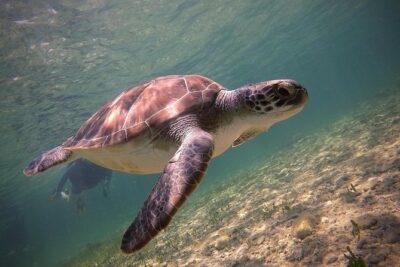
Half-Day Scuba Diving Tour – Discover Scuba Diving!
Read our review →Browse the lists this tour appears in