
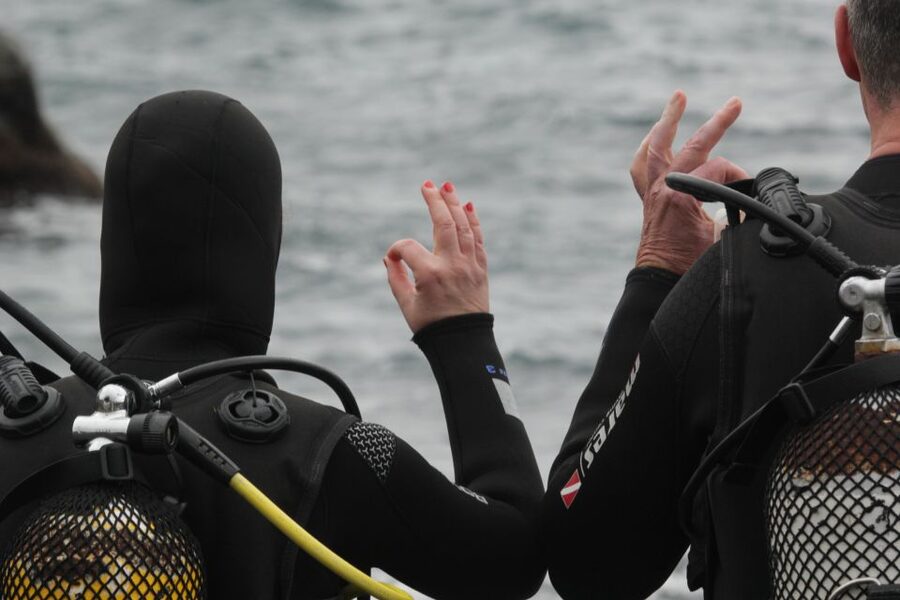
REVIEW · SPAIN
La Palma: Basic Diver Certification with 2 Atlantic Dives
Start beneath La Palma’s waves. This six-hour Atlantic experience gives you a gentle first taste of scuba in two supervised sessions, beginning in shallow water before reaching a maximum of 12 meters. I like the small groups of only three people and the patient instruction, especially for beginners who may need time to get comfortable breathing underwater. I also like that the SSI Basic Diver certification can count toward a later Open Water Diver qualification.
The main consideration is that this is not a full Open Water course. Your certification allows more sessions down to 12 meters for six months, but you will still need further training for broader independent scuba privileges. You also need to be a confident swimmer and medically fit, so this is not a good choice if you have a cold, respiratory trouble, heart problems, epilepsy, recent surgery, or difficulty moving around.
Key points at a glance
- Two Atlantic sessions at Playa Malpique: Recent feedback identifies this La Palma site as the setting for both underwater outings, with fish, moray eels, starfish, and other sea life reported there.
- A calm start in shallow water: You first learn to breathe through the regulator and manage the equipment where the water is very shallow.
- Maximum depth of 12 meters: You can remain shallower if you prefer, so the second session is not an all-or-nothing test of nerve.
- SSI Basic Diver certification included: The qualification is valid for additional sessions to 12 meters for six months and can count toward Open Water training.
- Three-person maximum: This is a useful size for close supervision, questions, and a slower pace.
- Equipment, insurance, water, and cookies included: You do not need to arrange the main gear, and the surface interval includes simple refreshments.
Why this is a good first step into scuba
Scuba can feel strange during the first few minutes. The mask, tank, regulator, and buoyancy equipment all require attention, and breathing underwater is not a natural sensation for most people. This program handles that awkward beginning sensibly by starting in very shallow water.
Your instructor introduces the equipment and explains the basic rules before you enter. Once in the water, you have time to get used to breathing through the regulator. You then practise the essential skills needed to handle the gear and stay comfortable.
I like this order. You are not rushed straight into open Atlantic water at a significant depth. You first get your bearings, practise the basics, and complete a short underwater tour while conditions are still simple. For a nervous first-timer, that gradual start may matter more than the sightseeing itself.
The group limit of three is another strong point. In a larger class, a beginner can spend a lot of time waiting or trying to attract an instructor’s attention. Here, the guide can watch your breathing, body position, and comfort more closely. That does not remove every challenge, but it gives you a better chance to ask for help before a small problem becomes a big one.
The instructors speak German, Spanish, and English. Recent feedback gives particular praise to Diana for detailed preparation and a calm manner, while Daniel is described as patient. Veronika and Sebastian are also praised for explaining things clearly and keeping the atmosphere relaxed. Instructor assignments can vary, but the emphasis on patient teaching is a useful sign for anyone who feels unsure.
More PADI Courses in Spain
- Barcelona: PADI Discover Scuba Diving
★ 4.7 · 1,016 reviews - Tossa de Mar: PADI Discovery Scuba Diving in Costa Brava
★ 4.7 · 392 reviews - Try Dive – PADI Discover Scuba Diving in Tenerife
★ 5.0 · 214 reviews
The first session begins close to shore
The day starts with an equipment briefing and an explanation of how to stay safe underwater. You learn what each piece of gear does and how to use it before beginning the practical work.
The first session remains at a very shallow depth. This is where you practise breathing, get comfortable with the mask and regulator, and learn the basic skills needed to manage yourself in the water. The instructor lets you work through these tasks rather than simply telling you what to do.
That training is followed by a short tour in shallow water. You can enjoy the Atlantic setting while still having a simple route and a manageable depth. The program description does not promise a fixed list of marine animals on every outing, so you should treat the wildlife as a bonus rather than a guarantee.
Playa Malpique is the named setting associated with the sessions. Feedback from one recent participant describes seeing fish, moray eels, starfish, and other sea life there. Underwater visibility and wildlife sightings can change with weather and sea conditions, and one person still found the experience excellent even when the weather was not perfect.
The first session is valuable because it combines skill practice with a real underwater outing. You are not spending the entire morning on theory, but you also are not expected to remember complicated procedures while dealing with unfamiliar equipment in deeper water.
The surface break gives you time to reset
After the first underwater session, you return to the surface for a break. Water and cookies are provided at the site, along with a briefing for the next session.
This is a small detail, but it helps. A first scuba session can take more concentration than you expect, and you may appreciate a drink and a quick snack before putting on the gear again. The pause also gives you time to talk through anything that felt difficult.
The second briefing prepares you for the next stage. You review more skills and get a fresh tank of air. The instructor can address concerns from the first session before you go back into the water.
The six-hour duration includes this teaching, equipment preparation, two sessions, and the surface interval. It is not six hours of continuous time underwater, and that is a good thing. Beginners need time for instruction, changing equipment, safety checks, and rest.
The second session reaches up to 12 meters
The second underwater session builds on what you learned earlier. You practise additional skills and then may descend to a maximum of 12 meters.
You do not have to reach that depth if you prefer to remain shallower. This flexibility is important because comfort levels vary widely. One person may enjoy going to the full limit, while another may get more from a shorter, shallower outing.
A depth of 12 meters gives you a real introduction to the underwater world without presenting this as an advanced course. You get a stronger sense of the Atlantic environment and more practice with buoyancy and equipment control, while the instructor remains with you.
The order of the program also helps you make a better decision about your own comfort. After the first session, you know how your body reacts to the equipment and the breathing system. You can then approach the second session with a clearer idea of whether you want to go deeper or stay near the surface.
The program is not designed for non-swimmers. You need to be able to manage yourself in the water, follow instructions, and remain calm enough to use the equipment. If you are only curious about scuba but have no swimming ability, choose a different water activity.
More Dive Courses in Spain:
- Tossa de Mar Scuba Diving PADI
★ 5.0 · 175 reviews - Ibiza: PADI Discover Scuba Diving & Snorkeling Boat Trip
★ 4.6 · 154 reviews - Gran Canaria:Live an Adventure and Learn to Dive with Expert
★ 4.7 · 109 reviews - PADI Open Water Diver Course (OWD) – 2.5 days
★ 5.0 · 98 reviews
What you see at Playa Malpique
The attraction here is not just the certificate. The underwater setting gives you a chance to look at La Palma from a very different angle.
Fish, moray eels, and starfish have been seen during these sessions. That mix suggests a pleasant introduction to Atlantic marine life, but conditions always affect what appears on the day. Weather, visibility, and the movement of animals are beyond the instructor’s control.
I would book this for the chance to explore rather than for a guaranteed wildlife checklist. If you hope to see a particular animal, you may be disappointed. If you are happy to learn basic skills and notice whatever appears around you, the setting adds real value.
The named site is also useful for first-timers because the activity begins in shallow water. You can focus on breathing and movement instead of trying to cope with depth immediately. That practical progression is one of the better reasons to choose this program over a less structured introduction.
What the $152 price includes
At $152 per person, this is not a cheap casual water activity. You are paying for a full six-hour program, an instructor, two Atlantic sessions, scuba equipment, insurance, and the SSI Basic Diver certification.
The small group matters when judging the price. With a maximum of three participants, you are paying for a more personal teaching setup rather than a crowded class. That can be especially worthwhile if you are nervous, need repeated explanations, or want close supervision during your first underwater session.
The certification adds longer-term value. It permits more sessions down to 12 meters during the following six months, and it can count toward an Open Water qualification. The exact amount of credit toward that later qualification is not specified, so you should ask the instructor how the training will be applied to your next course.
Water and cookies are included at the site. They are modest extras, but they mean you do not need to plan a separate snack during the surface break. Full equipment is also supplied, so you only need to bring beachwear.
If you want one quick underwater activity with no interest in further training, the certificate may not add much value. If you are considering an Open Water course, the price makes more sense because this can serve as a first recognised step.
Who should book this La Palma activity
I would recommend it to adults and children aged 10 or older who can swim, are medically fit, and want a careful introduction to scuba. The small group and shallow start are well suited to first-timers who prefer an instructor nearby.
It can also work for families with older children. A family account describes children aged 11 and 16 enjoying the calm explanations and relaxed instructors. You should still judge each child individually. Being old enough does not automatically mean being ready to breathe through a regulator in the sea.
This activity suits you if you want:
- A first scuba qualification in one day
- Two supervised Atlantic sessions
- A maximum depth that remains moderate
- The option to stay shallower
- A possible first step toward Open Water training
- Instruction in English, German, or Spanish
It is not suitable if you are a non-swimmer or have a listed medical concern. The operator requires a medical clearance on arrival. If you have any doubt about your health, ask your doctor before booking rather than waiting until the day.
You should also reconsider if you currently have a cold. Even a minor blocked nose can make underwater pressure changes uncomfortable, and the activity specifically excludes people with colds, respiratory issues, recent surgery, heart problems, or epilepsy.
Practical details before you go
The meeting point is behind the main road, at the location marked on Google Maps. Check the map carefully before setting out, since the description specifically notes that the meeting place is not directly on the main road.
Bring beachwear. The main scuba equipment is supplied, as is insurance. Water and cookies are available at the site, but you may want to eat a sensible meal before the six-hour activity without arriving overly full.
The activity is offered with free cancellation up to 24 hours before the start, and you can reserve now and pay later. Starting times depend on availability, so check the schedule before arranging the rest of your day.
The overall rating is 4.9 from 18 ratings, and the comments consistently praise patient explanations, a relaxed teaching style, and a strong sense of safety. One participant still rated the experience highly despite imperfect weather. That is useful context: the instructors appear to handle normal Atlantic uncertainty well, but no sea activity can promise perfect conditions.
The SSI certificate and what it really means
The SSI Basic Diver certificate is useful, but you should understand its limits. It allows you to do additional sessions to a maximum depth of 12 meters during the next six months. It is not the same as completing a full Open Water Diver course.
The certificate can count toward Open Water training, which makes this program a sensible trial for someone considering more scuba later. Before you book a full course, you can find out whether you enjoy the equipment, the breathing system, and the sensation of being underwater.
If your long-term plan is to scuba regularly, ask how this first qualification will transfer into your next course. The supplied information confirms that it can count toward Open Water training, but it does not state exactly which lessons or requirements will be credited.
Should you book it?
Book this if you want a carefully guided first taste of Atlantic scuba, especially if the idea of a large class makes you uneasy. The combination of shallow practice, two sessions, a three-person limit, full equipment, and a recognised SSI certificate gives the $152 price a fair amount of practical value.
Skip it if you cannot swim, have one of the listed health conditions, or want a complete Open Water qualification in a single day. You should also skip it if you are looking only for guaranteed wildlife sightings.
For a fit beginner who is curious about going further, this is a sensible La Palma introduction. You get enough time to learn, practise, and decide if scuba belongs in your future holiday plans, without being pushed beyond 12 meters.
FAQ
How long does the La Palma scuba certification activity last?
The activity lasts six hours, including instruction, equipment preparation, two Atlantic sessions, and the surface break.
How deep will I go?
The maximum depth is 12 meters. You can choose to remain shallower if you prefer.
What certification will I receive?
You will receive the SSI Basic Diver certification after successfully completing the two sessions.
Does the SSI Basic Diver certification count toward Open Water training?
Yes. It can count toward an Open Water Diver qualification, although the exact credit should be confirmed with the instructor.
How long can I use the SSI Basic Diver certification?
The certification allows additional sessions to a maximum depth of 12 meters during the following six months.
Is scuba equipment included?
Yes. Full scuba equipment and insurance are included.
What languages are available?
Instruction is available in German, Spanish, and English.
How many people are in each group?
The group is limited to three participants.
What should I bring, and is there a medical requirement?
Bring beachwear. On arrival, you must sign a medical clearance. People with heart problems, respiratory issues, epilepsy, recent surgery, a cold, mobility impairments, or other health concerns listed for the activity should not take part without appropriate medical advice.
New dives around Spain
- Your first introductory dive in Lanzarote with FREE photos.★ 4.7 · 16 reviews
- Tenerife: 2 Diving Sessions for Certified Divers★ 4.2 · 7 reviews
- TRY SCUBA – Experience for beginners★ 5.0 · 2 reviews
- Lanzarote: Beginner Scuba Diving from the Beach★ 5.0 · 2 reviews
- Beginner Scuba Dive with Scubapoint Tenerife in Turtle Area★ 4.7 · 8 reviews
- Scuba Experience in Tenerife with Guide★ 5.0 · 30 reviews
- Try Scuba Diving Puerto Colon★ 5.0 · 2 reviews
- Scuba Diving in Turtle and Ray Area★ 5.0 · 7 reviews
PADI Courses & Certification, compared.
Tossa de Mar: PADI Discovery Scuba Diving in Costa Brava
Read our review →
Full-Day Beginner Scuba Course with Private Tuition, Racha Yai
Read our review →
Beginner Scuba Diving Lesson with PADI Instructor
Read our review →
Discover Scuba Diving with No Certification in St Thomas
Read our review →
Try Dive – PADI Discover Scuba Diving in Tenerife
Read our review →
Browse the lists this tour appears in