
REVIEW · SPAIN
Lanzarote: Intro to Diving Experience for Beginners
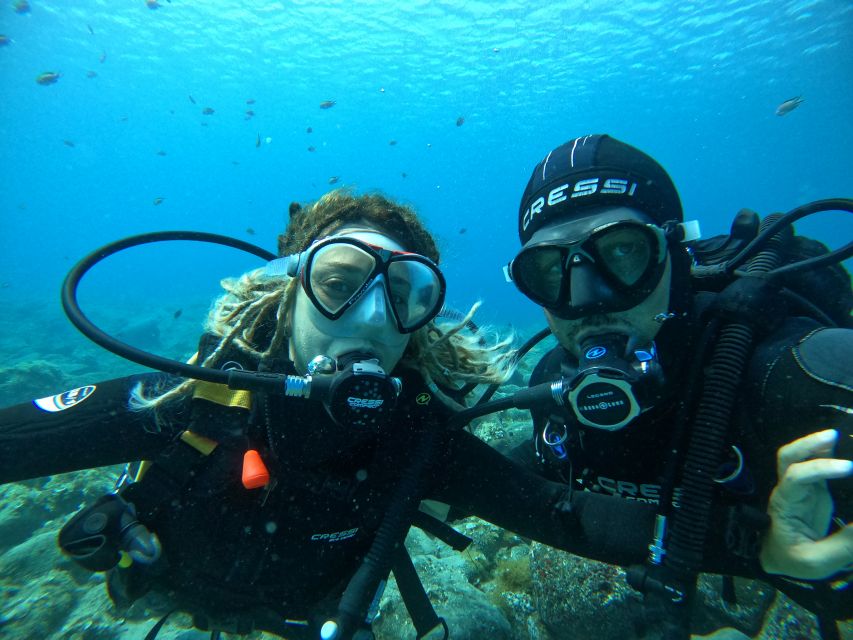
The sea is calmer than your nerves. This 2.5-hour beginner scuba session gives you a gentle first look at Lanzarote’s clear coastal waters, with an instructor beside you from the first equipment check to the final swim. I especially like the small groups, limited to four people, and the patient teaching style reported from instructors such as Salva, Salvador, and Tuti. The included transport, insurance, equipment, photos, and videos also make the $87 price easy to understand.
The main consideration is that breathing underwater can feel strange at first. Some people need extra time before heading farther from shore, and one participant chose not to complete the full session. That is not a failure. It is a useful reminder that this is an introduction, not a race to reach depth. You should also leave 12 hours between the activity and flying.
Quick take: what makes this beginner session special
- Small groups of up to four: You receive more direct attention than in a large resort activity.
- A calm start for nervous beginners: The instructor explains breathing, equipment, and underwater signals before you enter the sea.
- Beach entry and modest depth: The session is designed for first-timers, with one detailed account describing about 40 minutes in the water and a maximum depth of 8 metres.
- Lanzarote marine life close to shore: You might see colorful fish, octopuses, cuttlefish, seahorses, and, on fortunate days, an angelshark.
- Helpful extras included: Transport, insurance, scuba equipment, photos, and videos are part of the price.
- No license required: You do not need previous scuba experience, though the activity is not suitable for children under 8, pregnant women, or people with heart problems or epilepsy.
Why Lanzarote works well for a first underwater experience
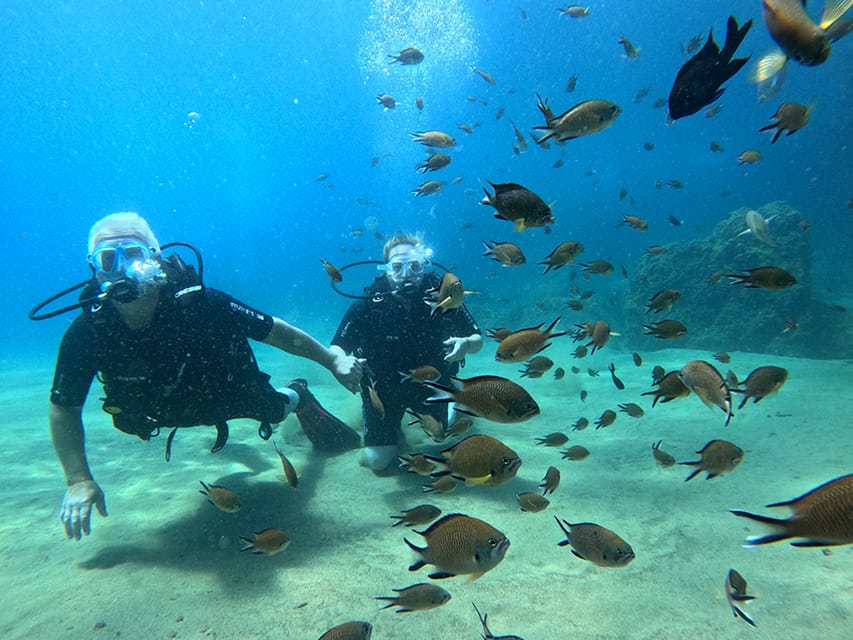
Lanzarote is a sensible place to try scuba because the first session takes place in clear coastal water rather than asking you to begin in a complicated offshore setting. From the beach, you can take your time getting used to the mask, regulator, fins, and sensation of breathing through equipment.
That gradual approach matters. A first attempt can be less about seeing a rare animal and more about learning to relax. Once your breathing settles, the underwater world begins to feel surprisingly quiet. The guide can point out fish and small creatures that you would probably miss while swimming from the surface.
The setting described by participants is often around sheltered coves and reef areas near Puerto del Carmen. The exact location can depend on conditions and the operator’s plan, so do not expect one fixed underwater route every time. What you can reasonably expect is a coastal session suited to beginners, with the instructor deciding how far and how deep to go.
I like that the experience does not pretend to turn you into a qualified scuba diver in one morning. You learn the basic skills, practice with support, and find out if you want to take a full course later. Several people finished wanting to continue with more training, which is a good sign for anyone testing the waters before committing to certification.
More Scuba Diving for Beginners in Lanzarote
- Lanzarote: Scuba Diving for Beginners – 1 Dive
★ 4.9 · 141 reviews - Lanzarote: Scuba Dive at Museo Atlántico for Beginners
★ 4.8 · 86 reviews - Puerto del Carmen: Try Scuba Diving for Beginners
★ 4.9 · 83 reviews
Meeting the Pro Dive Lanzarote van
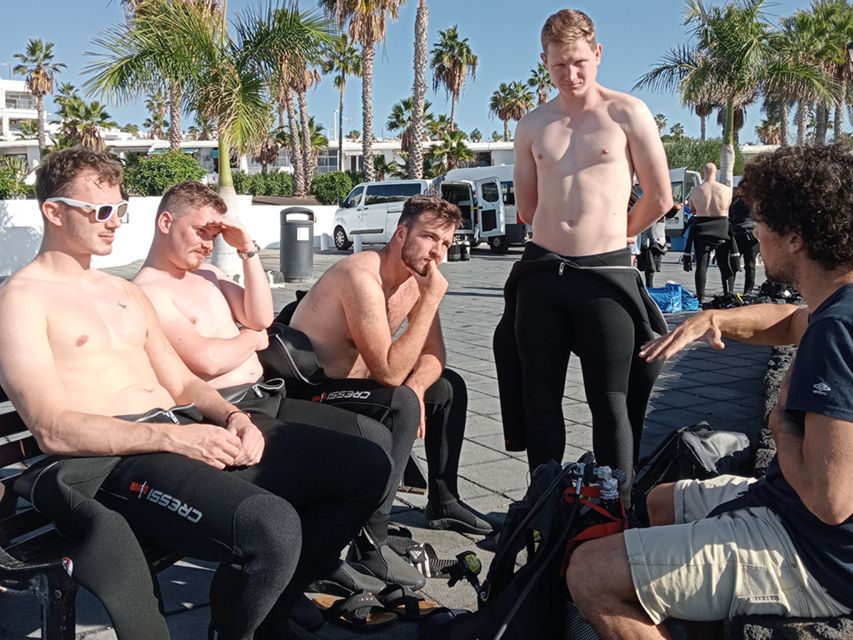
Your meeting point is the Pro Dive Lanzarote van. Transport is included, and pickup from an accommodation or resort has been arranged for some participants, but confirm the exact pickup details when you book. If you are meeting the van directly, allow yourself enough time to arrive without rushing.
The transport is more useful than it may first appear. You do not need to work out how to carry bulky equipment across town or find the correct beach on your own. In one account, the instructor also offered suggestions for other places to visit in Lanzarote during the drive. That kind of local help is a pleasant bonus, though the main purpose of the ride is getting you safely to the starting point.
Bring swimwear and a towel. Wear something you can change out of easily, since you may be handling wet gear after the session. The supplied information does not say that food, drinks, or changing facilities are included, so keep your packing simple and do not count on extra amenities.
The briefing: your first real test is breathing
Before entering the sea, you receive an explanation of the equipment and the basic rules. The instructor shows you how to use the regulator, how to communicate underwater, and what to do if you feel uncomfortable.
This is the part I would take seriously, even if you are eager to get into the water. The briefing gives you the tools to manage small problems before they become frightening. Ear pressure was an issue for one beginner, and the instructor helped with it. You may also need time to adjust your breathing rhythm or to get used to the mask.
The most reassuring feature is the pace. You are not expected to move straight from the briefing into a full underwater swim. The instructor gives you time to get used to the equipment and breathing at the water’s edge. If you feel tense, say so clearly. The session is designed around comfort and safety, not around proving anything.
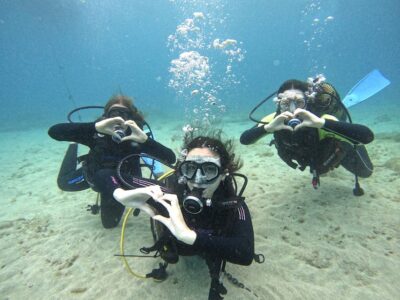
Underwater hand signals are especially useful because ordinary speech disappears. You will learn enough basic communication to indicate that you are fine, need help, or want to return toward the surface. Instructors repeatedly check that everyone is comfortable before continuing.
Entering from the beach and finding your rhythm
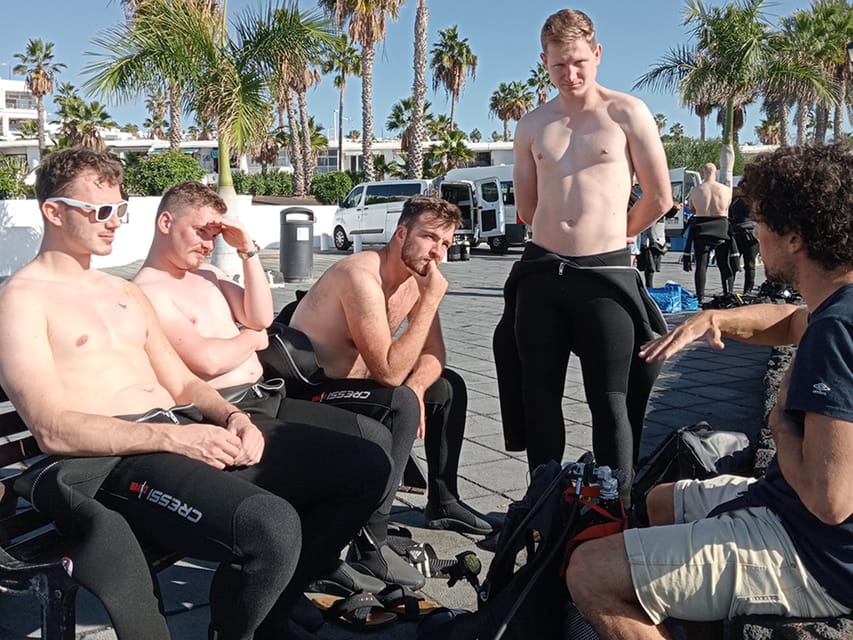
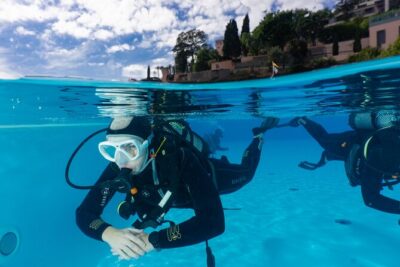
The session uses a beach entry, according to the detailed descriptions available. That means you walk into the water with your equipment rather than stepping immediately from a boat into open sea. For many beginners, this feels less intimidating because you can stop, stand, and collect yourself during the early stage.
The first minutes may be the hardest. The mask changes how your face feels, the regulator sounds unfamiliar, and your breathing seems louder than expected. Give yourself permission to go slowly. Several people who began nervous or panicky eventually relaxed because the instructors stayed close and allowed them to set the pace.
You may not reach the main underwater area right away. The guide can first help you float, control your breathing, and become comfortable with the gear. This preparation is not wasted time. It is what makes the later part more enjoyable.
One participant became uncomfortable during the session and wanted to return to the surface. The instructor took that request seriously and brought the person up immediately, while another instructor continued nearby at the surface. That is the kind of flexibility I want from a first-time activity. You can still remain part of the outing without forcing yourself to continue below the water.
More Scuba Diving for Beginners in Spain
- Try Scuba Diving in Lanzarote (No experience needed)
★ 5.0 · 69 reviews - Lanzarote: Scuba Diving for Beginners with 2 Dives
★ 4.9 · 65 reviews - Museo Atlantico: Diving Class for Non-Certified Divers
★ 4.8 · 21 reviews - Beginner dive from Playa Chica with Instructor
★ 5.0 · 14 reviews
What you may see beneath the coves
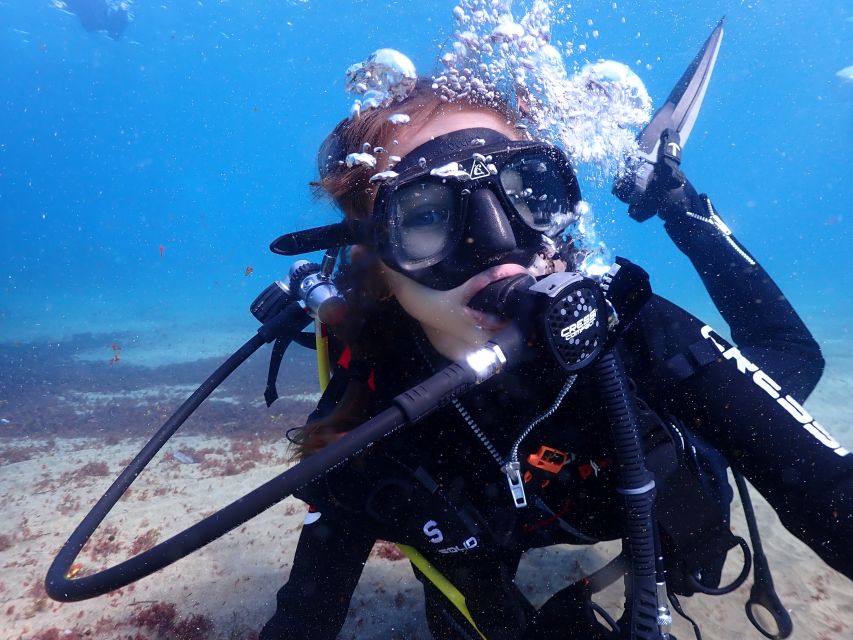
Once your breathing settles, the reward is a close look at Lanzarote’s underwater life. The water is described as clear enough to see the seabed and other members of the group from the surface. The guide points out animals as you move toward rocks and reef areas.
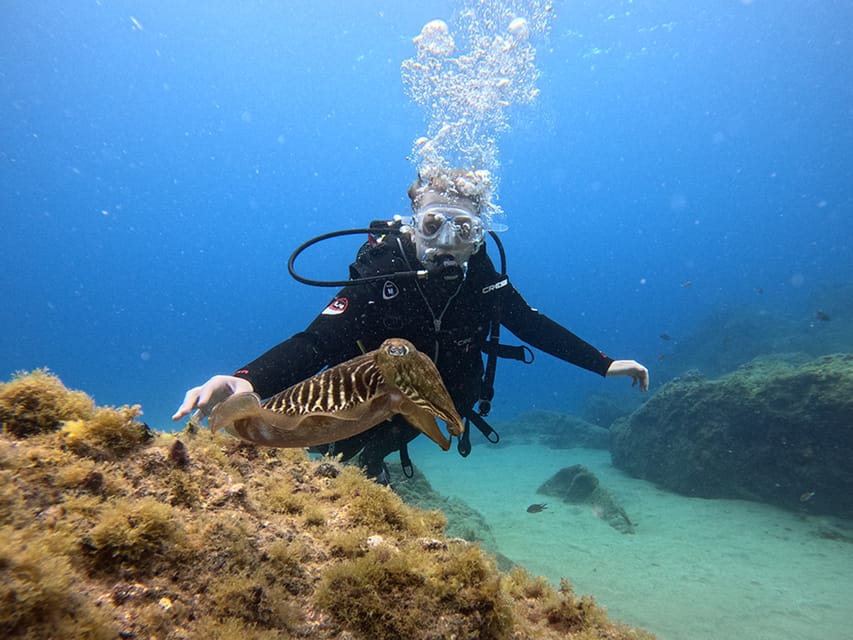
Fish are the most likely sighting, with several accounts describing many species in a relatively small area. You might also see octopuses, cuttlefish, and seahorses. A detailed account reported more than 25 kinds of fish along with an octopus, cuttlefish, and seahorses. Another fortunate outing included an angelshark.
Do not book this expecting a guaranteed list of animals. Marine life is not a stage show, and conditions affect what appears. The value is in having an experienced guide who knows where to look and can draw your attention to small movement among the rocks.
The underwater setting itself is part of the appeal. You are not simply ticking off species. You are learning how quiet the sea can feel and how much is happening below a beach that may look ordinary from above. The activity can feel surprisingly peaceful once you stop fighting the unfamiliar equipment.
How long you stay underwater
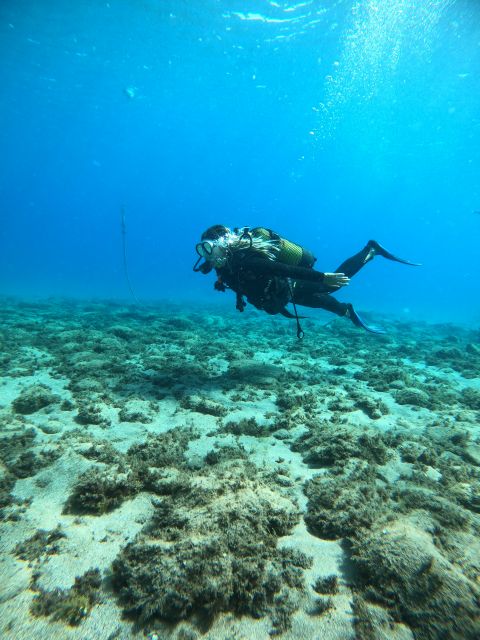
The advertised duration is 2.5 hours, but that includes transport, preparation, the briefing, equipment setup, entry, and time in the water. Do not assume you will spend all 150 minutes underwater.
One detailed account described roughly 40 minutes in the sea and a maximum depth of 8 metres. Treat that as a useful example rather than a guarantee. Your time and depth can depend on comfort, conditions, and the instructor’s judgment.
For a first attempt, this format makes sense. A longer session might sound attractive, but beginners often use a surprising amount of concentration simply managing breathing and body position. Forty calm minutes can be more rewarding than a longer period spent feeling tense.
The pace also suits couples and mixed-experience groups. A person who has scuba experience can still enjoy the marine life, while a complete beginner receives the support needed to learn safely. Do not expect an advanced route or demanding underwater skills. This is a gentle introduction.
The instructors make the biggest difference
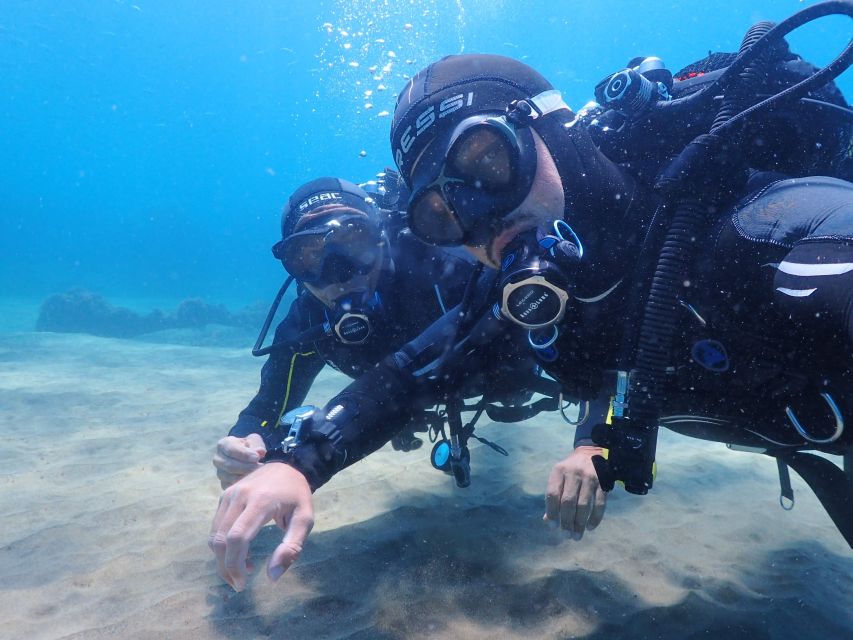
The strongest part of this experience is the teaching. Salva, Salvador, and Tuti are repeatedly singled out for clear explanations, patience, encouragement, and regular checks in the water. Names may vary depending on your session, but the pattern is consistent: the instructor stays involved rather than leaving you to manage unfamiliar equipment alone.
That personal attention is especially valuable in a group of four. If you struggle with breathing, ear pressure, or simply feeling calm, the instructor has a better chance of noticing quickly. Small groups also make it easier to ask questions without feeling that you are holding up a crowd.
The teaching style appears supportive without being overly dramatic. Nervous participants were given time to settle, and those who needed help were guided at their own pace. If you are not a strong swimmer, tell the instructor before starting. One participant who described poor swimming ability still managed to see the underwater area with direct assistance.
This is also a good option for a solo booking. You do not need to bring a partner to feel comfortable. One person who attended alone received steady support throughout the session.
Photos, videos, equipment, and the $87 price
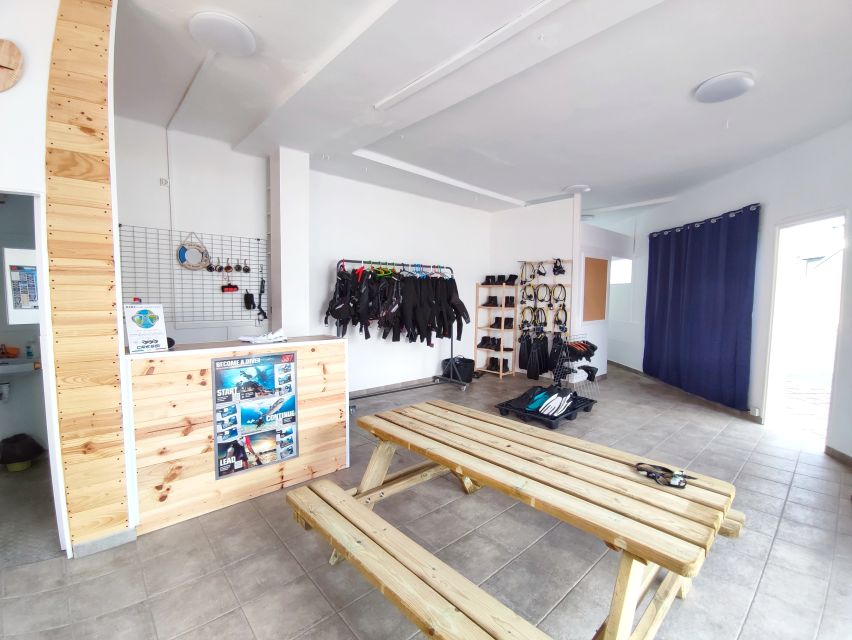
At $87 per person, this is not the cheapest way to spend a few hours in Lanzarote, but the price includes nearly everything needed. You receive a professional instructor, scuba equipment, transport, insurance, and photos and videos.
The included media adds real value. When you are concentrating on breathing and staying calm, you are not in a position to photograph the experience yourself. The guide can record parts of the session, giving you something to remember and share afterward.
The equipment is described as high quality, and the pre-water explanation helps you understand how to use it. Still, equipment fit is personal. Tell the instructor immediately if the mask leaks, the fins feel wrong, or the regulator is uncomfortable. Do not quietly tolerate a poor fit just because you are new.
Compared with paying separately for transport, gear rental, an instructor, and underwater photos, the package is fairly priced. It is especially good value if you are curious about scuba but do not want to commit to a multi-day course. Insurance is included too, which removes one practical concern from a short holiday activity.
Who should book this experience
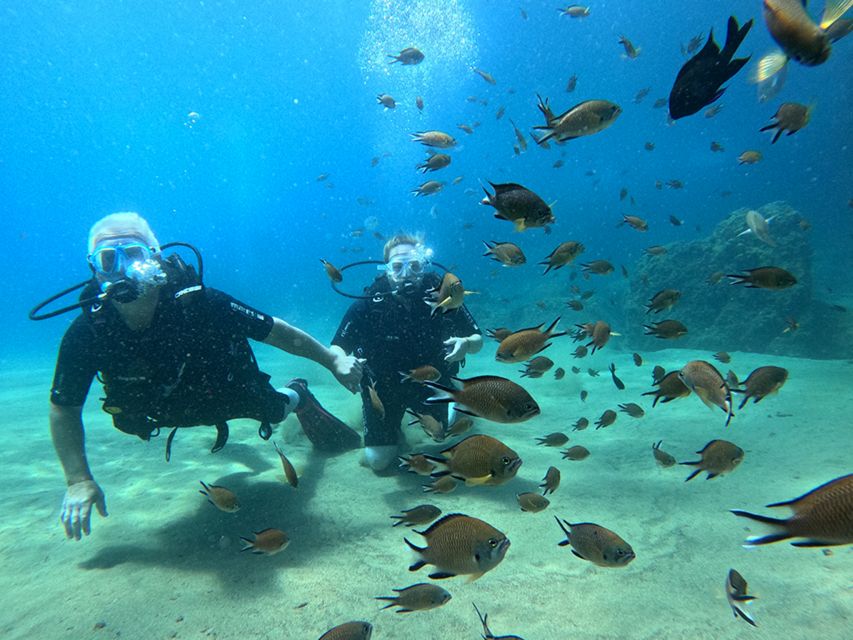
I would recommend it to adults and children aged 8 or older who want to try scuba without previous training. It also suits couples celebrating something special, families with older children, solo visitors, and anyone who feels nervous but still wants to try.
It is a particularly good choice if you value patient instruction over a large, fast-moving group. The experience is not aimed at certified scuba enthusiasts looking for a challenging site. It is also not the right activity if you need a fully predictable wildlife encounter or dislike being in the sea with mask and breathing equipment.
People with heart problems, epilepsy, and pregnant women should not take part. You must also plan your holiday schedule carefully because the operator requires 12 hours between the session and flying. That rule matters if you have a late flight on the same day.
The cancellation terms are helpful for uncertain plans: you can cancel up to 24 hours beforehand for a full refund. You can also reserve now and pay later, which is useful when you are arranging several Lanzarote activities at once.
Is this Lanzarote scuba session worth booking?
Yes, if you want a carefully supervised first taste of the underwater world. The strongest reasons are the four-person maximum, patient instructors, beach entry, clear water, included equipment, and the chance to see more than you might expect close to shore.
I would book it for a beginner who feels excited but nervous, especially if transport and underwater photos matter. I would skip it if you want a long technical session, guaranteed sightings, or a full certification course.
Bring swimwear, a towel, and a willingness to proceed slowly. If you can accept that the first few minutes may feel odd, this affordable introduction can turn a nervous first attempt into the activity you remember most from Lanzarote.
FAQ
Do I need a scuba license or previous experience?
No. This activity is designed for beginners and does not require a license or previous scuba experience.
How long does the experience last?
The total duration is 2.5 hours. This includes preparation, instruction, equipment setup, and time in the water.
How many people are in each group?
The group is limited to four participants, allowing for more individual attention from the instructor.
What should I bring?
Bring swimwear and a towel. The necessary scuba equipment is supplied.
Is transport included?
Yes. Transport is included, and the meeting point is the Pro Dive Lanzarote van. Pickup arrangements should be confirmed when you book.
Can I fly after the activity?
You should leave at least 12 hours between the scuba session and flying.
More Beginner Dives in Lanzarote
- Lanzarote: Beginner Try Scuba Diving Costa Teguise (2 dives)
★ 5.0 · 12 reviews - Lanzarote: Beginner Scuba Diving from the Beach
★ 5.0 · 2 reviews - First-Time Scuba Diving in Honolulu + Free Videos
★ 5.0 · 3,123 reviews - Beginner Scuba Diving with Turtles and Videos, San Juan
★ 5.0 · 1,743 reviews
New dives around Lanzarote
- Your first introductory dive in Lanzarote with FREE photos.★ 4.7 · 16 reviews
- Lanzarote: Beginner Scuba Diving from the Beach★ 5.0 · 2 reviews
- Beginner dive from Playa Chica with Instructor★ 5.0 · 14 reviews
- Freediving Training★ 5.0 · 7 reviews
- Try Scuba Diving | 1 dive★ 5.0 · 10 reviews
- Single Scuba Try-Dive in Puerto del Carmen – small groups – 2 hours★ 5.0 · 13 reviews
- Single Dive for qualified divers from shore, region Puerto del Carmen.★ 5.0 · 32 reviews
- Make a private Try Dive, for your first Scuba experience!★ 5.0 · 19 reviews
Scuba Diving for Beginners, compared.
First-Time Scuba Diving in Honolulu + Free Videos
Read our review →
Beginner Scuba Diving with Turtles and Videos, San Juan
Read our review →
Intro Diving 2 Stops For Beginners with Pick-up and Lunch – Hurghada
Read our review →
Intro Diving Beginner and Discover Red Sea Underwater
Read our review →
Beginner Scuba Diving Experience with Video Package in Honolulu
Read our review →
Tenerife: Beginner’s Dive at a Spot with Turtle Sightings
Read our review →Browse the lists this tour appears in