
REVIEW · AUSTRALIA
Scuba Dive the S.S. Yongala Wreck on the Great Barrier Reef.
The best wrecks feel alive. This Townsville excursion combines two certified scuba descents at the SS Yongala wreck with a day on the Great Barrier Reef, giving you a rare chance to see a protected shipwreck covered in corals and surrounded by large marine animals. I especially like that transport, tanks, weights, equipment, lunch, and drinks are included. You do not need to haul a full kit across town.
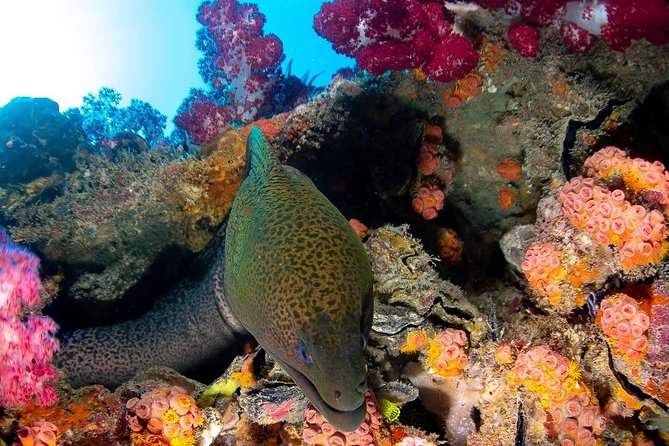
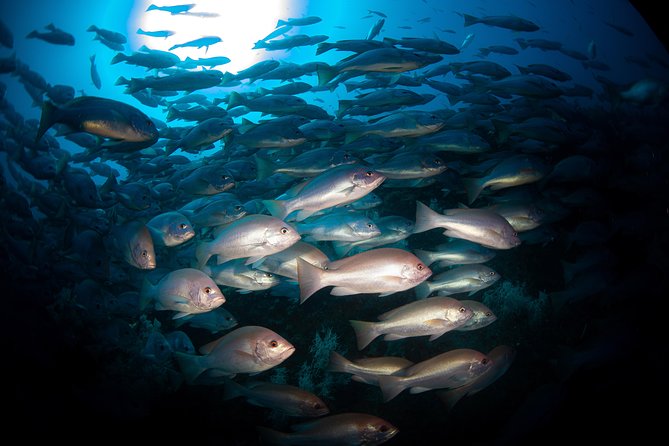
I also like the strong marine focus. The crew provides a Yongala history talk and environmental education, and the site can bring turtles, sea snakes, rays, sharks, Queensland gropers, giant trevally, and large schools of tropical fish. The main caution is the sea conditions and physical demand. The trip lasts about 10 hours, the surface can be choppy, and the wreck sits between 15 and 29 metres below the surface.
Key points before you book
- The SS Yongala reaches 29 metres below the surface: You need more than basic comfort in open water if you want to enjoy the site without rushing.
- Two certified descents are included: This is an efficient choice if your time in Townsville is short.
- At least six logged scuba descents are required: The minimum qualification is Open Water Diver, but the operator also checks your recent experience.
- Less experienced certified divers pay for extra supervision: If you have fewer than 15 logged descents, a guide is compulsory and costs A$20 per person.
- The boat carries up to 21 people: That keeps the trip relatively small, though the deck and briefing area may still feel busy.
- Whale season adds a special bonus: During the cooler months, you might see humpback whales breaching, tail slapping, or waving their pectoral fins.
Why the SS Yongala is such a special underwater site
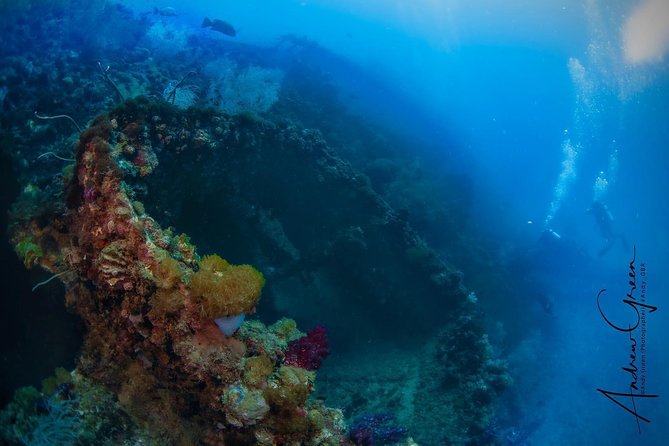
The SS Yongala is not just an old ship sitting on the seabed. It is the only large reef structure in the immediate area, so marine life gathers around it in remarkable numbers. The wreck has become a home, shelter, feeding ground, and meeting point for creatures that might otherwise be spread across a much wider patch of sea.
The ship lies within the Great Barrier Reef Marine Park, a World Heritage-listed area, and is protected under Australia’s Historic Shipwreck Act of 1976. That protection matters. You are visiting a significant maritime site, not an artificial attraction arranged for tourists.
The wreck runs from about 15 metres to 29 metres below the surface. That range gives you a clear idea of the demands involved. An Open Water qualification alone does not tell the whole story. You also need enough recent practice to manage your air, depth, buoyancy, and equipment while paying attention to marine life and the ship’s structure.
The wreck itself is decorated with corals and other sea growth. You can expect the attraction to come from the combination of steel, history, and animals rather than from a single dramatic interior passage. The ship’s protected status also means you should treat artifacts and the structure as part of a historic site, not something to touch or move.
More Reef Diving in Australia
- Great Barrier Reef Snorkeling and Diving Cruise from Cairns
★ 4.5 · 3,714 reviews - Ocean Freedom Great Barrier Reef Luxury Snorkel and Dive Cruise
★ 5.0 · 1,895 reviews - Cairns: Premium Snorkelling and Diving Reef Day Trip
★ 4.7 · 1,528 reviews
Leaving Townsville at 7:00 am
The trip begins at Fuel Wharf on Mariner’s Peninsula, at 29 Mariners Drive in Townsville City. The stated start time is 7:00 am, and the full outing lasts about 10 hours. That early start is necessary because the Yongala site lies offshore, and the day includes transport, two underwater sessions, surface time, lunch, and the return journey.
Transport from Townsville or Magnetic Island is included, which takes away one of the most annoying parts of planning a boat day. You do not need to arrange a separate transfer to the launch point, and the activity ends back at the same meeting point.
Arrive prepared rather than hoping to sort things out at the last minute. At booking, you must provide each passenger’s height, weight, shoe size, number of logged descents, and date of the most recent one. You also need to bring proof of certification on the day.
Wear your swimwear under your clothing. Pack a towel, hat, sun protection, and a light jumper during cooler months. A camera is also suggested, though you should make sure you can manage it safely and without disturbing the wreck or wildlife.
The boat ride and onboard routine
The crew supplies tanks, weights, and scuba equipment, along with iced water, cordial, tea, and coffee throughout the day. Lunch is included, so you can focus on the outing rather than packing a full meal. This package makes the listed price of $350.73 per person easier to assess, since several costs that can add up on a boat trip are already covered.
The crew is described as experienced, professional, safety-focused, and passionate about the marine environment. That combination matters at a site where depth, current, surface conditions, and historic structures all require sensible supervision.
One important practical point is that the boat can carry up to 21 people. That is not a tiny private charter. You should expect a shared group setting, with other people preparing equipment and listening to the same instructions. A smaller group can make a boat day feel calm, but a group of this size may feel busy during setup or briefings.
The sound level can also affect how easily you hear instructions. One person reported that a briefing was difficult to follow with the engine running, while another praised the crew for explaining the site, its history, and the wildlife clearly. My advice is simple: pay close attention during every briefing, move closer to the speaker if needed, and ask for any point to be repeated before entering the water.
Two descents at the Yongala wreck
The central feature is two certified open-water descents at the SS Yongala site. You are not rushing between several unrelated locations. The whole day gives the wreck the attention it deserves, with two opportunities to observe the ship, coral growth, and animals from different angles.
The first descent is your chance to settle into the conditions and get familiar with the site. Depth can affect air use, and the wreck reaches 29 metres, so an unhurried start is useful. Pay attention to the crew’s instructions, your buddy, and your own air supply rather than trying to see everything immediately.
The second descent gives you another chance to notice details missed earlier. Marine life is not arranged on a timetable, so a turtle, ray, shark, or large fish may appear when you least expect it. The repeated visit also helps you enjoy the wreck more calmly instead of treating the whole experience as one frantic sightseeing run.
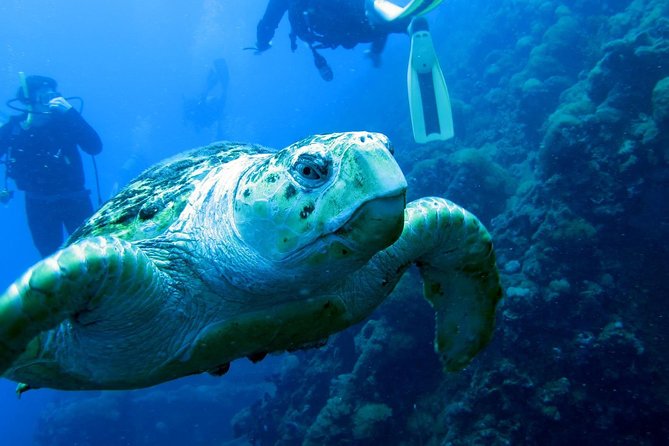
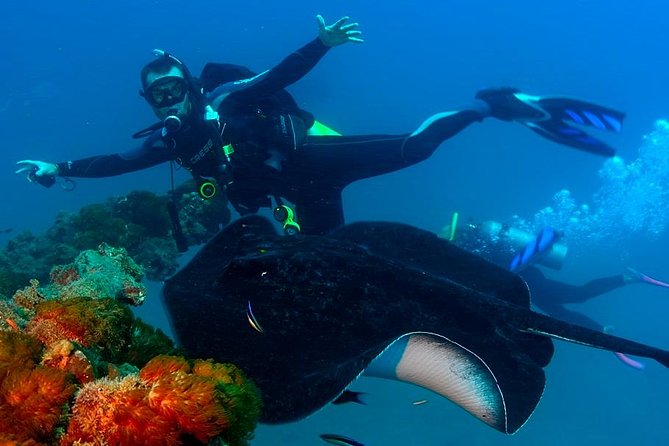
The site may produce an impressive range of animals. Possible sightings include turtles, sea snakes, giant trevally, Queensland gropers, eagle rays, manta rays, sharks, and many tropical fish. These are possibilities, not guarantees. Marine conditions and animal behavior change from day to day, so you should value the setting and the quality of the underwater visit even if a particular animal does not appear.
During the cooler months, humpback whales pass through on their annual migration. From the boat, you might see tail slapping, pectoral fin waving, or a breach. Whale sightings add something special to the surface intervals, but they should be viewed as a seasonal possibility rather than a promised part of the schedule.
More Wreck Dives in Australia:
- Ex- HMAS Swan Wreck Double Boat Dive
★ 5.0 · 20 reviews - Townsville or Magnetic Island: Yongala Wreck Dive Day Trip
★ 3.3 · 7 reviews - Sunshine Coast: Scuba Dive the Ex-HMAS Brisbane Ship Wreck
★ 4.8 · 5 reviews - Wreck and Bridge Span Dive for Certified Divers
★ 5.0 · 521 reviews
A real wreck, not a staged attraction
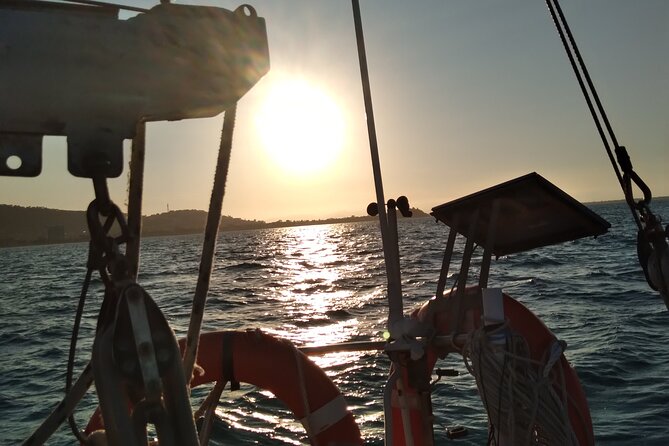
The Yongala’s appeal comes from its authenticity. You are looking at a historic shipwreck protected by law, with marine life using it as a habitat. The experience joins maritime history and natural history in one site.
That also creates responsibilities. Follow the crew’s directions, avoid contact with the wreck, and do not treat artifacts as souvenirs. Good buoyancy control is especially valuable here. It helps protect the site and lets you observe more closely without kicking the bottom or scraping against the structure.
The environmental talk is useful for this reason. It gives the wreck a wider context, explaining why the site is protected and how the surrounding marine environment functions. I would pay attention even if your main interest is photography or large animals. Knowing what you are looking at makes the underwater time more rewarding.
Certification rules and extra charges
This is a certified-only activity. You need at least an Open Water Diver qualification and a minimum of six logged descents before visiting the site. You must show proof of certification to the crew onboard.
If you have fewer than 15 logged descents, a guide is compulsory. That costs an additional A$20 per person, payable directly on the day. This is a useful safety measure, but it changes the advertised price, so include it in your budget.
There is another possible charge. If your experience limit is below 18 metres, the Adventure Dive Deep option is mandatory and costs A$35 per person. Since the Yongala reaches 29 metres, you need to know your certification limits before booking.
These rules make the trip a poor fit for someone newly certified who has not yet built up experience. They make much more sense for a diver who meets the minimum requirements and understands how depth affects comfort, air consumption, and workload.
The operator also asks for a moderate level of physical fitness. You should be prepared for a long day, boat movement, equipment handling, and time in open water. If you are unsure about your fitness or recent experience, contact the operator before paying.
What the $350.73 price really covers
At $350.73 per person, this is not a cheap half-day activity. It is a full-day marine outing with return transport, two certified descents, tanks, weights, scuba equipment, lunch, and hot and cold drinks. The price also includes access to a protected wreck site that is difficult to visit independently.
The value is strongest if you need equipment hire and transport. Bringing your own gear might lower the value slightly, but the included logistics still save you from arranging a vehicle, boat access, food, and site planning separately.
The extra guide fee and possible deep-water supplement are the main price details to watch. A diver with fewer than 15 logged descents could pay A$20 more, while someone whose qualification does not cover 18 metres pays A$35 more. Ask yourself not only if you can afford the base price, but also if your certification and experience make those additions likely.
A full day also affects the value calculation. If you have only one free day in Townsville, combining the Yongala with two underwater sessions is efficient. If you have several days and want a slower schedule, this outing still offers a strong focus, but you will spend most of a day committed to one offshore activity.
Handling rough water and changing conditions
Weather is a real factor. The trip requires suitable conditions, and poor weather can lead to a new date or a full refund. That policy is sensible for an offshore site, but it means you should avoid scheduling the activity immediately before an important flight or fixed connection.
Surface water may be choppy. One account described the crew checking carefully on a diver’s safety and comfort in rough conditions, while another raised concerns about organization and equipment. These differing experiences point to a practical truth: the crew’s response and the sea state can shape your day as much as the wreck itself.
If you are prone to motion sickness, prepare according to your doctor’s advice and tell the crew early. The supplied information does not specify a motion sickness program, so do not assume medication or special assistance is included.
The cooler months may offer the bonus of migrating humpback whales, but they can also call for that light jumper mentioned in the packing advice. Bring sun protection even on cooler days. Boat exposure can be strong, and the day is long.
Who will enjoy this trip most?
I would recommend this trip to:
- Certified divers with at least six logged descents
- People comfortable with open-water conditions and a full day at sea
- Divers who want a historic wreck rather than a standard reef-only outing
- Visitors with limited time who want two underwater sessions in one day
- Wildlife fans hoping to see turtles, rays, large fish, sharks, or seasonal whales
- People who prefer an organized package with equipment, meals, and transport included
I would be more cautious if you have only just completed certification, have not been underwater recently, dislike boat movement, or want a quiet private experience. The additional guide requirement can help less experienced divers, but the depth and duration still demand preparation.
The trip also suits people who value structure. The crew handles the main logistics, supplies drinks and lunch, and gives a site history and environmental talk. If you prefer to plan every detail yourself, the fixed schedule and shared boat may feel restrictive.
Booking and cancellation advice
You can cancel for a full refund up to 24 hours before the 7:00 am start time. Changes made inside that 24-hour window are not accepted, and the amount paid is not refunded for a late cancellation.
The operator may also cancel if weather conditions are poor or if the minimum number of participants is not reached. In those cases, you are offered another date or experience, or a full refund.
Because the activity is often booked around 36 days ahead, it is wise to reserve once your Townsville plans are firm. Keep some flexibility in your schedule in case weather affects the date.
Should you book the SS Yongala trip?
Book it if you are a properly certified, reasonably active scuba diver who wants one of Australia’s most distinctive wreck sites and appreciates having transport, equipment, lunch, and two underwater sessions organized in one package. The Yongala’s combination of protected history, coral growth, and large marine life gives the day a clear purpose beyond simply getting underwater.
Think twice if you are inexperienced, uncomfortable below 18 metres, or easily troubled by rough water. Check the possible A$20 guide fee and A$35 deep-water charge before booking, and make sure your recent experience meets the requirements.
For the right diver, this is a serious but rewarding full-day outing. The shipwreck is the star, while turtles, rays, fish, sharks, and winter whales provide the unpredictable moments that make a marine trip memorable.
FAQ
Where does the SS Yongala trip start?
The meeting point is Fuel Wharf, Mariner’s Peninsula, at 29 Mariners Drive, Townsville City, Queensland.
What time does the trip begin?
The scheduled start time is 7:00 am.
How long does the experience last?
The trip takes approximately 10 hours and ends back at the meeting point.
What certification do I need?
You need to be a certified diver with at least an Open Water Diver qualification and a minimum of six logged descents before visiting the site.
Do I need to show proof of certification?
Yes. You must present proof of certification to the crew onboard.
Is a guide required for less experienced divers?
Yes. Divers with fewer than 15 logged descents must use a guide. The additional cost is A$20 per person, payable directly on the day.
What equipment and food are included?
The trip includes tanks, weights, scuba equipment, lunch, iced water, cordial, tea, and coffee.
What happens if bad weather cancels the trip?
You can choose another date or receive a full refund if poor weather causes the operator to cancel.
More Reef Dives in Australia
- Cairns: Outer and Coral Cay Snorkel and Dive Cruise
★ 4.8 · 1,467 reviews - Swim with Whale Sharks in the Ningaloo Reef: 3 Island Shark Dive
★ 5.0 · 919 reviews - Snorkel & Dive the Reef: Sustainable, Scientific & Cultural Tour
★ 4.5 · 841 reviews - Cairns: Great Barrier Reef Premium Diving Full Day Tour
★ 4.7 · 792 reviews
New dives around Australia
- Scuba Dive With Grey Nurse Sharks in Bushrangers Bay★ 5.0 · 7 reviews
- Wave Break Island Scuba Diving on the Gold Coast★ 4.5 · 81 reviews
- Half-Day Private Discover Dive at Australia’s Iconic Beach★ 5.0 · 4 reviews
- Great Keppel Island PADI Discover Scuba Dive with Keppel Dive★ 5.0 · 25 reviews
- Premium Guided Dive Trip – Outer Great Barrier Reef★ 5.0 · 63 reviews
- Poseidon Outer Great Barrier Reef Snorkeling and Diving Cruise from Port Douglas★ 4.5 · 101 reviews
- Try Scuba Diving at Cook Island – Guided Ocean Dive with Turtles★ 4.5 · 6 reviews
- Gold Coast Learn to Dive – Open Water Certification Course★ 5.0 · 5 reviews
Wreck Diving, compared.
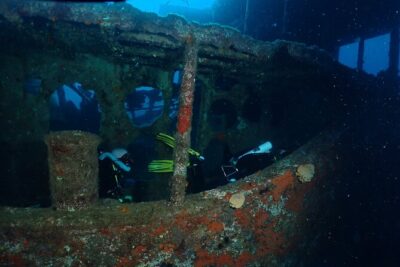
Wreck and Bridge Span Dive for Certified Divers
Read our review →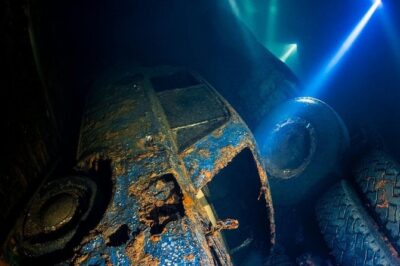
Bali Diving for Beginners: Tulamben Liberty Wreck
Read our review →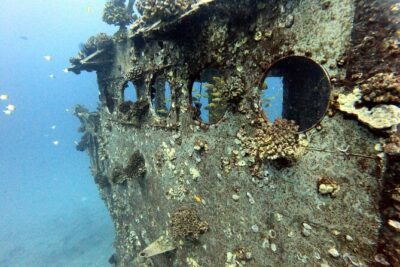
Certified Diver: 2-Tank Deep Wreck and Shallow Reef Dive Off Oahu
Read our review →
Waikiki 2 Tank World Class Wreck SCUBA Diving – Certified Only
Read our review →
Private First-Time Dive on Aruba’s Reef and Wreck Site
Read our review →Tulamben Diving USS Liberty Shipwreck Scuba Dive
Read our review →
Bali Diving Day Trip-Manta Point/Tulamben Shipwreck-Fun Dive
Read our review →Browse the lists this tour appears in