
REVIEW · BALI
3-Day Freediving Level 1 Course
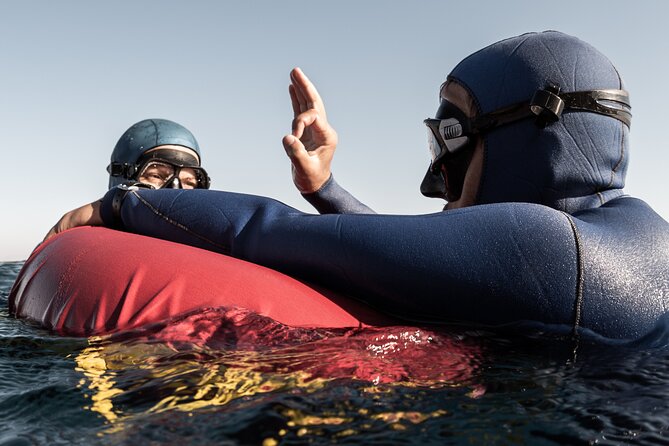
The ocean gets quiet fast. This three-day Nusa Penida freediving course gives beginners a careful route into breath-hold swimming, with classroom lessons, pool practice, and open-water sessions. I like the maximum of four students per instructor, and I like that equipment, digital study materials, certification, and underwater photos are included.
The main caution is the full schedule: 8:30 a.m. to 4:30 p.m. for three days, with lunch on your own. You also need moderate fitness and must be able to swim. At $450 per person, it is a serious course rather than a quick holiday activity, but the small class and three days of instruction help explain the cost.
Key points to know before booking
- Three days from 8:30 a.m. to 4:30 p.m.: You get theory, pool work, and three open-water sessions rather than a brief introduction.
- Small groups of up to four: The instructor can watch your technique closely and adjust the pace to suit your comfort.
- No previous water-sport experience required: You only need to swim and have a moderate level of fitness.
- A clear beginner target: Many students finish able to hold their breath for more than two minutes and reach 15 to 20 meters.
- Equipment and certification included: You do not need to buy special freediving gear before arrival.
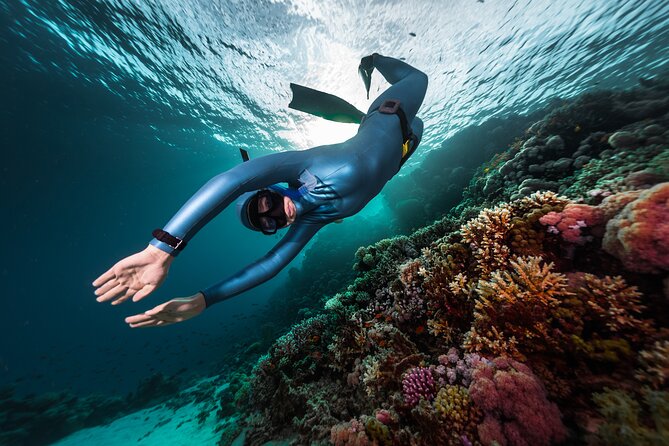
- Nusa Penida setting: Coral, tropical fish, and underwater photos give the course a memorable sense of place.
What the three-day course really offers
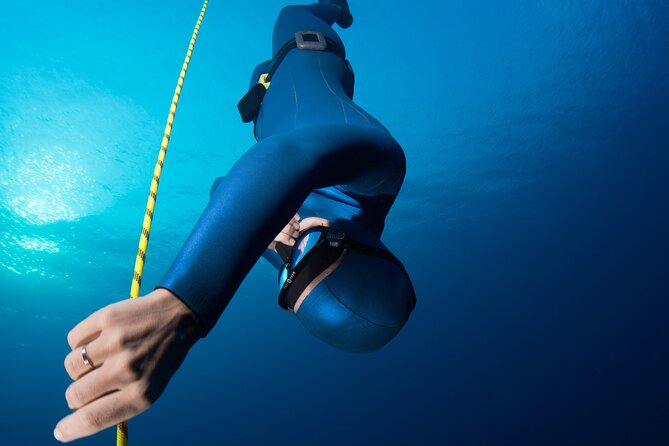
This is a proper beginner course, not a one-hour tryout with a mask and fins. You spend three days learning how to move through water with less effort, manage your breath, and stay calm when your body wants to rush back to the surface.
The course combines theory with practical work. That matters because breath-hold activities are not just about willpower. Good technique, calm breathing, body position, equalizing, and safe habits all play a part.
The program includes sessions on land, two confined-water sessions, and three open-water sessions. In plain terms, you first learn the ideas, then practice in a controlled setting, and finally apply them in the sea.
That measured progression is one of the strongest parts of the experience. A beginner can feel nervous about being underwater without breathing. The course gives you time to get used to that sensation instead of throwing you straight into a demanding sea session.
The advertised end point is ambitious but clearly presented as a typical result, not a promise. Most students can reach 15 to 20 meters and hold their breath for more than two minutes by the end. Your result will depend on comfort, fitness, technique, and how quickly your body adapts.
More Freediving Trips in Indonesia:
- Snorkeling and Freediving Trip around Nusa Penida
★ 4.5 · 77 reviews - Try Freediving on Nusa Penida
★ 5.0 · 30 reviews - Freedive Silfra Half Day Tour
★ 5.0 · 225 reviews
Starting at Freedive Nusa in Ped
You meet at Freedive Nusa, on Jl. Ped-Buyuk in Ped, Nusa Penida. The course runs daily from 8:30 a.m. to 4:30 p.m., including a lunch break, and returns to the same meeting point at the end of each day.
The fixed meeting point makes planning simpler, but private transportation is not included. Accommodation is not included either, so you need to arrange your own place to stay and your own route to the school.
I would plan to arrive on Nusa Penida before the first morning. Trying to reach the island and make an 8:30 a.m. start on the same day could make an already active course needlessly stressful. The provided details do not include transfer arrangements, so you should confirm your transport plans before booking.
The mobile ticket is useful for keeping the booking details on your phone. Bring the practical basics you would expect for a long day around the water, but you do not need to purchase special freediving equipment in advance.
Day one: learning calm, safe technique
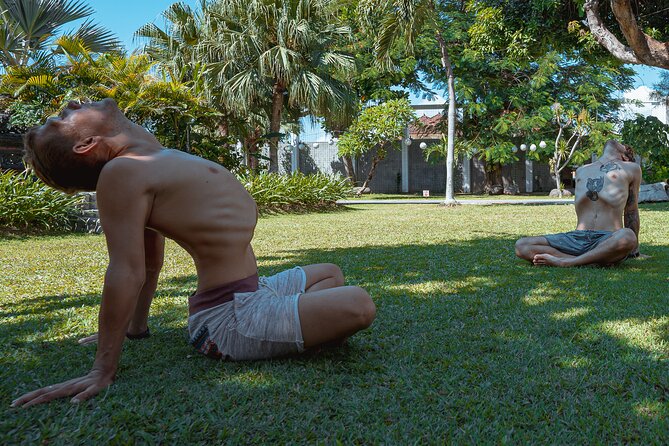
The first day sets the tone. You study the basic ideas on land, then begin practical work in confined water. For a complete beginner, this is the right order.
The early theory is valuable because it gives you a framework for every later session. You learn why relaxation matters, how breath control affects comfort, and why safe practice must come before chasing depth or time.
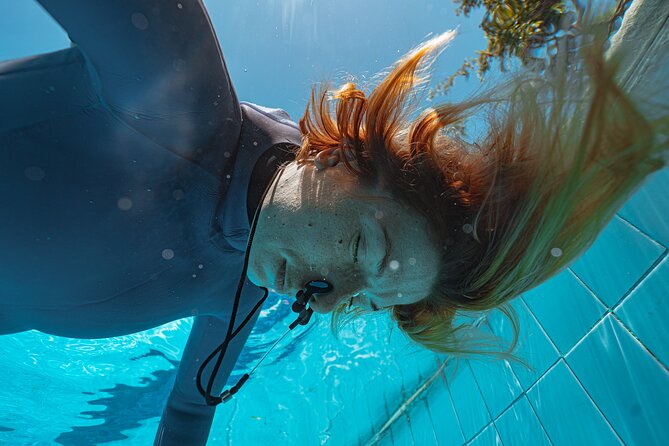
The confined-water sessions are especially useful if you have never tried breath-hold swimming. You can work on body position and movement without the added pressure of an open sea environment.
Several students praised the patient teaching style at the school. Artem was described as supportive but willing to encourage students toward a sensible challenge. Roberto was also praised for helping a nervous beginner feel comfortable in the water.
Those details point to an important quality in a course like this: the instructor relationship matters as much as the equipment. A calm teacher can help you replace panic with concentration. At the same time, you should expect to take responsibility for your own limits. The goal is controlled progress, not a contest.
Day two: building confidence in confined water
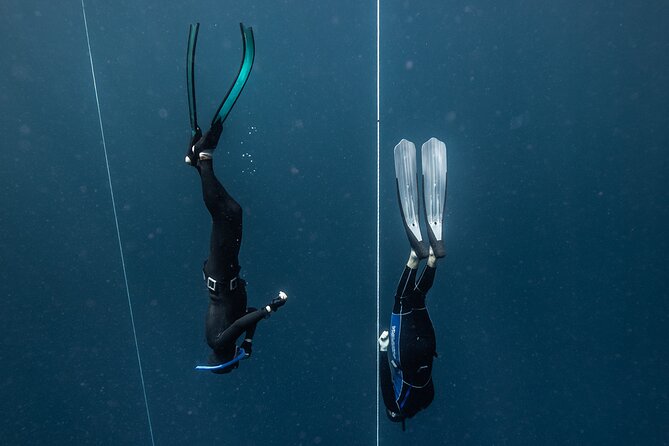
The second day continues the practical work and prepares you for the sea. You will likely spend more time refining the basics and learning how to stay relaxed while your breath is held.
The course does not promise that everyone will reach the same numbers. That is a good sign. Depth and breath-hold time are useful markers, but they are not the whole experience. A student who learns to remain calm and safe may gain more than someone who forces a longer attempt.
The school’s small-group format helps here. With no more than four students per instructor, the teacher has a better chance to notice rushed movements, poor body position, or signs that you need a break.
Several instructors received specific praise. Seva was described as patient, kind, funny, and good at making students feel safe. Gas and Chiara were praised for clear theory and a relaxed teaching style. Hamza was noted for patience and for helping a beginner gain confidence.
Instructor names may vary by course date, so you should not book on the assumption that one particular person will teach you. Still, the repeated focus on encouragement, clear explanations, and personal attention is useful when deciding if this course fits you.
A few more dives around Indonesia worth comparing
- Sanur Open Water Course learn diving in 3 Days – Get certified & Dive everywhere
★ 5.0 · 9 reviews - 3 Days PADI Open Water Course in Pemuteran
★ 5.0 · 3 reviews - 3-Day PADI Open Water Diving Course in Dubai
★ 5.0 · 173 reviews - Padi open water diver course, become a diver in 3 days
★ 5.0 · 113 reviews
Day three: open-water sessions around Nusa Penida
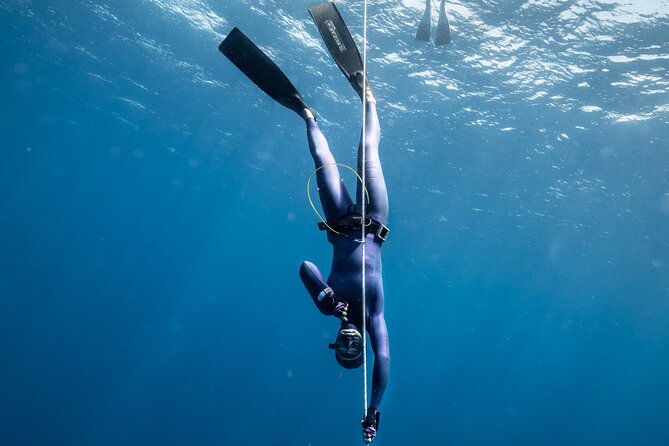
The final stage includes the open-water sessions, where your new skills meet the real setting. Nusa Penida gives the course a strong visual reward: coral, tropical fish, and the chance to receive underwater photos of yourself.
The photos are more than a small extra. For a first freediving course, it can be hard to remember your body position or facial expression while concentrating on breath control. Images give you a record of the experience and may help you see how relaxed or streamlined you looked in the water.
Open-water practice also brings more variables than a pool or confined setting. You may need to manage your comfort in a larger environment while listening carefully to your instructor. The course’s measured structure and small class size are useful for that transition.
The details do not specify exact daily sites, water conditions, boat arrangements, or the precise timing of each sea session. Do not assume that every session will have the same visibility or marine life. Coral and tropical fish are part of the promised setting, but nature decides what you see on a given day.
By the end, the course aims to give you both ability and judgment. You may reach 15 to 20 meters, but the more lasting benefit is learning how to approach each attempt with preparation and control.
What the instructors do well
The strongest theme in the feedback is personal support. Students repeatedly praised instructors for being patient, kind, encouraging, and attentive to individual needs.
That combination matters for beginners. A teacher who only pushes performance can make a new student tense. A teacher who only reassures you may not help you improve. The best comments describe instructors doing both: keeping students comfortable while encouraging sensible progress.
The theory was also praised for being clear and easy to remember. That is worth noting because technical lessons can become a blur after several hours in the water. Simple explanations help you apply the material when you are tired.
The course appears to suit people who want active instruction rather than a passive excursion. You will be asked to listen, practice, repeat, and accept corrections. If you prefer to spend most of your holiday floating around without a timetable, three full days may feel demanding.
Equipment, photos, and certification
The $450 price includes use of freediving equipment, all fees and taxes, digital learning materials, and freediving certification. Underwater photos are also part of the course offering.
That package has real value. You do not have to shop for specialist gear before arriving, and you leave with study material that can help you remember the lessons. Certification gives you a formal record of completing the level, though the supplied details do not state the name of the certifying organization or any further certification requirements.
Lunch is not included. You receive a break during the daily schedule, but you need to budget for your own meals. Private transportation and accommodation are also separate expenses.
This is why I would compare the price with the total cost of your stay, not just the course fee. Add lodging, transport to Nusa Penida, local transfers, meals, and any extra nights needed around the three-day schedule.
Still, the price is easier to justify if you want a serious introduction. You receive three days of instruction, six practical sessions in confined and open water, equipment, course materials, certification, and photos. A shorter activity may cost less, but it will not offer the same amount of coaching or practice.
Who should take this course?
This course is aimed at beginners who can swim and have moderate physical fitness. You do not need previous freediving or other water-sport experience.
It suits you best if you want:
- A structured introduction instead of a quick tryout
- Small-group instruction
- Time to build confidence in stages
- A certificate at the end
- An active three-day plan in Nusa Penida
- Underwater photographs to remember the experience
It may not suit you if you have very limited time on the island, dislike early starts, or want a flexible activity with no fixed schedule. The daily hours are long, and you should expect the water sessions to require focus.
You should also be honest about your swimming ability and fitness. The course welcomes first-timers, but beginner-friendly does not mean effortless. Breath-hold work can feel strange at first, and progress should happen at a safe pace.
Practical planning for Nusa Penida
Book accommodation with the meeting point and morning start in mind. The school is in Ped, and the course ends back at the same location, but the activity does not include private transport.
Give yourself enough time to reach Nusa Penida before day one. Your booking confirmation arrives at the time of booking, and the mobile ticket makes it easy to keep the details available on your phone.
The course runs Monday through Sunday during the stated operating period, from 8:30 a.m. to 4:30 p.m. Confirm the date you want and plan around the full three-day block rather than treating this as three separate casual outings.
The cancellation terms are practical: you can receive a full refund if you cancel at least 24 hours before the start time. Cancellations or changes made less than 24 hours before the local start time are not accepted for a refund.
Should you book the $450 course?
I would book this course if you want to learn freediving properly and can give Nusa Penida three full days. The strongest reasons are the four-to-one instructor ratio, the step-by-step structure, the included equipment, and the repeated praise for patient teaching from instructors such as Artem, Roberto, Seva, Gas, Chiara, and Hamza.
I would hesitate if you are only looking for a single memorable swim or if the $450 fee would stretch your trip budget after accommodation and transport. You also need to be comfortable with a full schedule and take responsibility for bringing your own lunch and arranging your own transport.
For a first serious introduction, though, this is a well-shaped package. You get practical skill, safety instruction, a certificate, and a beautiful Nusa Penida setting. If the thought of holding your breath underwater makes you nervous, that is not automatically a reason to stay away. It may be the very reason to choose a course that gives you three days, a small group, and patient guidance.
FAQ
Is previous freediving experience required?
No. The course is designed for beginners, and no previous water-sport experience is required. You must be able to swim and have a moderate fitness level.
How long does the course run each day?
The course runs from 8:30 a.m. to 4:30 p.m. for three days, including a lunch break.
How many students are assigned to one instructor?
The maximum is four students per instructor. This allows for a small, closely supervised learning group.
What practical sessions are included?
The course includes two confined-water sessions and three open-water sessions, along with theory and practical instruction on land.
Is equipment included?
Yes. Use of freediving equipment, digital learning materials, certification, and all fees and taxes are included. Lunch, accommodation, and private transportation are not included.
Where does the course start and end?
It starts and ends at Freedive Nusa, Freediving School, Jl. Ped-Buyuk No. Desa, Ped, Kecamatan Nusa Penida, Bali 80771, Indonesia.
New dives around Indonesia
- Bali Hai – PADI Advance Open Water Course in Menjangan★ 5.0 · 2 reviews
- All Inclusive Bali Scuba Diving at Tulamben with Lunch -Transport★ 5.0 · 4 reviews
- PADI Open water Course in Tulamben – Get certified & dive anywhere in the world★ 5.0 · 5 reviews
- Try Diving at USAT Liberty Wreck Tulamben with 1 or 2 Dives (Stay In Tulamben)★ 5.0 · 5 reviews
- 5 Fun Dives in Tulamben (for certified divers) – Discover famous diving sites★ 5.0 · 93 reviews
- Bali Full Day Experience Scuba Diving Tour at Tulamben★ 5.0 · 4 reviews
- 7 Fun Dives in Tulamben (for certified divers) – Premium Value Package★ 5.0 · 69 reviews
- Fun Diving Tulamben Bali – For Certified Divers★ 5.0 · 33 reviews
Freediving, compared.
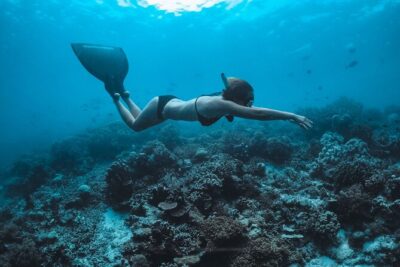
Snorkeling and Freediving Trip around Nusa Penida
Read our review →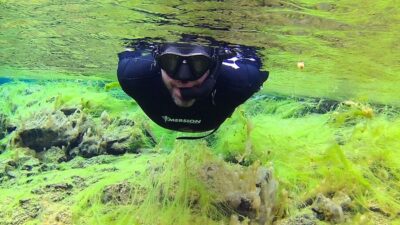
Thingvellir: Silfra Freedive Adevnture with a Guide
Read our review →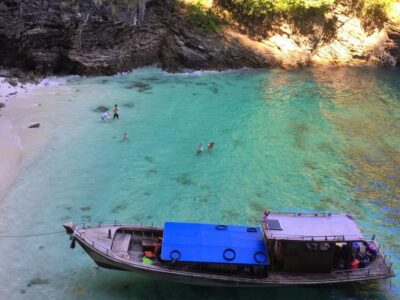
Krabi: Freediving and Snorkeling at Yawasam and Talu Island
Read our review →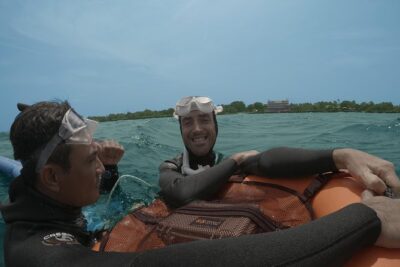
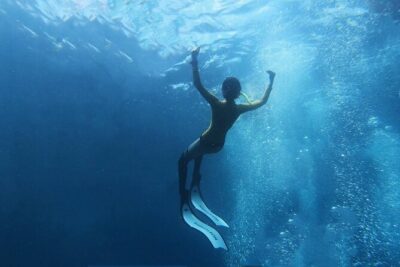
Freedive trip Koh Kood or Koh Rang National Park ( start at Ko Kut)
Read our review →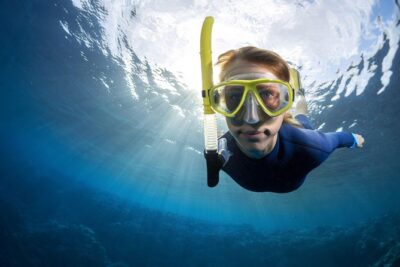
Freediving in Phuket – SSI – AIDA – Molchanovs – PADI
Read our review →Browse the lists this tour appears in