
REVIEW · ITALY
Try Scuba Diving and Underwater Roman Ruins in Baia from Naples
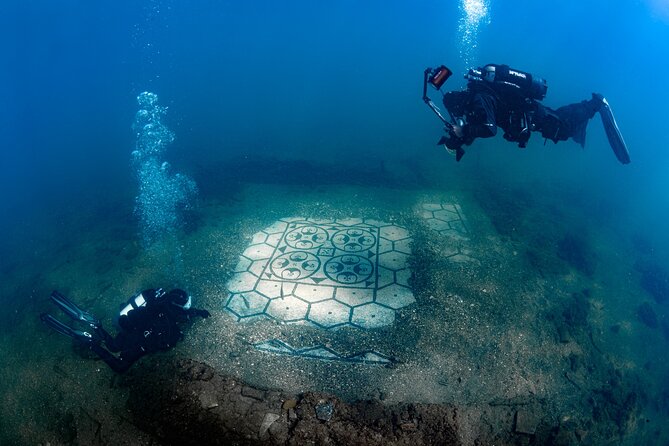
Ancient Rome lies beneath the Bay of Naples. This five-hour Baia experience lets you learn basic scuba skills, then visit Roman ruins under the sea with a certified instructor. I like the small group limit of four, which gives beginners more personal attention, and I like that two underwater sessions, equipment, fees, and bottled water are included. The main catch is that the famous statues are not guaranteed, since only one of Baia’s seven archaeological sites contains them.
The instructors earn strong praise for patience and safety, especially from first-time participants. Alex is singled out for being an excellent instructor, and Alice is remembered as a supportive dive buddy. You should also know that transport from Naples costs an extra €75, paid directly to the driver, so the final cost is higher than the advertised $263.08.
Key points at a glance
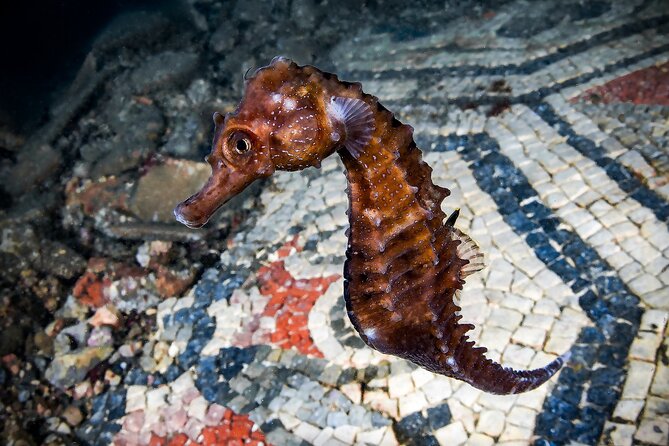
- Ancient ruins beneath Baia: You can see Roman mosaics and other archaeological remains on the seafloor, a rare way to encounter antiquity.
- Two underwater sessions included: Beginners receive instruction before entering the water, then have two chances to practice and see the site.
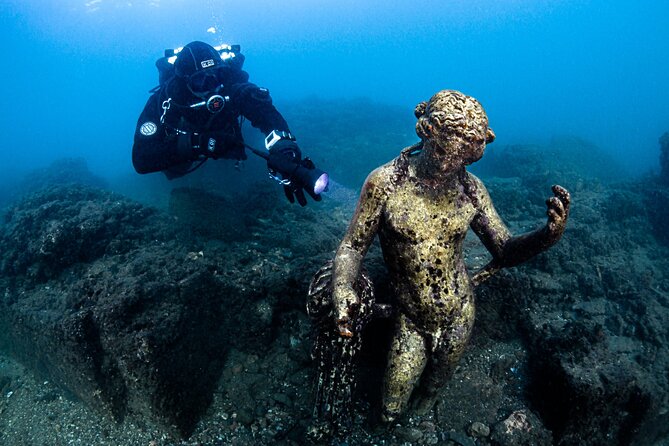
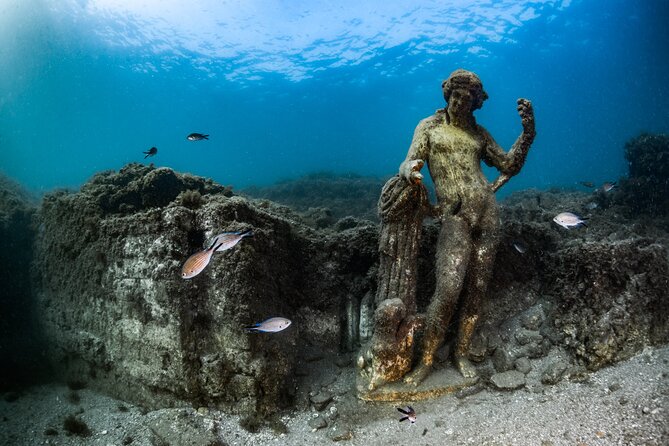
- Statues are not guaranteed: The statues shown in promotional images belong to one particular location, while Baia has seven possible underwater sites.
- Only four people per group: This is useful if you are nervous, need close guidance, or want a quieter outing.
- Snorkeling and certified scuba options: You do not need to choose the beginner program if you already have certification, and snorkeling is also available.
- Five hours, with paid transport from Naples: Pickup is offered, but the air-conditioned vehicle costs €75 from Naples and is paid separately.
Why Baia’s Roman ruins are worth seeing underwater
Baia was an ancient Roman resort area on the Bay of Naples. The wealthy came here for the sea, thermal springs, villas, and fine surroundings. Over time, volcanic activity and changes in the coastline left parts of the Roman settlement below the water.
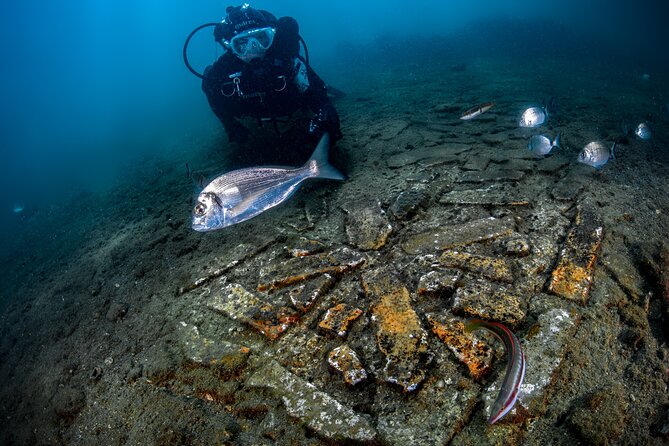
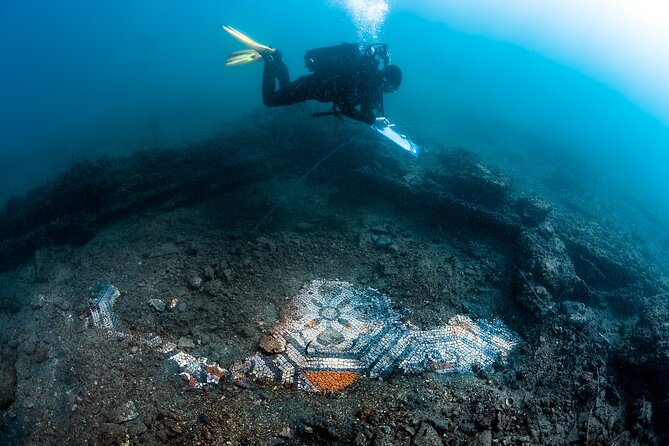
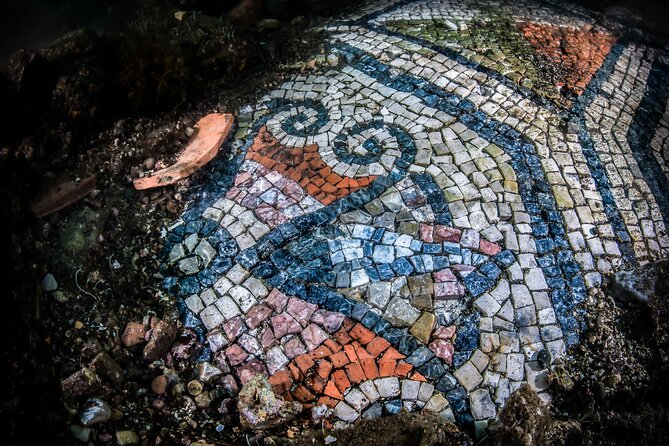
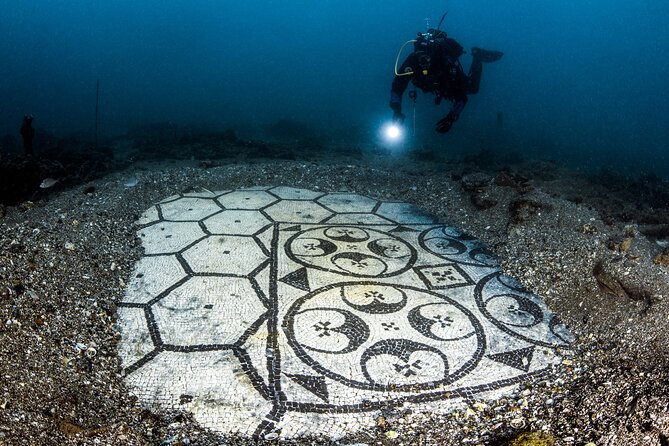
That gives this outing its special appeal. You are not visiting a reconstructed museum display or looking at ruins from behind a rope. From beneath the sea, you may see mosaics and stonework where they have remained for centuries. One participant particularly valued getting close to original Roman mosaics and artifacts.
The underwater setting changes how you look at Roman history. A mosaic on a gallery wall is carefully framed and lit. A mosaic on the seafloor is part of an old building site, with sand, water, and the remains of the surrounding structure still shaping your view. You need to accept that visibility can vary, but that uncertainty is part of seeing a real archaeological site rather than a polished attraction.
The site is also unusual because you can visit it by snorkeling or scuba. Snorkeling works for people who want a look without full scuba training. The Try Scuba option is aimed at beginners, while certified participants can arrange a more advanced outing.
More Discover Scuba Diving in Italy
- Exciting PADI Discover Scuba Diving Experience Isola Bella Marine Park Taormina
★ 5.0 · 96 reviews - Sea Baptism Scuba Experience in Polignano a Mare
★ 5.0 · 87 reviews - Napoli: Dive or Discover Scuba Diving in the Park of Baia
★ 4.9 · 79 reviews
What the five-hour outing is likely to feel like
The experience begins with a briefing from a certified instructor. If you are new to scuba, this is the point where you learn the basic ideas and get used to the equipment before entering the water. That early instruction matters. Breathing through a regulator, managing your movement, and staying calm underwater all feel less strange when someone explains each step clearly.
The strongest praise goes to the instructors’ patience. One first-time participant described the staff as supportive throughout the process, while another said the team explained everything in detail and made safety a priority. That is exactly what you want here. The Roman setting is exciting, but a relaxed introduction is more important than rushing toward the ruins.
The program includes equipment and two underwater sessions. The information provided does not give a fixed minute-by-minute schedule, so the exact order can depend on conditions, the park’s availability, and the level of the group. You should expect instruction first, followed by time in the water with an instructor, and then a second session that gives you another chance to practice and observe.
For a first-time participant, two sessions are helpful. The first can be spent getting comfortable with breathing and movement. By the second, you may be able to pay more attention to the mosaics and structures instead of thinking about every piece of equipment.
The total duration is about five hours. That makes this more than a quick activity squeezed between sightseeing stops, but it is still manageable as a half-day plan from Naples. Avoid booking it too close to an important afternoon appointment, since weather and sea conditions can affect the schedule.
The important distinction between statues and mosaics
You should clarify the archaeological site before you go. Baia’s marine park has seven underwater locations, and only one of them contains the statues shown in some promotional images. The statues at that location are replicas, while the originals are kept in a museum.
That does not make the statue site worthless, but it does make the advertising detail important. If seeing the statues is your main reason for booking, contact the provider in advance and ask whether that location is planned for your date. The site schedule is arranged according to availability from the marine park management, so no particular location is automatic.
There is also a practical reason the statue site may not be used. If visibility is poor, the instructor may choose a location with better conditions, such as the mosaics. Seeing nearly two-thousand-year-old original mosaic work in clear water can be a better experience than visiting a statue site where visibility is poor and the sculptures are copies.
This is the key tradeoff. You may not see every feature shown in the images, but you can still have an excellent archaeological outing. Go in expecting an underwater Roman site, not a guaranteed statue tour.
Learning scuba in a four-person group
The group limit of four is one of the strongest practical features. Beginners often need repeated explanations, time to adjust, and reassurance before they feel at ease. A small group gives the instructor a better chance to watch each person closely.
That personal attention is especially useful if you are nervous. One participant was very anxious before the outing and later described it as a great experience. Another person aged 71 called it a final scuba session and praised the warmth of the wetsuit, the briefings, and the underwater sights.
The program is not only for young or highly athletic people. The official information says most people can participate, and the positive accounts include a range of experience levels. Still, scuba requires you to feel comfortable following instructions and using the equipment. If you have concerns about your ability to participate, ask the provider before booking rather than relying on the general statement that most people can join.
The instructors also seem to understand that confidence develops at different speeds. Alex receives particular praise for his instruction, and Alice is remembered as a good buddy. Names like these matter because they suggest a personal, hands-on atmosphere rather than a large operation moving people through quickly.
More First-Time Dives in Italy:
- Discover scuba diving
★ 5.0 · 39 reviews - Discover Scuba diving in Villasimius
★ 5.0 · 34 reviews - Discover scuba diving in Brindisi
★ 5.0 · 23 reviews - Discover Scuba Diving in the Bay Submerged Park
★ 5.0 · 20 reviews
What is included, and what costs extra
The advertised price is $263.08 per person. That includes scuba equipment, all fees and taxes, bottled water, instruction, and two underwater sessions. For a small group activity at a protected archaeological site, that is a substantial but understandable price.
The value depends on what you compare it with. You are paying for more than equipment rental. A certified instructor, a beginner tutorial, access to an underwater archaeological area, and two sessions are bundled together. If you are new to scuba, the instruction is a major part of the value.
Transportation is the main extra cost. An air-conditioned vehicle from Naples costs €75, paid directly to the driver. The information says pickup is offered, but the vehicle itself is not included in the advertised price. Confirm the pickup arrangement and total transport cost before you commit, especially if you are traveling alone.
For two or more people sharing the transport, the extra charge may feel easier to justify. For a solo participant, it raises the total price noticeably. The small group and unusual setting still make the outing appealing, but you should calculate the full cost rather than treating $263.08 as the final amount.
Weather, visibility, and the choice of site
This is a weather-dependent activity. If poor weather forces cancellation, you are offered a different date or a full refund. That is reassuring, but it also means you should keep some flexibility in your Naples schedule.
Water visibility is another factor. Underwater archaeology depends on what you can actually see. Murky conditions can reduce the impact of mosaics and make the session less enjoyable, which is one reason the site may change.
I appreciate that the provider may favor a mosaic location when visibility is poor at the statue site. That decision can disappoint someone who has arrived determined to see a particular image, but it is sensible if the goal is a clear and worthwhile archaeological visit.
You should also remember that photographs can flatten the difference between sites. Images of statues, mosaics, and ruins may all appear together in the same promotional material, even though they belong to different locations. Ask direct questions before the day: Which site is scheduled? Are the statues available? What happens if visibility is poor?
Snorkeling, beginner scuba, or certified scuba?
You have three broad ways to experience the park. Snorkeling is the simplest option and may suit you if you want to see the ruins without learning scuba equipment. It is also a reasonable choice if you are not sure how you will feel underwater.
Try Scuba is for beginners. You receive a tutorial with a certified instructor, equipment, and two sessions. You do not need to arrive as an experienced scuba participant, which makes this a good introduction for someone who has always wanted to try it but does not want to begin in a large group.
Certified scuba participants can choose an option suited to their background. The supplied information does not spell out the certification requirements or exact format for that version, so you should confirm those details directly if you are already certified.
The right choice depends on your priority. Choose snorkeling for a lighter introduction. Choose Try Scuba if learning the basics is part of the appeal. Choose the certified option if you already know the equipment and want to focus more directly on the archaeological site.
Who should book this Baia experience?
I would recommend it most strongly to someone who wants an unusual history experience and is open to learning a new skill. You do not need to be a lifelong scuba enthusiast. The small group, patient instruction, and two sessions make it friendly to beginners.
It also suits repeat visitors to Naples. If you have already seen Pompeii, Herculaneum, and the major city sights, Baia offers a different way to encounter the ancient world. The ruins are not simply another collection of columns. They are part of the seafloor, and that changes the entire experience.
This is less suitable if you need a guaranteed statue visit, dislike water-based activities, or have a tight schedule. It may also disappoint you if you expect a large number of perfectly preserved buildings. The appeal is in seeing authentic fragments, mosaics, and archaeological remains under natural conditions.
Book well ahead if your dates are fixed. The experience is booked an average of 41 days in advance, which suggests that planning early is sensible. You receive confirmation at booking, and free cancellation is available up to 24 hours before the start time. Cancellations inside that window are not refunded, and weather-related cancellations offer either another date or a full refund.
Should you book it?
Book this experience if the idea of seeing Roman mosaics beneath the Bay of Naples excites you more than the promise of a specific statue. The instruction, equipment, two sessions, and four-person limit give beginners a solid foundation, while the archaeological setting makes the cost easier to understand.
Before paying, contact SuBaia Diving Center and ask which site is planned, especially if the statues matter to you. Also add the €75 Naples transport charge to your budget. If you can accept changing conditions and want a personal, unusual look at Roman remains, this is one of the more memorable ways to spend half a day near Naples.
FAQ
How long does the Baia scuba experience last?
The experience lasts approximately five hours.
What is included in the price?
The price includes scuba equipment, all fees and taxes, bottled water, instruction, and two underwater sessions.
Is transportation from Naples included?
No. An air-conditioned vehicle from Naples costs €75, paid directly to the driver.
Can beginners participate?
Yes. The Try Scuba program introduces beginners to the basics with a certified instructor and includes equipment and two underwater sessions.
Are underwater statues guaranteed?
No. Baia has seven underwater sites, and only one contains the statues shown in some images. Ask about the planned site before your experience if the statues are important to you.
Can certified scuba participants join?
Yes. Options are available for experienced and certified scuba participants, although you should confirm the specific requirements with the provider.
Is snorkeling available?
Yes. The underwater archaeological sites can be visited by snorkeling as well as scuba.
What happens if bad weather cancels the experience?
You will be offered a different date or a full refund if poor weather causes cancellation.
New dives around Italy
- Villasimius: Scuba Dive in Capo Carbona without Certificate★ 4.9 · 23 reviews
- Villasimius: Capo Carbonara First Time Dive with Instructor★ 4.9 · 50 reviews
- Discover Scuba diving in Calabria, Italy★ 4.5 · 3 reviews
- Scuba diving in Calabria, Italy★ 5.0 · 23 reviews
- Discover Scuba Diving PADI – Trial dive in Sorrento★ 5.0 · 2 reviews
- Double dive in the Punta Campanella Marine Protected Area★ 5.0 · 11 reviews
- Guided diving for beginners without certification from Sorrento★ 5.0 · 22 reviews
- Syracuse: Ortigia Deep Dive Cultural Tour (max 6 Guests)★ 5.0 · 9 reviews
Discover Scuba Diving, compared.
Cyprus: Introductory Scuba Lesson and Dive with Transfer
Read our review →
Half-Day Scuba Diving Tour – Discover Scuba Diving!
Read our review →Browse the lists this tour appears in