
REVIEW · MAURITIUS
Discover Scuba Diving in Mauritius
Your first breath underwater changes the day. This Mauritius experience makes that first step approachable with a PADI-qualified instructor, a short theory lesson, and carefully staged practice before you head to the reef. The reward is a chance to see colorful fish and coral in clear water, with dolphins, rays, turtles, and other large sea life possible at the right time.
I like the small operating scale, with a maximum of eight participants and an instructor ratio of up to four people. I also like the calm progression from beach practice to a proper reef swim, since you are not simply handed equipment and sent into open water. The main consideration is that scuba requires reasonable fitness and comfort in the sea, and the final underwater session depends on your ability to complete the practice skills safely.
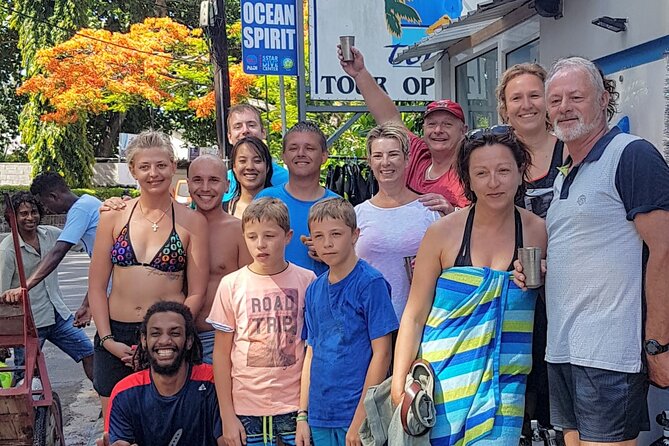
The experience takes about two and a half hours and costs $116.15 per person. It begins at Ocean Spirit Scuba Diving on Coastal Road in Pereybere, near Grand Baie, and finishes back there. A 4.8 out of 5 score from 28 ratings, along with a 96 percent recommendation rate, points to a well-regarded introduction, especially for families and nervous beginners.
Key points to know before you book
- Children over 8 can participate, making this a possible family activity for older children and teenagers.
- The session has three clear stages: theory, shallow-water skills, and a reef swim if you complete the exercises successfully.
- The first practice takes place at only 0.6 to 1.8 meters, giving you room to learn mask and breathing skills without starting in deep water.
- The reef session reaches 6 to 12 meters and lasts about 30 to 45 minutes, depending on air use.
- The maximum group size is eight, with instruction provided at a ratio of one instructor to four participants.
- Good weather matters, and a cancellation caused by poor conditions comes with a new date or full refund.
Why this is a good first underwater experience
The best part of this activity is its simple teaching sequence. You do not begin with a long technical course, but you also do not skip the basics. The instructor introduces the equipment, explains safety, teaches the hand signals used underwater, and discusses how to avoid harming marine life.
That matters because the equipment can feel strange at first. Breathing through a regulator, wearing a buoyancy jacket, and clearing water from a mask are not natural movements for most people. A short classroom-style briefing gives you a chance to understand what each piece does before you enter the sea.
The operator uses a PADI-qualified instructor, and the stated ratio is one instructor for every four people. That is not a private lesson, but it is a manageable group size. The maximum of eight people also keeps the session from becoming a large beach class with little personal attention.
Several accounts praise instructors named Bobby, Nando, and Roger for patience and reassurance. That is useful information if you are nervous. The activity is built for first-timers, and the teaching style appears to favor calm explanations rather than rushing you through the process.
More First-Time Dives in Mauritius:
- Discover Scuba Diving Experience
★ 4.5 · 17 reviews - Discover Scuba Diving in the North of Mauritius
★ 5.0 · 7 reviews - DISCOVER SCUBA DIVING IN LEMORNE with EasydiveMauritius
★ 5.0 · 3 reviews
The 20 to 30 minute theory session
The first stage lasts about 20 to 30 minutes. You learn how the scuba equipment works, how to communicate underwater, what to do if a problem occurs, and why the reef and its animals need protection.
This part may feel basic if you have snorkeled before, but do not treat it as filler. Scuba changes the way you move and breathe, so understanding the equipment before entering the water makes the practical work much easier.
The underwater hand signals are especially important. You cannot talk normally while wearing the equipment, so simple signals become your main way to say that you are comfortable, need help, or want to return to the surface.
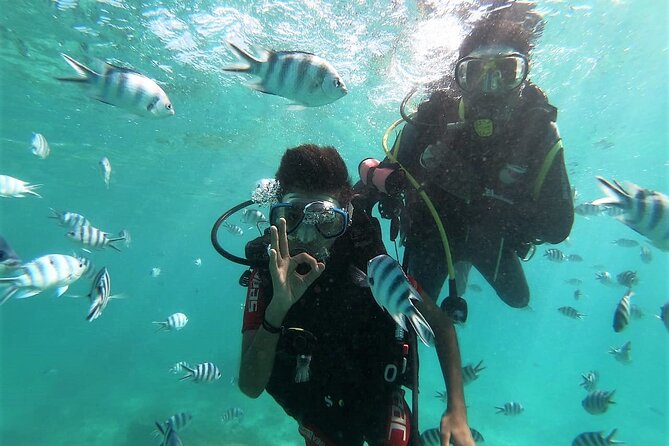
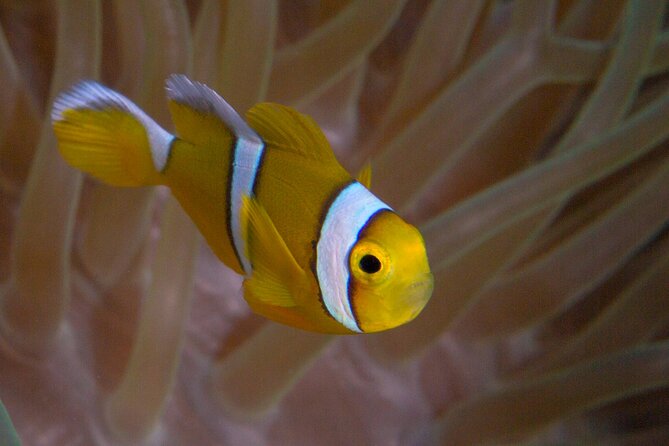
The environmental advice is also welcome. Mauritius has reef areas with fish and other sea life, and learning to avoid touching coral or chasing animals helps protect the very setting you came to see. You are not promised a particular species, but the experience may include reef fish and, with good timing and conditions, dolphins, rays, turtles, or other large animals.
The shallow-water practice at 0.6 to 1.8 meters
After the briefing, you move into the shallows near the beach. The water depth ranges from about 0.6 to 1.8 meters, a useful setting for learning because you are close to the surface and can concentrate on the skills without immediately dealing with deeper water.
The first exercise involves clearing your mask. Water entering a mask is one of the most common worries for a new scuba participant, so practicing it in shallow water helps turn a frightening possibility into a familiar task.
You also practice removing and recovering the mouthpiece, or regulator. This teaches you how to respond if it leaves your mouth. The exercise is designed to build control and confidence before the reef portion begins.
The final skill involves buoyancy. You use the jacket and your breathing to control your position in the water. This is a central scuba skill because good buoyancy helps you remain comfortable, avoid bumping the bottom, and reduce accidental contact with coral.
The instructor decides if you have completed all three exercises satisfactorily. That checkpoint is important. You are not guaranteed the reef portion simply because you booked the activity. If the skills are not secure, the instructor may keep the session in the shallows rather than move you into deeper water.
The 6 to 12 meter reef session
If you complete the practice skills, you take a second underwater session farther out on the reef. This portion has no exercises, so you can focus on looking around and enjoying the marine life.
The depth ranges from 6 to 12 meters. That is deep enough to give you the feeling of a real scuba outing, but it remains within the limits stated for this introductory activity. The session usually lasts 30 to 45 minutes, though your air consumption determines the exact time.
This is where the setting earns its price. The water can feel like a natural aquarium, with reef life visible around you. The guide points out areas worth watching, and the underwater experience may include colorful fish, coral, rays, turtles, dolphins, or other large pelagic animals. Wildlife sightings are never guaranteed, so you should book this for the experience of being underwater rather than for one particular animal.
Some people finish this session wanting to continue with a full PADI Open Water course. That is a sensible next step if you enjoy the experience, but this two-and-a-half-hour activity is not the same as a certification course. It is an introduction, not a qualification.
A few more dives around Mauritius worth comparing
- Mauritius: East Belle Mare Scuba Diving Tour
★ 4.8 · 136 reviews - Exploration dives for experienced divers
★ 5.0 · 41 reviews - Mauritius: Seabob Diving Experience
★ 5.0 · 27 reviews - Tamarin Bay: Beginners Scuba Diving Experience
★ 4.9 · 23 reviews
What the instructors do well
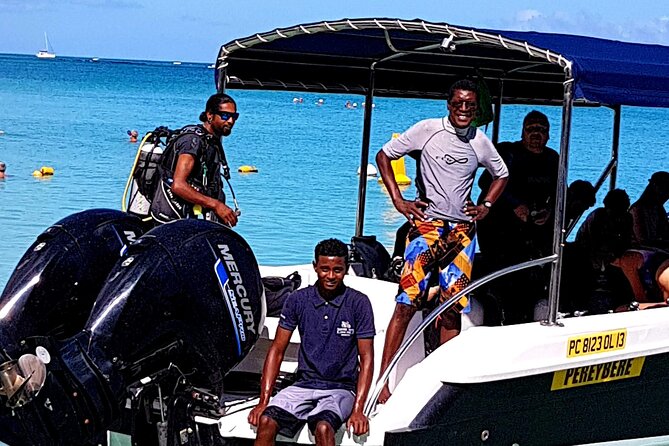
The strongest theme in the available feedback is patient instruction. Bobby is singled out for explaining the course clearly and taking care of beginners. Nando is praised for helping nervous participants feel comfortable, while other accounts describe the crew as friendly, attentive, and willing to adjust to different levels of confidence.
That flexibility matters in a family group. One person may be ready to descend immediately, while another may need more time to breathe through the regulator and settle down. A good instructor can slow the pace without making the more confident participant feel ignored.
The reports also describe equipment and the boat positively, and several people praise the administrative team and boat handlers. These details matter because a well-organized start leaves you with more energy for the actual underwater session.
Communication appears to be workable across different languages, with one account noting that language differences did not prevent a successful outing. Still, the activity depends on understanding safety instructions, so you should make sure you can follow the briefing and hand signals before entering the water.
Marine life and what you might see
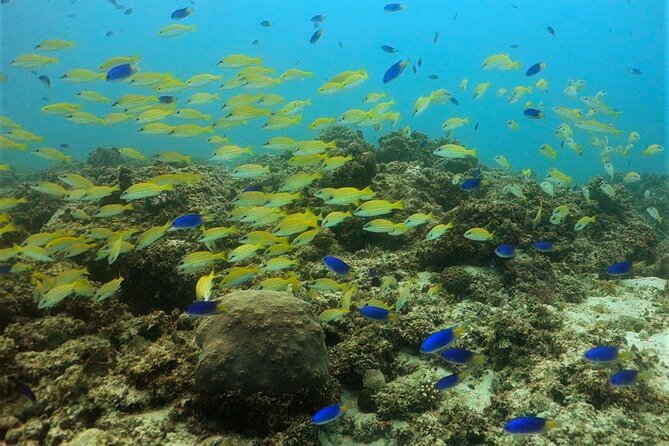
Mauritius offers the kind of reef setting that makes a first scuba session memorable. The stated attraction is a broad range of reef life, and the clear water can make fish and coral easy to observe.
You might see rays or turtles, and dolphins and other large animals are possible at the right time. These sightings depend on location, weather, visibility, and animal movement. No responsible operator can promise them, so consider them an extra reward rather than the main reason to book.
The guide’s role is important here. An experienced escort can direct your attention toward small animals and reef activity that you might miss while concentrating on your breathing. Staying calm and moving slowly also gives you a better chance to notice what is around you.
The environmental briefing is not just a formal message. You are entering a living reef, and careless fin movements or touching coral can cause damage. Keep your hands to yourself, listen to the guide, and let the animals decide how close they want to come.
Safety, comfort, and the one serious concern
The staged format is reassuring. You begin with instruction, practice in shallow water, and only then proceed to 6 to 12 meters. The instructor ratio and small maximum group also support closer supervision.
At the same time, scuba is not risk-free. You need a moderate level of physical fitness, and you should be honest about anxiety, breathing problems, or difficulty in the water before the session begins. If you feel unable to continue, tell the instructor immediately.
One publicly shared account describes a serious incident in which a participant allegedly lost access to air at 12 meters. The provider responded that it could not match the account to its records and apologized for the bad experience. This is a single disputed account within otherwise very positive feedback, but it is still fair to acknowledge it rather than pretend every outing is perfect.
For your own peace of mind, pay close attention to the equipment briefing and make sure you understand the emergency signals. A calm, clear conversation with the instructor before entering the sea is worthwhile, especially if this is your first time.
Is $116.15 good value?
At $116.15 per person, this is not the cheapest water activity in Mauritius. It costs more than a simple snorkel outing because you receive scuba equipment, instruction, skill practice, and a guided reef session.
The price makes the most sense if you want a genuine first taste of scuba without committing to a multi-day certification course. You receive roughly two and a half hours of activity, including training and a 30 to 45 minute reef session if you qualify for it.
I consider the price reasonable for a first-time experience, particularly because the teaching takes place in stages. The value is weaker if you mainly want to see fish from the surface, dislike formal instruction, or are hoping for a long underwater session. In those cases, snorkeling may suit you better.
The maximum of eight people and one-to-four instructor ratio also help support the cost. You are paying for supervision and a controlled introduction, not only for time in the water.
Who should book this Mauritius experience?
This activity suits adults and children over eight who are curious about scuba but do not yet hold a certification. It is especially useful for families, couples, and first-timers who want an organized introduction rather than trying to arrange equipment and instruction separately.
It can also suit a nervous beginner. The shallow-water practice gives you a chance to test the mask, regulator, buoyancy jacket, and breathing technique before going farther from shore. The patient approach described by the operator’s customers is a real advantage here.
You should think twice if you have low fitness, feel uncomfortable in the sea, or cannot follow the safety briefing. The reef portion is conditional, so you also need to accept that the instructor may decide you are not ready for the deeper session.
The meeting point is Ocean Spirit Scuba Diving on Coastal Road in Pereybere, in the Grand Baie area. It is near public transportation, and the activity ends at the same location. Confirmation is provided when you book, and the experience is supplied as a mobile ticket.
Timing, weather, and cancellation advice
The activity is commonly booked about 20 days ahead, so reserving early is sensible if your Mauritius schedule is tight. Allow the full two and a half hours rather than treating this as a quick beach stop.
Weather affects the experience. If conditions make the activity unsafe, the operator offers another date or a full refund. You can also cancel for a full refund if you do so at least 24 hours before the start time. Cancellations or changes made less than 24 hours before the activity are not refunded or accepted.
Choose a time when you are not rushed by another appointment. You will get more from the session if you can listen carefully, take the shallow practice at your own pace, and enjoy the reef portion without watching the clock.
Should you book it?
I would book this if you want a carefully managed first scuba experience in Mauritius, especially with older children or a nervous family member. The shallow practice, small group limit, and patient instructors named in the feedback give it a strong foundation.
I would not book it solely for a guaranteed dolphin, turtle, or ray sighting. Marine life is unpredictable, and the reef session depends on both your performance and your air supply.
For $116.15, you are buying an introduction rather than a certification. If you want to discover how it feels to breathe underwater, learn the essential skills, and spend up to 45 minutes exploring a reef with an instructor, this is a sensible choice.
FAQ
How long does the Discover Scuba Diving experience last?
The activity takes approximately 2 hours and 30 minutes, including the theory lesson, shallow-water practice, and possible reef session.
Where does the experience begin and end?
It begins at Ocean Spirit Scuba Diving on Coastal Road in Pereybere, near Grand Baie, Mauritius. It ends back at the same meeting point.
How much does the experience cost?
The listed price is $116.15 per person.
Can children take part?
Yes. Children over 8 years old are welcome to participate.
How many people can join the activity?
The maximum group size is eight people. Instruction is provided at a ratio of one instructor to four participants.
What happens during the theory session?
The 20 to 30 minute session introduces the scuba equipment, safety procedures, skill development, underwater hand signals, and protection of the ocean environment and its animals.
How deep is the reef session?
The reef session reaches depths of approximately 6 to 12 meters.
How long does the reef session last?
The reef session lasts about 30 to 45 minutes, depending on each participant’s air consumption.
What happens if the weather is poor?
If poor weather causes the activity to be canceled, you can choose another date or receive a full refund.
New dives around Mauritius
- Padi Open Water Diver Course★ 5.0 · 2 reviews
- Discover Scuba Diving Experience- Bel Ombre★ 5.0 · 2 reviews
- Exploration dives★ 4.5 · 6 reviews
- Discover Scuba Diving Experience★ 4.5 · 17 reviews
- Discover Scuba Diving Experience★ 5.0 · 2 reviews
- Tamarin: Exploration Dive★ 4.7 · 2 reviews
- Tamarin Bay: Beginners Scuba Diving Experience★ 4.9 · 23 reviews
- North of Mauritius: Scuba Diving Tour★ 5.0 · 4 reviews
Discover Scuba Diving, compared.
Cyprus: Introductory Scuba Lesson and Dive with Transfer
Read our review →
Half-Day Scuba Diving Tour – Discover Scuba Diving!
Read our review →Browse the lists this tour appears in