
REVIEW · MALLORCA
Mallorca: Discover Scuba Diving from the boat
Mallorca looks different below the surface. This four-hour boat outing gives non-certified visitors a careful first taste of scuba, with a shore briefing, two underwater sessions, and all equipment supplied. I like the small-group format and the chance to learn in shallow water before going deeper. My main concern is the price, $290.25 per person, especially since one report raised concerns about equipment reliability.
The program suits healthy adults and children from age 10 who can swim and want more than a quick resort introduction. I also like that insurance is included and the second session can reach 12 meters if you feel ready. Still, this is not a certification course, and you must stay out of airplanes for at least 24 hours afterward.
Key points at a glance
- Two underwater sessions from a boat: The first stays shallow for equipment practice and basic skills. The second may reach 12 meters, depending on your comfort and sea conditions.
- Designed for complete beginners: You need no previous scuba experience, but you do need good health and adequate swimming ability.
- All main gear is provided: Equipment, insurance, and basic theory are included, so you can try the sport without buying a kit first.
- Short, focused instruction: The program begins with a land-based briefing covering theory and technique before you board the boat.
- A compact afternoon plan: Meet at Big Blue Diving in Palmanova at 2 p.m. The full activity takes about four hours and returns to the same location.
- Check the group-size details: The experience is promoted as a small group of up to four, while the booking information also gives a maximum of six. Confirm this before paying.
A first look beneath Mallorca’s surface
Big Blue Diving runs this introduction from its base at Carrer Martín Ros García, 6, in Palmanova. The central idea is simple: you learn the basics on land, travel by boat to a suitable site, and then practice underwater with an instructor nearby.
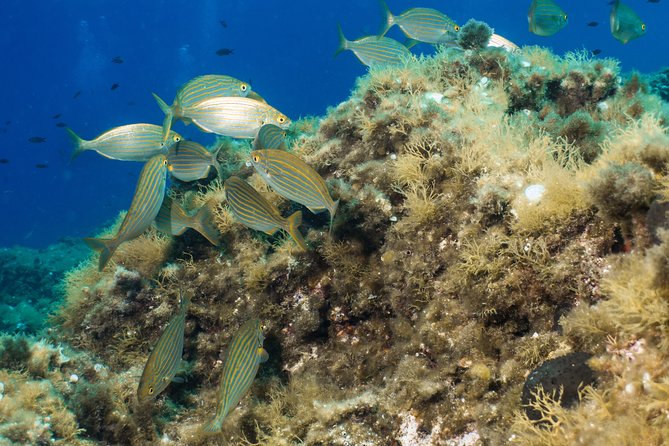
That format has a real advantage over a rushed pool-only introduction. You get a taste of the setting that attracts people to Mallorca in the first place, while still starting with basic exercises in shallow water. The boat ride also makes the outing feel like a proper sea activity rather than a short equipment demonstration.
This is the most extensive type of introduction available to someone without a scuba certificate, but it remains an introduction. You cannot use it as a substitute for a recognized course, and it does not grant certification.
The small-group promise is important here. A maximum of four means the instructor can watch your breathing, buoyancy, equipment use, and comfort more closely than on a large group outing. The additional booking information lists up to six people, so I would ask Big Blue Diving which limit applies to your date.
More Discover Scuba Diving in Spain
- Mallorca: Discover Scuba Diving for Beginners
★ 4.7 · 805 reviews - Santa Ponsa: Try Scuba Diving in a Marine Reserve
★ 4.9 · 172 reviews - Mallorca: Discover Scuba Diving from the beach
★ 5.0 · 87 reviews
The 2 p.m. start in Palmanova
Your meeting point is Big Blue Diving in Palmanova, on Carrer Martín Ros García, 6. The activity begins at 2 p.m. and finishes back at the same place, which keeps the day easy to plan if you are staying nearby.
The location is close to public transportation, a useful detail if you do not have a car. You should still allow enough time to arrive calmly. A first scuba session involves fitting equipment, listening carefully, and asking questions. Arriving in a rush is a poor way to begin any activity that depends on comfort and concentration.
The total time is about four hours. That includes the land briefing, equipment preparation, boat travel, and both underwater sessions. You should not expect four hours beneath the water. The real value lies in the full progression from explanation to practice to a supervised sea experience.
The activity is offered in English. If you are not fully comfortable with technical instructions in English, consider that before booking. Understanding signals and safety directions matters more here than conversational fluency.
The land briefing comes first
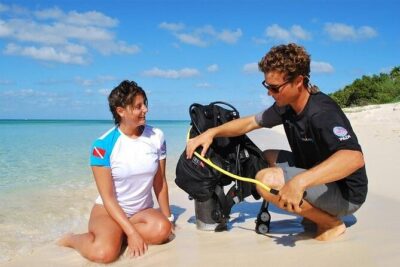
Before boarding, you receive simple theory and technique instruction. This is where you learn how the equipment works, how to breathe through the regulator, and how to manage basic underwater tasks.
The briefing is not filler. For a first-time participant, the gear can feel unfamiliar, even when the actual controls are straightforward. The instructor’s job is to explain what you will wear, what you should do if something feels odd, and how to communicate underwater.
Use this time well. Ask about hand signals, clearing water from your mask, and what happens if you feel nervous. You do not need to pretend you are calm or experienced. A good introduction should give you permission to pause and communicate.
You will also get practical technique advice before entering the water. That matters because many beginners spend their first few minutes simply getting used to breathing slowly and moving with fins. The more comfortable you are with the equipment on land, the more attention you can give to the surroundings later.
The first session stays in shallow water
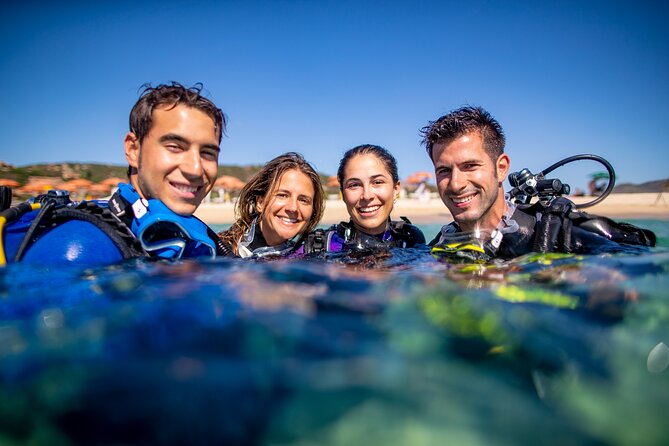
The first underwater session is deliberately gentle. In shallow water, you become familiar with the equipment and complete basic exercises under supervision.
This is the key learning stage. You may be checking your breathing, adjusting your position, practicing simple movements, or responding to instructions. The purpose is not to cover distance or reach depth. It is to build enough confidence for the second session.
I like this step because it gives you a clear decision point. If the equipment feels uncomfortable or the idea of going farther underwater does not suit you, you can say so before the next session. You are not being pushed into a fixed performance.
Your comfort should guide the pace. First-time scuba participants often need a few minutes to stop thinking about every breath. Shallow water gives the instructor a better chance to notice problems and correct them early.
The supplied equipment is included in the price, which is convenient, but one recorded complaint raised concerns about equipment failures. That is not a reason to assume the gear is unsafe, but it is a reason to inspect your equipment and speak up immediately if anything does not feel right. For a beginner, reliable equipment and clear checks are basic requirements, not optional extras.
More First-Time Dives in Mallorca:
- Mallorca: Try Scuba Diving in a Beautiful Nature Reserve
★ 4.5 · 51 reviews - Mallorca: Try Scuba Diving by Boat
★ 4.9 · 18 reviews - Mallorca: Discover Scuba Diving from the beach
★ 5.0 · 15 reviews - Discover Scuba Diving, scuba diving for begginers!!
★ 3.6 · 10 reviews
The second session can reach 12 meters
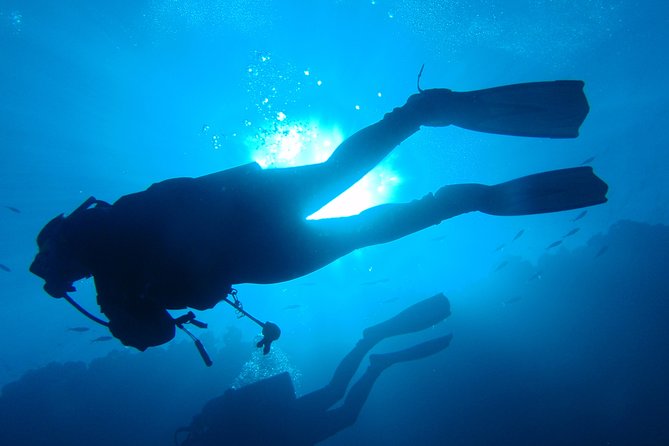
The second session depends on two things: your comfort and the conditions at sea. If both are suitable, it can reach a maximum depth of 12 meters.
That depth gives you a genuine sense of recreational scuba rather than a token taste in waist-deep water. At the same time, 12 meters is a maximum, not a promise. The instructor may keep you shallower, and that is the correct decision if weather, visibility, or your confidence is not right.
Do not judge the experience by how deep you go. For a first attempt, calm breathing, controlled movement, and feeling at ease are better measures of success. A shallower session can still be worthwhile if you learn how your body responds underwater.
The boat setting adds interest, but it also means the plan depends on the sea. Poor weather can lead to a new date or a full refund. That policy protects the quality and safety of the outing, though it may require flexibility in your Mallorca schedule.
What the $290.25 price really covers
At $290.25 per person, this is a costly introduction. You are paying for more than access to the sea: the package includes scuba equipment, diving insurance, the initial theory lesson, instructor attention, boat access, and two supervised sessions.
That makes the cost easier to understand if you have been considering a certified course but are not ready to commit. You can test whether you enjoy breathing underwater and handling the equipment before spending more on lessons or personal gear.
Still, the value depends heavily on the group size and the quality of instruction. A four-person group would make the price more defensible because each participant should receive close attention. If six people are placed together, the experience may feel less personal. I would confirm the actual number for your departure.
The price does not include snacks. Bring anything you need for the four-hour outing, though only the included items are confirmed. There is no reason to expect a meal or refreshments as part of the package.
For someone who already holds a scuba certificate, this is not the right purchase. The program is specifically aimed at people without certification and does not provide a qualification. For a curious beginner, the price buys a trial with professional structure rather than a casual swim with equipment.
Safety, fitness, and the practical rules
You need good health, adequate swimming skills, and a moderate level of physical fitness. No previous scuba experience is required, but this is not a passive sightseeing trip. You will handle equipment, move in the water, listen to instructions, and take part in basic exercises.
The minimum age is 10. The supplied information does not give a separate child-specific schedule or set of procedures, so parents should confirm suitability for a particular child before booking.
Insurance for the activity is included. That is useful, but it does not remove the need to disclose relevant health concerns and follow the instructor’s directions. If you are unsure about your fitness for scuba, get medical advice before reserving.
The most important aftercare rule is the flight restriction. Do not fly for at least 24 hours after taking part. That can affect a short Mallorca trip, especially if you plan to fly home the same evening or next morning. Put this activity early enough in your itinerary to leave a full buffer.
Bring your swimming ability, patience, and willingness to communicate. If you feel anxious, tell the instructor. The first shallow session exists partly to help you decide how far you want to go.
The equipment concern deserves attention
The overall rating is very high, at 4.9 from 95 ratings, and 97 percent of participants recommend the experience. The strongest pattern is clear: people value the attention, the location, and the chance to learn in a small group.
There is also a specific negative report about equipment malfunction. The complaint says the equipment did not work properly and questions whether that is acceptable at this price, particularly for a first-time participant. The same report still describes the attention and the underwater site positively.
That combination gives you useful advice. Do not ignore a problem because you are new. Before entering the water, check that your mask, regulator, buoyancy equipment, and other supplied items feel functional. If something fails or feels wrong, stop and ask for a replacement or correction.
One poor equipment report does not establish a general pattern, especially alongside the strong overall rating. But scuba depends on trust in the gear. The operator should welcome careful checks, and you should not feel awkward about making them.
Who will get the most from this outing
This program is best for a first-timer who wants a serious introduction without signing up for a full certification course. You should be comfortable in the water, reasonably fit, and interested in learning rather than simply taking a quick scenic ride.
It also suits someone already on holiday in Palmanova who wants a half-day activity with a clear start and finish. The return to the same meeting point makes it easier to fit around other plans, though the no-flying rule requires careful scheduling.
Families may consider it for children age 10 and older, provided they meet the swimming and health requirements. Confirm child suitability directly, since the available information does not describe special arrangements for young participants.
This is less suitable if you dislike boats, cannot swim adequately, have very limited physical fitness, or need a formal qualification. It is also a poor fit for anyone flying within 24 hours.
The activity is offered in English, so you should be able to understand safety instructions and communicate clearly. That point is easy to overlook when booking a holiday activity, but it matters underwater.
Booking, cancellation, and weather planning
You receive confirmation when you book, and free cancellation is available if you cancel at least 24 hours before the 2 p.m. start time. Cancellations made inside that window are not refunded, and late changes are not accepted.
Weather can affect the schedule. If poor conditions cancel the outing, you receive the choice of another date or a full refund. Since the second session depends on both sea conditions and your comfort, keeping a little flexibility in your Mallorca plans is sensible.
The experience is commonly booked about 12 days in advance. That does not guarantee availability, but it suggests you should not leave it until the last moment if your dates are fixed.
Should you book Mallorca’s boat-based first scuba experience?
Book it if you want a structured first taste of scuba, can swim well, and value close instruction over a low-cost group outing. The shallow first session, possible 12-meter second session, included equipment, and insurance make the progression easy to understand.
I would be cautious if $290.25 feels high, if your group may contain six people, or if you have only one possible weather day. Ask about the actual group size and equipment checks before confirming.
For a healthy beginner with a flexible schedule, this is one of the more useful ways to try Mallorca underwater without committing to certification. Just plan around the 24-hour flight rule, inspect the gear, and speak up the moment something feels wrong.
FAQ
Where does the experience start and finish?
It starts and ends at Big Blue Diving, Carrer Martín Ros García, 6, 07181 Palmanova, Illes Balears, Spain.
What time does the activity begin?
The scheduled start time is 2 p.m.
How long does the experience last?
The total duration is approximately four hours.
Do I need previous scuba experience?
No. No prior experience is necessary.
What is the minimum age?
The minimum age is 10 years.
What swimming and fitness level do I need?
You need good health, adequate swimming skills, and a moderate level of physical fitness.
How deep can the second session go?
The second session can reach a maximum depth of 12 meters, depending on your comfort and the conditions.
Is this a certification course?
No. This is an introduction for non-certified participants and does not lead to certification.
Can I fly after the activity?
You should not fly for at least 24 hours after participating.
New dives around Mallorca
- Mallorca: Try Scuba Diving in a Beautiful Nature Reserve★ 4.5 · 51 reviews
- Mallorca: Discover Scuba Diving from the beach★ 5.0 · 87 reviews
- Mallorca PRIVATE Reservation*Scuba dive + photo/video★ 5.0 · 36 reviews
- Mallorca: Scuba Dive Adventure Cap Formentor – 1 Dive (license required)★ 5.0 · 2 reviews
- Mallorca: Snorkeling tour with diving instructor from a boat – Cap de Formentor★ 4.6 · 47 reviews
- Mallorca: Try Scuba Diving by Boat★ 4.9 · 18 reviews
- Mallorca: Scuba Diving for Beginners★ 4.8 · 11 reviews
- Mallorca: Adventure Diving (without a license – in the quiet off-season)★ 5.0 · 3 reviews
Discover Scuba Diving, compared.
Cyprus: Introductory Scuba Lesson and Dive with Transfer
Read our review →
Half-Day Scuba Diving Tour – Discover Scuba Diving!
Read our review →Browse the lists this tour appears in