
REVIEW · AUSTRALIA
Sunshine Coast: Scuba Dive the Ex-HMAS Brisbane Ship Wreck
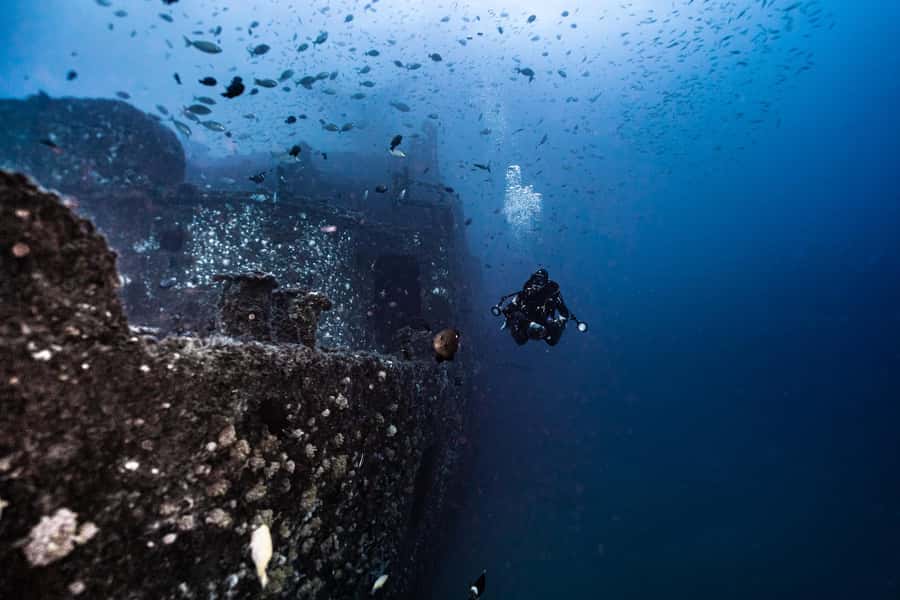
A warship now feeds an entire reef. From Mooloolaba, you reach the former HMAS Brisbane in about 30 minutes, then spend up to three hours exploring a huge upright destroyer surrounded by coral, rays, turtles, fish, and other sea life. I like the short 2.9-nautical-mile boat ride and the way two midship moorings allow a relaxed look at different parts of the ship.
I also like that the trip caters to certified Open Water divers through to Divemasters and instructors. The main caution is water temperature and equipment. Winter water can fall to 17°C, and even in warmer months, a 5mm wetsuit may not feel sufficient for everyone. Equipment hire costs extra, so check your exposure protection and fins before paying the $133 base price.
Key things to know before booking
- The wreck sits upright in 15 to 18 metres of water, with the forward decks shallower than the stern.
- Two midship moorings support two unhurried underwater sessions around the ship.
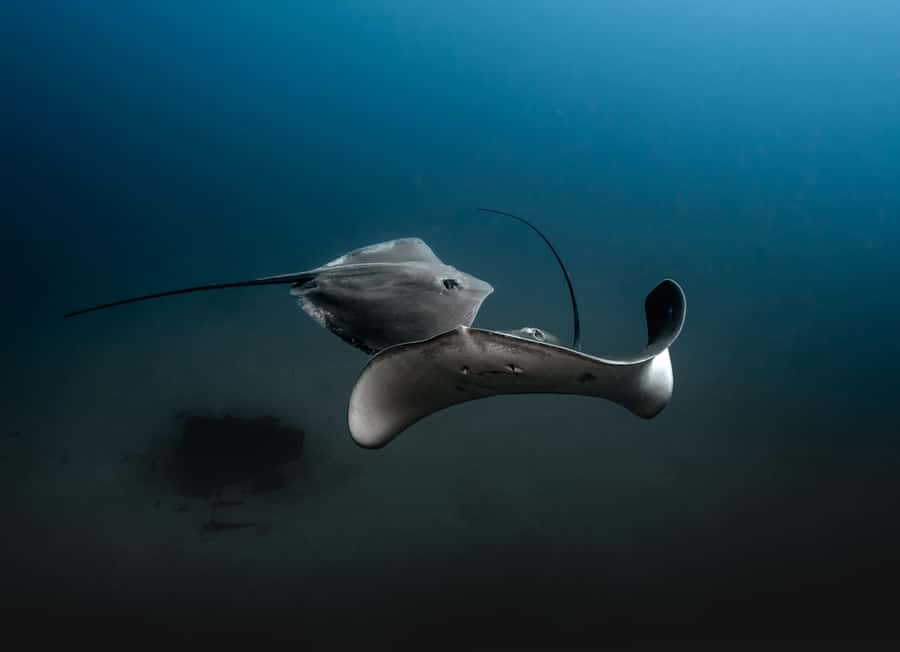
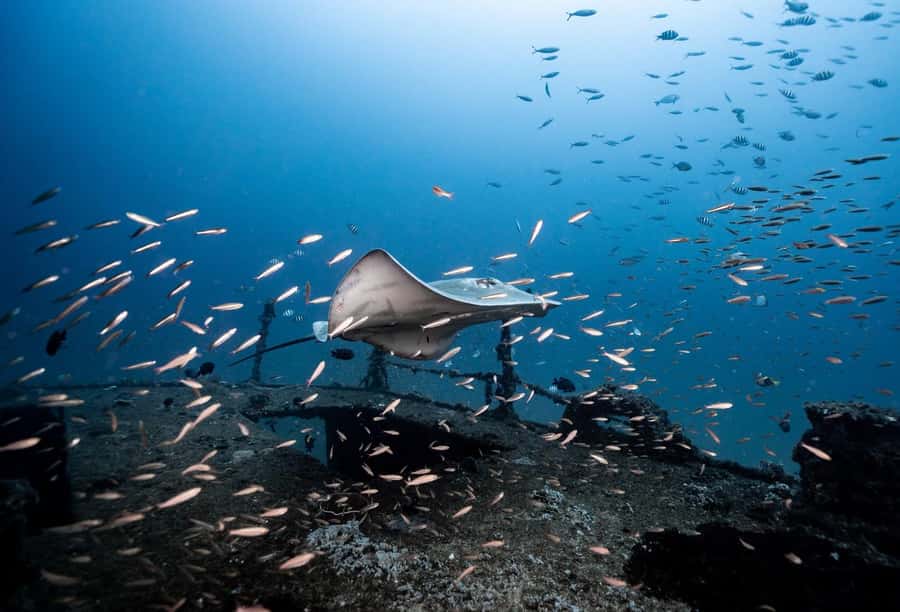
- Marine life is the real bonus, including turtles, eagle rays, bull rays, grouper, kingfish, octopus, nudibranchs, and soft corals.
- The boat ride takes about 30 minutes each way, making this an easy half-day outing from Mooloolaba.
- The $133 price excludes scuba equipment and cameras, both available for an additional charge.
- You need current certification and recent experience, with scuba activity within the past two years.
Why the Ex-HMAS Brisbane is worth seeing
The former HMAS Brisbane was a guided missile destroyer. Today, it rests upright off the Sunshine Coast as an artificial reef, and its size gives the site real presence. Even before you inspect details, the shape of the ship is impressive: decks, funnels, superstructure, hull, and stern all remain easy to recognise underwater.
The forward decks sit under about 15 metres of water, while the stern reaches roughly 18 metres. That puts the wreck within the range of certified Open Water divers, though you should still be comfortable with your depth limits, air use, buoyancy, and current conditions.
I like wrecks that offer more than one quick circuit, and the Brisbane does. The outside alone can fill a session. You can move along the hull, inspect the upper decks, look for fish sheltering around openings, and watch how coral has taken hold on the metal.
For qualified divers with the right experience, the trip can also include sections inside the vessel. The engine room and control room are especially appealing, and the ship’s kill switches remain intact. A torch is required for all penetration sections, so do not assume your phone light or a small personal lamp will meet the requirement. You can hire a torch for an added fee if needed.
The ship is large enough that two moorings matter. Sunreef uses the two midship moorings, giving you access to different areas rather than forcing every group into one narrow route. That setup should help you spend more time looking and less time battling to cover ground.
More Wreck Dives in Australia:
- Ex- HMAS Swan Wreck Double Boat Dive
★ 5.0 · 20 reviews - Townsville or Magnetic Island: Yongala Wreck Dive Day Trip
★ 3.3 · 7 reviews - Wreck and Bridge Span Dive for Certified Divers
★ 5.0 · 521 reviews
The 30-minute run from Sunreef Mooloolaba
The morning or afternoon begins at Sunreef Mooloolaba with a 15-minute safety briefing. This is where you should have your certification card, recent dive log, swimwear, towel, and sunscreen ready.
The boat then heads about 2.9 nautical miles offshore. A 30-minute ride is short enough to avoid the long, tiring transit associated with many wreck trips, but it gives you time to settle in and think through the plan. Minimal swell is common at the site, which can make the trip easier for people who do not enjoy extended time in rough water.
Conditions still matter. The Sunshine Coast is not a swimming pool, and visibility changes with weather, swell, and water movement. The stated average is around 15 metres, with 20 metres or more possible. That is enough to appreciate the ship’s scale, especially when you first see the full outline.
The boat trip includes light snacks, and the marine park permits are covered. Bring your own water, though. One account of the trip noted chips and coffee but no water onboard. That is a small point, yet it is the sort of detail that can affect a half-day on the sea.
Three hours around a real warship
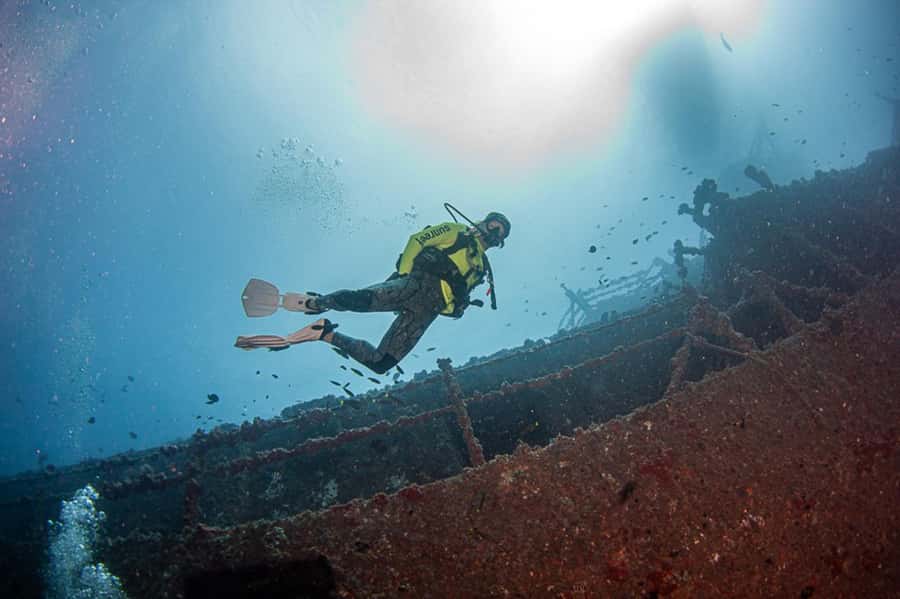
The underwater portion lasts about three hours, allowing two leisurely sessions rather than one rushed look. Your qualified PADI instructor or Divemaster guides you, but this is still a certified scuba activity, not a beginner lesson.
The first session may be the best time to appreciate the overall structure. Move back from the wreck when possible and take in the ship’s profile. The destroyer sits bolt upright, which makes it easier to understand as a vessel rather than a scattered pile of metal.
The second session can focus on details and marine life. Look around the funnels, deck fittings, openings, and shaded sections of the hull. An octopus has made a home in a pyrotechnic tube on the deck, so small holes and recesses deserve attention.
If you are qualified and properly equipped for entry, the engine room and control room add a more enclosed, technical feel. The control room, with its original kill switches still in place, connects the site to the ship’s working past. You are not simply looking at a reef. You are moving through a former naval vessel that still shows how it operated.
Take the guide’s instructions seriously inside the wreck. A torch is required for penetration, and you should only enter areas appropriate to your training, certification, and comfort. If you prefer to remain outside, you will still have plenty to see.
The two moorings also help with navigation. A ship this size can become confusing when you are focused on fish, structure, and air use. Stay aware of your position, your buddy, and the route back to the mooring line.
Marine life around the funnels and bow
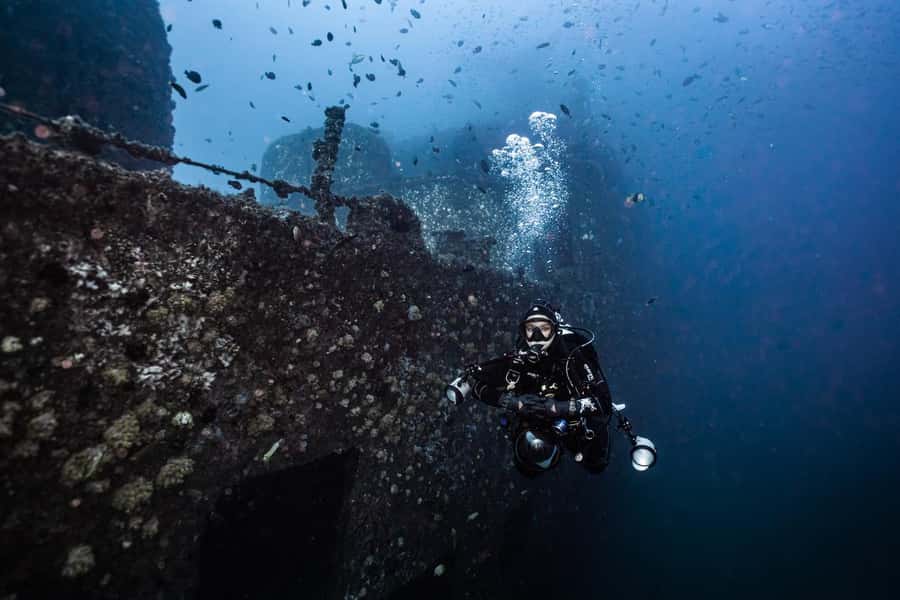
The Brisbane has become much more than a metal attraction. Environmental studies by the University of the Sunshine Coast and Queensland Museum found a wide range of marine life using the wreck.
The larger animals are the obvious prizes. Bull rays and eagle rays may cruise near the ship, and eagle rays are known to move between the two funnels. A turtle has taken up residence on the aft funnel, though wildlife never follows a schedule.
Up to 10 giant Queensland grouper have been seen near the bow at one time. That is a remarkable sight, but you should treat it as a possibility rather than a promise. The same applies to shoveled nose rays and greasy cod.
Schools of fish add movement to the open water around the ship. Juvenile red emperor and snapper gather near the wreck, while yellow-tailed kingfish patrol the bait fish. The kingfish are predatory, fast, and likely to catch your attention as they move through the schools.
Look closer for smaller creatures. Anglerfish, lionfish, blennies, nudibranchs, sea hares, squid, and octopus all use the wreck’s structure. Soft corals are widespread, and hard corals are becoming established too.
I would bring a slow, observant approach. Large animals may appear in open water, but the smaller finds reward anyone willing to inspect a pipe, ledge, or shadow. Avoid touching the ship, coral, or animals, and keep your buoyancy controlled around fragile growth.
A few more dives around Australia worth comparing
- Great Barrier Reef Snorkeling and Diving Cruise from Cairns
★ 4.5 · 3,714 reviews - Ocean Freedom Great Barrier Reef Luxury Snorkel and Dive Cruise
★ 5.0 · 1,895 reviews - Cairns: Premium Snorkelling and Diving Reef Day Trip
★ 4.7 · 1,528 reviews - Cairns: Outer and Coral Cay Snorkel and Dive Cruise
★ 4.8 · 1,467 reviews
Water temperature, visibility, and equipment
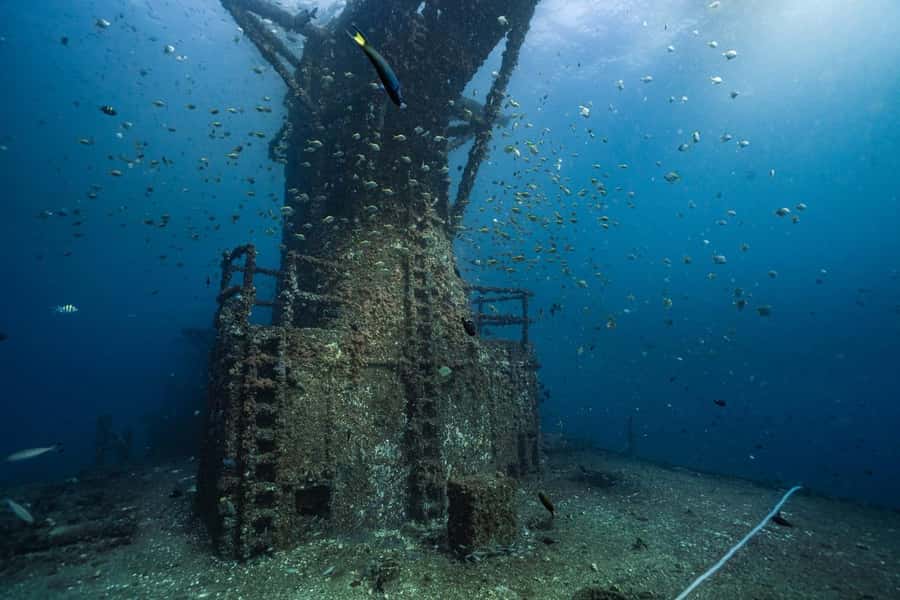
Water temperature ranges from about 17°C in winter to 27°C in summer. That is a big swing, and your comfort may depend as much on the season as on the air temperature at Mooloolaba.
One account from October described extremely cold conditions, even with a 5mm wetsuit. Another account, from September, reported feeling very cold in a 5mm suit and open-heel fins at water temperatures of 22°C. Those reports are useful warnings, even though individual cold tolerance varies.
Ask about exposure protection before you arrive. Hoods, gloves, boots, and suitable fins may make a major difference. The crew reportedly had better cold-water gear available for staff than the basic setup used by one participant, so it is sensible to ask what is included in a rental package rather than assuming a standard wetsuit will be enough.
The advertised price does not include equipment. You can hire all scuba gear on the day for an added fee, and the equipment is described as being in excellent condition. You can also hire an underwater camera and torch, again at extra cost.
That changes the value calculation. At $133, the trip is attractive if you already own a complete kit and only need the boat, guides, permits, and snacks. If you need a wetsuit, regulators, BCD, fins, mask, weights, camera, and torch, your final cost will be higher.
Visibility averages around 15 metres, and 20 metres or more is not unusual. Good visibility makes a huge difference on a wreck this size. You can understand the vessel’s layout from farther away and watch rays or fish approach across open water.
What the return trip feels like
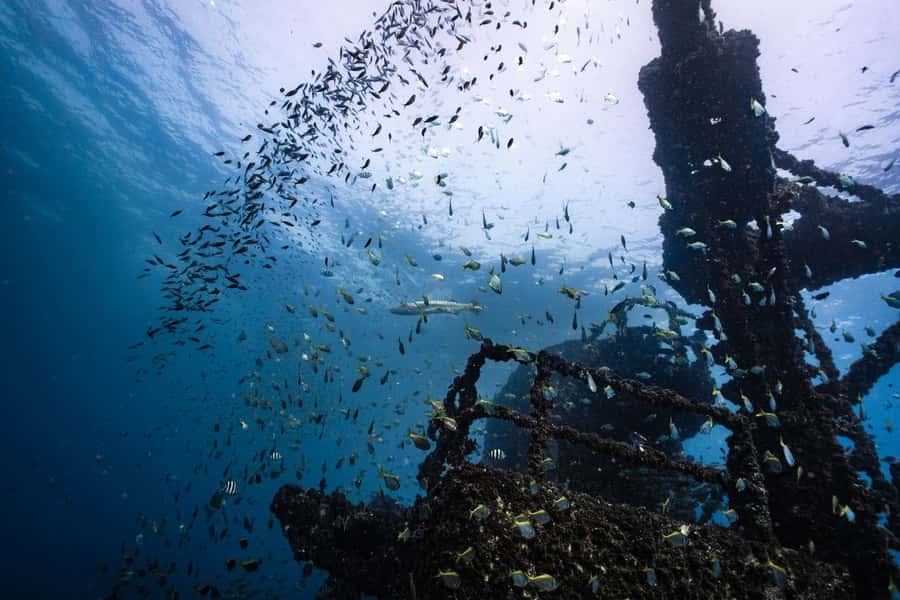
After the underwater sessions, the boat takes about 30 minutes to return to Sunreef Mooloolaba. That gives you time to warm up, pack equipment, and compare what you saw with the rest of your group.
Bring a towel and a change of dry clothing. Biodegradable sunscreen is required for the day, and you should apply it before boarding while remembering that sunscreen does not replace good cover from the sun.
A hot drink or soup can be welcome after a cold session. One account specifically noted that hot soup helped after getting out of very cold water. Since onboard provisions include light snacks but not clearly a full meal or guaranteed drinking water, bring what you need within the operator’s rules.
The trip lasts five hours in total. That is long enough for a meaningful wreck visit without taking up an entire day. There is no hotel pickup, so you need to make your own way to Sunreef Mooloolaba.
Who should book this wreck trip?
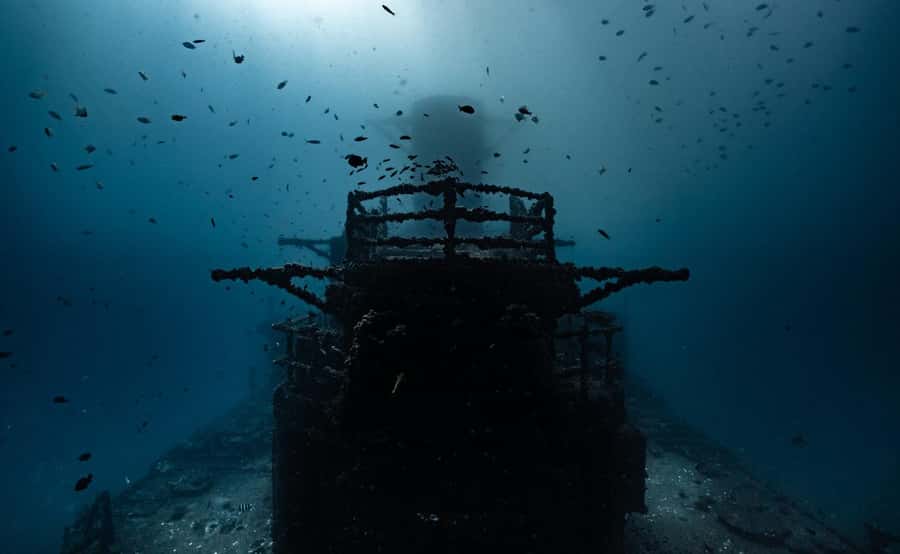
This outing suits certified divers who want a substantial wreck rather than a short reef swim. It works especially well for people from Open Water level through Divemaster and instructor, provided you are current and comfortable at the wreck’s depth.
You must have scuba certification and have been scuba diving within the past two years. Bring your physical or digital certification card. You also need to sign a diver statement before entering the water.
The trip is a good fit if you:
- Enjoy shipwreck structure and marine life in equal measure
- Want two longer sessions instead of one rushed visit
- Are comfortable in water between 17°C and 27°C
- Have your own kit or are happy to pay for rental equipment
- Want a short boat ride from Mooloolaba
- Can manage your own buoyancy, air use, and underwater navigation
It is less suitable if you are newly certified but have not been in the water for two years, dislike cold water, or hope for a casual snorkel. Pregnant participants cannot take part, and uncertified people cannot join the scuba activity.
Is $133 good value?
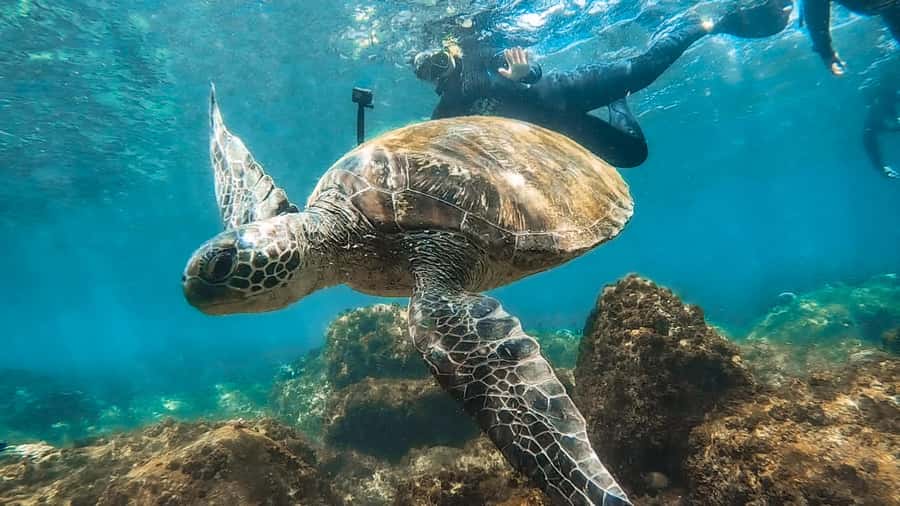
The $133 price covers the return boat journey, marine park permits, light snacks, and guidance from a qualified PADI instructor or Divemaster. It also gives you about three hours at one of Queensland’s best-known wreck sites.
That is fair value for a certified diver who already owns equipment. The short journey is another plus. You are not paying for hours of transit before reaching the site.
The value is less clear once equipment hire is added. Cold-water protection matters here, and a basic 5mm wetsuit may not suit everyone. Add the cost of gear, a torch for any penetration sections, and a camera if you want photographs.
I would ask for the full rental price before booking. Confirm what the package contains, especially hood, gloves, boots, fins, and exposure protection. That one conversation may prevent an uncomfortable day in the water.
Free cancellation is available up to three days before the activity for a full refund. Check the available departure time when booking, since the listed five-hour duration does not identify one fixed start time.
Final verdict: book it if the wreck matters to you
I would book the Ex-HMAS Brisbane if you are a certified, current scuba diver who enjoys large wrecks and wants plenty of underwater time. The upright destroyer, good usual visibility, short run offshore, and varied marine life make this more than a quick sightseeing stop.
I would be careful if you get cold easily or need to hire every piece of equipment. Ask about the cold-water kit first, bring water and warm clothing, and budget for the extras. With the right preparation, this is a strong Sunshine Coast choice for seeing a genuine artificial reef and a former naval ship in one memorable outing.
FAQ
Where does the Ex-HMAS Brisbane trip start?
It starts at Sunreef Mooloolaba in Queensland. Hotel pickup is not included, so you need to make your own way to the departure point.
How long does the experience last?
The full experience lasts five hours. The schedule includes a 15-minute safety briefing, about 30 minutes by boat to the site, around three hours underwater, and about 30 minutes back to Mooloolaba.
How far offshore is the wreck?
The Ex-HMAS Brisbane is located about 2.9 nautical miles offshore from Mooloolaba.
What certification do I need?
You must hold a current scuba certification, at least Open Water level, and have been scuba diving within the past two years. Bring a physical certification card or digital card.
Is scuba equipment included in the price?
No. The $133 price does not include scuba equipment. Full equipment can be hired for an additional fee on the day. An underwater camera and diving torch are also available for extra charges.
How deep is the wreck?
The wreck sits upright, with about 15 metres of water over the forward decks and about 18 metres over the stern.
What water temperature and visibility should I expect?
Water temperatures range from about 17°C in winter to 27°C in summer. Visibility averages around 15 metres, with 20 metres or more possible.
New dives around Australia
- Try Scuba Diving at Cook Island – Guided Ocean Dive with Turtles★ 4.5 · 6 reviews
- Gold Coast Learn to Dive – Open Water Certification Course★ 5.0 · 5 reviews
- Rottnest Island Deep Dive Day Trips★ 5.0 · 29 reviews
- Scuba Dive The Beautiful Rottnest Island for Certified divers★ 5.0 · 65 reviews
- Rottnest Island scuba dive tour★ 5.0 · 25 reviews
- Rottnest Island Boat Dive Day Trip including Lunch★ 4.5 · 77 reviews
- PADI Open Water Course★ 4.5 · 11 reviews
- Scuba Dive Ningaloo Reef★ 4.5 · 92 reviews
Wreck Diving, compared.
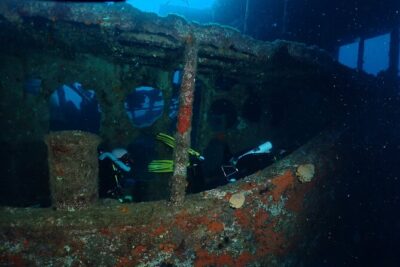
Wreck and Bridge Span Dive for Certified Divers
Read our review →
Bali Diving for Beginners: Tulamben Liberty Wreck
Read our review →
Certified Diver: 2-Tank Deep Wreck and Shallow Reef Dive Off Oahu
Read our review →
Waikiki 2 Tank World Class Wreck SCUBA Diving – Certified Only
Read our review →
Private First-Time Dive on Aruba’s Reef and Wreck Site
Read our review →Tulamben Diving USS Liberty Shipwreck Scuba Dive
Read our review →
Bali Diving Day Trip-Manta Point/Tulamben Shipwreck-Fun Dive
Read our review →Browse the lists this tour appears in