
REVIEW · PUNTA CANA
3 Days Open Water Diving Course in Punta Cana
Your holiday can end with a new skill. This three-day Punta Cana course combines PADI training with four open-water sessions, so you do more than admire the Caribbean from a beach chair. I like the small maximum group of eight and the steady progression from online study to pool practice to sea. I also like the personal teaching style associated with instructors Kelvin, Franklin, Gilberto, and George, who have helped new swimmers gain confidence.
The main consideration is time. This is a real certification course, not a quick tourist activity, and you need enough energy for theory, equipment practice, and four required open-water sessions. A medical questionnaire applies, and you should have a moderate level of fitness.
What makes this Punta Cana course worth considering
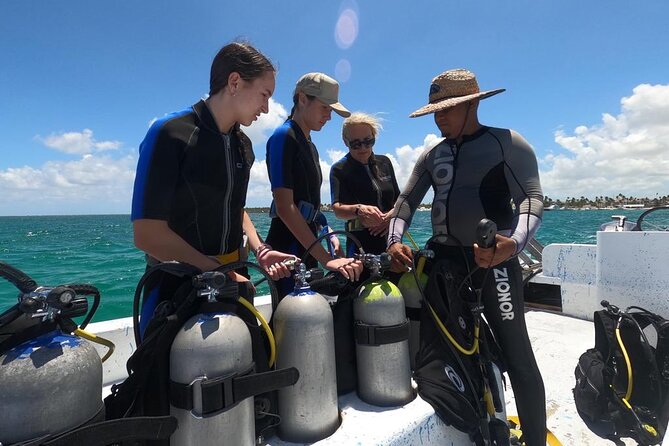
- Four open-water sessions: You complete the required sea work for certification and visit more than one underwater site.
- Maximum depth of 18 meters: The qualification allows you to dive to 60 feet anywhere in the world, subject to local rules and your experience.
- Pool skills before the sea: You practice essential procedures in confined water before dealing with open-water conditions.
- A possible shipwreck visit: The Monica wreck has been used as one of the training sites, along with a reef location.
- Small groups of up to eight: This gives instructors more room to watch your technique and answer questions.
- Flexible support: Pickup is offered, and the team has helped with transport arrangements and communication.
Three days from theory to open water
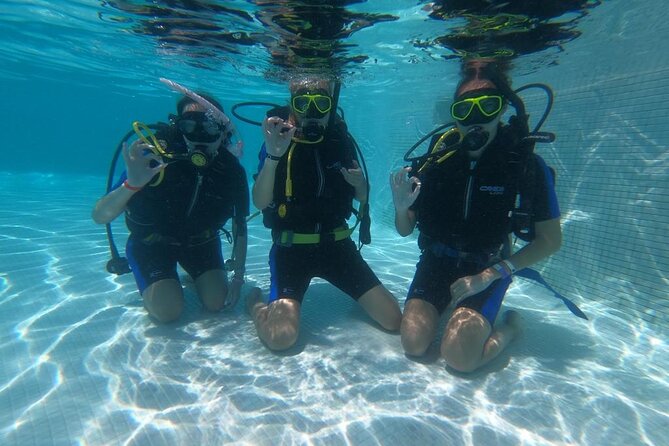
The course has three connected parts: online scuba theory, confined-water practice, and four open-water sessions. That order matters. You first learn why equipment works, then practice using it in a controlled setting, and only after that move into the sea.
Your online work covers basic scuba principles, including pressure, equipment, safety, and the effects of changing depth. This is not filler before the fun begins. A solid grasp of pressure and procedures helps you understand why you must ascend carefully, monitor your air supply, and respond calmly when something feels unfamiliar.
You should plan your schedule around the course rather than squeeze it between unrelated excursions. The stated operating hours are Monday through Saturday, from 8:30 a.m. to 5 p.m. The exact daily sequence can depend on the instructor and sea conditions, but you should expect the course to occupy a meaningful part of three days.
More Dive Courses in Punta Cana:
- Barcelona: PADI Discover Scuba Diving
★ 4.7 · 1,016 reviews - PADI Open Water Diver Course
★ 5.0 · 626 reviews - Tossa de Mar: PADI Discovery Scuba Diving in Costa Brava
★ 4.7 · 392 reviews
Pool practice before the sea
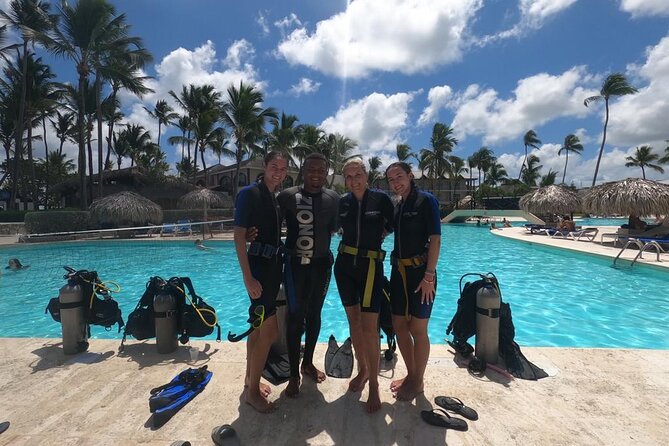
The confined-water section gives you a safer place to learn the basics. You work on equipment use, breathing, movement, and safety procedures before open-water conditions add current, visibility changes, and a larger sense of space.
For a first-time scuba student, this stage may be the most important part of the whole course. You can pause, ask questions, and repeat a skill without the pressure of being far from shore. That is especially useful if you feel nervous about breathing through a regulator or clearing water from your mask.
The teaching style matters here. Kelvin has been praised for explaining each step thoroughly and making sure beginners were comfortable and understood what they were doing. Franklin is also involved in instruction and management, which gives the operation a useful combination of teaching and practical coordination.
I would not rush this stage. If a skill does not feel natural in the pool, tell your instructor. The point is not to look confident for a few minutes. The point is to build habits that will keep you calm and safe later.
Four open-water sessions in Punta Cana
Once your instructor decides you are ready, you move into four open-water sessions. The course description places the maximum depth at 18 meters, or 60 feet, which is the standard limit for an entry-level open-water qualification.
The sea portion is where the course becomes memorable. Punta Cana is known for clear turquoise water, coral reefs, tropical fish, and varied underwater scenery. Conditions can change with weather, so you should think of the setting as attractive but not fully predictable. Visibility and site selection may vary, and poor weather can force a change of date.
The available site information includes both a reef and the Monica shipwreck. These offer different kinds of interest. A reef gives you a chance to watch marine life among coral formations, while a wreck adds structure and a stronger sense of exploration. The wreck is not simply a photo stop. It also gives you a clear underwater feature to navigate around while practicing control and awareness.
You may complete the four sessions across two or three days, depending on the teaching plan and conditions. The experience has been arranged for small groups, but the exact sites and order are not guaranteed. That flexibility is sensible because safe sea operations must respond to weather and water conditions.
What you can expect from the instructors
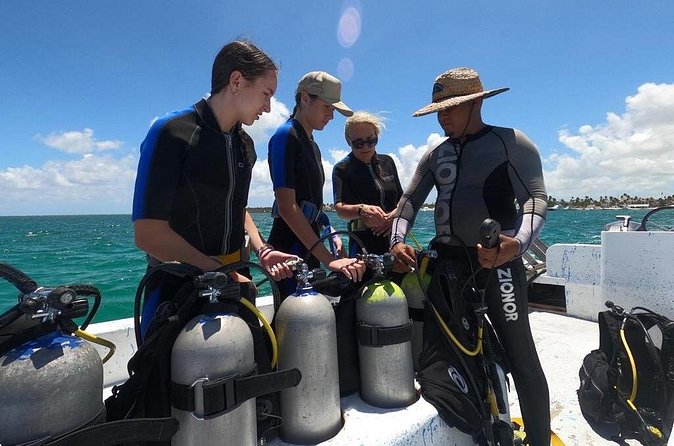
The strongest theme in the available feedback is personal attention. Kelvin, Franklin, Gilberto, and George are repeatedly singled out for teaching, transport help, patience, and communication.
That is good news if you are new to scuba. A beginner needs more than a formal lesson. You need someone to notice when you are rushing, explain a skill in a different way, and give you a moment to settle before continuing. The instructors have been described as supportive and easy to contact, with special praise for making first-time students feel at ease.
The small group limit also supports that approach. With no more than eight people, you have a better chance of receiving direct feedback than you would in a large resort class. Still, group size is a maximum, not a promise that every session will feel private. Ask about the group arrangement when you book if individual attention is a major concern.
An instructor may also adjust the pace. Someone who has already used scuba equipment will likely move through basic handling more quickly than someone who has never breathed underwater. The important point is that the course is designed to build ability in stages rather than drop a beginner straight into the sea.
A few more dives around Punta Cana worth comparing
- 3-Day PADI Open Water Diving Course in Dubai
★ 5.0 · 173 reviews - Padi open water diver course, become a diver in 3 days
★ 5.0 · 113 reviews - Become certified diver in 3 days – PADI Open Water Diver course on Koh Tao
★ 5.0 · 104 reviews - Hurghada: 3-Day PADI Open Water Diving Course
★ 4.6 · 78 reviews
What the certification means
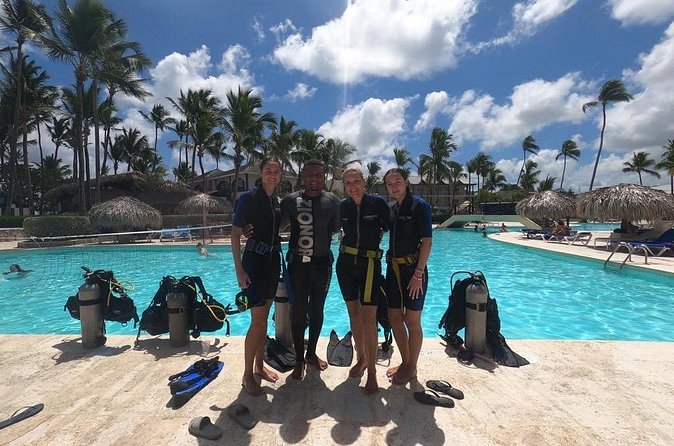
Passing the course allows you to scuba to a maximum of 18 meters, or 60 feet, anywhere in the world. That is a useful qualification for future holidays, but it does not mean every site at that depth will be appropriate for you.
Your certification is a starting point. Local operators can set their own limits based on weather, current, visibility, equipment, and your recent experience. You should also remember the skills learned in this course, especially controlled ascents, equipment checks, and careful communication with your buddy and instructor.
The qualification has value because it gives you more choice on future trips. Instead of being limited to a brief introductory session, you can join suitable certified scuba outings. You still need to follow the rules of the operator and remain within your training and comfort level.
Is $490 a fair price?
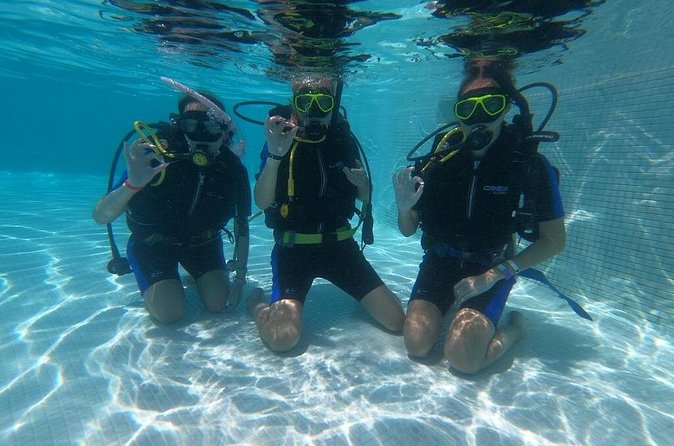
The cost is $490 per person. I would judge that price against what the course includes, not against the cost of a one-hour recreational activity.
You receive online theory, confined-water instruction, equipment-related training, instructor supervision, and four open-water sessions. You also work toward a qualification that can be used internationally. Those elements make the price easier to justify for someone who genuinely wants certification.
The value is lower if you only want to see fish once during a beach holiday. A single guided snorkel or introductory scuba session would take less time and carry less commitment. This course makes financial sense when you want a lasting skill and intend to use the certification again.
Pickup is offered, which may reduce the hassle of arranging transport, although the details of pickup should be confirmed before you set your schedule. The team has also helped with transport in individual cases, a useful benefit in a resort area where getting between hotels, the shop, and the marina can take planning.
Because the course is usually booked well ahead, with an average booking lead time of about 64 days, I would not leave it until the last moment if your holiday dates are fixed. Early planning also gives you time to complete the online theory without cramming.
Fitness, medical forms, and practical preparation
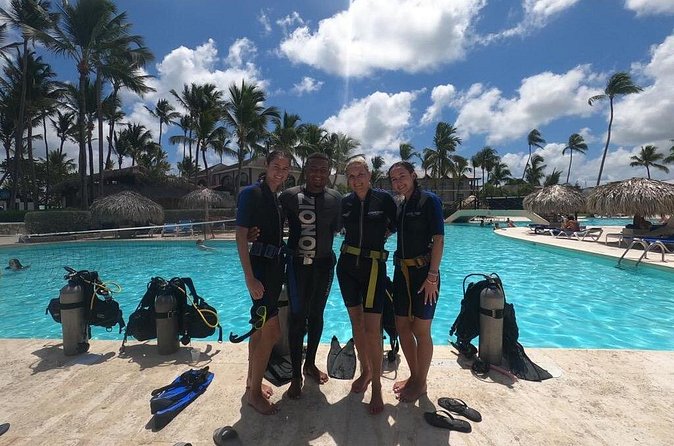
You should have a moderate level of physical fitness. The course involves time in the water, equipment handling, swimming, and repeated sessions over several days. You do not need to approach it like an athletic contest, but you should be comfortable with the physical demands of being in open water.
A medical questionnaire is required to help determine whether scuba activity is suitable for you. Answer it honestly. If a health issue needs further review, deal with that before the course begins rather than hoping it will not matter at the meeting point.
I would also keep your schedule light around the training. You may be excited to add ziplining, a long excursion, or a late night to the same three-day stretch, but fatigue can make new skills harder. The course deserves your attention.
Wear practical swim clothing and bring anything the provider tells you to bring. The supplied information confirms mobile tickets and pickup availability, but it does not specify every item included in the equipment package, so ask before arrival if you want to know what is supplied and what you should carry.
Weather and cancellation rules
The sea portion depends on suitable weather. If poor conditions cancel the activity, you are offered another date or a full refund. That policy is reassuring, but weather changes can still affect your holiday timetable.
The experience also requires a minimum number of participants. If that minimum is not met, you are offered another date or experience, or a full refund. Keep that possibility in mind if you are building a tight itinerary around the course.
You can cancel for a full refund if you do so at least 24 hours before the local start time. Cancellations or changes made within 24 hours are not accepted for a refund. In practical terms, book early enough to secure a place, but do not wait until the last day to decide if the course is right for you.
Who will get the most from this course?
This is a strong fit for you if you have always wanted an entry-level scuba qualification and can give three days to the process. It also suits couples, parents and older children who meet the provider’s requirements, and friends who prefer learning a skill together rather than simply booking a short water activity.
It is particularly useful for first-time students who want patient instruction. The praise for Kelvin, Franklin, Gilberto, and George suggests that beginners receive close support, and the pool stage gives you a proper chance to build confidence.
You may want a different activity if your holiday is very short or you dislike structured study. Four open-water sessions require commitment, and the online theory comes before the more exciting sea work. This is not the right choice if you want instant action with no classroom component.
The course also may not suit you if you are uncomfortable completing a medical questionnaire or if moderate physical activity in open water is a concern. In that case, ask the provider about your situation before paying.
Booking advice for a smoother experience
I would start by choosing three days when you have no urgent plans afterward. Morning operating hours begin at 8:30 a.m., and the listed schedule runs until 5 p.m., so leave room for the course rather than assuming you can fit it into a spare afternoon.
Ask about the exact meeting point and pickup area. Public transportation is nearby, but pickup can be simpler if you are staying away from the main activity area. Confirm the plan before the first session, especially if you are relying on hotel transport.
When you meet the instructor, tell them if you are anxious or have never used scuba equipment. That information helps them set the pace. Ask for an explanation whenever a safety step is unclear. You are not slowing the class down by learning properly.
Keep your mobile ticket available and allow time to complete any required paperwork. Since the course is offered Monday through Saturday, a Sunday arrival may require careful planning if you want to begin immediately.
FAQ
How long is the scuba course?
The course lasts approximately three days.
What does the course include?
It includes online scuba theory, confined-water pool sessions, and four open-water sessions.
How deep can I go after completing the course?
The course allows you to scuba to a maximum depth of 18 meters, or 60 feet, anywhere in the world, subject to local rules and conditions.
Is this course suitable for someone who has never scuba dived before?
Yes. The course teaches basic theory and equipment use, then provides confined-water practice before open-water training. A moderate physical fitness level is required.
How many people can be in the group?
The maximum group size is eight people.
Are pickup and mobile tickets available?
Yes. Pickup is offered, and the experience uses a mobile ticket.
What marine sites might I visit?
The course includes open-water sites in Punta Cana, with reef areas and a possible visit to the Monica shipwreck.
Is a medical questionnaire required?
Yes. A medical questionnaire applies to help ensure that the activity is suitable and safe for you.
What happens if bad weather cancels the course?
You are offered another date or a full refund if poor weather causes cancellation. The same type of option applies if the minimum number of participants is not reached.
Should you book the Punta Cana scuba course?
Book it if you want a proper entry-level qualification, not just a quick underwater photo. The combination of pool preparation, four open-water sessions, small groups, and patient instruction gives you a sound introduction to scuba, while the reef and Monica wreck add variety to the sea work.
I would be especially comfortable recommending it to a first-time student who values calm teaching. Kelvin, Franklin, Gilberto, and George have earned strong praise for support and clear instruction, and that matters more than flashy promises when you are learning to breathe underwater.
Skip it if you have only one free day, want a casual resort activity, or do not want the study and safety work that certification requires. For everyone else, $490 is a reasonable investment in a skill you can carry to future coastlines, provided you can commit three days and meet the medical and fitness requirements.
New dives around Punta Cana
- Scuba Doo Underwater Scooter in Punta Cana (Half Day)★ 4.0 · 84 reviews
- Scuba Diving at Catalina Island – 2 tank – for Certified Divers★ 3.0 · 6 reviews
- Scuba Doo Diving Scooters in Punta Cana★ 3.5 · 7 reviews
- Scuba Diving on Catalina Island | 2 tanks, 2 spots★ 4.0 · 5 reviews
- Scuba Diving at Catalina Island – 2 tank | 2 spots★ 3.5 · 19 reviews
- Platinum Power Shore Adventure, Hookah Diving, and Snorkeling★ 5.0 · 2 reviews
- Full-Day Catalina Island Scuba Diving Tour from Punta Cana★ 3.5 · 37 reviews
- Saona Diving★ 5.0 · 4 reviews
PADI Courses & Certification, compared.
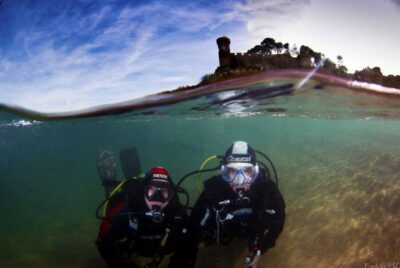
Tossa de Mar: PADI Discovery Scuba Diving in Costa Brava
Read our review →
Full-Day Beginner Scuba Course with Private Tuition, Racha Yai
Read our review →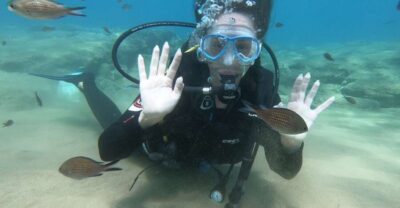
Beginner Scuba Diving Lesson with PADI Instructor
Read our review →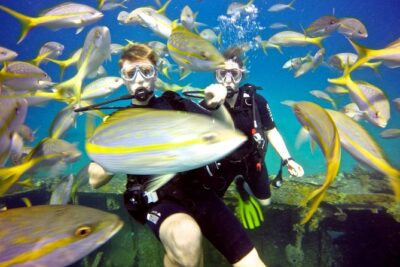
Discover Scuba Diving with No Certification in St Thomas
Read our review →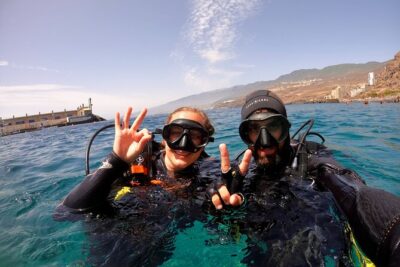
Try Dive – PADI Discover Scuba Diving in Tenerife
Read our review →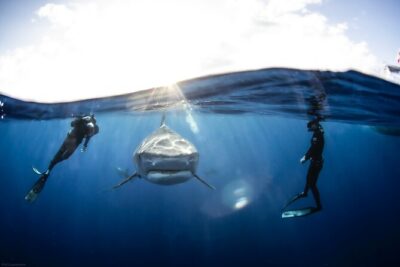
Browse the lists this tour appears in