
REVIEW · CRETE
Research diving with a Marine Biologist in Crete
Crete has a second world below the waves. This one-day program pairs two scuba sessions with a marine biologist, giving you a closer look at Mediterranean plants and animals than a standard recreational outing. I like the maximum four-person group, which keeps the instruction personal, and I like the chance to examine samples under a microscope afterward. The main consideration is simple: you must already be a certified scuba diver and fit enough for a full day in the water.
You start at 8:30 a.m. at Dive2gether Crete in Plakias, visit Souda Beach and Plakias, and return to the same marine center. Lunch at a beach taverna costs extra, as do underwater photos. At $308.58 per person, this is not a casual budget activity, but the fee includes equipment, specialist research tools, bottled water, and a guided science session that turns a pleasant day at sea into something more useful.
Key points at a glance
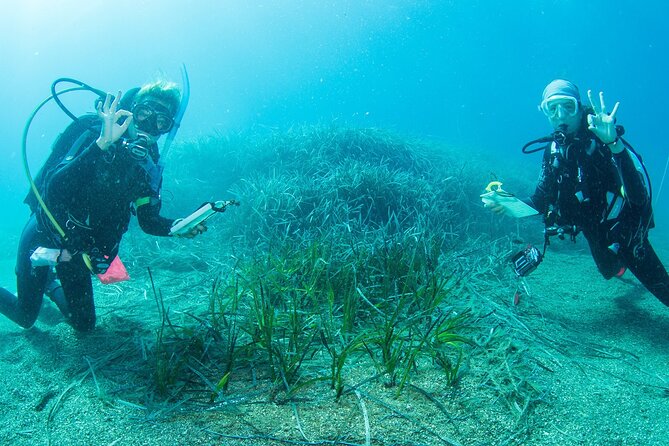
- Two underwater sessions with a marine biologist: Your guide adjusts the program to your certification level, experience, and interests.
- A maximum of four certified scuba participants: The small group allows more time for questions, observation, and practical instruction.
- Citizen-science work in the Mediterranean: You help collect information that supports marine education and environmental projects.
- Souda Beach and Plakias in one day: The program gives you two local settings rather than keeping you at a single site.
- Microscope work after the water sessions: At the open-air marine biology lab, you examine samples and connect what you saw underwater with smaller forms of life.
- Lunch and photos cost extra: Plan for a separate meal budget, and expect to pay €19 if you want the guide’s underwater photographs.
Why this is more than a standard scuba outing
Many recreational scuba programs focus on getting you safely into the water, showing you a few sights, and bringing you back to shore. This program adds a scientific purpose. Before entering the sea, you learn what to look for, then use that information during the underwater work.
That change in focus matters. You are not simply passing over the seabed and trying to remember a few fish names. You may take underwater notes, record species, collect sediment samples, or play a recognition game based on the animals and plants you encounter. The exact work is shaped around the group and the marine biology project in progress.
The program is described as tailor-made for your level and interests. That is especially helpful because certified scuba participants can have very different backgrounds. An experienced participant may want to concentrate on seagrass or sediment, while someone with less experience may benefit from a slower introduction to observation and identification.
You are also working in a very small group. With no more than four scuba participants, the marine biologist can respond to questions without turning the briefing into a classroom lecture. You should still expect a structured day, but the format has room for discussion and individual attention.
A few more dives around Crete worth comparing
- Heraklion: Scuba Diving Experience for Beginners _Beach
★ 4.7 · 549 reviews - Heraklion: Beginner Scuba Diving Lesson with PADI Instructor
★ 4.9 · 355 reviews - Heraklion: Scuba Diving Experience for First-Timers
★ 4.8 · 203 reviews
Starting at the Plakias marine center at 8:30 a.m.
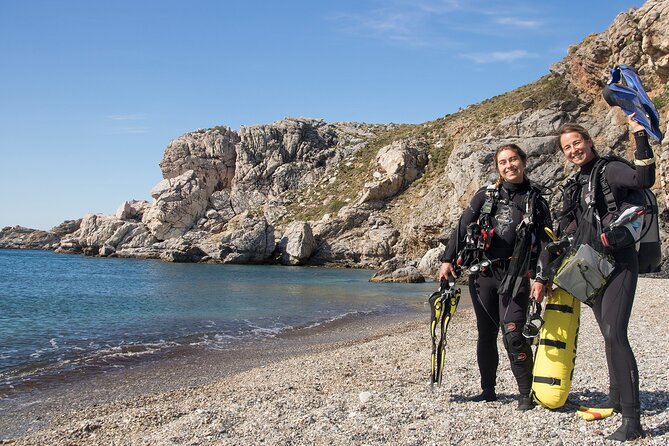
The day begins at Dive2gether Crete, a 5-star PADI Diving School and Marine Field Station on Eleftheriou Venizelou in Myrthianos, Plakias. The activity ends here too, which keeps the morning and afternoon fairly straightforward.
An early start makes sense. You need time for the morning briefing, equipment preparation, two water sessions, lunch, and the laboratory work later in the day. Arrive ready for a full schedule rather than a quick morning excursion.
The health requirements deserve attention. You need to be certified, healthy, and fit for scuba activity, with a moderate physical fitness level expected. This is not a program for someone who simply wants to try scuba for the first time. If you have any concern about your fitness or health, sort that out before booking.
The center provides scuba equipment and specialist marine biology equipment. Bottled water is also included. You do not need to assemble your own research kit, which makes the science portion accessible even if you have never handled sampling tools before.
Souda Beach: a practical place to begin
Souda Beach is one of the day’s two listed stops. The available details do not specify the exact site conditions or the particular species you will see, so you should avoid arriving with a fixed checklist. The marine biologist will explain what is relevant to the area and adapt the work to conditions, experience, and the project being carried out.
The first session is a chance to connect the briefing with the real underwater setting. You might be asked to notice how plants are arranged, identify small animals living among them, or record observations in a clear and organized way. The point is not to rush from one sight to the next. It is to train your attention.
That makes Souda Beach useful for building confidence in the program’s method. You learn how to look, what to record, and how to distinguish a useful observation from a passing glimpse. A regular recreational trip can leave you with a few memorable images. This session aims to leave you with a better way of observing the sea.
Shore-based work can also feel more relaxed than a boat-based outing, though the supplied details do not confirm the exact entry method for this particular day. The site is listed as a stop, not as a promise of a specific shore or boat arrangement. Ask the center about the planned entries if that detail matters to you.
Plakias: the second setting and the return to the lab
Plakias appears both as the home of the marine center and as the second stop. This gives the day a useful rhythm: you begin with an underwater setting, move through the program’s field work, and return to the center where the observations can be discussed and examined more closely.
Past participants have used the Plakias area for species study, sediment sampling, underwater notes, and a recognition exercise. Another program focused on seagrass and then examined the microscopic life found in that habitat. These examples show how different the day can feel depending on the group’s interest.
You might spend more time looking at a habitat than covering a large distance. That is a benefit if you enjoy patient observation, but it may disappoint you if your idea of a great scuba day is maximum swimming time or a long list of dramatic sights. This is a research-led activity, not a sightseeing race.
The second water session should help you apply what you learned earlier. You may return with samples, notes, or a clearer sense of how marine biologists gather information in the field. The value lies in the connection between the two sessions. You learn a method, use it underwater, and then discuss what happened afterward.
Same coastline, a very different dive:
- Chania: Scuba Diving for Beginners
★ 4.7 · 196 reviews - Chania: Scuba Diving for Beginners
★ 5.0 · 103 reviews - Experience Scuba Diving in Heraklion Crete
★ 5.0 · 80 reviews - Crete-Chania: Snorkeling & Scuba Dive for Beginners by Boat
★ 5.0 · 77 reviews
The marine biology lesson before you enter the water
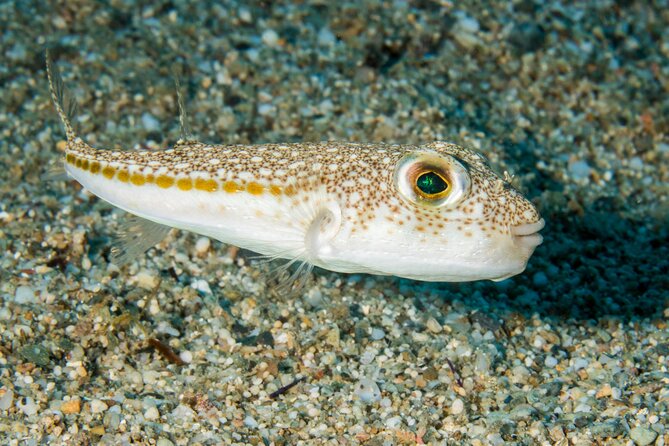
The briefings are a central part of the day, not filler before the enjoyable section begins. You learn about the flora and fauna of the area, the methods used in marine biology research, and the species that may be found there.
The program has been led by trained marine biologists including Vanessa, Martina, Marie-Claire, Kirsten, and Katy. The information provided does not guarantee which person will lead your date, but it does show that the marine education side is built into the center’s team rather than added as a one-off talk.
You should expect the briefing to prepare you for practical work. That might include the correct way to collect a sediment sample, how to make underwater notes, or how to recognize a species without relying on a quick guess. The aim is to make you more careful and more curious.
This teaching style suits you if you enjoy learning by doing. If you would rather spend the day quietly following a guide from one underwater feature to another, the science tasks may feel like extra work. For me, that is exactly what gives the program its character.
Becoming a citizen scientist for the day
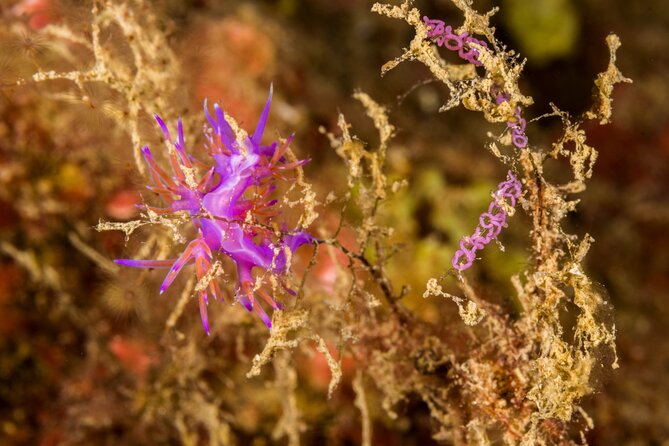
The phrase citizen scientist can sound grand, but here it describes a useful role. You are taking part in small-scale data collection and observation that can help educate others and support environmental protection projects.
The work is modest, yet meaningful. A sediment sample or a careful species record will not transform marine research by itself. But learning how these records are gathered helps you understand the sea as a living system rather than a backdrop for recreation.
The seagrass program is a good example. After working underwater, participants examined the tiny ecosystem associated with the seagrass in the field lab. That extra step shows why the program uses specialist equipment. The most interesting life may not be obvious when you first look across the seabed.
You should be prepared to follow instructions closely. Sampling and recording work require care, and the program is most rewarding when you are willing to slow down. The center supplies the specialist tools, but your attention is the most important piece of equipment.
The open-air lab and microscope session
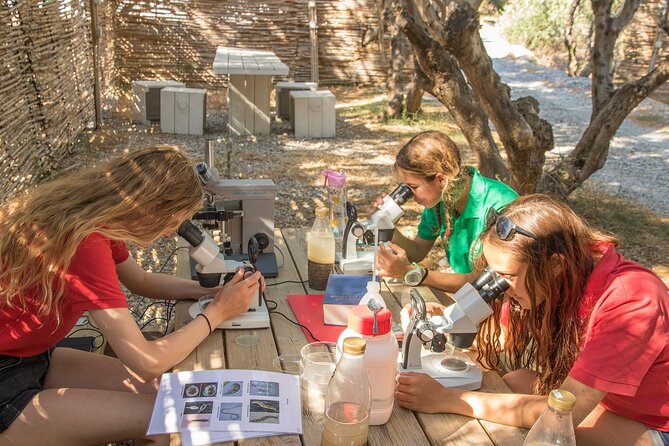
After the water work, you return to the marine center for a debrief. This is where the day’s pieces come together. You discuss what you saw, what you learned, and what the samples reveal.
The center has an open-air marine biology lab with microscopes. Looking at a sample through a microscope changes your sense of scale. You may have just spent time observing a broad habitat, then discover that the material contains a much smaller community of life.
This part also gives you a chance to ask questions while the experience is still fresh. You can compare what you thought you saw underwater with what appears on the slide. That makes the lab session more than a technical demonstration. It becomes a second look at the same environment.
The format has been especially well suited to families and groups who want shared learning. A father and his two sons, all advanced open-water certified, spent two days with the center and combined ordinary site orientation with sediment analysis and species recognition. You do not need to book two days for this program, but that example shows how the activity can appeal across ages when everyone already has scuba training.
Lunch, photographs, and the real cost
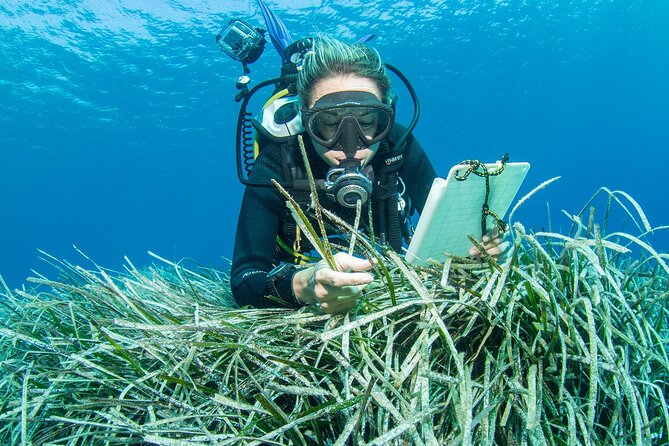
The listed price is $308.58 per person. It includes scuba equipment, marine biology equipment, bottled water, and the use of microscopes in the lab. Since the program is private to your group and limited to four scuba participants, you are paying for specialist instruction and a highly personal format, not only for time in the water.
Lunch is not included. The group enjoys eating together at a beach taverna, but you pay for your own meal. Set aside extra money for lunch and drinks, since the day is long and the meal is part of the planned rhythm.
Underwater photographs are also separate. The guide takes photos that can be purchased for €19. That is a reasonable optional cost if you want a record of the day, especially because research tasks can leave you busy and less focused on taking your own pictures.
The price makes the most sense if you value instruction, small-group attention, and the lab work. If you only want recreational scuba time, a standard trip may offer better value. If you want to understand the Mediterranean environment and take part in practical research, the added cost is easier to justify.
Who should book this program
This experience suits a certified scuba participant who enjoys marine life, patient observation, and learning practical methods. It is also a good match for families or friends who already share scuba experience and want an activity with a stronger educational purpose.
You will likely get the most from it if you are happy to:
- Spend a full day on a structured program
- Listen carefully during briefings
- Record observations or handle samples
- Work in a group of no more than four
- Discuss what you saw after returning to the center
- Pay separately for lunch and optional photos
It is less suitable for a first scuba experience, a participant who is not fit for a full day in the water, or anyone seeking only dramatic underwater sightseeing. The program asks you to participate rather than simply watch.
The small group is a major advantage, but it also means availability may be limited. Since the activity is private to your group, you will not be placed with a larger mixed party. That creates a calmer format, though it may cost more than a basic shared excursion.
Booking, timing, and cancellation details
Confirmation is provided when you book. The meeting point is Dive2gether Crete, and the activity returns there at the end of the day. The stated start time is 8:30 a.m.
Free cancellation is available if you cancel at least 24 hours before the local start time. Cancellations made less than 24 hours before the start are not refunded, and changes inside that period are not accepted.
Because the program depends on your health, certification, and fitness, check those requirements before paying. It is better to resolve questions early than to discover on the morning that this is not the right type of scuba activity for you.
Should you book the marine biology day?
Book it if you want to see Crete’s underwater world with more purpose than a standard recreational outing. The two water sessions, small group, trained marine biology team, citizen-science work, and microscope lab create a well-rounded day for certified participants.
Skip it if you mainly want maximum underwater sightseeing, a low-cost activity, or a first introduction to scuba. The $308.58 price is easiest to defend when you care about learning and participation.
For the right person, this is a memorable way to spend a day in Plakias: you observe the sea, gather information, study what you collected, and leave with a clearer idea of how Mediterranean research happens in the field.
FAQ
Where does the experience take place?
The program takes place in Crete, with stops at Souda Beach and Plakias. It begins and ends at Dive2gether Crete in Myrthianos, Plakias.
What time does the program start?
The stated start time is 8:30 a.m.
How long does the program last?
It lasts approximately one day.
How many scuba sessions are included?
The program includes two scuba sessions.
Do I need to be certified?
Yes. You need to be a certified scuba diver to participate.
Is scuba equipment included?
Yes. The program includes the use of scuba equipment.
Is marine biology equipment provided?
Yes. Specialist marine biology equipment is included.
Is lunch included in the price?
No. Lunch at a beach taverna is paid separately.
Can I purchase underwater photos?
Yes. The guide takes underwater photos, which can be purchased separately for €19.
What is the cancellation policy?
You can cancel at least 24 hours before the local start time for a full refund. Cancellations or changes made less than 24 hours before the start are not accepted for a refund.
New dives around Crete
- Crete: Scuba Diving for Certified Divers in Chania★ 5.0 · 12 reviews
- Experience Scuba Diving in Heraklion Crete★ 5.0 · 80 reviews
- Crete Introductory Scuba Diving Experience★ 4.5 · 9 reviews
- Chania Scuba Diving 2 Shore Dives(Receive Certification)★ 5.0 · 11 reviews
- Crete-Chania: Snorkeling & Scuba Dive for Beginners by Boat★ 5.0 · 77 reviews
- Heraklion: Scuba Diving Experience for First-Timers★ 5.0 · 9 reviews
- Scuba Diving for Beginners with a PADI Instructor near Heraklion★ 4.5 · 8 reviews
- Heraklion: Scuba Diving Experience for Beginners★ 4.5 · 21 reviews
Scuba Diving, compared.
Great Barrier Reef Snorkeling and Diving Cruise from Cairns
Read our review →
First-Time Scuba Diving in Honolulu + Free Videos
Read our review →
Silfra: Diving Between Tectonic Plates – Meet on Location
Read our review →
Ocean Freedom Great Barrier Reef Luxury Snorkel and Dive Cruise
Read our review →
Beginner Scuba Diving with Turtles and Videos, San Juan
Read our review →
Tenerife: Your First Scuba Diving Experience in Turtle Area
Read our review →
Browse the lists this tour appears in