
REVIEW · MALTA
First scuba diving experience with instructor – Malta
Malta looks different below sea level. This three-hour PADI Discover Scuba experience from St. Paul’s Bay gives first-timers a careful introduction to equipment, breathing, hand signals, and Malta’s marine life. I like the clear beginner focus and the chance to move from shallow water into open water with an instructor nearby.
I also like the small-group setup, with a maximum of eight people, and the patient teaching praised by many participants. Antonio and Georgia are mentioned by name for calm explanations and encouragement. The main consideration is that this is not a private one-to-one lesson every time, and language support is specifically listed as Italian and English.
Key points before you book
- Three hours at DiveBase Malta: The session includes paperwork, instruction, equipment preparation, and time in the water.
- Designed for complete beginners: You do not need previous scuba experience, but you must be able to swim and be in good health.
- Two stages in the water: You begin in a shallow setting, then progress toward open water once you are comfortable.
- Maximum group size of eight: The personal attention can be good, but the exact instructor-to-student ratio may vary.
- A PADI certificate follows: You receive a Discover Scuba Diving Certificate of Achievement, which can help you continue training.
- Plan around your flight: You should wait at least 12 hours after the session before flying.
Arriving at 25 Islet Promenade in St. Paul’s Bay
Your meeting point is DiveBase Malta at 25 Islet Promenade, St. Paul’s Bay, postcode SPB 2506. The activity begins and ends here, and the location is near public transportation, so you do not need to arrange a separate transfer based on the information provided.
Allow extra time before the start. You will need to complete medical forms, and the experience provider stresses that forms should be ready before arrival. One group lost time because several people arrived late and had not completed the paperwork, so punctuality matters more than it might for a simple sightseeing tour.
You should also understand the health rules before paying. The session is not suitable for people with respiratory problems, including active asthma, or for those with blood or heart conditions. Recent surgery can also prevent participation. In some cases, a doctor’s statement is required, so check your situation before booking rather than discovering the problem at the desk.
The operator says most people can participate, and service animals are allowed. Still, scuba equipment and underwater breathing place different demands on your body than a normal swim. If you have any doubt, ask your doctor first.
A few more dives around Malta worth comparing
- Malta: First Experience Scuba Diving Lesson
★ 4.7 · 548 reviews - St Julians: Discover Scuba Diving Experience
★ 4.8 · 93 reviews - Two Morning Dives in Gozo for Certified Diver
★ 5.0 · 66 reviews
Learning the equipment before entering the sea
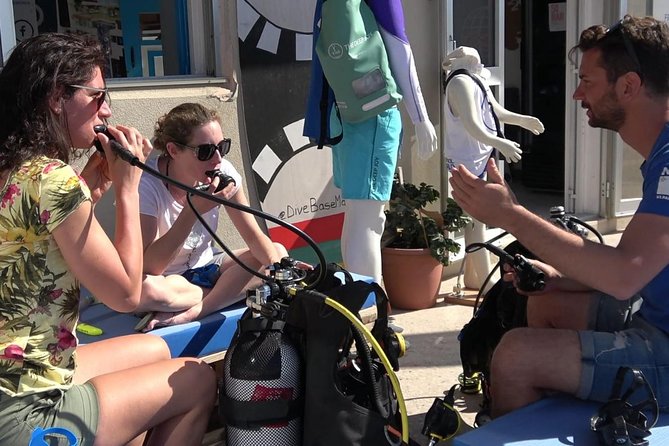
The first part is a practical lesson, not a quick safety speech. Your instructor introduces the scuba equipment and shows you how it works. For a nervous beginner, this is where the experience either begins to feel manageable or starts to feel overwhelming.
You learn how to use the regulator, mask, fins, and other equipment supplied for the session. The precise equipment models are not stated, but use of scuba equipment is included, along with diving insurance and a PADI instructor.
You also practice the basic skills needed underwater:
- Breathing through the regulator
- Equalizing pressure in your ears
- Swimming with fins
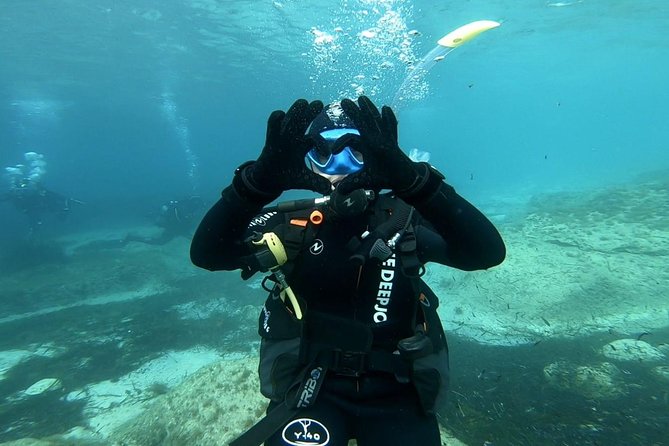
- Using hand signals
- Staying calm and comfortable below the surface
The hand signals are especially important. You cannot rely on normal conversation underwater, so simple gestures let you communicate with the instructor. You will also need to tell the instructor if you feel uncomfortable, need to stop, or have trouble with your ears.
Many beginners find breathing through a regulator strange at first. One participant had difficulty staying calm while breathing underwater, but said the instructor’s support made it possible to continue. That is a useful picture of the session: the first few minutes may feel awkward, and a good instructor will not treat that as failure.
The shallow-water stage builds confidence
The initial water work takes place in a shallow setting. This gives you time to get used to the mask, fins, regulator, buoyancy, and breathing pattern without immediately heading into deeper water.
This part may be the most important section for a first-timer. It lets you repeat the basic skills until they feel less foreign. You might spend more time here than expected if you are nervous or cannot yet breathe comfortably through the regulator.
The instruction style appears to vary by instructor and by group. Antonio is praised for clear explanations and patience, while Georgia helped one beginner understand the process and reach a depth of seven meters. Other participants described instructors as encouraging, calm, and careful about safety.
There is also a less positive point to consider. One family felt that an instructor was impatient when a child struggled to breathe underwater. The provider later explained that the group had a language barrier, had arrived late, and needed more than an hour for the confined-water part. This does not prove that every session feels rushed, but it does show why good communication, punctuality, and realistic expectations matter.
If you or your child needs more time, say so clearly. Scuba is not a sport where forcing the next step helps. A participant can stop, and one person in the reported group chose not to continue. That is a sensible choice if breathing or anxiety does not settle.
Moving into open water around St. Paul’s Bay
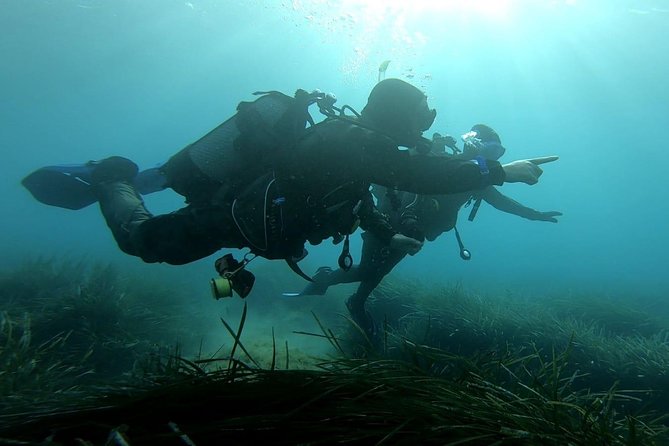
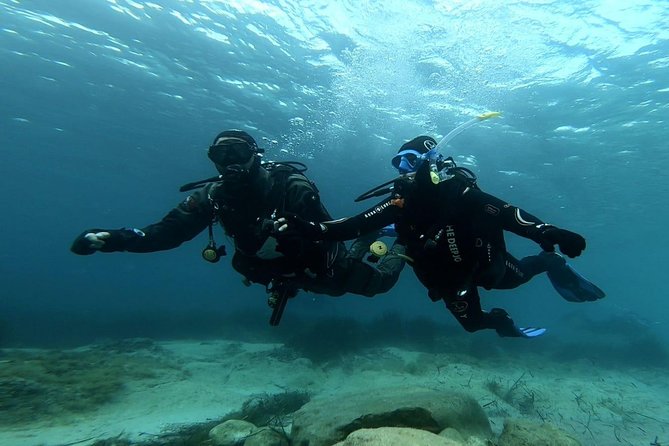
Once you meet the basic requirements, you move from shallow water toward an open-water session. This is the point when the activity feels less like a lesson and more like an actual underwater exploration of Malta’s coast.
The exact site and route are not specified, so you should not book this expecting a named reef, wreck, or particular animal. The attraction is the chance to see local marine flora and fauna at close range while an instructor manages the technical side.
One participant spent about an hour underwater and saw interesting sea life. Another saw local fish and an octopus close up. Those sightings are possible rather than guaranteed, but even ordinary fish become fascinating when you are floating quietly at their level.
Depth also depends on your comfort and ability. One beginner reached seven meters, while others may remain shallower. The instructor decides how far you progress based on your skills and conditions, not simply on the advertised duration.
This is a good reason to approach the session as an introduction rather than a full sightseeing cruise. The goal is to learn to breathe, move, equalize, and communicate underwater. Marine life is the reward, not the only purpose.
Same coastline, a very different dive:
- First Experience Scuba Diving
★ 4.5 · 52 reviews - Malta, Scuba diving with instructor
★ 4.8 · 52 reviews - SSI Try Scuba Diving in the sea
★ 4.8 · 43 reviews - Gozo: Discover Scuba Diving Experience for Beginners
★ 5.0 · 15 reviews
What the instructors do well
The strongest part of this experience is the teaching. Antonio receives repeated praise for being informative, patient, and reassuring. Georgia is singled out for making the process easy to understand. Other instructors are described as friendly, humorous, professional, and focused on safety.
That mix matters. A technically correct lesson can still be unpleasant if the instructor gives instructions too quickly or makes a beginner feel embarrassed. The best feedback describes instructors who took fear out of the first session and stayed calm in the sea.
You should also expect an English-speaking environment, with Italian and English listed as the available languages. A basic ability to understand instructions in one of those languages is important. One French-speaking participant said the explanations were clear but noted that a good command of English is strongly advised.
Language is not a minor detail here. You need to understand hand signals and safety directions without hesitation. If you are booking for a mixed-language group, ask the company in advance what support is available.
The maximum group size is eight. That is small enough to feel more personal than a large boat excursion, but it does not guarantee that you will have an instructor alone. Some groups have been much smaller, including one with two participants and a total group of four people.
What to bring and what not to expect
Your scuba equipment, insurance, and PADI instructor are included. You need to bring your own bathing suit, bikini, or shorts, plus a towel.
The activity does not include a photo service unless it is arranged in advance. This point caused confusion for one group, so do not assume an underwater photographer will be present or that photos are part of the price.
You may also be asked to rinse the wetsuit, fins, and mask after use. That is a normal practical task in a scuba center, both for hygiene and for learning how to care for equipment. If you prefer a completely hands-off activity, this small cleanup chore may surprise you.
Wear something comfortable under the equipment and bring dry clothing for afterward. The supplied information does not list lockers, changing facilities, or refreshments, so do not count on those unless DiveBase confirms them directly.
Certificate, flights, and the value of three hours
After completing the required parts of the session, you receive a PADI Discover Scuba Diving Certificate of Achievement. It is recognized worldwide and lets you continue your scuba education, although it is not the same as completing a full certification course.
That distinction matters. This session can show you if scuba suits you, but it does not make you an independent certified diver. If you enjoy it, you will still need further training before taking part in standard certified-diver excursions.
The listed price supplied for this experience is $0. That may indicate a booking display issue, a promotional rate, or incomplete pricing information. Confirm the actual total before you reserve. If the cost really is zero, the included equipment, insurance, instruction, and certificate would make the value exceptional. If a price appears at checkout, compare it with other beginner sessions by checking instructor time, equipment, insurance, group size, and certificate inclusion.
Three hours is a reasonable amount of time for a first session because it includes more than the underwater portion. One participant reported roughly an hour underwater, while the rest is used for forms, explanations, equipment, and shallow practice.
Do not schedule a flight immediately afterward. The advice provided is to wait at least 12 hours before flying. That is an important planning detail if Malta is your final stop before leaving the country.
Weather, cancellation, and timing tips
The activity depends on suitable weather. If poor conditions cause cancellation, you are offered another date or a full refund.
You can cancel for a full refund if you do so at least 24 hours before the start time. Changes or cancellations within 24 hours are not accepted for a refund, so leave some flexibility in your Malta schedule if possible.
Because the activity begins and ends at the same St. Paul’s Bay meeting point, it is easy to place on a day when you are already in the area. Make sure everyone in your party arrives on time and has completed the medical forms. That simple preparation can protect your full three-hour session.
Who will enjoy this Malta scuba experience?
I would recommend it to a confident swimmer who is curious about scuba but does not want to commit to a full certification course yet. It also suits couples, friends, and families with older children who can follow instructions and meet the health requirements.
It is particularly useful if you want a first taste of Malta’s underwater world rather than a long boat trip. You get structured teaching, equipment, insurance, and a chance to see fish and other marine life at close range.
I would be more cautious if you are anxious about breathing underwater, have limited English or Italian, or need a highly flexible pace. Ask about language support and instructor arrangements before booking. If you have a medical condition, obtain the necessary doctor’s clearance first.
Should you book it?
Book this experience if you want a well-structured first introduction, value supportive instruction, and are happy to treat marine life as a bonus rather than a guarantee. The repeated praise for Antonio, Georgia, and the wider team suggests that the teaching is often the highlight.
Before booking, confirm the real price, the available language, the group size, the photo policy, and any medical paperwork. Arrive early, bring swimwear and a towel, and leave at least 12 hours before your flight. With those details handled, this is a promising way to discover whether Malta’s underwater world is your next adventure.
FAQ
Do I need previous scuba experience?
No. This is designed for first-time or inexperienced participants, and previous scuba experience is not required.
How long does the experience last?
The experience lasts approximately three hours, including the briefing, equipment preparation, shallow-water training, and open-water session.
Where does the activity begin and end?
It begins and ends at DiveBase Malta, 25 Islet Promenade, St. Paul’s Bay, Malta, SPB 2506.
What do I need to bring?
You need to bring your own bathing suit, bikini, or shorts, as well as a towel. Scuba equipment is supplied.
Is a medical certificate required?
A doctor’s statement might be required in particular cases. The activity is not suitable for people with respiratory problems, including active asthma, blood or heart conditions, or surgery within the past year.
How many people can join?
The maximum group size is eight participants. The exact instructor-to-participant ratio may vary.
Can I fly after the session?
You should wait at least 12 hours after the session before taking a flight.
New dives around Malta
- Diving experience in Malta★ 5.0 · 12 reviews
- First Experience Scuba Diving★ 4.5 · 52 reviews
- 2 Scuba Fun Dives for Certified divers in St Paul’s Bay★ 5.0 · 4 reviews
- SSI Try Scuba Diving in the sea★ 4.8 · 43 reviews
- Mellieha: Introductory Diving Session in the Open Sea★ 5.0 · 3 reviews
- Malta, Scuba diving with instructor★ 4.8 · 52 reviews
- Malta St Pauls Bay: PADI Discover Scuba Diving Experience★ 5.0 · 4 reviews
- Malta: Discover Scuba Diving in crystal clear waters★ 4.7 · 4 reviews
Scuba Diving, compared.
Great Barrier Reef Snorkeling and Diving Cruise from Cairns
Read our review →
First-Time Scuba Diving in Honolulu + Free Videos
Read our review →
Silfra: Diving Between Tectonic Plates – Meet on Location
Read our review →
Ocean Freedom Great Barrier Reef Luxury Snorkel and Dive Cruise
Read our review →
Beginner Scuba Diving with Turtles and Videos, San Juan
Read our review →
Tenerife: Your First Scuba Diving Experience in Turtle Area
Read our review →
Browse the lists this tour appears in