
REVIEW · ITALY
Double Dive in the Bay Park for certified divers
Baia keeps its secrets underwater. This four-hour experience lets certified divers explore the Submerged Park of Baia on two guided sessions, close to Naples and packed with Roman archaeology. I like the small group limit of five and the short boat ride, which keeps the day focused rather than turning it into a long excursion. The main consideration is visibility: sand used to uncover and protect the mosaics can make the water cloudy.
I also like the careful setup. You arrive about an hour early for equipment, a briefing, and an introduction to Baia’s sunken city before walking a few steps to the boat. Alessandro has earned praise for clear briefings and flexible scheduling, but you should remember that this is an archaeological site, not a wildlife outing. The mosaics and villa remains are the prize.
Key things to know before booking
- Two sessions of about 45 minutes: You get enough time underwater to see the archaeological remains without rushing.
- Maximum depth of about 5 meters: This is a shallow archaeological experience, so it suits certified participants who want history more than technical challenge.
- Small groups of up to five people: A useful advantage when you need help with equipment or want to hear the guide clearly.
- Baia is less than five minutes by boat: The boat transfer is brief, leaving most of the four-hour schedule for preparation and underwater exploration.
- January water can reach 17C: A 5-millimeter wetsuit and boots are provided, while 3 or 5-millimeter gloves are a sensible winter choice.
- Lunch costs extra: A partner restaurant meal is available for 35 euros, but it must be booked separately.
Why Baia’s sunken city is worth your time
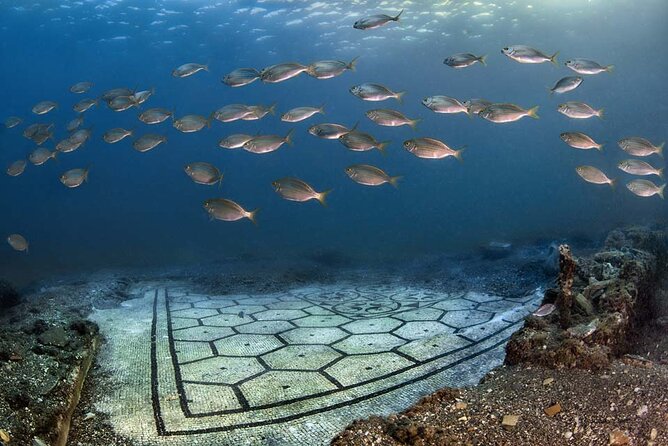
Baia was once a favored resort area for wealthy Romans. Parts of the ancient settlement now sit beneath the Bay of Naples, where volcanic activity and gradual changes in the coastline placed villas, roads, and decorative floors below the water.
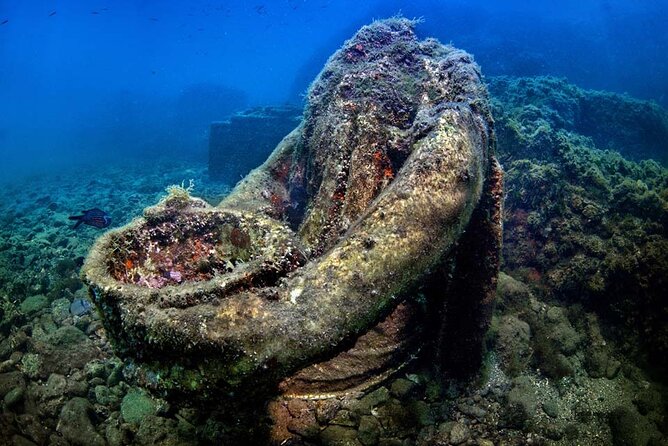
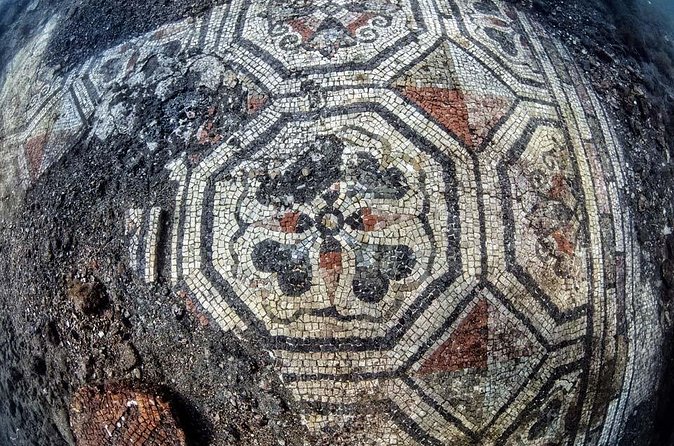
That setting gives this experience a different character from a normal recreational outing. You are not simply looking for fish or colorful reefs. You are moving over traces of Roman life, including villa foundations and mosaics, with the remains protected by the surrounding water.
I would choose this activity if archaeology is the reason you want to spend time underwater. The maximum depth is only about five meters, which means you will not use your air quickly simply because of depth. It also makes the remains easier to study at a calm pace.
The shallow water does not guarantee perfect visibility. In January, one participant found the water somewhat cloudy. That is partly linked to the work needed to uncover and recover mosaics with sand. It is a fair trade for protecting the site, but you should not expect crystal-clear conditions every day.
More Dives for Certified Divers in Italy:
- Diving for certified divers with PADI 5* Diving Resort – Taormina
★ 5.0 · 167 reviews - Scuba Diving in La Maddalena & Lavezzi Park for certified divers.
★ 5.0 · 20 reviews - Diving at the Baia Submerged Park for certified divers
★ 5.0 · 11 reviews
What happens during the first hour
You meet at Via Lucullo in Baia, near Naples. Plan to arrive about an hour before the scheduled start, not at the listed activity time. This early arrival matters because the staff need to provide equipment, check that everything fits, and explain the plan.
The briefing covers the underwater sites and gives you an introduction to Baia’s submerged remains. This is not just a safety talk. It helps you understand what you are looking at once you reach the park, which is especially useful when the remains are low to the seafloor and visibility is not perfect.
The required certification is Junior Open Water Diver or Scuba Diver. You do not need to be an advanced certified participant based on the stated requirements, but you must hold one of those certifications. If you are not certified, the operator offers a snorkeling visit to the archaeological park and a Discover Scuba Diving program instead.
The equipment, insurance, guide, park entrance, and taxes are included. You also receive use of the showers and changing rooms after the sessions. That makes the experience easier to fit into a day of sightseeing around Naples, since you do not need to arrange separate equipment or park admission.
The short boat ride to the park
Once you are ready, you walk a few steps from the center to the departure point. The RIB reaches the Submerged Park of Baia in less than five minutes.
That short crossing is a real advantage. You spend little time sitting on a boat and more time preparing for the underwater portion. It also keeps the activity tied closely to Baia rather than making it feel like a full-day sea trip.
The schedule allows about an hour at each site, with each underwater session lasting roughly 45 minutes. The extra time at the buoy gives the guide room to organize the group and manage the return to the boat without cutting the underwater portion short.
The small maximum group of five should make this easier. You can expect a more personal format than a large boat outing, with fewer people competing for the guide’s attention. This is particularly useful when the water is cloudy and you need help identifying the remains.
Tempio di Venere and the first underwater site
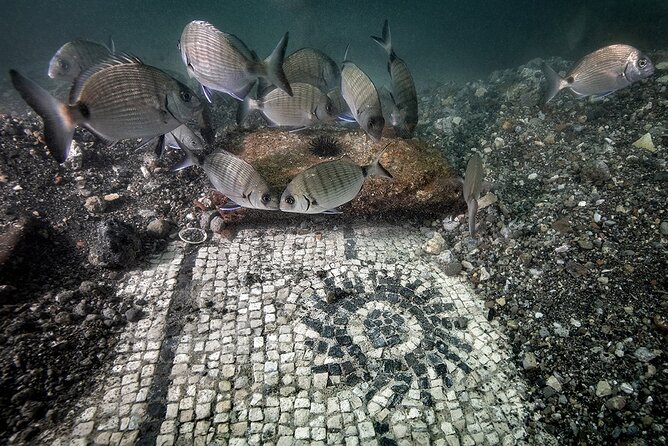
Tempio di Venere is the first named site. The title points to the archaeological focus of the visit, and this is the kind of place where your guide’s briefing becomes important. Underwater Roman remains are not always obvious at first glance. Foundations and fragments can blend into the seafloor, especially when sand has been moved as part of conservation work.
The experience is best approached with patience. You will likely spend time looking closely rather than covering a large area. At a maximum depth of about five meters, the setting allows you to focus on shapes, masonry, and floor decoration instead of worrying about a demanding descent.
The first session also gives you a practical sense of the water conditions. If visibility is reduced, adjust your expectations early. The point is not to collect a long list of sights, but to understand how a Roman coastal settlement survives beneath the bay.
A few more dives around Italy worth comparing
- Catania: Gulf Scuba Diving Tour with Marine Biologist
★ 4.9 · 212 reviews - Diving for patented divers
★ 5.0 · 175 reviews - TuffAlcantara – dives, slides and lots of fun in the Alcantara river
★ 5.0 · 106 reviews - Exciting PADI Discover Scuba Diving Experience Isola Bella Marine Park Taormina
★ 5.0 · 96 reviews
Castello Aragonese di Baia and the second site
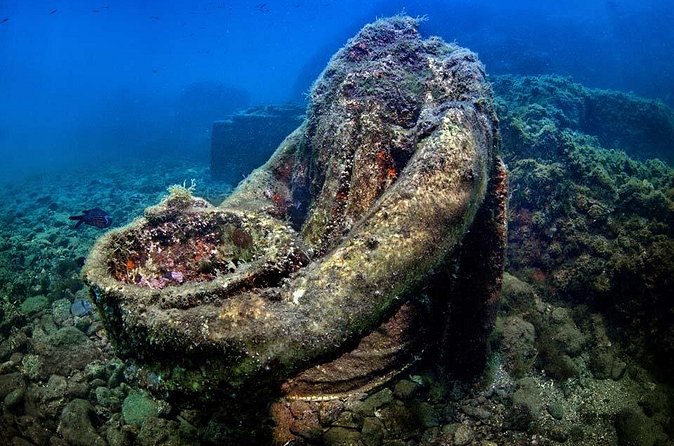
Castello Aragonese di Baia is the second named stop. The castle is part of the wider Baia setting and helps connect the underwater park with the historic shoreline above it.
The itinerary also names Rione Terra, Pozzuoli, Monte Nuovo, Campi Flegrei, and Vesuvius National Park. These names place the experience within the broader volcanic and archaeological area around Naples. They should be treated as regional context rather than a promise of separate land visits during the four-hour session.
That distinction matters. You are booking a focused underwater archaeological outing, not a coach tour through all ten places listed in the route. The actual time is built around the submerged park, two underwater sessions, and the nearby boat transfer.
The second session is useful because one pass through Baia may not be enough. You have another 45 minutes to see details you missed earlier, compare a second area, and settle into the slow rhythm needed for underwater archaeology. The two-session format is the strongest reason to choose this activity over a shorter introductory option.
Baiae and the wider archaeological setting
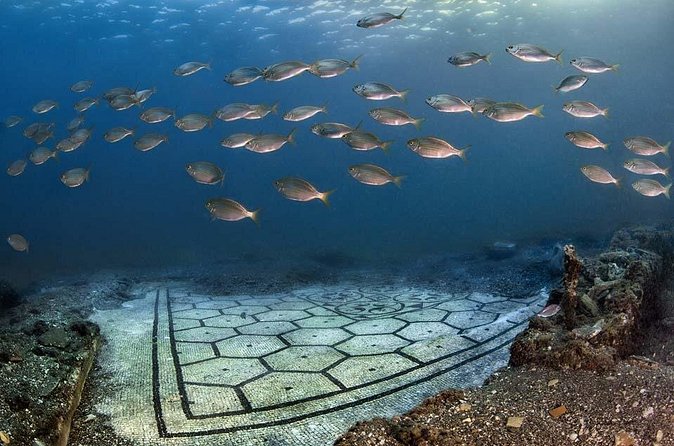
Baiae, also written as Baia, was known in Roman times for its leisure villas and coastal setting. The submerged remains give you a rare view of a settlement that is partly preserved below the modern waterline.
The itinerary includes the Centro Visite AMP Parco Sommerso di Baia and the Parco Archeologico delle Terme di Baia. These places reinforce the connection between the protected underwater area and the archaeological remains on land. If you have time before or after the activity, they can help you place what you saw underwater into a larger picture, though separate admission or opening details are not provided here.
The route also names Pozzuoli and the Campi Flegrei, a volcanic area with a long history of ground movement. That setting helps explain why Baia’s ancient remains are found below the surface. You do not need to be an archaeology expert to appreciate the basic idea: the coastline changed, and a Roman resort now lies underwater.
The presence of Vesuvius National Park in the itinerary connects Baia to the wider volcanic region, but the supplied schedule does not say that you visit the national park during this activity. I would not book this expecting views or a land excursion there.
Equipment, water temperature, and comfort
The operator provides scuba equipment, a 5-millimeter wetsuit, and boots. A January session had water at about 17C, and the provided suit and boots were in good condition.
If you go in winter, bring 3 or 5-millimeter gloves if you own them. One participant used 5-millimeter gloves and found their hands stayed warm. This is practical advice, not a guarantee, since comfort depends on your own cold tolerance and the day’s conditions.
You should also allow time for changing before and after the activity. Showers and changing rooms are included, which is helpful after two sessions in a wetsuit. The experience ends back at the meeting point, so you can collect your belongings and continue your day from Baia.
The activity requires good weather. If conditions force a cancellation, you can choose another date or receive a full refund. That policy is helpful, but keep the weather requirement in mind when planning a tightly packed Naples itinerary.
The guide and group experience
The guide is an important part of this outing because the site needs interpretation. Alessandro has been praised for a strong briefing and for handling a schedule change when another group was visiting at the same time.
That detail suggests a guide who can manage the practical side without losing sight of the archaeology. It also shows why the small group limit matters. With no more than five participants, changes to timing should be easier to explain and manage.
The operator provides English service. You should still expect the experience to depend on clear pre-session instruction and underwater signals, as with any organized certified activity. The published information does not promise a particular guide for every date, so Alessandro may not lead every session.
The overall rating is 5 from seven published reviews, with especially strong praise for communication, equipment condition, professional handling, and the exact four-hour duration. Those are the details I would value most when booking a specialized activity from abroad.
Is the 144.19 euro price fair?
At 144.19 euros per person, this is not a cheap add-on, but the price includes several costs that can quickly build up elsewhere. You receive scuba equipment, a guide, insurance, the RIB transfer, entrance to the archaeological park, showers, changing rooms, taxes, and two underwater sessions.
The two sessions are the key value. A single short outing would give you less time to understand the site, while this format provides about 90 minutes underwater in total. The small group also gives the price more weight, especially if you prefer personal support over a crowded boat.
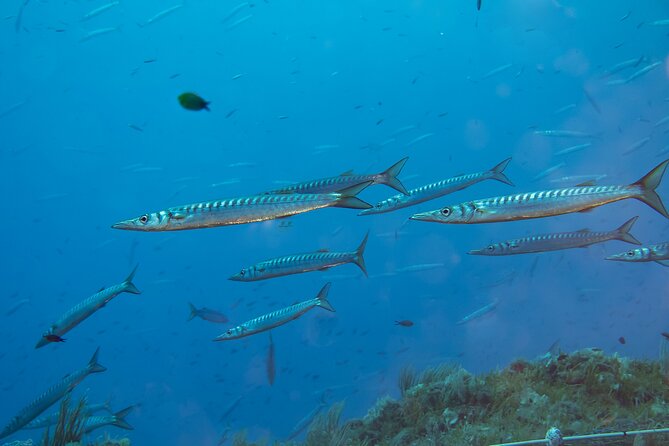
The price makes less sense if you are mainly looking for marine life. The site is archaeological, and the available information specifically warns that you will not see a large range of sea life. You are paying for Roman remains, mosaics, and the chance to visit a submerged city with a guide.
Lunch is not included. A partner restaurant meal costs 35 euros and includes ten appetizers, a first course, a second course chosen from the menu, dessert, water, and wine. That is a substantial meal, but you can skip it if you want to keep the day less expensive.
Who should book this experience?
I would recommend it to certified participants who care about archaeology and want a small, organized outing near Naples. The shallow maximum depth makes it less intimidating than a deep offshore session, while the two 45-minute periods provide enough time to look carefully.
It also suits people who want a clear schedule. The activity lasts about four hours, and one published experience ran exactly that long. The boat ride is brief, the meeting point is fixed, and the activity returns to the same location.
You may want to choose another option if you are newly certified but uncomfortable in open water, if you want a strong marine-life focus, or if cloudy conditions would spoil the experience for you. The operator offers snorkeling at the park for non-certified participants, so you do not have to give up on seeing Baia if you lack the required certification.
Mobile tickets and English service make the booking simple. Most participants can take part, and service animals are allowed. The meeting point is near public transportation, although the supplied details do not specify the exact route or travel time from central Naples.
Cancellation and planning advice
You can cancel for a full refund up to 24 hours before the local start time. Changes made less than 24 hours before the activity are not accepted, and cancellations inside that window are not refunded unless poor weather cancels the experience.
I would avoid scheduling this on the final morning of a short Naples stay. Weather can affect the outing, and a little flexibility gives you room to move the booking if conditions change. Arrive an hour early, bring suitable winter gloves if needed, and leave space afterward for changing and any optional meal.
Should you book it?
Book this if you want to see Roman archaeology from an unusual angle and you already hold the required certification. The strongest reasons are the two 45-minute sessions, the shallow five-meter setting, the five-person limit, and the guide-led explanation of Baia’s sunken remains.
Skip it if you want reefs, abundant sea life, or a broad sightseeing tour of Pozzuoli, Vesuvius, and the Campi Flegrei. For the right person, though, the 144.19 euros buys a focused and well-supported visit to one of Naples’ most unusual archaeological sites, with equipment and park entry already handled.
FAQ
Where does the experience start?
It starts at Via Lucullo, 80070 Baia NA, Italy.
Where does the experience end?
It ends back at the meeting point.
How long does the activity last?
The experience lasts approximately four hours.
How long is each underwater session?
Each session lasts about 45 minutes, with about an hour allocated at each site.
What certification do I need?
You need at least Junior Open Water Diver or Scuba Diver certification.
Is equipment included?
Yes. Scuba equipment, a wetsuit, boots, insurance, a guide, park admission, showers, changing rooms, and taxes are included.
How many people can join?
The maximum group size is five participants.
What happens if the weather is poor?
If poor weather causes cancellation, you can receive a full refund or choose a different date.
New dives around Italy
- Villasimius: Scuba Dive in Capo Carbona without Certificate★ 4.9 · 23 reviews
- Villasimius: Capo Carbonara First Time Dive with Instructor★ 4.9 · 50 reviews
- Discover Scuba diving in Calabria, Italy★ 4.5 · 3 reviews
- Scuba diving in Calabria, Italy★ 5.0 · 23 reviews
- Discover Scuba Diving PADI – Trial dive in Sorrento★ 5.0 · 2 reviews
- Double dive in the Punta Campanella Marine Protected Area★ 5.0 · 11 reviews
- Guided diving for beginners without certification from Sorrento★ 5.0 · 22 reviews
- Syracuse: Ortigia Deep Dive Cultural Tour (max 6 Guests)★ 5.0 · 9 reviews
Dives for Certified Divers, compared.
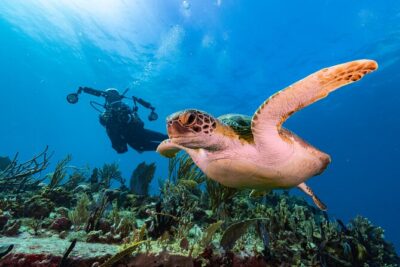
Two-Tank Morning Dive Trip for Certified Divers
Read our review →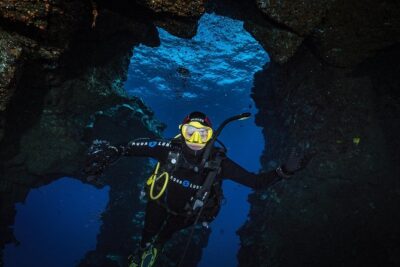
2 Tank Lanai Cathedral Scuba Dive Via Boat for Certified Divers
Read our review →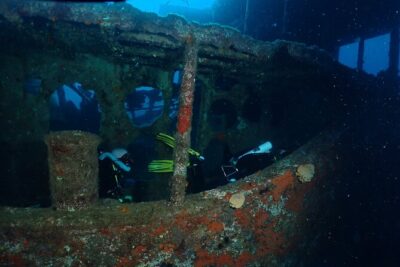
Wreck and Bridge Span Dive for Certified Divers
Read our review →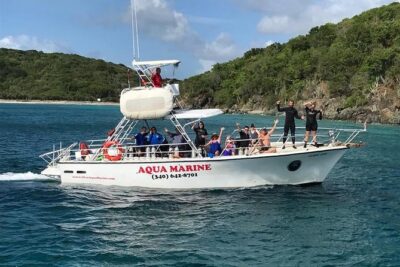
Two-Tank Dive for Certified Diving in St Thomas
Read our review →
Diving for Certified Divers, 2 Tanks Sosúa Bay
Read our review →
Certified Diver: 2-Tank Deep Wreck and Shallow Reef Dive Off Oahu
Read our review →
Certified Diver: 2-Tank Shallow Reef Dives off Oahu
Read our review →
2 Dives in the morning for certified divers in Bora Bora
Read our review →Browse the lists this tour appears in