REVIEW · KATHMANDU
Dive into Spirituality: 6 Days Trek to Gosaikunda Lake
Sacred water, high trails, and a short Himalayan escape. This six-day trek from Kathmandu takes you through Langtang National Park to Gosaikunda, a holy lake revered by Hindus and Buddhists. I like the route for two clear reasons: it offers a meaningful mountain journey without requiring a long holiday, and it combines forest paths, ethnic villages, high-altitude scenery, and several sacred lakes in one compact trip.
I also like that the price includes transport, meals, teahouse lodging, permits, a guide, and porter support. The main consideration is physical effort. You need a moderate fitness level, and the steep ascent between Dhunche and Chandanbari, followed by the climb to Gosaikunda, can feel demanding.
Key points to know before you book
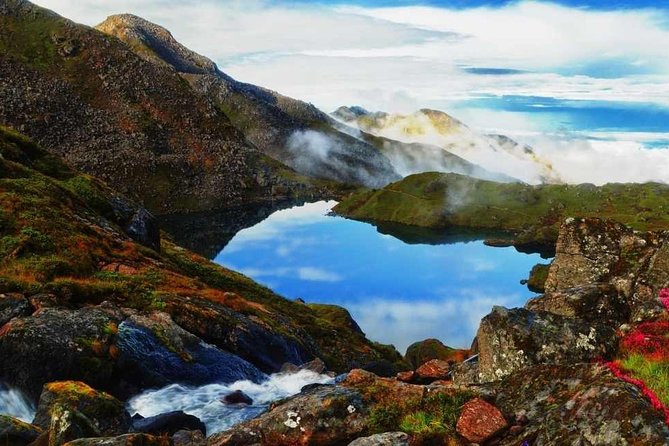
- Gosaikunda is the heart of the trip: The main lake is a major religious site, with Surya Kunda, Saraswoti Kunda, and Bhairab Kunda nearby.
- The route begins and ends in Kathmandu: Public transport carries you between Kathmandu and Dhunche, keeping the trip practical and relatively affordable.
- The trek works well for a short holiday: Six days gives you a real Himalayan walking experience without the longer commitment required for Everest Base Camp or extended Annapurna routes.
- You sleep in simple teahouses: Twin-sharing accommodation and local meals are included, while drinks, hot showers, and internet cost extra.
- A guide and porter are provided: One English-speaking trekking guide leads the group, with one Sherpa porter for every two trekkers.
- The trip has spiritual and natural appeal: You can worship at Gosaikunda, see Langtang and Ganesh Himal, and walk through parts of Langtang National Park.
Why Gosaikunda works for a six-day trek
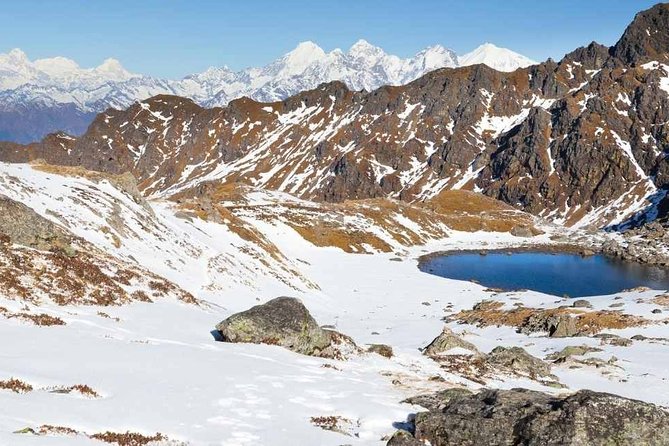
Gosaikunda gives you a taste of Nepal’s high country without asking you to spend two or three weeks on the trail. The route is short in calendar terms, but the walking days still carry real weight. You travel by road to Dhunche, then gain height on foot through forested ground and mountain settlements.
I like this balance. You are not simply driven to a viewpoint, photographed, and returned to town. You walk into the setting, spend a night near the sacred lake, and then retrace your route. That return journey may look repetitive on paper, but it gives you another chance to notice the scenery, villages, and trail details you missed while climbing.
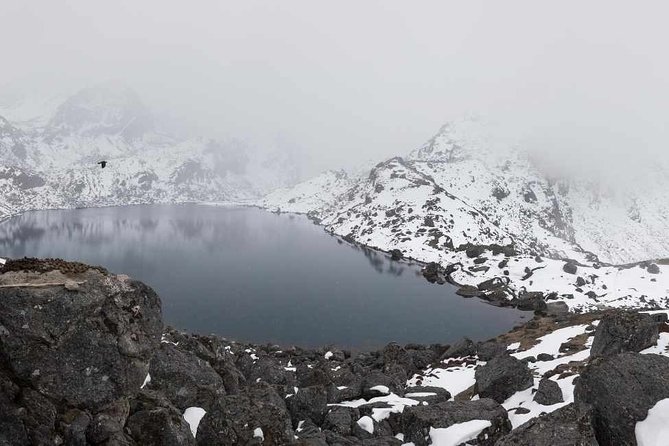
The religious importance of Gosaikunda adds another layer. Hindu and Buddhist visitors regard the lake as sacred, so this is more than a mountain stop. You can visit the nearby Surya Kunda, Saraswoti Kunda, and Bhairab Kunda, then spend time at Gosaikunda itself. The itinerary includes worship at the lake, making the spiritual side a central part of the trip rather than a footnote.
A few more dives around the world worth comparing
- Sea Trek Helmet Dive at Coral World Ocean Park
★ 5.0 · 992 reviews - Semporna: Bohey 3 Islands Hike, Snorkel/Dive Tour with Lunch
★ 4.3 · 50 reviews - Serra D’Arga Hike, Dive & Dine Like A Local in a Secret Spot
★ 5.0 · 19 reviews
Day 1: Kathmandu to Dhunche by public transport
The trip begins early, with a meeting time of 5:45 am. You leave Kathmandu by public transport and travel toward Dhunche through Trisuli Bazar. The road journey is part of the Nepal experience, but it is also the least polished part of the trip. Public transport can be less predictable and less comfortable than a private vehicle, so you should begin the day ready for a long transfer.
Dhunche serves as the starting point for the walking portion. You spend the night there before heading uphill the next morning. This first night also gives you a practical break between the busy Kathmandu Valley and the trail.
The early start matters. You will want to arrive at the meeting point with your daypack ready, water arranged, and personal items easy to reach. Drinks are not included, and hot showers, internet, tea, coffee, soft drinks, and alcohol are also separate expenses.
Day 2: The uphill walk to Chandanbari
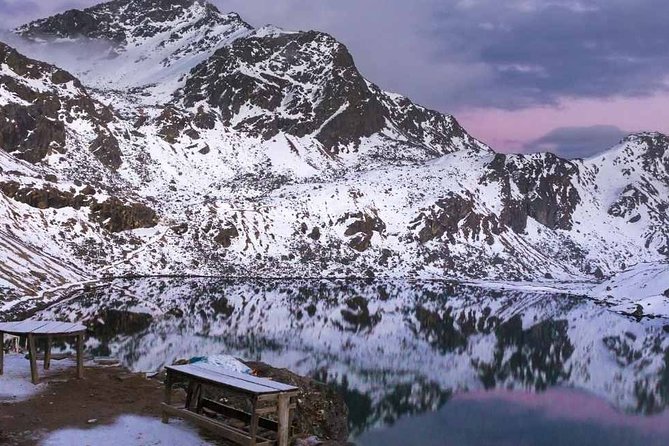
Day two brings the first serious walking day, lasting about six to seven hours. The route from Dhunche to Chandanbari is uphill, so this is where your fitness begins to matter.
The itinerary describes the route as a steep ascent, with forest, rough ground, and changing views along the way. You should expect a steady effort rather than a gentle village stroll. The reward is a stronger sense of moving away from the road and into the Himalayan setting.
Chandanbari is a useful overnight stop because it breaks the climb before the push toward Gosaikunda. Accommodation is in a teahouse on a twin-sharing basis. Local breakfast, lunch, and dinner are included during the trek, which keeps the daily budget easier to manage.
The word teahouse deserves some attention. This is simple mountain lodging, not a hotel. You get a bed and shared facilities, while comforts such as hot showers and internet are excluded. If you prefer a trip with polished rooms and private amenities, this arrangement may feel basic. If you value a traditional trekking format and want the cost to include the essentials, it is a sensible setup.
Day 3: Reaching the holy lakes at Gosaikunda
You start early for the walk to Gosaikunda. This is the emotional center of the trek, and also one of its most demanding days because the route continues uphill toward the high lake.
At Gosaikunda, you can visit the main lake and the nearby Surya Kunda, Saraswoti Kunda, and Bhairab Kunda. The itinerary allows time to worship at the holy lake, so you are not simply passing through for a quick photograph. The religious setting gives the destination a quiet purpose, even when other people are present.
The mountain views are another major reward. From the route, you may see Langtang Himal and Ganesh Himal. The scenery changes from forest and rough trail to a more exposed, high-country setting with snowy peaks and open mountain views.
You spend the night at Gosaikunda. This makes the day more satisfying than a rushed ascent followed by an immediate return. It also means you should be prepared for a basic night at a high-altitude teahouse. The supplied information does not give an elevation figure, so you should ask the operator for current altitude details and their advice on acclimatization before booking.
Same coastline, a very different dive:
- Great Barrier Reef Snorkeling and Diving Cruise from Cairns
★ 4.5 · 3,714 reviews - First-Time Scuba Diving in Honolulu + Free Videos
★ 5.0 · 3,123 reviews - Oahu Shark Dive
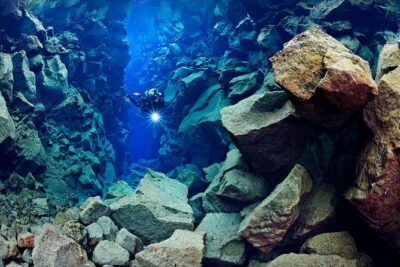
★ 5.0 · 2,903 reviews - Silfra: Diving Between Tectonic Plates – Meet on Location
★ 5.0 · 2,139 reviews
Day 4: Returning to Chandanbari
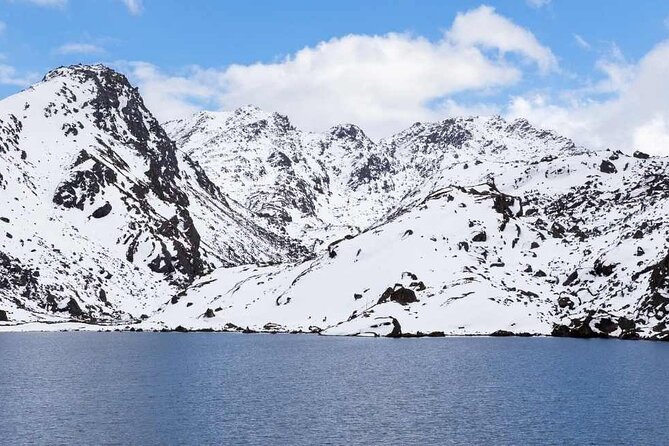
Day four reverses the route, taking you back to Chandanbari. After the effort of reaching Gosaikunda, the return walk can feel easier, but downhill walking brings its own strain. Rough ground can be hard on knees and ankles, so steady pacing is more useful than trying to hurry.
This day gives you a different view of the trail. On the way up, your attention may have been fixed on the next climb. On the way down, you can look around more often, notice the forest, and enjoy the mountain views without constantly measuring the slope ahead.
You stay again at Chandanbari. The repeated accommodation keeps the route simple and avoids adding another destination just for the sake of variety. It also means the six-day plan is focused on Gosaikunda rather than padded with unnecessary detours.
Day 5: Downhill to Dhunche
The walk from Chandanbari to Dhunche is downhill. This is the final trekking day, but it is not automatically an easy one. A long descent can test your legs, especially after several days of climbing and walking on uneven ground.
Dhunche is where the walking portion ends. Spending the night there before the return to Kathmandu would be useful, but the supplied itinerary places the overnight stay in Dhunche on day five and the drive back on day six. That gives you a clear transition between trail time and road travel.
The support arrangement helps here. One English-speaking guide accompanies the trip, and one Sherpa porter is provided for every two trekkers. You still need to carry a daypack with personal essentials, but the porter system can reduce the load during the steep sections.
Day 6: Returning to Kathmandu
The final day is a drive back to Kathmandu. You finish the trek by returning to the capital and reflecting on the route, the sacred lakes, and the mountain views.
Because public transport is included, the trip keeps costs lower than a private vehicle itinerary. The trade-off is comfort and control. You should not expect the same flexibility you would have with a privately arranged transfer, and the start and return times may depend on local transport conditions.
The route is particularly useful for people with limited holiday time. One person who had hoped to trek to Everest Base Camp found the longer trip unsuitable for a short Nepal visit and was guided toward the Langtang region instead. That is good practical advice: a shorter trek you can complete properly is better than forcing a grander route into an unrealistic schedule.
What the $735 price includes
At $735 per person, the cost is not just paying for the walk. It covers public transport from Kathmandu to Dhunche and back, local meals during the trek, twin-sharing teahouse accommodation, the Langtang Conservation Area Permit, the TIMS card, an English-speaking guide, and porter support.
Government taxes and service charges are also included. That makes the price easier to assess because several unavoidable trek expenses are already bundled into it.
You should budget extra for:
- Meals and accommodation in Kathmandu
- Tea, coffee, water, soft drinks, and alcohol
- Hot showers
- Internet
- Tips for the guide and porters
- Travel insurance
The value is strongest if you want organized support without paying for a private vehicle or higher-end lodging. You receive the basic infrastructure required for a guided trek, but this is not an all-inclusive holiday. Bring extra money for drinks and personal needs, and take the insurance requirement seriously. Adventure travel insurance is compulsory for this trip.
The guide and porter arrangement
The tour provides one experienced English-speaking trekking guide and one Sherpa porter for every two trekkers. That ratio is practical because it gives you carrying support without creating a large support team.
The information provided does not name the guide assigned to every departure. However, Manish from Mountain Hike Nepal helped one short-holiday customer choose the Langtang region instead of trying to fit Everest Base Camp into too little time. That suggests the company can help match a route to your available days, though you should confirm who will lead your particular departure.
A guide matters on this route for more than trail direction. You are visiting a sacred site, walking through communities with different traditions, and spending nights in simple teahouses. A good guide can help you approach the religious setting respectfully and manage the pace of the group.
Tips are not included. You should plan for them as a normal part of the trip budget, although the supplied details do not state a recommended amount.
Culture, wildlife, and the Langtang setting
The route passes through villages associated with different ethnic communities. That cultural variety is one of the strongest reasons to choose Gosaikunda rather than treating the trip as a simple mountain walk.
You also travel through Langtang National Park, where rare wildlife such as red pandas and snow leopards can be found. Seeing either animal is not promised, and the itinerary does not describe a wildlife-focused outing. Still, the national park setting adds meaning to the walk. You are moving through protected mountain country, not only between accommodation points.
The scenery changes as you climb. Expect lush forest in the lower sections, rougher ground higher up, and views toward snowy Himalayan peaks. This variety is especially valuable on a six-day trip because you get several distinct settings without spending weeks on the trail.
Who should book this trek?
I would recommend this trip to you if you have a moderate level of fitness, want a short Himalayan trek, and care about the religious meaning of Gosaikunda. It is also a strong choice if you have already visited Nepal or considered a longer route but only have a few days available.
You should think twice if you dislike early starts, basic teahouses, public transport, uphill walking, or extra charges for simple comforts. The route is not presented as an easy sightseeing tour. The six-day schedule is compact, and the two main uphill sections require real effort.
This is a private activity, so only your group participates. That can make the experience more personal than joining a large mixed group, though the available details do not state the maximum group size. Ask the operator about the expected number of people before booking if group size matters to you.
The published rating is 4.7 from three ratings, with praise focused on the company’s professionalism, the beauty and sacred importance of the lake, and the suitability of the route for a short holiday. That is encouraging, but the sample is small. I would treat it as a positive signal rather than final proof of every part of the operation.
Booking, weather, and cancellation advice
Confirmation is received at booking, and the tour offers pickup. The meeting time is 5:45 am, and the route is near public transportation.
You can cancel up to 24 hours before the start time for a full refund. Cancellations or changes made less than 24 hours before the start are not refunded or accepted. The local time in Nepal controls the deadline.
Weather can affect the departure. If poor weather causes cancellation, you are offered another date or a full refund. The trip also requires a minimum number of participants. If that minimum is not met, you are offered a different date or experience, or a full refund.
Should you book the Gosaikunda trek?
Book it if you want a short but serious Himalayan walk with a sacred destination, mountain views, local meals, and organized guide and porter support. The best reason to choose it is the combination of spiritual importance and manageable length. You can reach one of Nepal’s best-known holy lakes without committing to a much longer trek.
Do not book it expecting luxury, an easy trail, or a private-car itinerary. You will need fitness, patience with public transport, and comfort with basic teahouse living. For the right person, the $735 price offers solid value because permits, meals, lodging, transport, guide service, and porter support are included. For anyone with limited time who wants more than a city visit, this is a practical route to consider.
FAQ
How long is the Gosaikunda trek?
The experience lasts approximately six days.
Where does the trek begin?
The trip begins in Kathmandu, with transport to Dhunche on the first day.
How do I travel from Kathmandu to Dhunche?
Public transport is included from Kathmandu to Dhunche, with the return journey to Kathmandu also included.
What time does the trip start?
The meeting time is 5:45 am.
Is Gosaikunda a sacred lake?
Yes. Gosaikunda is revered by Hindus and Buddhists.
Which other lakes can I visit?
The itinerary includes visits to Surya Kunda, Saraswoti Kunda, and Bhairab Kunda, as well as Gosaikunda.
Are meals included?
Breakfast, lunch, and dinner are included during the trek. Meals in Kathmandu are not included.
Is accommodation included?
Yes. Teahouse accommodation on a twin-sharing basis is included during the trek. Accommodation in Kathmandu is not included.
Are a guide and porter included?
Yes. The trip includes one English-speaking trekking guide and one Sherpa porter for every two trekkers.
Is travel insurance required?
Yes. Travel insurance is compulsory for this adventure trip.
Can I cancel for a full refund?
Yes. You can receive a full refund if you cancel at least 24 hours before the experience start time.
New dives around the world
- Try Scuba Diving in Kauai From a Boat: No Experience Necessary★ 5.0 · 24 reviews
- Shore Dive with Sea Turtles @ Koloa Landing for Certified Divers★ 5.0 · 10 reviews
- One Tank Scuba Diving in Kauai South Shore Certified Diver Only★ 4.5 · 14 reviews
- 1 Tank Discover Scuba at Koloa Landing with No Experience needed★ 5.0 · 31 reviews
- Try Scuba Diving on Kaua’i with Sea Turtles★ 5.0 · 3 reviews
- Kenting, Taiwan|Snorkeling Free underwater photography One-on-one with instructor|Taiwan Diving Snorkeling★ 5.0 · 10 reviews
- Discover Scuba Diving With Sea Turtles – Xiaoliuqiu, Taiwan★ 5.0 · 3 reviews
- Scuba Diving in Kalpitiya★ 5.0 · 2 reviews
Scuba Diving, compared.
Great Barrier Reef Snorkeling and Diving Cruise from Cairns
Read our review →
First-Time Scuba Diving in Honolulu + Free Videos
Read our review →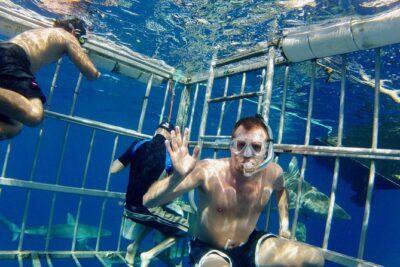
Silfra: Diving Between Tectonic Plates – Meet on Location
Read our review →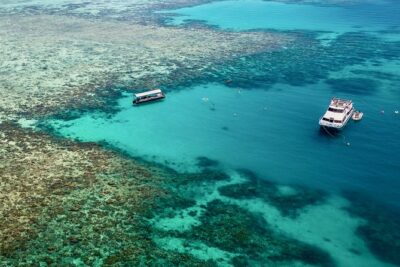
Ocean Freedom Great Barrier Reef Luxury Snorkel and Dive Cruise
Read our review →
Beginner Scuba Diving with Turtles and Videos, San Juan
Read our review →
Tenerife: Your First Scuba Diving Experience in Turtle Area
Read our review →