REVIEW · PLAYA DEL CARMEN
Cenote Diving – 2 Tank Dive Trip for Certified Divers
Cenotes turn a scuba outing into something otherworldly. This Playa del Carmen trip takes you to Chac Mool or Dos Ojos for two guided cavern sessions, each lasting about 45 minutes, with permanent lines, a maximum depth of 50 feet, and a small group capped at eight people. The top appeal is the chance to see Mexico’s underground waterways without committing to a full cave course.
I like the small group size and the sensible limits: Open Water certification, recent underwater experience, and a maximum depth of 15 meters. I also like that transportation, tanks, weights, lights, drinks, snacks, and a sandwich are included. The main drawback is the extra cash you must budget for the cenote entrance fee and any equipment rental, and some privately owned cenotes restrict cameras or charge as much as $60 to use one.
Key points to know before you book
- Two 45-minute cavern sessions: You follow permanent lines at a maximum depth of 50 feet.
- Chac Mool or Dos Ojos: The chosen cenote depends on the day, so you do not select one with certainty when booking.
- Open Water certification required: You must show certification from a recognized agency and have gone scuba diving within the last 12 months.
- Useful inclusions: Tanks, weights, transportation, a light, water, soft drinks, snacks, and a sandwich are covered.
- Bring cash: Chac Mool costs 300 MXN to enter, while Dos Ojos costs 600 MXN. Entrance fees are paid separately.
- Camera rules vary: Some cenotes ban cameras. Others charge between $20 and $60, depending on the camera.
Why cenotes make this Playa del Carmen trip special
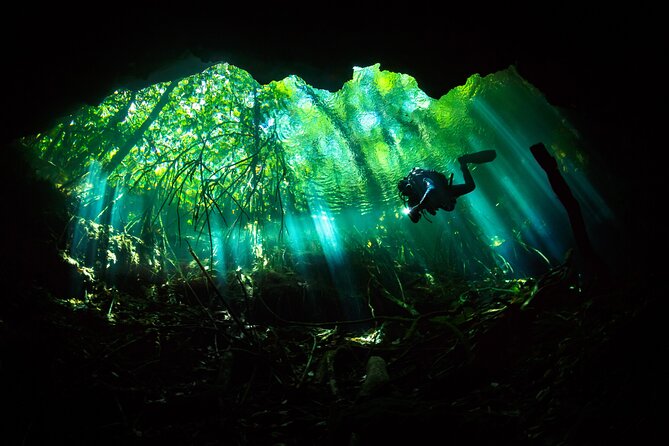
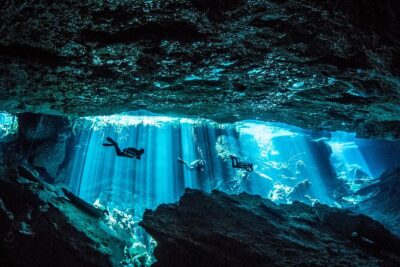
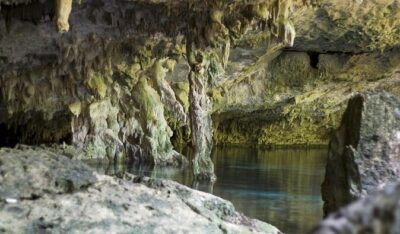
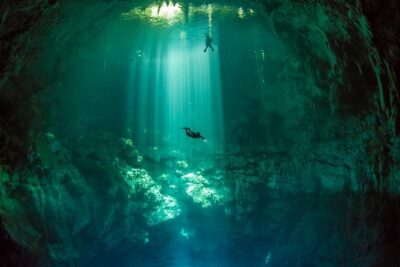
A cenote is a natural water-filled opening in the limestone ground. Around the Yucatán Peninsula, these openings connect to extensive underground waterways. For a certified scuba diver, that means a very different setting from the open Caribbean: enclosed rock, fresh water, permanent guide lines, and shafts of light filtering into the cavern.
The appeal is not speed or wildlife. It is the feeling of moving through a quiet underground space. The review of this outing describes the caverns as another world, which is a good way to understand the attraction. You are not simply swimming in a freshwater pool. You are entering a carefully managed cavern environment with a guide who explains how to move through it safely.
The trip is designed for certified Open Water divers, not for people trying scuba for the first time. That distinction matters. You need enough basic skill to control your buoyancy, follow a line, manage your equipment, and listen closely to instructions in a setting where the rock walls change the feel of the water.
The maximum depth is 50 feet, or 15 meters. That is moderate by scuba standards, but depth is not the only issue here. The cavern setting requires attention to the line and to the guide’s procedures. You should arrive rested, comfortable in your equipment, and ready to follow directions rather than treat the outing as a casual swim.
More Cenote Dives in Playa del Carmen
- Scuba Diving in Cenote Dos Ojos from Playa del Carmen
★ 5.0 · 453 reviews - Scuba Diving in Cenote Kukulkan from Playa del Carmen
★ 5.0 · 370 reviews - Scuba Diving in Cenotes
★ 5.0 · 37 reviews
From Calle 4 Norte to the cenote
Your morning begins at 8:00 a.m. at Scuba Mobile Dive Center on Calle 4 Norte in central Playa del Carmen. You complete the required paperwork, show proof of Open Water certification from a recognized agency, and confirm that you have been underwater within the past 12 months.
The center fits you with any equipment you need before departure. If you bring your own kit, the included package still covers tanks, weights, and a dive light. If you need a full set, rental costs $25 and includes a BCD, regulator, dive computer, wetsuit, mask, and fins.
The truck ride to the cenote takes about 45 minutes. That transfer is included, which makes the trip easier than arranging separate transportation to a privately operated cenote. It also keeps the day organized: you meet at one place, travel with the group, and return to the same location after the underwater sessions.
The small group limit of eight is useful here. A cavern trip requires more concentration than a standard boat outing, and a smaller group usually means less time waiting while people prepare. The provided details do not promise a private trip, so you should expect to share the guide and vehicle with other certified divers.
The chosen site may be Chac Mool or Dos Ojos. These are not interchangeable from a budgeting point of view. Chac Mool’s entrance fee is 300 MXN, while Dos Ojos costs 600 MXN, and both fees must be paid in cash. Since the final site depends on the day, bring enough Mexican pesos for the higher amount rather than being caught short.
The briefing before entering the water
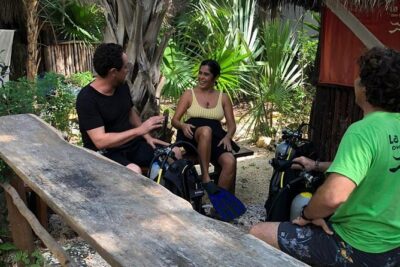
At the cenote, your guide gives a detailed briefing about the environment and the procedures for the session. The guide is a full-cave certified professional and Open Water scuba instructor, so the briefing is an important part of the outing, not a quick formality.
You learn how the cavern route works, how to use the permanent lines, and what to expect from the setting. The permanent lines provide a clear route through the cavern area. You should stay with the guide, follow the line, and keep your attention on the group rather than drifting off to frame a photograph.
The trip description calls these cavern sessions suitable for divers at different experience levels, but there is still a minimum standard. You must hold at least Open Water certification and have dived within the last six to 12 months. The formal requirement stated for participation is within the last 12 months, so do not assume an older certification record will be enough.
A moderate level of physical fitness is also expected. You will travel by truck, handle scuba equipment, and complete two sessions in one day. No special athletic ability is stated, but this is not a passive sightseeing ride. If you have concerns about carrying equipment or managing a full day around water, ask the operator before booking.
What the first 45-minute session feels like
Each underwater session lasts around 45 minutes. The maximum depth is 50 feet, and you follow the permanent lines placed inside the cavern. That combination gives the outing a clear structure: a controlled route, a set depth limit, and a guide-led pace.
The setting is the main event. Light and rock formations create the visual interest, while the enclosed cavern gives the water a different mood from the open sea. The information provided does not promise particular animals, formations, or water conditions, so you should book this for the underground scenery and unusual setting, not for a guaranteed wildlife sighting.
You should also expect camera restrictions to affect your plans. Some privately owned cenotes do not permit cameras at all. Others charge a separate fee, ranging from $20 to $60 depending on the camera. Ask about the rule at the selected cenote before you enter the water. A camera that is allowed at one site may not be allowed at another.
The included light is a practical touch. It is part of the package rather than an optional rental, and it helps you see inside darker sections of the cavern. You still need to pay attention to your own equipment and the guide’s instructions. The light adds convenience, but it does not turn the session into a free-form photography trip.
More Dives for Certified Divers in Mexico
- Cozumel Dive Package – Certified Divers from the Riviera Maya (4 dives)
★ 4.5 · 51 reviews - 2-Tank Morning or Afternoon Dives in Playa del Carmen certified Divers Only
★ 4.5 · 33 reviews - Cenotes 2-Tank Dive in Playa del Carmen/for certified divers only
★ 4.0 · 13 reviews - 1 day of diving in Cenotes price for 2 certified divers
★ 5.0 · 7 reviews
The 45-minute break between sessions
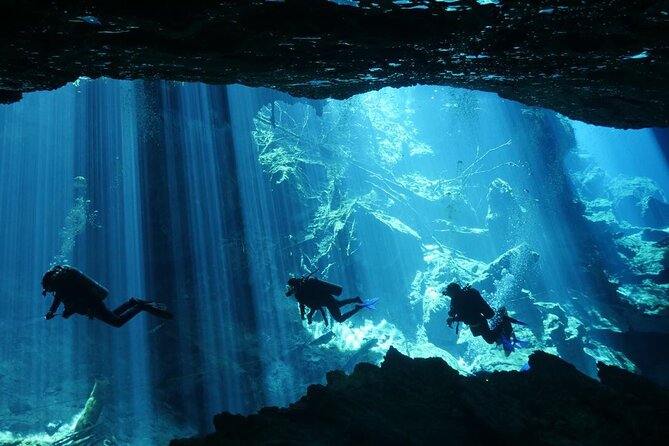
After the first session, you have a surface interval of about 45 minutes. Water, soft drinks, snacks, and a sandwich are provided. That food is more important than it may sound. With an early start, a truck ride, equipment preparation, and two underwater sessions, you will appreciate having lunch arranged at the site.
The break also gives you time to get warm, check your gear, and reset before the second session. A cenote day is less rushed when you do not need to search for food or bring enough provisions for the full outing. You should still bring anything personal you need for comfort, since the included food and drinks are limited to what is specified.
This is a good point to decide how much energy you want to put into photos. If cameras are allowed and you have paid the fee, the interval may be your chance to confirm the rules with the guide. If cameras are not permitted, you can simply enjoy the second session without trying to work around a restriction.
The second cavern route and return to Playa del Carmen
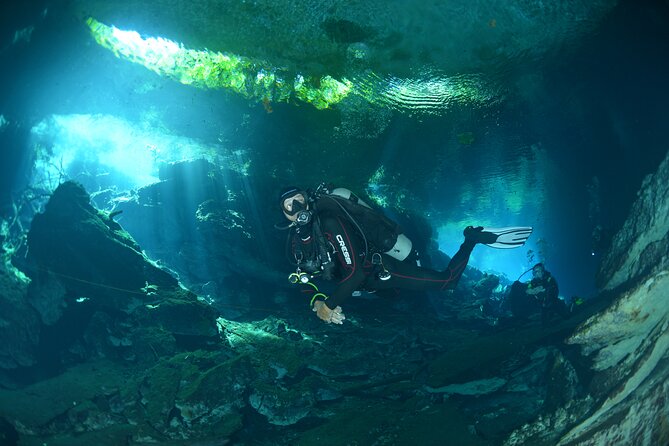
The second session lasts around 45 minutes and follows the same basic limits: permanent lines and a maximum depth of 50 feet. Having two sessions is a strong part of the trip’s value. You get more time in the cenote than you would on a single short visit, while the surface interval breaks the day into manageable sections.
The exact character of the second route depends on the chosen cenote and the guide’s plan. The supplied details do not promise two different cenotes or two entirely different routes. You should understand this as two sessions at one cenote, not a site-hopping tour.
Once the underwater portion is complete, you return by truck to the dive center. The estimated return is around 3:30 p.m., making the full outing roughly seven and a half hours from the 8:00 a.m. start, though the stated duration is approximately seven hours. Allow flexibility around the return time. Road conditions, preparation, and the pace of the group can affect the schedule.
The activity ends where it began, at the Calle 4 Norte meeting point. It is near public transportation, which helps if you are staying elsewhere in Playa del Carmen and do not have a car.
What the package includes, and what it does not
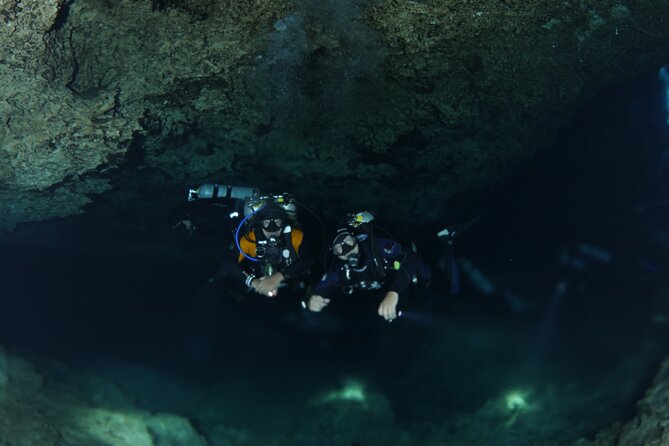
The included items cover several costs that can quietly add up on a scuba day:
- Two sessions at one cenote
- Tanks and weights
- Round-trip transportation from the dive center
- Dive light rental
- Water and soft drinks
- Snacks and a sandwich
The full equipment rental is $25. That price includes the BCD, regulator, dive computer, wetsuit, mask, and fins. If you own some but not all of your equipment, ask the center how partial rental works, since only the full-set price is provided here.
The cenote entrance fee is separate and cash only. Chac Mool costs 300 MXN, and Dos Ojos costs 600 MXN. This is the largest variable cost stated for the day, and the difference between the two sites is meaningful. Bring Mexican pesos rather than relying on a card or assuming the fee is part of the tour price.
There is no total tour price provided in the details, so I cannot judge the complete cost against other Playa del Carmen outings. I can say that the package has practical value if you need transportation, a light, food, and only basic equipment support. You should compare the final booking price after adding the $25 rental, the entrance fee, and any camera charge.
Who will get the most from this outing
This trip suits a certified Open Water diver who wants an unusual freshwater setting without signing up for a technical cave course. It also works well if you value a compact group, organized transport, and a guide-led route.
You are a good match if you:
- Have recognized Open Water certification
- Have been scuba diving within the last 12 months
- Are comfortable following permanent lines
- Can manage a moderate physical day with equipment
- Prefer a guided outing over planning a cenote visit yourself
- Want two substantial underwater sessions rather than a quick look
It may not suit you if you are newly certified and have not built confidence after training, or if your recent scuba experience falls outside the 12-month requirement. It is also a poor fit if your main goal is guaranteed underwater photography. Camera access depends on the privately owned cenote, and fees can be high.
The trip is also not aimed at non-divers. An Open Water certificate is required, and the experience includes two underwater sessions at a depth of up to 50 feet. There is no beginner lesson or introductory pool session described.
Practical advice for a smoother day
Bring cash in Mexican pesos for the entrance fee. Since you may visit Dos Ojos, prepare for 600 MXN rather than carrying only the lower Chac Mool amount.
Bring proof of certification and be ready to show it at the center. You also need to be able to confirm a scuba outing within the last 12 months.
Ask about the day’s cenote before leaving the center. That lets you confirm the entrance fee, camera policy, and whether you need to adjust your expectations about photography. If you are bringing a camera, do not assume permission simply because it was allowed at another cenote.
The meeting time is 8:00 a.m., so plan your morning around arriving at Calle 4 Norte ready for paperwork and equipment fitting. The outing ends back at the center around 3:30 p.m., but keep the rest of your afternoon flexible.
Free cancellation is available if you cancel at least 24 hours before the start time. Changes or cancellations inside that window are not accepted for a refund. The trip can also be canceled for poor weather or because the minimum number of participants is not reached. In those cases, you are offered another date or experience, or a full refund.
Should you book the cenote trip?
Book it if you are a recently active Open Water diver and the thought of moving through a Mexican cavern appeals to you more than a standard reef outing. The two 45-minute sessions, included transport, small group limit, guide briefing, and supplied food make the day straightforward.
Think twice if you need guaranteed camera access, dislike enclosed environments, or have not been underwater within the past year. Also price the trip honestly by adding equipment rental, the cenote fee, and possible camera charges.
For the right diver, this is a focused way to see the underground side of the Riviera Maya. The five-star rating and praise for the cavern setting match the strongest part of the outing: it offers a memorable, carefully bounded look at a world that most visitors to Playa del Carmen never see.
FAQ
Where does the cenote trip begin?
It begins at Scuba Mobile Dive Center on Calle 4 Norte in central Playa del Carmen. The activity also ends back at this meeting point.
What time does the activity start and finish?
The start time is 8:00 a.m. The return to the dive center is expected at about 3:30 p.m., with an approximate duration of seven hours.
Which cenote will I visit?
The chosen cenote may be Chac Mool or Dos Ojos. The trip includes two underwater sessions at one cenote.
Do I need scuba certification?
Yes. You must have at least Open Water certification from a recognized agency and must have been scuba diving within the last 12 months.
What equipment is included?
Tanks, weights, and a dive light are included. Full equipment rental costs $25 and includes a BCD, regulator, dive computer, wetsuit, mask, and fins.
How much are the cenote entrance fees?
Chac Mool costs 300 MXN and Dos Ojos costs 600 MXN. The fee is not included and must be paid in cash.
More Two-Tank Boat Dives in Mexico
- 2 Tank Dive in Cozumel
★ 4.5 · 31 reviews - Cozumel Express 2-Tank Dives from Playa del Carmen/ Only for Certified Divers
★ 5.0 · 2 reviews - Two Tanks Scuba Diving for Beginners in Cancun
★ 5.0 · 233 reviews - 2 Tank Dive – Certified Divers (Santa Maria Bay & Chileno Bay)
★ 5.0 · 162 reviews
More Dives for Certified Divers in Playa del Carmen
- Playa del Carmen: Guided Reef Diving for Certified Divers
★ 4.6 · 7 reviews - Cancun: MUSA Diving for certified divers morning dive trip
★ 4.9 · 7 reviews - 3 days diving in cenotes for certified divers
★ 5.0 · 3 reviews - Scuba Dive in Playa del Carmen – 2 Dives (Certified divers)
★ 3.3 · 3 reviews
New dives around Playa del Carmen
- Cozumel Express 2-Tank Dives from Playa del Carmen/ Only for Certified Divers★ 5.0 · 2 reviews
- Full-Day Playa del Carmen Reef Diving Activity★ 5.0 · 3 reviews
- Try dive in beautiful Casa cenote for 2 people★ 5.0 · 6 reviews
- Private Scuba Diving in Cenote around Playa del Carmen★ 5.0 · 7 reviews
- Scuba Referral Dives & Beach Club with Transportation In Riviera Maya★ 5.0 · 33 reviews
- PADI Open Water Diver Course in Playa del Carmen★ 5.0 · 40 reviews
- Scuba Diving for Beginners – Tulum Dive Machine★ 5.0 · 26 reviews
- Try dive in Cozumel island★ 5.0 · 4 reviews
Cenote & Cavern Dives, compared.
2 cenote divings (including one deep diving) for advanced divers in Tulum
Read our review →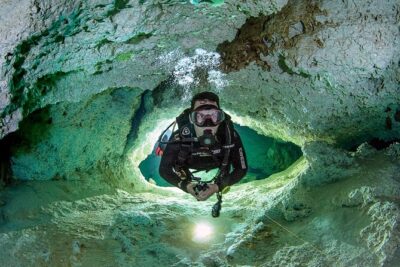
Amazing beginner dive in Tulum cenote (or refresher dive)
Read our review →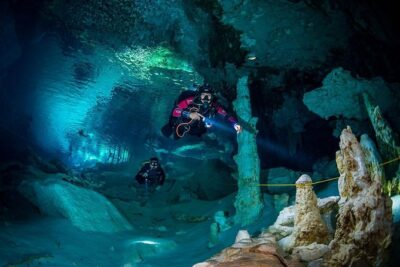
Go for 2 dives in cenote Dos ojos for certified divers
Read our review →