
REVIEW · ITALY
Brindisi: Underwater scuba diving
Clear water, calm instruction, real sea life. This two-hour Brindisi scuba experience gives you a simple way to see Apulia from below the surface, with full equipment and a small group capped at eight people. I like the patient teaching approach and the choice between a first-time session and a guided outing for certified divers. The main concern is operational reliability: one confirmed booking reported no instructor at the meeting point and no answer to repeated calls.
I also like that the center is the official diving center of Marina di Brindisi and works with national CMAS and ISO-certified instructors. That adds useful reassurance when you are handing over your breathing, buoyancy, and safety to someone else. Still, this is not a sightseeing boat trip with a long list of stops. It is a focused introduction to the water, so expectations should stay realistic.
Key points to know before you book
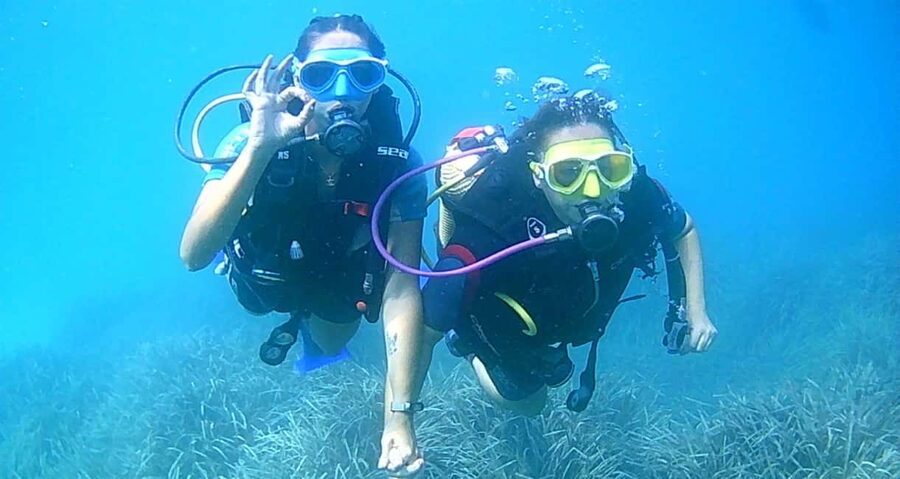
- Two formats are available: Choose a first scuba experience if you have never tried it, or a guided underwater tour if you already hold certification.
- Small groups matter: A maximum of eight participants allows the instructor to give closer attention than a large beach operation.
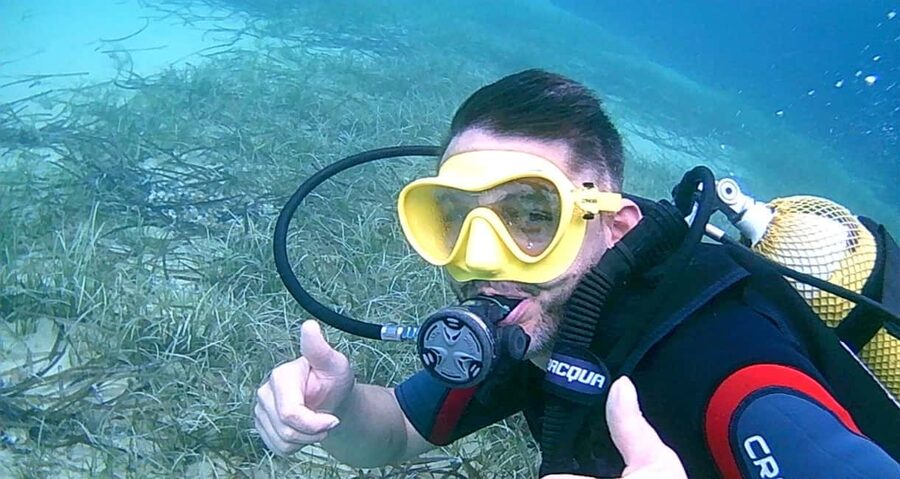
- Full equipment is included: You receive a wetsuit, BCD, regulator, air cylinder, mask, and fins.
- The instruction is hands-on: Beginners practice breathing, mask clearing, regulator recovery, and buoyancy in shallow water before entering open water.
- The setting is Marina di Brindisi: Meet in front of ponton F, with the sea serving as your classroom.
- The value is strongest for beginners: At $71, the price covers two hours, equipment, instruction, and a PTRD international experience certificate.
Starting at Marina di Brindisi, in front of ponton F
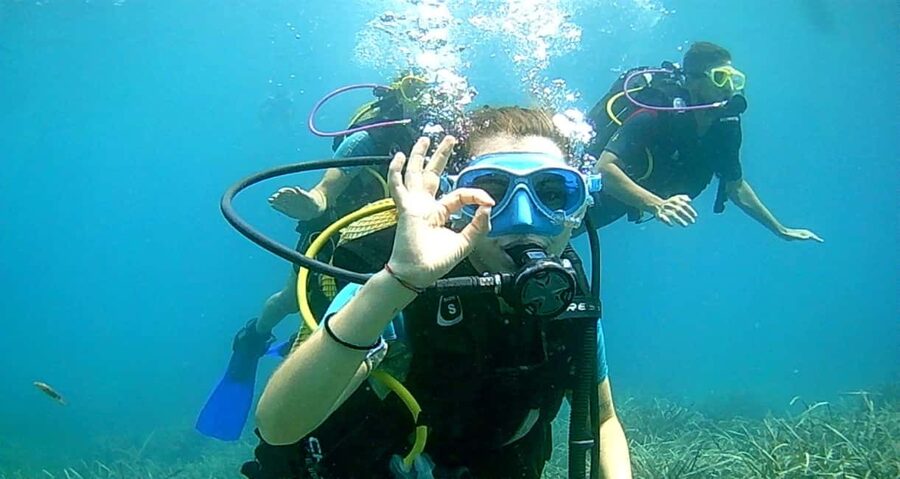
Your meeting point is in front of ponton F at Marina di Brindisi. That is the one location detail provided, so I would check your confirmation carefully and arrive with enough time to find the pontoon without rushing.
The activity lasts two hours. That sounds generous at first, but the clock includes the briefing, equipment preparation, shallow-water practice for beginners, the open-water session, and the final discussion. You should think of this as a compact instructional experience, not two full hours spent below the surface.
The marina setting is practical. You are close to the water and equipment, and the first part of the activity can take place in a controlled area. For someone nervous about scuba, that gradual start is important. You do not simply receive a tank and walk into the sea with little explanation.
The operation uses English, Spanish, and Italian. That language choice makes the session easier for many international visitors, especially when the instructor is explaining hand signals and breathing routines. Scuba relies on clear communication, so tell the center your preferred language when booking.
A few more dives around Italy worth comparing
- Catania: Gulf Scuba Diving Tour with Marine Biologist
★ 4.9 · 212 reviews - Diving for patented divers
★ 5.0 · 175 reviews - Diving for certified divers with PADI 5* Diving Resort – Taormina
★ 5.0 · 167 reviews
Choosing between a first session and a certified outing
The first option is intended for people who want to try scuba without taking a full certification course. It is a sensible choice if you are curious but not ready to commit to a longer training program.
You begin with an explanation of basic underwater communication, breathing, and equipment use. The instructor then helps you prepare your wetsuit, BCD, regulator, cylinder, mask, and fins. You are not expected to know how to assemble or check everything alone.
The second option is for certified divers who want a guided underwater tour. It is less about learning the first principles and more about practicing skills while exploring the Brindisi seabed. Experienced participants receive a scuba computer as part of the included equipment, while the supplied information does not say that beginners use one.
Be honest when choosing your option. If you have certification, select the guided outing. If you have never used scuba equipment, book the first experience. The two formats serve different needs, and the instructor needs accurate information before you enter the water.
The briefing gives beginners a proper start
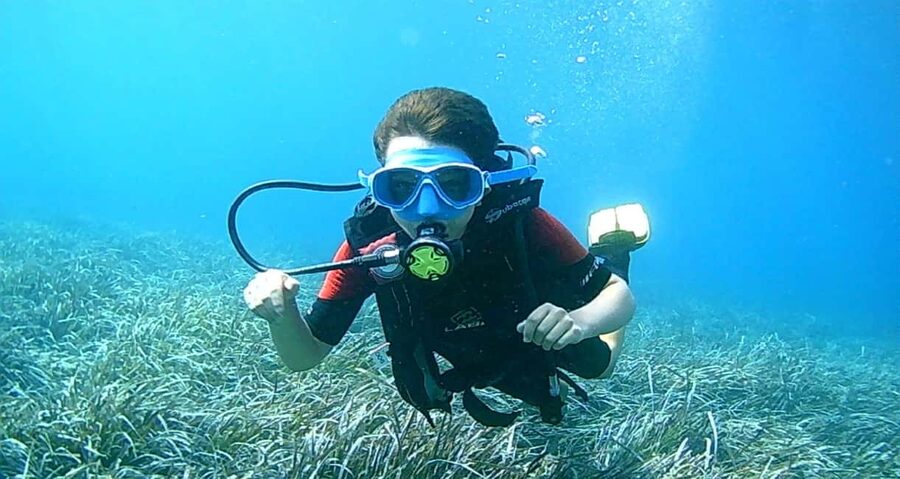
The briefing is one of the most useful parts of the session. You learn the hand signals used underwater, how to breathe through the regulator, and how the main equipment works.
This may sound basic, but basic is exactly what you want before entering the sea. You cannot chat normally underwater, so simple signals carry real importance. You need to know how to communicate that you are fine, need help, want to ascend, or need attention.
The briefing also gives you a chance to voice concerns. If the mask feels uncomfortable or the regulator seems unfamiliar, say so early. A good fit and a calm explanation can make the difference between enjoying the session and spending the whole time fighting your equipment.
Feedback about the instruction has been especially positive. The teaching is described as patient, gentle, friendly, and clear, with instructors taking time to explain each step. That is exactly the style I would want for a first underwater experience.
Preparing the wetsuit, BCD, and air cylinder
The center provides the main equipment. That includes a wetsuit suited to the water conditions, a buoyancy compensator, regulator, compressed air cylinder, mask, and fins.
The wetsuit helps with warmth and provides some protection from contact with the surroundings. The BCD allows you to manage your position in the water. The regulator delivers air from the cylinder, while the mask lets you see and the fins help you move.
Your instructor guides the preparation and equipment checks. Pay attention here instead of treating it as a boring delay. Understanding how your gear fits and works will make you calmer once you are in the sea.
The supplied information calls the equipment full, but it does not mention personal items such as towels, swimwear, or a change of clothes. I would bring the normal seaside basics and avoid assuming that anything beyond the listed scuba gear is provided.
Same coastline, a very different dive:
- TuffAlcantara – dives, slides and lots of fun in the Alcantara river
★ 5.0 · 106 reviews - Exciting PADI Discover Scuba Diving Experience Isola Bella Marine Park Taormina
★ 5.0 · 96 reviews - Sea Baptism Scuba Experience in Polignano a Mare
★ 5.0 · 87 reviews - Catania: Scuba Diving Experience
★ 4.9 · 79 reviews
Shallow-water practice before open water
If this is your first session, you complete basic exercises in shallow water before going farther out. This is a strong feature because it lets you deal with small problems while you are still in a controlled setting.
You practice breathing underwater, clearing your mask, retrieving your regulator, and managing buoyancy. Each exercise addresses a common beginner worry.
Mask clearing teaches you what to do if water enters the mask. Regulator recovery shows you how to find your breathing equipment if it shifts out of your mouth. Buoyancy practice helps you stay comfortable rather than constantly rising or sinking.
Do not rush this stage. If you need another explanation or another attempt, ask for it. The whole point is to build comfort before the open-water portion begins.
The shallow-water exercises also give the instructor a better sense of how you respond. Some people adjust quickly. Others need more time with breathing or buoyancy. A small group, limited to eight people, gives the instructor a better chance to notice those differences.
Moving into Brindisi’s open water
Once you feel ready, the session moves into open water, usually in a controlled setting such as a bay. The instructor stays close and helps you observe the underwater flora and fauna around Brindisi.
The description does not promise a specific reef, wreck, animal, depth, or route. That is worth noting. Sea conditions affect what you see, and a beginner session is shaped by safety and comfort rather than by covering a long distance.
What you can count on is a guided look at the local seabed and a chance to swim in clear sea water. The emphasis is on learning how to move and breathe underwater while noticing the marine environment around you.
For certified participants, the outing offers practice in a familiar but guided setting. It may suit you if you want a short session rather than a full-day program. The information does not state the exact depth or certification level required, so certified divers should confirm those details before paying.
What the small group changes
Eight participants is not a private lesson, but it is still a manageable number. Compared with a crowded operation, a small group gives the instructor more opportunity to watch each person’s equipment, breathing, and buoyancy.
For first-time participants, that attention can reduce stress. You are less likely to feel lost in a large procession of beginners. It also makes it easier to ask questions during preparation and the final discussion.
The trade-off is that the pace must work for everyone. If one person needs extra time, the group may move more slowly. That is not necessarily a problem for beginners, but certified divers hoping for a fast, technical session should keep the introductory nature of the activity in mind.
The final discussion and PTRD certificate
After the underwater session, you take part in a debriefing. This is your chance to discuss what happened, ask questions, and receive suggestions for improving your scuba skills.
For a first attempt, the debrief matters because you may not remember every detail while you are in the water. Talking through buoyancy, breathing, and equipment use helps turn the experience into something you can build on.
You also receive an international PTRD Diving Experience certificate, with your experience entered into the PTRD teaching register. This is not presented as a replacement for a full scuba certification course. It is a record of the introductory experience, so do not mistake it for a license to scuba independently.
That distinction is important. If you want to continue, ask the center what training would be needed next. The session can give you a useful first taste without asking you to commit to a complete course immediately.
Is $71 a fair price?
At $71 per person, the value is good if you are new to scuba and need equipment, instruction, shallow-water practice, open-water supervision, and a certificate in one short session.
You are not paying only for time in the water. You are also paying for the instructor’s preparation, equipment checks, safety guidance, and the chance to try scuba without buying gear or enrolling in a full certification program.
For certified divers, the value depends more on the actual route, conditions, and time spent underwater. Since the exact depth, marine sites, and bottom time are not specified, I would ask for those details before booking if you are an experienced diver with particular goals.
The reserve-now, pay-later option helps if your schedule is still changing. Cancellation is free up to 24 hours in advance, according to the supplied conditions. You must book at least one day before the activity, so this is not a last-minute marina purchase.
Health limits and practical suitability
This activity is not suitable for children under eight, pregnant women, people over 70, or people with claustrophobia. It also excludes people with heart, respiratory, or hearing problems, epilepsy, diabetes, recent surgery, or a cold.
These limits are not minor fine print. Scuba places specific demands on breathing, pressure changes, communication, and physical comfort. If any condition applies to you, contact the provider before booking rather than hoping the issue will be overlooked.
Alcohol and drugs are not allowed. Arrive clear-headed and ready to follow instructions. You also need to be comfortable in the water and able to take part in the equipment and swimming portions of the activity.
Wheelchair users are listed as unable to take part. If accessibility is important for your plans, confirm the current arrangements directly before making payment.
One practical warning deserves attention. A confirmed booking in April 2025 reported that nobody arrived at about 7:30, repeated calls went unanswered, and support did not respond. Most available feedback is strongly positive about the instructors and the setting, but this report means I would save the center’s contact number, confirm the meeting time in advance, and avoid booking the activity immediately before an important departure.
Who will enjoy this Brindisi experience?
I would recommend it most strongly to a first-time participant who wants a supervised introduction, values patient instruction, and likes the idea of seeing Brindisi from below the water.
It also suits a certified diver looking for a short guided session with equipment included. The small group and multilingual instruction are useful advantages, especially if you are visiting Apulia and do not speak Italian.
You may want another option if you need a specific wreck, marine species, depth, or technical challenge. Those details are not promised here. This is a practical introduction and guided outing, not a specialist expedition.
Should you book it?
Book this experience if you want a gentle first step into scuba, full basic equipment, close supervision, and a two-hour session at Marina di Brindisi. The patient instruction, clear-water setting, small group, and PTRD certificate make the $71 price reasonable for beginners.
Before booking, confirm the meeting time and ponton F location, disclose any health concerns, and ask certified-diver questions about depth and route. I would also build in a little schedule flexibility because of the reported no-show problem.
For a safe, friendly introduction, this is a promising choice. For advanced underwater goals, treat it as a short local outing and verify the technical details first.
FAQ
Where does the scuba experience meet?
The meeting point is in front of ponton F at Marina di Brindisi.
How long does the activity last?
The activity lasts two hours, including the briefing, equipment preparation, practice, open-water session, and debriefing.
How much does the experience cost?
The price is $71 per person.
Is this suitable for someone who has never tried scuba?
Yes. The first-experience option is designed for people trying scuba for the first time without completing a full certification course.
Is there an option for certified divers?
Yes. Certified divers can choose a guided underwater tour intended for practicing scuba and exploring the Brindisi seabed.
What equipment is included?
A wetsuit, buoyancy compensator, regulator, compressed air cylinder, mask, and fins are included. A scuba computer is included for experienced divers.
What languages do the instructors speak?
Instruction is available in English, Spanish, and Italian.
How many people can join the group?
The group is limited to eight participants.
What health restrictions apply?
The activity is not suitable for children under eight, pregnant women, people over 70, people with claustrophobia, heart or respiratory problems, epilepsy, diabetes, a cold, recent surgery, hearing impairment, or wheelchair users.
New dives around Italy
- Villasimius: Scuba Dive in Capo Carbona without Certificate★ 4.9 · 23 reviews
- Villasimius: Capo Carbonara First Time Dive with Instructor★ 4.9 · 50 reviews
- Discover Scuba diving in Calabria, Italy★ 4.5 · 3 reviews
- Scuba diving in Calabria, Italy★ 5.0 · 23 reviews
- Discover Scuba Diving PADI – Trial dive in Sorrento★ 5.0 · 2 reviews
- Double dive in the Punta Campanella Marine Protected Area★ 5.0 · 11 reviews
- Guided diving for beginners without certification from Sorrento★ 5.0 · 22 reviews
- Syracuse: Ortigia Deep Dive Cultural Tour (max 6 Guests)★ 5.0 · 9 reviews
Scuba Diving, compared.
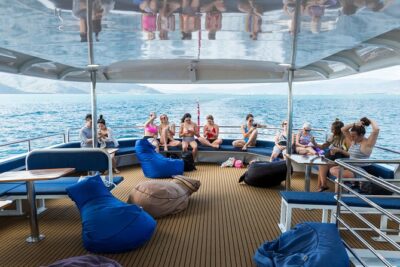
Great Barrier Reef Snorkeling and Diving Cruise from Cairns
Read our review →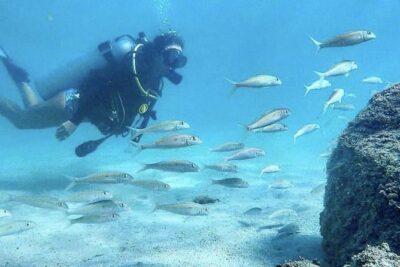
First-Time Scuba Diving in Honolulu + Free Videos
Read our review →
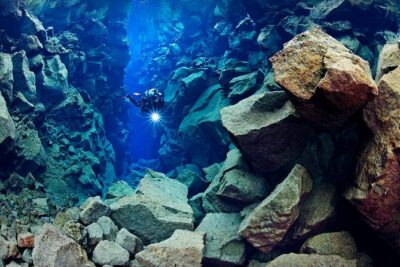
Silfra: Diving Between Tectonic Plates – Meet on Location
Read our review →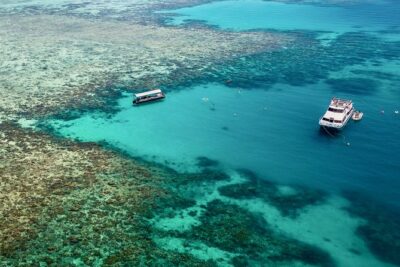
Ocean Freedom Great Barrier Reef Luxury Snorkel and Dive Cruise
Read our review →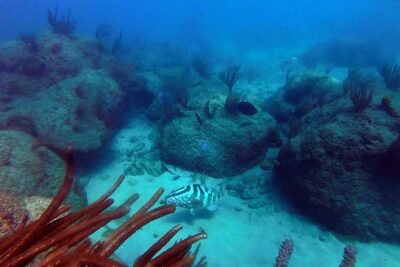
Beginner Scuba Diving with Turtles and Videos, San Juan
Read our review →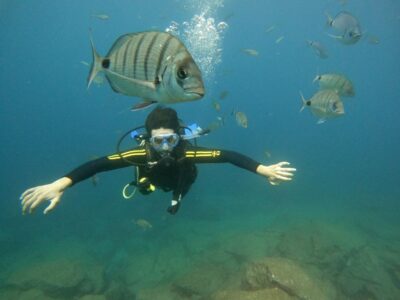
Tenerife: Your First Scuba Diving Experience in Turtle Area
Read our review →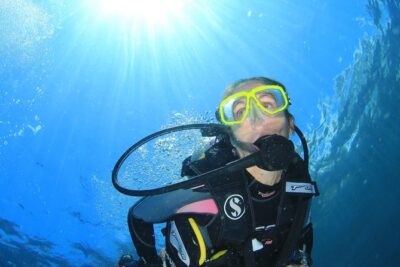
Browse the lists this tour appears in