
REVIEW · FRANCE
Beyond Bouillabaisse: Diving into Marseille’s Multicultural Stew
Come hungry, leave with a new map of Marseille. This 5.5-hour food walk moves from Saint-Charles station to the Old Port, using Algerian delicacies, Provençal biscuits, spice stalls, market food, and an apéro to explain how migration shaped the city. I especially like the maximum seven-person group, which gives the guide room to answer questions, and the way the tour uses small local businesses rather than sticking to the usual French-food checklist. The main caution is simple: you need to enjoy walking, generous portions, and foods that may be quite different from classic bouillabaisse or ratatouille.
I also like that the tour ends at the Old Port instead of returning to the start. That makes it useful on your first day, since you finish in one of Marseille’s most convenient areas. The $160 price is not cheap, but it includes two full meals and many tastings, plus practical restaurant advice for the rest of your stay. Come without breakfast, wear comfortable shoes, and do not expect every stop to be a seated restaurant meal.
Key points at a glance
- A food map of modern Marseille: Algerian, North African, Provençal, Mediterranean, and other local influences appear along the route.
- A very small group: With no more than seven people, conversation with the guide is easier and the pace can be adjusted.
- Two substantial meals plus tastings: Several food stops can add up quickly, so arrive hungry.
- A route from Saint-Charles to the Old Port: You see major central districts without retracing your steps.
- Guides who shape the experience: Coco, Séverine, Chloé, and Alexis are praised for their warmth, local knowledge, and flexibility.
- Useful for a first day: You leave with food addresses and restaurant suggestions for later meals.
Why Marseille needs more than bouillabaisse
Marseille is often sold through its harbor, fishing boats, Provençal sunshine, and famous fish stew. Those are real parts of the city, but they tell only one chapter. This tour looks at Marseille as a port shaped by movement: people, languages, spices, recipes, religions, and trade routes have all passed through here.
That idea gives the experience a clear purpose. You are not simply stopping for samples. You are using food to understand why certain neighborhoods feel different, why Algerian and North African flavors sit naturally beside French pastries, and how a city’s eating habits change as people arrive and settle.
The focus may surprise you if you want a traditional French food tour. The route includes fish, wine, cheese, pastries, coffee, biscuits, fruits, flowers, mint tea, spices, and foods from several cultures. Yet the central theme is Marseille’s mixed identity, not a parade of famous French dishes.
That distinction matters before you book. If your ideal day means a long lunch with several classic Provençal courses, this may feel too informal. If you want to understand Marseille beyond the postcard version, the approach makes sense.
A few more dives around France worth comparing
- Calvi: Introduction to Diving Dive with an Instructor
★ 4.8 · 112 reviews - Scuba diving baptism
★ 5.0 · 37 reviews - Fréjus: Diving Experience in Port-Fréjus with an Instructor
★ 4.7 · 34 reviews
Starting at Saint-Charles with an Algerian welcome
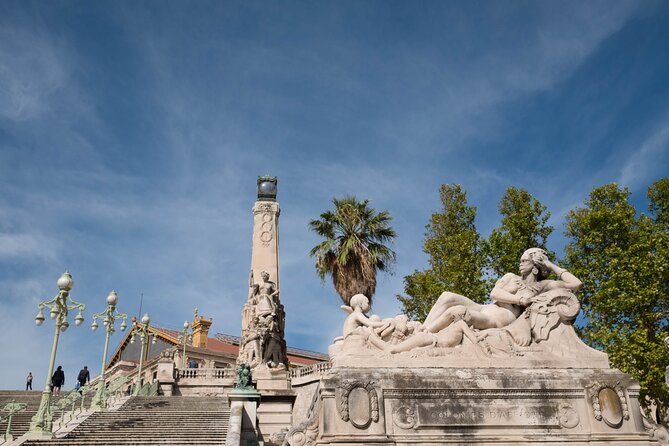
The meeting point is Place des Marseillaises beside Gare de Marseille Saint-Charles. This is a useful place to begin because the station sits above the city and introduces Marseille as a place of arrival. Trains, ferries, workers, students, and newcomers have long made this part of town a natural gateway.
The first hour uses an Algerian delicacy to open the conversation about migration. The exact item can vary, so I would treat this as a taste and a story rather than a fixed menu promise. The important point is the setting: you start with a food tied to Marseille’s wider Mediterranean connections, not with a generic croissant-and-coffee introduction.
Some parties have had a private tour when no other people booked. That is a nice possibility, though it should not be expected. The normal maximum is seven, still small enough for the guide to speak with everyone and adjust the discussion to your interests.
If you are arriving from a cruise ship, plan the transfer carefully. One family described a taxi dropping them far from the meeting point and charging €20 before they needed another taxi. The tour itself worked well once they arrived, but the story is a useful warning: confirm the exact Place des Marseillaises location rather than relying on vague directions from a driver.
Saint-Vincent de Paul and the taste of Provence
The next stop is Église Saint-Vincent de Paul, also known as the Réformés church, where you spend about 30 minutes. The church supplies a change of pace after the food introduction. You get architecture, religious history, and a look at one of central Marseille’s major landmarks.
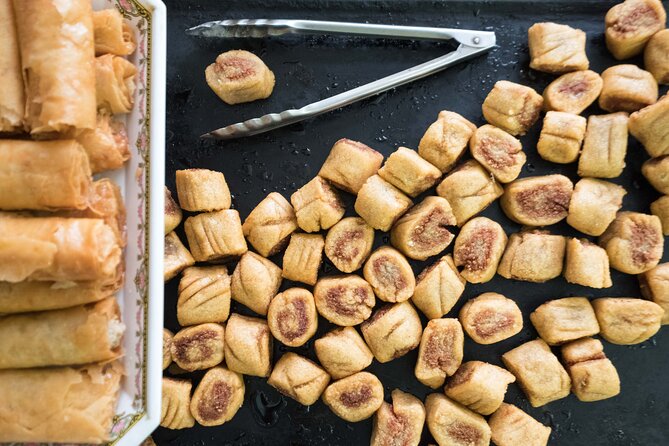
The stop is followed by Provençal biscuits at a classic café. This is where the tour balances the international focus with local tradition. The biscuits may seem modest beside a full meal, but they help show how Provence expresses itself through everyday snacks, not just expensive restaurant plates.
Coffee and pastries may also appear early in the day. One useful piece of advice from the experience is to skip breakfast. That is not a polite suggestion to arrive slightly hungry. The tastings are generous enough that a normal breakfast could become an uncomfortable extra course.
The walking is broken up by food and conversation, but you should still wear sturdy, comfortable shoes. One five-star account called the walking substantial but manageable because stops came often. Another simply advised comfortable footwear. That is fair: five and a half hours on city streets is a long meal with a long walk attached.
La Canebière, spices, and the everyday city
La Canebière is Marseille’s best-known boulevard and a natural route between the station area and the Old Port. The walk here gives the guide space to explain architecture, trade, and the city’s changing population while you move through central streets.
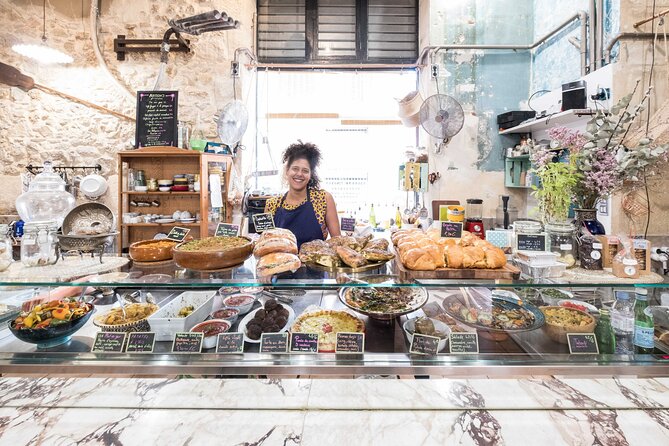
The food focus shifts toward a colorful spice shop and market. This is one of the tour’s strongest ideas. Spices are compact records of travel and exchange. A display of dried goods can explain more about Marseille’s connections to North Africa and the wider Mediterranean than a formal lecture alone.
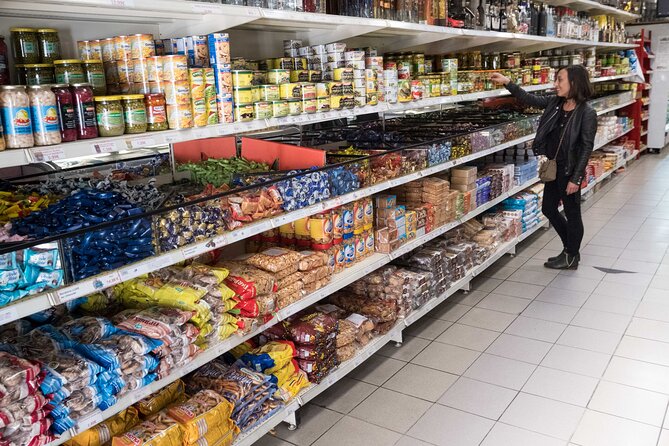
You may also encounter ethnic grocery shops, unusual fruits, salts, flowers, and products that you would probably pass without knowing how to use. That is where a guide earns the fee. Instead of simply pointing at shelves, the guide can explain what the food is, who buys it, and how it fits into local life.
Coco is especially praised for making this kind of walk feel like time spent with a well-informed local friend. Séverine is also repeatedly praised for her personal connections with shopkeepers and restaurant owners. Those relationships matter because they can make a stop feel less like a transaction and more like an introduction.
Do keep your expectations flexible. The food is not designed to imitate a Michelin-starred tasting menu. One lower-rated account found some items mediocre and felt the meal leaned too heavily toward bread and vegetarian foods. That criticism is useful. The tour’s value comes from access, context, and variety, not from every bite being luxurious.
Same coastline, a very different dive:
- Calanques National Park Snorkel and Scuba Dive
★ 4.8 · 27 reviews - Private diving baptism in the Golf of Calvi
★ 5.0 · 19 reviews - Porto-Vecchio: beginner diving in the Cerbicale Islands in the reserve
★ 4.9 · 18 reviews - Diving in Authentic Marseille with a local
★ 5.0 · 15 reviews
Noailles, Marseille’s food pantry
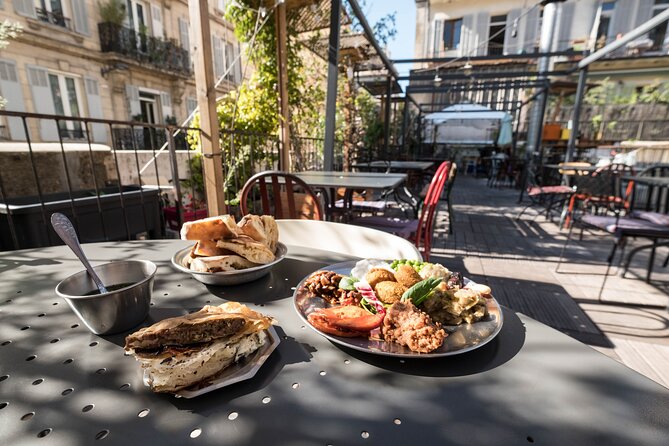
The Marché de Noailles is often called the belly of Marseille, and it is the heart of this route. The market’s appeal is not polished presentation. It is the mix of stalls, smells, ingredients, and people that makes the neighborhood a working food district rather than a stage set for visitors.
You may taste food from several traditions here, possibly including items you would not know how to order alone. The experience has included street food, tea, pastries, fruits, flowers, and products from North African and other immigrant communities. The guide explains the food as you go, so the market becomes easier to read.
This is also where the tour’s central lesson becomes clearest: Marseille’s food culture is not divided into a French section and a foreign section. The city’s daily eating habits have developed through contact between cultures. That is why the tour spends time in grocery shops and market stalls instead of only visiting restaurants.
The setting can be crowded and informal. You may eat standing up, share samples, or pause on the street rather than settle into a reserved dining room. One disappointed participant expected more sit-down restaurant meals and more meat and seafood. If that sounds like your preference, ask yourself how much you value market access and cultural context.
The tour description promises two full meals, and the total amount of food is repeatedly described as substantial. Still, the exact balance of seated meals, snacks, and shared tastings can vary. It is best to think of the day as a rolling food itinerary rather than two formal restaurant reservations.
Reaching the Old Port with an apéro
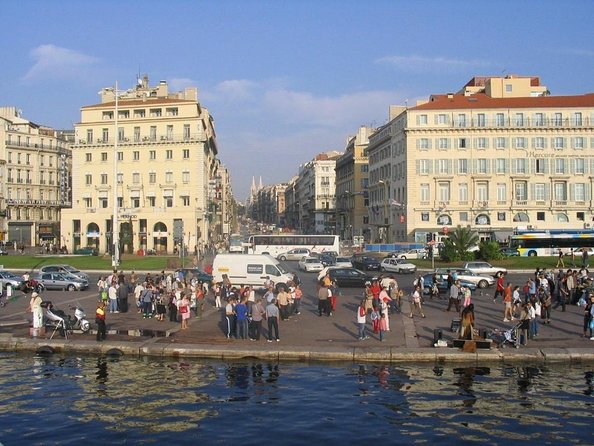
The final section takes you to the Vieux-Port, Marseille’s boat-filled harbor. The guide explains the port’s role in the city before taking you for an apéro in a former sailors’ bar.
An apéro is more than a drink before dinner. It is a social pause, a chance to talk, and a very French way to mark the transition from afternoon to evening. Here it also gives the tour a fitting finish: after discussing people and goods arriving by land, you end beside the water that connected Marseille to the rest of the Mediterranean.
The former sailors’ bar adds atmosphere without requiring a grand dining room. You can sit, compare favorite tastes, and ask the guide what to do next. This is one reason I think the ending works well for first-time visitors. You finish near restaurants, boats, waterfront walks, and transport options rather than being sent back uphill to Saint-Charles.
The tour does not return to the original meeting point. That is convenient if you plan to stay around the Old Port, but less convenient if your hotel or onward transport is near the station. A cruise passenger may need a taxi after the tour. One group paid about €50 total for taxis connected with their cruise-day schedule, so allow time and money for that if you need to return to the ship.
What the guide adds to the food
The guides receive the strongest praise across the experience. Coco is described as charming, flexible, and able to explain both food and city life. Séverine is praised for her personal warmth, local relationships, and ability to adjust the pace. Chloé is noted for her energy, humor, and clear explanation of immigration and neighborhood change. Alexis is singled out as a major part of one excellent day.
You cannot choose a specific guide unless the booking system allows it, so treat those names as examples of the experience’s guiding style rather than a guarantee. The common thread is more important: the guide is expected to interpret Marseille, not simply point out where to eat.
That also explains why the tour can work for people who do not consider themselves food experts. You do not need to recognize every spice or know the difference between every regional pastry. The guide supplies the background and gives you a way to approach unfamiliar foods without feeling lost.
The small group helps here. With seven people or fewer, you can ask why a dish matters, request a slower pace, or explain dietary preferences. One group even had the route modified to suit its wishes. Flexibility is possible, but it should be discussed before the day begins rather than assumed.
Is $160 a fair price?
At $160 per person, this is a significant purchase. The price makes more sense if you count the full duration, two meals, numerous tastings, the guide’s time, and the access to places you might not find on your own.
It also includes something less visible: a ready-made introduction to Marseille’s central neighborhoods. You get a route, background, food translation, and a list of places to revisit. Several participants used the tour as their first-day orientation and returned to the cafés, shops, and restaurants afterward.
The value drops if you mainly want expensive ingredients, large seafood portions, or a formal dining experience. One lower-rated account felt the amount of food did not justify the price and estimated the shared food value at far less than the group had paid. That is a fair concern, especially if you judge a food tour by ingredient cost alone.
I would judge the price by what you want to buy. For a simple meal, it is high. For a half-day introduction to Marseille’s food cultures, neighborhoods, and local contacts, it can be reasonable, especially if you use the restaurant advice during the rest of your visit.
Who should book this Marseille food walk?
I would recommend it most strongly to first-time visitors who want a city orientation with plenty to eat. It suits couples, families with adult children, solo visitors, and small groups who like talking while they walk.
It is also a good fit for cruise passengers with a full day in Marseille, provided you allow time for taxis and confirm the meeting point. The start near Saint-Charles and finish at the Old Port can help you see a useful slice of the center without repeating the route.
You should think twice if walking for several hours is difficult, if you need a strictly fixed menu, or if you want only traditional French dishes. The route includes fish, wine, cheese, and Provençal specialties, but its main subject is the city’s mixture of cultures.
Service animals are allowed, the meeting area is near public transportation, and most people can participate. Still, the food volume, street stops, and length of the walk make comfortable shoes and an empty stomach practical necessities.
Booking advice and cancellation terms
Confirmation is sent within 48 hours, subject to availability. You can cancel at least 24 hours before the start time for a full refund. Changes or cancellations inside that 24-hour window are not accepted for a refund.
The tour requires suitable weather and a minimum number of participants. If poor weather or low enrollment cancels the experience, you can choose another date or experience, or receive a full refund.
Should you book Beyond Bouillabaisse?
Book it if you want Marseille explained through its food rather than reduced to a harbor photograph and a bowl of fish stew. The strongest reasons are the small group, the generous food schedule, the market and shop visits, and the guides’ ability to connect what you eat with the people who shaped the city.
Skip it if you want a polished, seafood-heavy restaurant crawl. For everyone else, especially first-time visitors, this is a practical way to get oriented, eat widely, and finish the day with a useful list of places to return to. Come very hungry, wear good shoes, and leave room for mint tea, pastries, spices, and a few surprises.
FAQ
Where does the tour begin?
It begins at Place des Marseillaises, beside Gare de Marseille Saint-Charles in Marseille.
Where does the tour end?
It ends at the Old Port of Marseille, also called the Vieux-Port. It does not return to the original meeting point.
How long does the experience last?
The tour lasts approximately 5 hours and 30 minutes.
How many people can join the tour?
The maximum group size is seven people.
What language is the tour offered in?
The tour is offered in English.
Does the tour include food and drinks?
Yes. The experience includes two full meals and many tastings. Examples from the route and food stops include Algerian food, Provençal biscuits, coffee, pastries, market products, spices, mint tea, wine, cheese, fish, fruits, and flowers.
Should I eat breakfast first?
It is best to arrive hungry. The food begins early, and the amount served throughout the walk can be substantial.
Is the tour suitable for cruise passengers?
It can work well for cruise passengers, but you need to arrange transport to the meeting point and from the Old Port after the tour. The tour does not return to the starting location.
Are service animals allowed?
Yes. Service animals are allowed.
Can I cancel for a full refund?
Yes, if you cancel at least 24 hours before the experience starts. Cancellations or changes made less than 24 hours before the start time are not accepted for a refund.
What happens if bad weather cancels the tour?
You will be offered another date or experience, or a full refund. The same choices apply if the minimum number of participants is not reached.
New dives around France
- Villefranche-sur-Mer: Experience an introduction to scuba diving★ 5.0 · 2 reviews
- Half Day Snorkeling & Diving in Nice★ 5.0 · 4 reviews
- Diving in Authentic Marseille with a local★ 5.0 · 15 reviews
- Full-Day Snorkeling and Guided Dive in the Calanques National Park from Marseille★ 5.0 · 7 reviews
- Diving in the Calanque Saint-Barthélemy★ 5.0 · 3 reviews
- Private diving baptism in the Golf of Calvi★ 5.0 · 19 reviews
- Private Guided Bike Tour of Cabourg and Dives in French★ 5.0 · 10 reviews
- Calanques National Park Snorkel and Scuba Dive★ 4.8 · 27 reviews
Scuba Diving, compared.
Great Barrier Reef Snorkeling and Diving Cruise from Cairns
Read our review →
First-Time Scuba Diving in Honolulu + Free Videos
Read our review →

Silfra: Diving Between Tectonic Plates – Meet on Location
Read our review →
Ocean Freedom Great Barrier Reef Luxury Snorkel and Dive Cruise
Read our review →
Beginner Scuba Diving with Turtles and Videos, San Juan
Read our review →
Tenerife: Your First Scuba Diving Experience in Turtle Area
Read our review →
Browse the lists this tour appears in