REVIEW · HAWAII
Oahu Night Dive: Adventure for Certified Divers
Night changes everything underwater. Oahu’s 3-hour evening scuba adventure takes certified divers to two south-shore sites, first at twilight and then in full darkness. With a PADI-certified guide, two tanks, dive lights, and a boat fitted with both shaded and open decks, this is a compact way to see Hawaii’s reefs after sunset.
I like the transition from fading daylight to total darkness, when familiar reef life gives way to eels, octopus, crabs, rays, and other night-active creatures. I also like that the $248 price includes the main equipment you need, snacks, refreshments, and both guided sessions. The main consideration is that this is strictly for certified divers in good health, and the six-review rating of 3.6 suggests the experience may not suit everyone equally.
Key points to know before booking
- Two underwater sessions in one evening: The first lasts about an hour at twilight, followed by a 30-minute surface break and a second hour-long session in darkness.
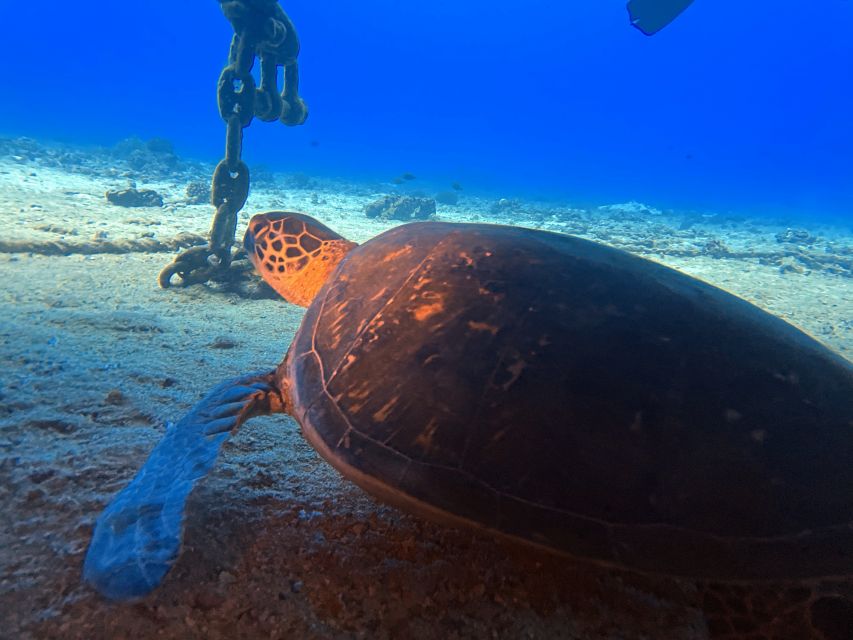
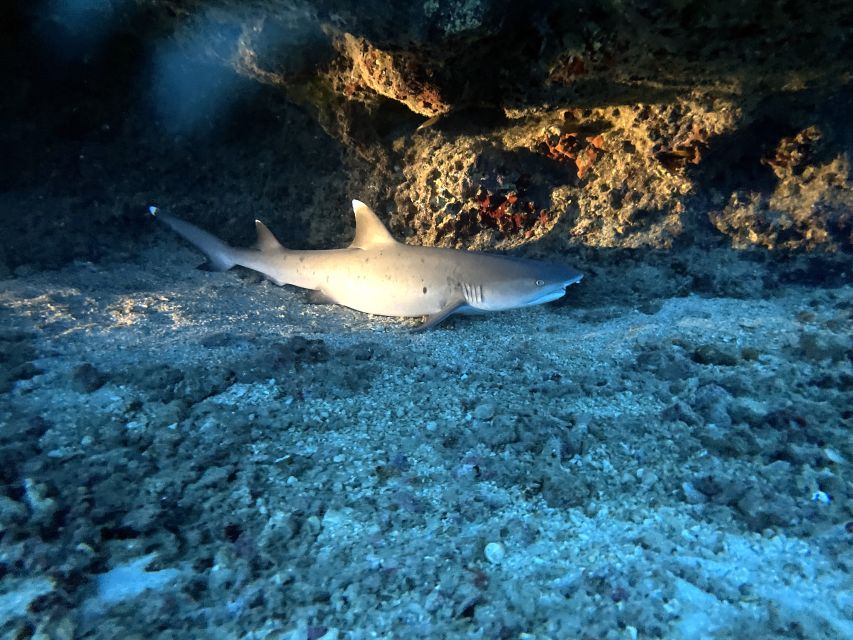
- South-shore marine life: You might encounter sharks, turtles, eels, rays, octopus, starfish, crabs, Hawaiian endemic fish, and dolphins.
- Equipment is included: Your package covers two tanks, a wetsuit, weights, fins, a BCD, and a complimentary light.
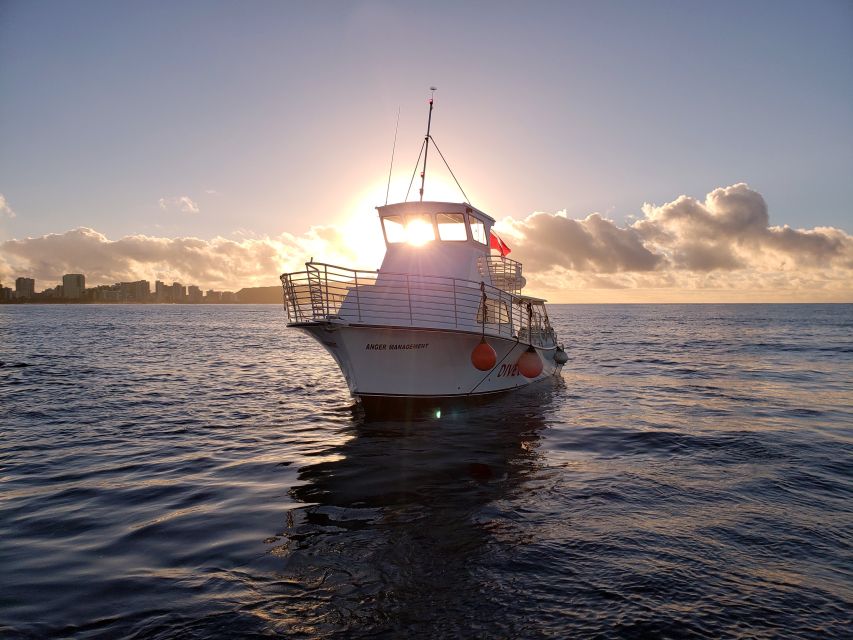
- Comfortable boat setup: The charter has a sun deck, a shaded deck, plenty of room to move, and an onboard restroom.
- Certification is required: You must show proof of certification at the boat, and you must be able to swim and be in good health.
- Plan around your flight: You must not fly within 24 hours after the underwater sessions.
Why nighttime changes Oahu’s reefs
A daytime reef and a nighttime reef can feel like two different places. As daylight fades, some animals settle down while nocturnal creatures become active. The first session gives you a gradual change in light, while the second lets you see the ocean with only your guide’s lights and your own beam cutting through the dark.
That change is the heart of this experience. You are not simply repeating the same underwater tour twice. You are seeing the reef during two distinct stages of the evening, with a 30-minute rest period between them.
The possible sightings are impressive, though no marine-life encounter can be promised. Sharks, turtles, eels, rays, octopus, starfish, crabs, Hawaiian endemic fish, and dolphins are all listed as possible animals. I would treat that list as a guide to the area’s variety, not a checklist.
The darkness also changes your attention. A light beam picks out small details rather than showing the whole reef at once. That can make a tiny crab or an eel feel just as important as a larger animal. If you enjoy patient observation, this format gives you plenty to watch.
More Dives for Certified Divers in Oahu
- Certified Diver: 2-Tank Deep Wreck and Shallow Reef Dive Off Oahu
★ 5.0 · 331 reviews - Certified Diver: 2-Tank Shallow Reef Dives off Oahu
★ 5.0 · 278 reviews - Waikiki 2 Tank World Class Wreck SCUBA Diving – Certified Only
★ 4.5 · 205 reviews
Meeting at Kewalo Basin without a last-minute scramble
You meet at the harbor at the front row, slip 8. Look for the large picture of a turtle, which is the clearest identifying marker provided for the boat. Arrive at least 30 minutes before the scheduled start time, not at the exact departure time.
Parking is available at Kewalo Basin for $1 per hour. Ala Moana Beach Park offers free parking, but you should allow extra time if you choose it. The tour itself lasts three hours, so arriving early matters more than it might for a quick daytime activity. You need time to park, find the correct slip, confirm your certification, and get settled before the safety briefing.
The operator is Dive Oahu Inc. The activity is conducted in English, and the guide is PADI certified. You must bring proof of your scuba certification to the boat. A booking confirmation email from the local partner arrives after you reserve, so keep that available in case you need the details at the harbor.
The 25-minute briefing sets the tone
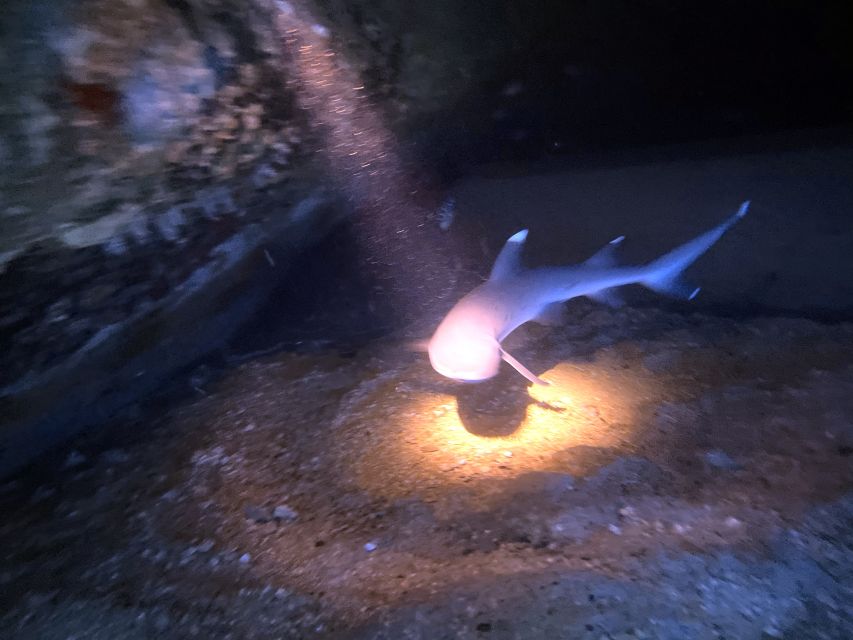
The scheduled program begins with a 25-minute safety briefing in Honolulu. This is an important part of the evening, especially because the second session takes place in complete darkness.
You should expect the briefing to cover the plan for both underwater outings, equipment, boat procedures, and the way the guide will lead the group after sunset. The supplied details do not specify the group size or the exact briefing content, so I would not assume a private or small-group format.
For certified divers, the briefing may feel familiar. Still, nighttime conditions make a careful review worthwhile. Darkness changes how you communicate, how you monitor your equipment, and how you stay aware of the group. The best approach is to listen closely even if you have plenty of prior experience.
This is also the right time to tell the guide about anything relevant to your comfort or health. The activity requires that you be able to swim and be in good health. It is not suitable for children under 15, pregnant women, or people with pre-existing medical conditions.
First session: one hour at twilight
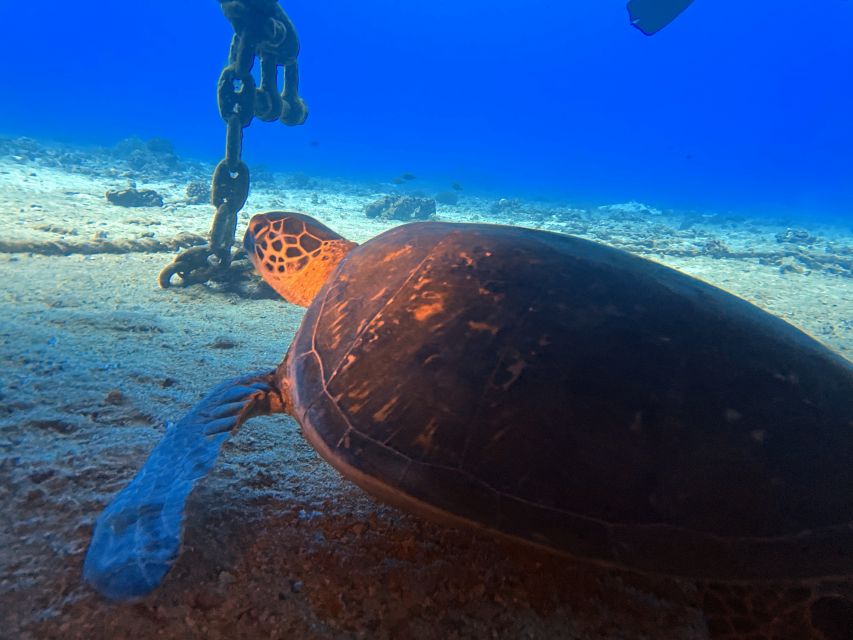
The first underwater session takes place as evening light fades. This timing is one of the strongest features of the program because you get to watch the reef shift from day activity toward night activity.
At twilight, you should still have some natural light, though the exact amount depends on the time of year and the schedule. The guide leads you through one of Oahu’s famous scuba sites, with the emphasis on observing the reef as animals begin to change their routines.
This session can be a gentle way to adjust to the evening. You have the guide’s support, some remaining light, and a chance to become comfortable with the equipment before the second outing. It also gives you a useful comparison point. Later, the same type of environment may feel far less familiar once the sun is fully gone.
The description lists possible sightings of turtles, sharks, eels, rays, octopus, starfish, crabs, endemic Hawaiian fish, and dolphins. The list is broad, so expectations should stay realistic. Marine life is never scheduled like a performance. Your actual experience depends on conditions, location, and what animals happen to be active that night.
The first session lasts about one hour. That is long enough to feel substantial, but not so long that the evening becomes exhausting for most certified participants. If you are newer to night scuba, the twilight timing may be especially useful.
More Dives for Certified Divers in the USA
- Certified Diver: 2-Tank Night Dive
★ 5.0 · 61 reviews - Certified Divers: Best 2-Tank Wrecks & Reef Boat Dive All Inclusive From Waikiki
★ 5.0 · 41 reviews - Oahu: Wreck & Reef Scuba Dive for Certified Divers
★ 4.8 · 17 reviews - Oahu: Shallow Reef Scuba Dive for Certified Divers
★ 5.0 · 11 reviews
A 30-minute sunset break on the boat
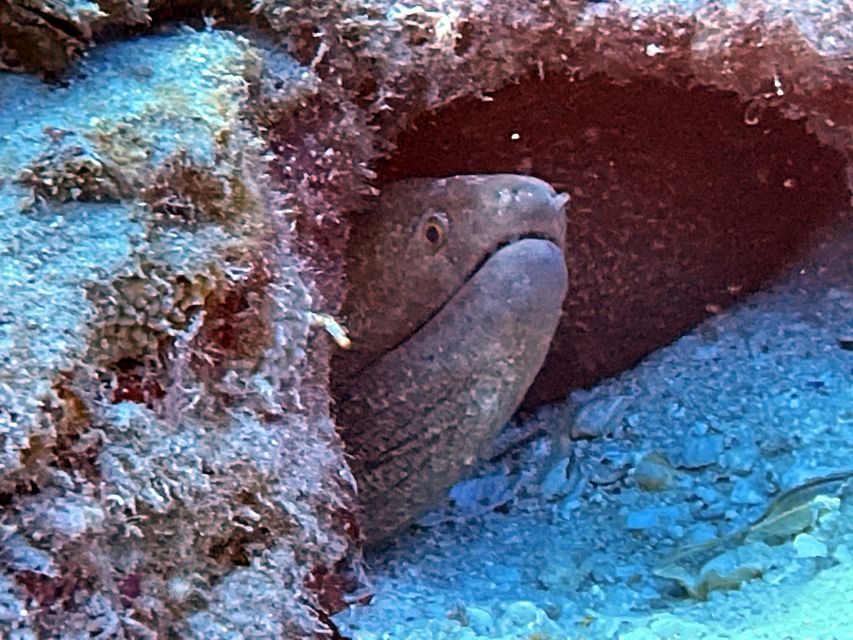
After the first session, you return to the boat for a 30-minute surface interval. Snacks and refreshments are included, giving you time to warm up, rehydrate, and prepare for the second session.
The boat has a shaded deck and a sun deck, so you can choose between cover and open air. There is also plenty of room to move around and a restroom onboard. Those features matter more after an hour in the water, when a cramped boat can make the break feel like another test of endurance.
The surface interval is also when the evening’s mood changes. The first session begins in fading light, but the second starts after sunset, when the ocean is fully dark. You can use the break to ask the guide questions, check your equipment, and make sure your light is ready.
Snacks and refreshments are helpful, but do not treat them as a full meal. Bring only what the operator requests and what you need personally, while remembering that swimwear and a towel are on the recommended packing list.
Second session: the reef in complete darkness
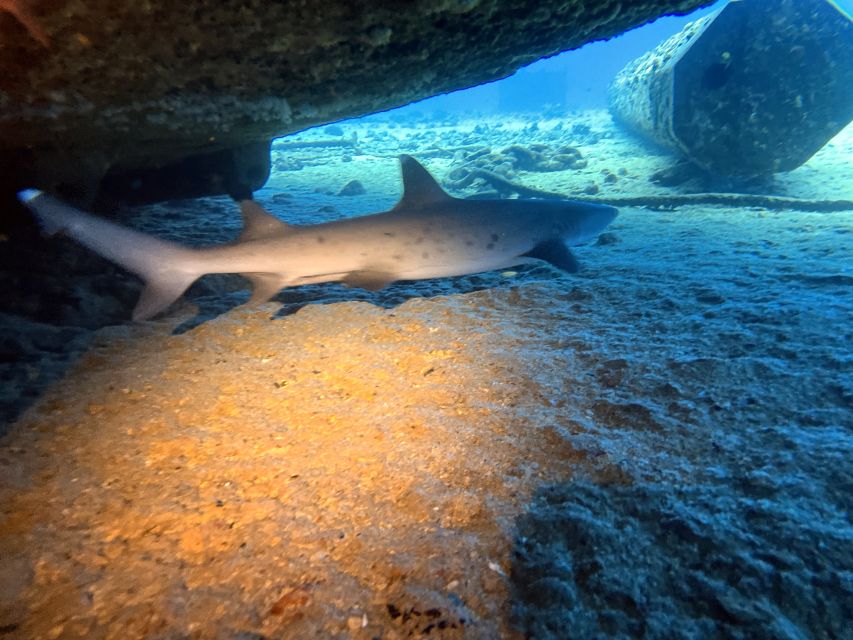
The second hour-long session is the main thrill for many certified participants. With a complimentary light, you enter the water after dark and explore the south shore with the guide.
Your light becomes your main window into the reef. Instead of seeing a broad area at once, you scan a smaller section and notice movement, texture, and eyeshine within the beam. The darkness can make familiar animals seem more active and can bring nocturnal species into focus.
This is also the part of the experience that demands the most comfort and self-control. Complete darkness is very different from a late-afternoon swim. You need to remain calm, follow the guide, and stay aware of your equipment and position.
The guide’s presence is especially valuable here. You are not trying to navigate the site alone or work out the route as you go. The package includes a PADI-certified guide for both sessions, along with the light needed for the dark outing.
The supplied information does not promise any specific animal sighting. You might see eels, rays, octopus, crabs, starfish, sharks, turtles, or other marine life, but the real appeal is the change in behavior and atmosphere. The second session rewards curiosity more than a demand for one particular animal.
What the included equipment means for the $248 price
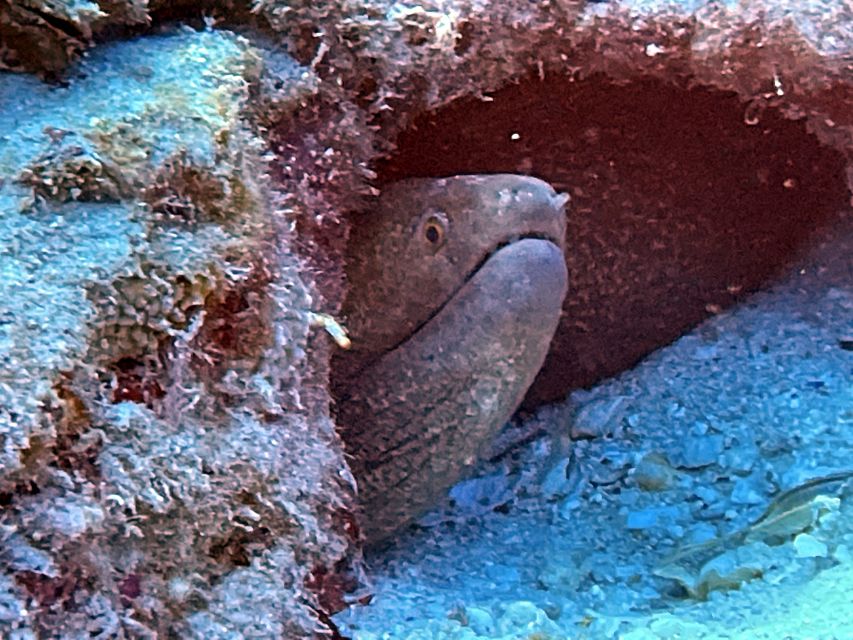
The cost is $248 per person. That is not a small add-on to a beach day, but it covers more than boat transport and a guide.
The package includes:
- Two tanks
- Dive lights
- Wetsuit
- Weights
- Fins
- BCD
- PADI-certified guidance
- Snacks and refreshments
That equipment list gives the price real value for certified divers who do not want to bring a full kit to Hawaii. Renting tanks, buoyancy equipment, exposure protection, fins, and lights separately can quickly become expensive and inconvenient. Here, the main gear is arranged as one package.
The value is strongest if you are already planning a scuba outing and need rental equipment. If you own all your gear and only need a boat seat and guide, the price may feel less attractive. The experience also includes two sessions rather than one, which helps explain the cost.
Parking is not included. Kewalo Basin charges $1 per hour, while Ala Moana Beach Park has free parking. That is a small additional cost compared with the activity price, but it is worth planning for so it does not become a nuisance before departure.
The boat helps during the long evening
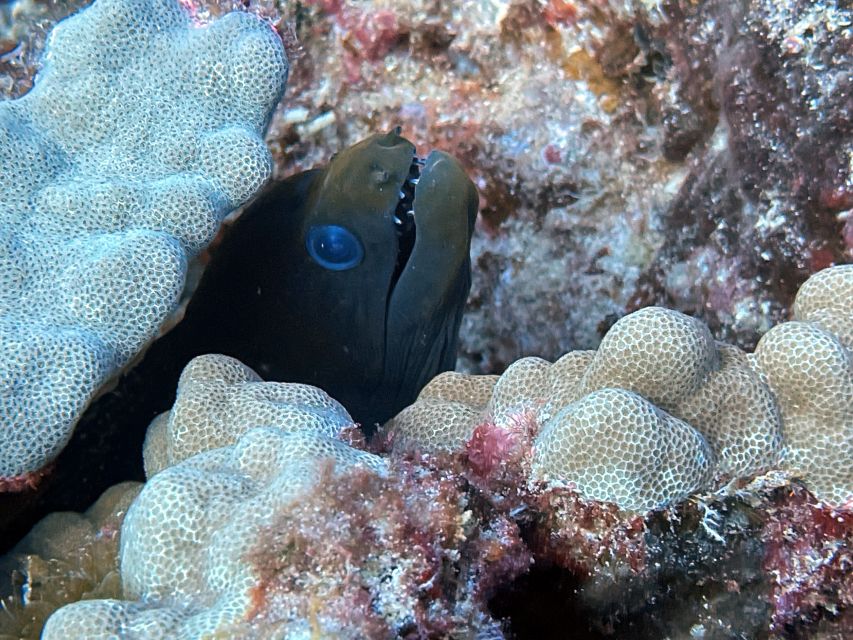
The boat’s layout is practical rather than decorative. A sun deck, shaded deck, open space, and restroom give you choices between the two water sessions.
You may want shade before the first outing or open air during the surface interval. Having room to move is useful when you are handling equipment, changing layers, or waiting for the group. The restroom is a simple feature, but it matters during a three-hour program.
The description does not give a passenger limit or specify whether the boat is covered in full. I would therefore avoid booking this with the expectation of a private charter. You are paying for a guided boat experience, not necessarily an exclusive one.
Who will get the most from this experience
This outing is best for certified scuba participants who already feel comfortable in the water and want a different view of Oahu’s reefs. It suits you if the idea of watching marine life change after sunset sounds more appealing than a standard daytime session.
It is also a good fit if you want to travel light. The included equipment removes the need to arrange tanks, fins, a BCD, wetsuit, and weights separately. The two-session format gives you a substantial evening without taking an entire day away from other Oahu plans.
You should think twice if you dislike darkness underwater, are not in good health, or have not maintained your scuba skills. The activity requires certification, swimming ability, and proof of certification at the boat. It is not available to children under 15, pregnant women, or people with pre-existing medical conditions.
The post-activity flight rule is important. You must not fly within 24 hours after the sessions. If you are leaving Oahu the next morning, this experience will not fit your schedule. Plan it for an evening well before your departure flight.
Practical packing and timing advice
Bring swimwear, a towel, and proof of scuba certification. The operator provides the listed equipment, including the light, so you do not need to arrange those items separately unless you prefer to use personal gear.
Arrive 30 minutes early. Find Kewalo Basin, locate the front row and slip 8, and look for the turtle image. Give yourself enough time for parking and harbor orientation, particularly if you choose the free parking at Ala Moana Beach Park.
Keep the confirmation email from the local partner handy. The activity is conducted in English, so you should be comfortable understanding the guide’s instructions in that language.
The cancellation policy gives you some flexibility: you can cancel up to 24 hours in advance for a full refund. You can also reserve now and pay later, which helps if you are still arranging your Oahu schedule.
The main strengths and the fair cautions
The most praised point in the available feedback is simple: one verified participant gave the experience a full five stars and called it amazing. That is only one detailed comment, and the overall rating is 3.6 from six reviews, so I would treat it as encouragement rather than proof that every outing is perfect.
The strongest features are clear. You get two guided underwater sessions, a twilight-to-dark progression, a full rental package, a boat with useful facilities, and snacks during the break. The possibility of seeing animals such as turtles, sharks, octopus, and Hawaiian endemic fish adds excitement without requiring you to plan a separate wildlife trip.
The cautions are just as clear. The price is substantial, certification is mandatory, parking costs extra, and the 24-hour no-flying rule affects your itinerary. The experience also depends on marine conditions and animal activity, so anyone booking solely to see one specific creature may be disappointed.
Should you book Oahu’s night scuba adventure?
Book it if you are a certified diver in good health, comfortable with darkness underwater, and interested in seeing Oahu’s south-shore reefs at two different points in the evening. The included equipment and two guided sessions make the $248 price easier to justify, especially if you are renting most of your gear.
Skip it if you are not certified, need to fly within 24 hours, or want a relaxed boat ride without demanding underwater work. For the right participant, the change from twilight to complete darkness is the reason to go. It gives you a focused, unusual evening on Oahu rather than another routine beach activity.
FAQ
Where does the Oahu night scuba experience meet?
Meet at the harbor in the front row at slip 8. Look for the large picture of a turtle.
How early should I arrive?
Arrive at least 30 minutes before the scheduled start time.
How long does the experience last?
The full experience lasts three hours.
How many underwater sessions are included?
Two guided scuba sessions are included. The first lasts about one hour, followed by a 30-minute break, and the second lasts about one hour.
Is scuba certification required?
Yes. You must be a certified diver and show proof of certification at the boat.
What equipment is included?
The package includes two tanks, dive lights, a wetsuit, weights, fins, and a BCD.
Are snacks and drinks included?
Yes. Snacks and refreshments are provided during the surface interval.
Is parking included?
No. Parking is not included. Kewalo Basin charges $1 per hour, and Ala Moana Beach Park has free parking.
Can I fly after the experience?
You must not fly within 24 hours after scuba activity.
Who cannot join this experience?
The activity is not suitable for children under 15, pregnant women, or people with pre-existing medical conditions. You must also be able to swim and be in good health.
More Evening Experiences in Oahu
- 2 Days & 1 Night – 2 Dives in Lembongan/Penida (for certified divers)
★ 5.0 · 76 reviews - 3 Night Ningaloo Reef Snorkel and Dive Getaway from Coral Bay
★ 5.0 · 74 reviews - Kailua-Kona: Night Manta Snorkel or Dive
★ 4.6 · 7 reviews - Night Shore Diving Mangel Halto Aruba for Certified Divers
★ 5.0 · 6 reviews
More Night Dives in Oahu
- One Tank Manta Night Dive and Snorkel
★ 5.0 · 56 reviews - Scuba Diving Kata Beach Night Dive for Certified Divers
★ 4.5 · 14 reviews - Aruba Guided Night Dive Adventure: Shallow Reefs or Shipwrecks
★ 5.0 · 12 reviews - Cairns: Pro Dive Great Barrier Reef 3 Day/2 Night Dive Trip
★ 4.5 · 12 reviews
New dives around Oahu
- Oahu: Wreck & Reef Scuba Dive for Certified Divers★ 4.8 · 17 reviews
- Oahu: Shallow Reef Scuba Dive for Certified Divers★ 5.0 · 11 reviews
- Oahu: Cageless Shark Dive Adventure★ 4.9 · 60 reviews
- Waikiki: Honolulu Beginner Scuba Diving with Videos★ 4.7 · 94 reviews
- Certified Divers: Best 2-Tank Wrecks & Reef Boat Dive All Inclusive From Waikiki★ 5.0 · 41 reviews
- Certified Diver: 2-Tank Night Dive★ 5.0 · 61 reviews
- Oahu Open Water Shark Diving Experience★ 5.0 · 128 reviews
- Waikiki 2 Tank World Class Wreck SCUBA Diving – Certified Only★ 4.5 · 205 reviews
Night Dives, compared.
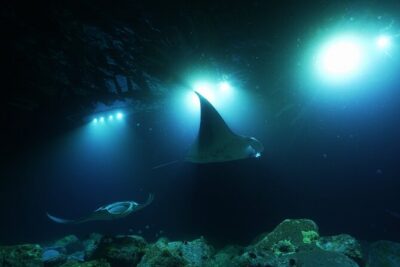
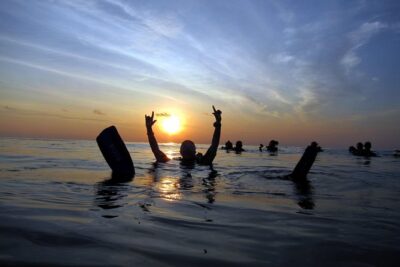
Scuba Diving Kata Beach Night Dive for Certified Divers
Read our review →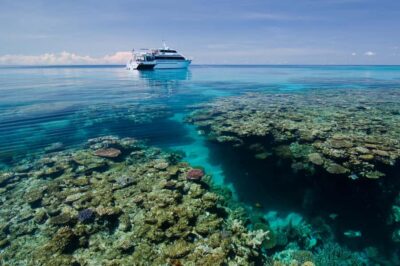
Cairns: Pro Dive Great Barrier Reef 3 Day/2 Night Dive Trip
Read our review →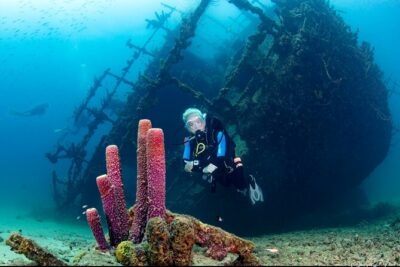
Aruba Guided Night Dive Adventure: Shallow Reefs or Shipwrecks
Read our review →
2 Hour Private Night Diving in the Red Sea of Aqaba
Read our review →