
REVIEW · PLAYA DEL CARMEN
Scuba Diving in Cenote Kukulkan from Playa del Carmen
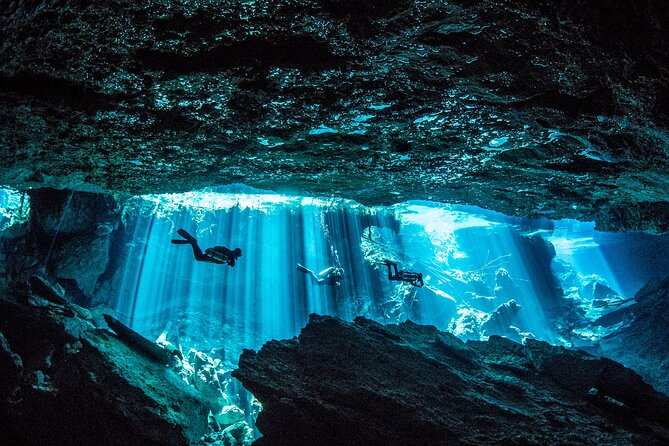
Light, water, and silence make this special. This seven-hour Cenote Kukulkan outing gives you two scuba descents with a maximum of four people, so I like the small group size and the chance to receive close attention from your guide. I also like that gear, refreshments, transport, and lunch are included, which keeps the day simple.
The main catch is that you need a current scuba certification, with Open Water as the minimum, and your last scuba session must have been within six months. You also pay the entrance fee separately, MX$300 per person for both cenotes, and underwater cameras are not allowed.
- Only four people maximum: A tiny group means less waiting, easier communication, and more personal help from the guide.
- Two descents on different lines: You see the cenote from more than one route rather than repeating the same view.
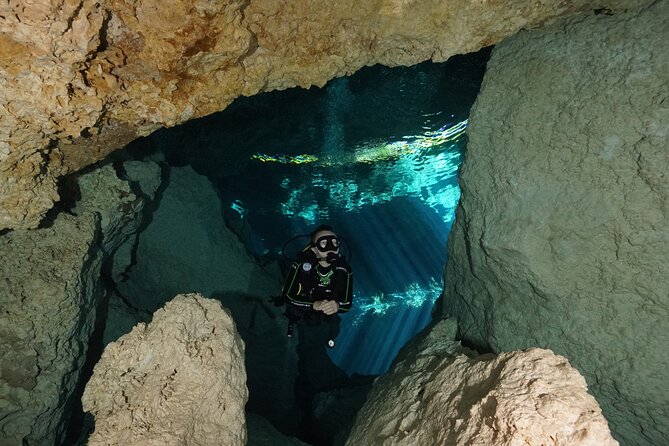
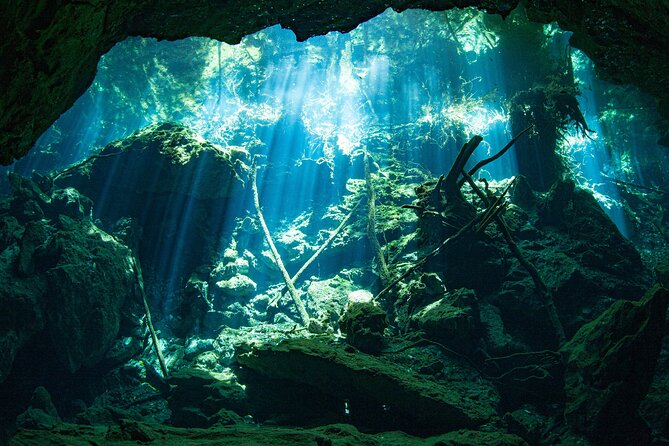
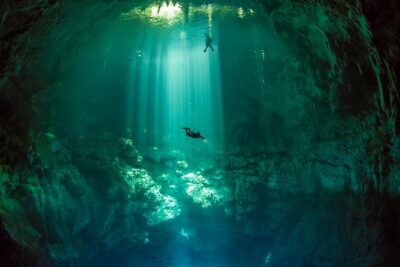
- Light beams and limestone formations: The underwater scenery is the star, with time built in to pause and take it in.
- Gear and refreshments included: Tanks, equipment, snacks, and drinks are supplied, so you can travel light.
- Lunch after the water time: A typical Mexican meal is included, though restrictions may mean sandwiches instead.
- Strict safety rules: Open Water certification, a recent scuba session, and no flying for 12 to 18 hours afterward are important planning details.
Why Cenote Kukulkan Makes a Memorable Scuba Day
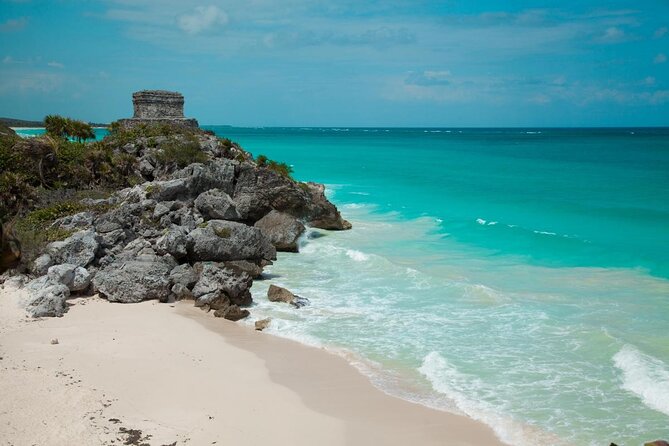
Cenotes are freshwater pools formed in the limestone of the Yucatán Peninsula. For the Maya, these natural openings held cultural and spiritual importance, and the region’s cenotes remain closely tied to local history and geology.
At Cenote Kukulkan, your time underwater is shaped by the setting itself. You are not simply looking for fish or coral. Instead, you are watching sunlight pass through openings above and cut across clear water, stone, and submerged passages. The light can shift as you move, so a patient guide matters.
This is where the small group helps. With no more than four people, the guide can keep the pace calm and make stops when a shaft of light or an unusual rock formation deserves attention. One guide praised by name, Remi, was noted for explaining both the cultural background of the cenotes and the science behind what appeared underwater.
I like that combination. You get the beauty, but you also learn why the place looks the way it does. A guide who points out light refractions and explains the geology turns a scenic swim into a more meaningful outing.
The setting is not designed for a rushed checklist. If you want a fast sequence of activities, this may feel slow. If you enjoy quiet observation and careful movement underwater, the pauses are part of the reward.
The 8 a.m. Start in Playa del Carmen
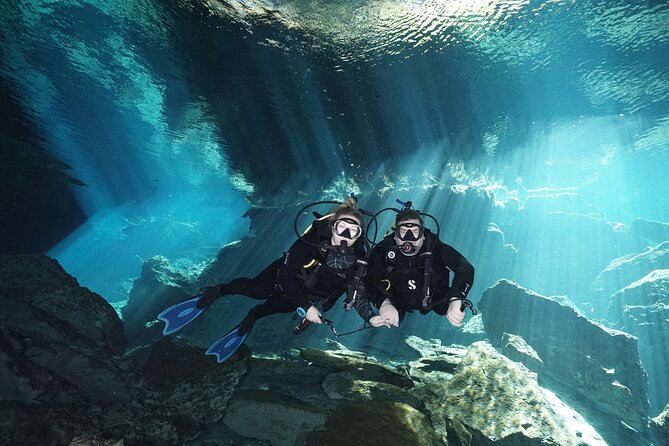
The day begins at 8 a.m. at Fruit StandCentro, 77710 Playa del Carmen. The tour information also describes round-trip transport from your hotel, while the detailed meeting instructions identify the fruit stand as the start and finish point. Confirm the exact pickup arrangement before setting out, especially if you are staying outside central Playa del Carmen.
The drive to the cenote takes about 30 minutes. That short ride is useful preparation time rather than dead time. Your guide explains the plan, talks through the two descents, and shares background on cenotes and Maya culture.
You also discuss your previous scuba experience. This is a valuable step, since the guide can offer practical suggestions based on your comfort level and recent history underwater. Be honest here. The goal is not to impress anyone. The goal is to help the guide set a sensible pace.
The equipment is already in the vehicle, so you do not need to organize a separate gear pickup. Still, you should arrive ready for an active morning and bring anything you need for personal comfort, since the supplied details only promise the scuba equipment, snacks, refreshments, and lunch.
More Cenote Dives in Playa del Carmen
- Scuba Diving in Cenote Dos Ojos from Playa del Carmen
★ 5.0 · 453 reviews - Scuba Diving in Cenotes
★ 5.0 · 37 reviews - Dive into Tulum: Tour 3 Cenotes, from Riviera Maya
★ 4.5 · 15 reviews
Preparing the Equipment at the Cenote
Once you arrive, you prepare the equipment with the guide. Together, you check that everything is ready, and the guide checks tank pressure and inspects the equipment in detail.
I value this part because it gives you a clear chance to spot problems before entering the water. It also lets you become familiar with equipment that may not be your own. Even experienced certified scuba users benefit from a deliberate check when conditions and gear are unfamiliar.
The group then walks around the property. You see the cenotes, locate the entry point, and get a general sense of the route. This walk helps you understand where you will enter and how the underwater path fits into the wider site.
A safety and scuba briefing comes before the first descent. Listen closely, even if you have many logged hours. Cenote conditions differ from open-water conditions, and the guide’s instructions are designed for this particular route.
The operator requires Open Water certification at minimum. This is not a beginner lesson or a tryout session for someone without a license. Your last scuba session must also have been at least six months ago, so plan another refresher first if you have been out of the water longer than that.
Two Routes, Two Underwater Views
The central part of the day includes two descents on two different lines. That arrangement gives the outing variety and makes the MX$300 entrance fee for both cenotes easier to understand as part of the overall cost.
The first route also helps determine the timing of the surface interval. Instead of forcing every group into an identical schedule, the break is based on what happened during the first descent. That approach allows the guide to consider the actual pace and conditions of your group.
The most praised feature is the guide’s ability to pause at the right places. Light refractions can be easy to miss if you are focused only on moving ahead. A guide who knows when to stop gives you time to look, settle your breathing, and appreciate the view.
The water and rock create a different kind of underwater setting from a coastal reef. There is no promise of a particular animal sighting, and marine life is not the main reason to book this outing. You come for the cenote’s light, stone, freshwater character, and sense of place.
You should also know that underwater cameras are not allowed. That may disappoint anyone hoping to bring home photographs, but it means you can focus on the route without managing a camera. It also prevents you from assuming that a camera is part of the day’s plan.
For the strongest experience, resist the urge to rush. Watch how the light changes, follow the guide’s route, and keep your attention on the surroundings. The special moments here seem to come from careful stops rather than constant motion.
What the Small Group Changes
A maximum of four people is more than a marketing detail. It affects how the day feels.
In a larger group, you might spend more time waiting for others to prepare, enter, or adjust their equipment. A four-person limit should make it easier to hear the briefing and stay near the guide. It also gives the guide a better chance to notice when someone needs a slower pace or a little extra reassurance.
The small group is especially useful for a site where visual details matter. If the guide stops to point out a scientific feature or a pattern of light, you are less likely to be crowded away from the best view.
The trade-off is that a small-group tour may have less flexibility if a booking is changed or a participant has different abilities. The supplied information does not promise private service, only a maximum of four. Still, that is a notably intimate size for a guided outdoor activity.
The high praise focuses on safety, excitement, and the guide’s ability to explain what you are seeing. One experienced scuba instructor, Brett, described the outing as an especially memorable change from his usual underwater work. That is a useful signal for confident certified users who want something different from a standard reef session.
At the same time, you do not need to be an instructor to enjoy it. Most certified participants can take part, provided they meet the certification and recent-experience rules.
More Cenote and Cavern Dives in Playa del Carmen:
- Cenotes 2-Tank Dive in Playa del Carmen/for certified divers only
★ 4.0 · 13 reviews - Cenotes diving
★ 5.0 · 12 reviews - Cenotes 2-Day Scuba Diving Package in the Riviera Maya
★ 5.0 · 9 reviews - Private Scuba Diving in Cenote around Playa del Carmen
★ 5.0 · 7 reviews
Lunch, Snacks, and the Ride Back
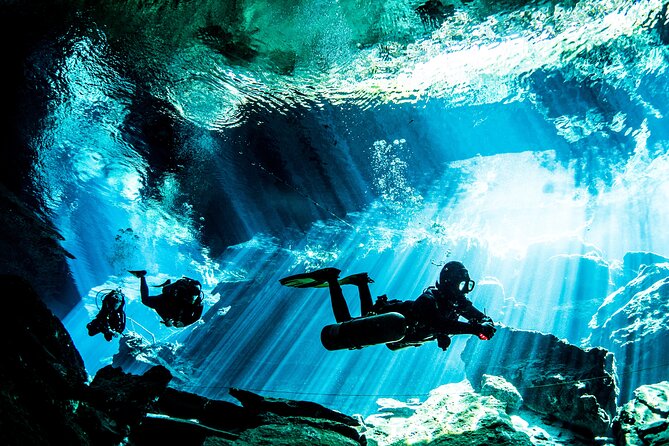
After the two descents, you share a meal at a typical Mexican restaurant. The plan is to return to Playa del Carmen between 2:30 and 3 p.m., making the total day about seven hours.
Lunch is a practical inclusion. After a morning in the water, having food arranged means you do not need to search for a restaurant or carry a full meal. The intended meal is typical Mexican food, but health restrictions may affect the restaurant choice, and you may receive sandwiches instead.
That uncertainty is worth noting if lunch is a major reason for booking. The meal is included, but the exact menu is not guaranteed. I would treat it as convenient fuel rather than a carefully selected culinary stop.
Snacks and refreshments are provided throughout the day. This helps bridge the early start and the return trip, particularly since you leave Playa del Carmen at 8 a.m. and do not finish until midafternoon.
The ride back ends at the meeting point. Since the published information refers both to hotel transfers and to the Fruit StandCentro meeting point, check how your particular pickup is handled before booking. This small confirmation can prevent an avoidable morning scramble.
Cost, Inclusions, and What You Still Pay
The advertised inclusions cover the main practical needs:
- Professional multilingual guide
- Scuba equipment rental
- Transport from the meeting point
- Typical Mexican lunch
- Snacks and refreshments
The separate entrance charge is MX$300 per person for both cenotes. Add that fee to the tour price when comparing this outing with other Playa del Carmen activities.
The value is strongest if you need equipment and transport. Renting gear separately, arranging a ride, finding food, and hiring a guide can quickly make a self-organized day less convenient. The four-person limit also gives this outing a more personal feel than a large group option.
If you own all your equipment and prefer to arrange your own transportation, the included gear may matter less to you. Even then, the guide’s local knowledge and the planned access to two different lines remain central to the value.
Group discounts are available, which may help if you are traveling with certified companions. The price is not described here, so I would ask for the exact total, including the MX$300 entrance fee, before making a final comparison.
Who Should Book This Cenote Outing
I would choose this for a certified scuba user who wants a focused freshwater outing from Playa del Carmen. It suits someone who values a small group, careful explanations, and time to stop at scenic points rather than racing through a route.
It is also a good fit for an experienced scuba user looking for a change from ordinary ocean sessions. The light, limestone, and cultural context give the day a distinct character.
I would think twice if you have not used scuba equipment in more than six months. The rules are clear, and this is not the place to hide rusty skills. It is also unsuitable for people with heart problems or other serious medical conditions.
The minimum age is 15. The activity is not suitable within 12 to 18 hours before a flight, so place it early enough in your holiday to allow the required no-fly period. That rule matters more than squeezing one last activity into your departure day.
You should also skip it if underwater photography is essential to you. No underwater cameras are allowed, and that restriction is firm.
Booking Details Worth Checking
Confirmation is provided at booking, and the meeting point is near public transportation. Free cancellation is available if you cancel at least 24 hours before the 8 a.m. start time. Changes or cancellations made inside that window are not refunded, and the cutoff uses local time.
Ask about the pickup location if you are staying at a hotel, since the tour description includes hotel transfers but also gives Fruit StandCentro as the meeting point. Confirm the entrance fee, too, because it is not included in the tour price.
The outing is offered in English, with a multilingual professional guide. That is helpful if you want explanations about the cenotes, Maya culture, safety, and the science behind the underwater views.
Should You Book Scuba Diving in Cenote Kukulkan?
Book it if you are a certified Open Water scuba user with recent experience and you want a small, carefully guided look at cenote scenery. The strongest reasons are the four-person limit, two different routes, included equipment, and guides who make time for the light and geological details.
Skip it if you need a beginner lesson, want to take underwater photographs, or have a flight soon afterward. Also calculate the separate MX$300 entrance fee before judging the price.
For the right person, this is less about ticking off another Playa del Carmen activity and more about spending a quiet, well-supervised morning in a remarkable freshwater setting.
FAQ
Where does the Cenote Kukulkan tour start?
The published meeting point is Fruit StandCentro, 77710 Playa del Carmen, Q.R., Mexico. The activity begins at 8 a.m. and finishes back at the meeting point.
How long does the activity last?
The full outing takes about seven hours. You are expected back in Playa del Carmen between 2:30 and 3 p.m.
How many people can join the group?
The group has a maximum of four participants.
Is scuba certification required?
Yes. Scuba certification is mandatory, and Open Water is the minimum qualification accepted.
How recent must my last scuba session be?
Your last scuba experience must have been within the previous six months.
Is scuba equipment included?
Yes. Scuba equipment rental is included, along with transport from the meeting point, snacks, refreshments, and lunch.
Is the cenote entrance fee included?
No. Entrance to both cenotes costs MX$300 per person and is paid separately.
Can I bring an underwater camera?
No. Underwater cameras are not allowed during the activity.
New dives around Playa del Carmen
- Cozumel Express 2-Tank Dives from Playa del Carmen/ Only for Certified Divers★ 5.0 · 2 reviews
- Full-Day Playa del Carmen Reef Diving Activity★ 5.0 · 3 reviews
- Try dive in beautiful Casa cenote for 2 people★ 5.0 · 6 reviews
- Private Scuba Diving in Cenote around Playa del Carmen★ 5.0 · 7 reviews
- Scuba Referral Dives & Beach Club with Transportation In Riviera Maya★ 5.0 · 33 reviews
- Try dive in Cozumel island★ 5.0 · 4 reviews
- PADI Open Water Diver Course in Playa del Carmen★ 5.0 · 40 reviews
- Scuba Diving for Beginners – Tulum Dive Machine★ 5.0 · 26 reviews
Cenote & Cavern Dives, compared.
2 cenote divings (including one deep diving) for advanced divers in Tulum
Read our review →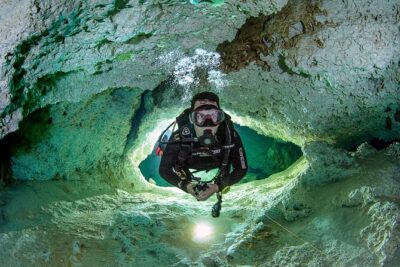
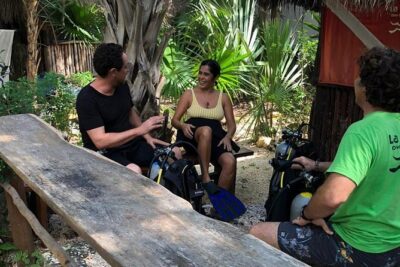
Amazing beginner dive in Tulum cenote (or refresher dive)
Read our review →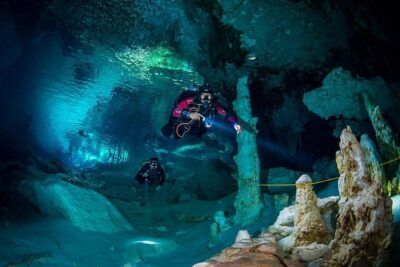
Go for 2 dives in cenote Dos ojos for certified divers
Read our review →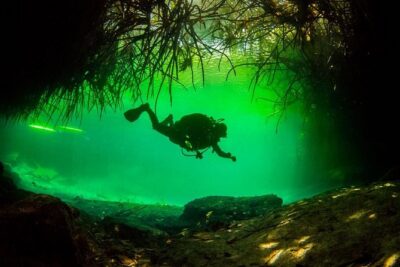
2 tanks Cenote Diving Adventure in Tulum for Certified Divers
Read our review →
Dos Ojos Cenote Cavern Dive- The Barbie Line and The Bat Cave
Read our review →Browse the lists this tour appears in