
REVIEW · GREECE
Scuba Diving in the Volcanic Caldera/shorelines of Santorini
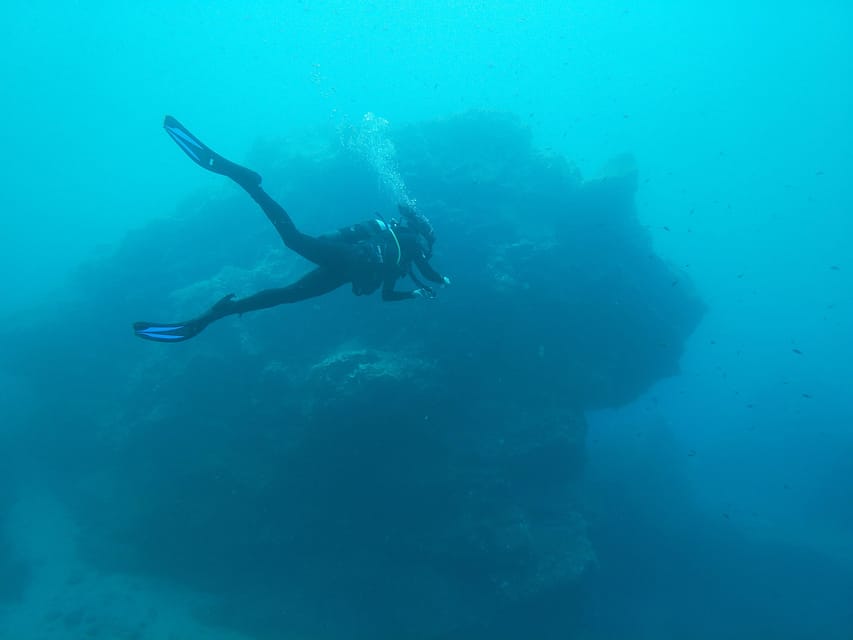
The volcano continues below the sea. Santorini’s underwater world gives certified divers a chance to explore lava caverns, walls, reefs, Posidonia meadows, and protected marine areas in the caldera and along the island’s shorelines. The water is known for clear visibility, little current, and no tidal movement, which can make the experience feel calm and controlled.
I like the small groups of no more than six people, since that gives instructors room to match guests by certification and experience. I also like the careful preparation: full equipment, a safety briefing, a boat ride, snacks, water, lockers, changing rooms, and showers are all part of the package. The main drawback is simple: this is for certified divers with recent experience, not beginners or anyone hoping for a casual first underwater try.
Key things to know before booking
- Two underwater sessions in five hours: You spend roughly 9:00 to 14:00 or 14:30 with the center, including preparation, transport, two descents, and a snack break.
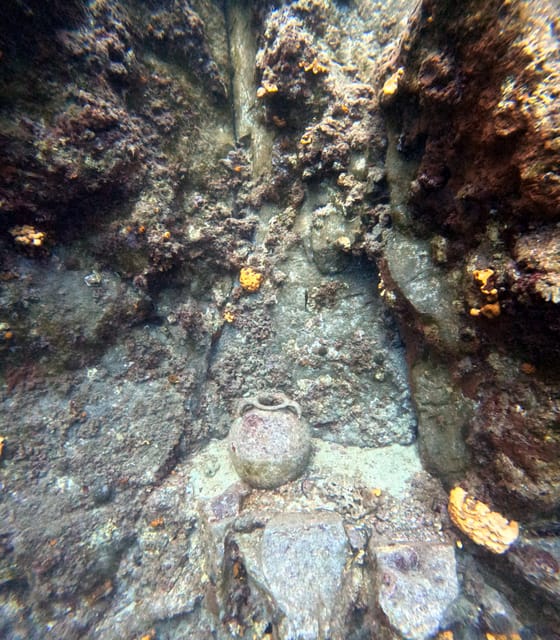
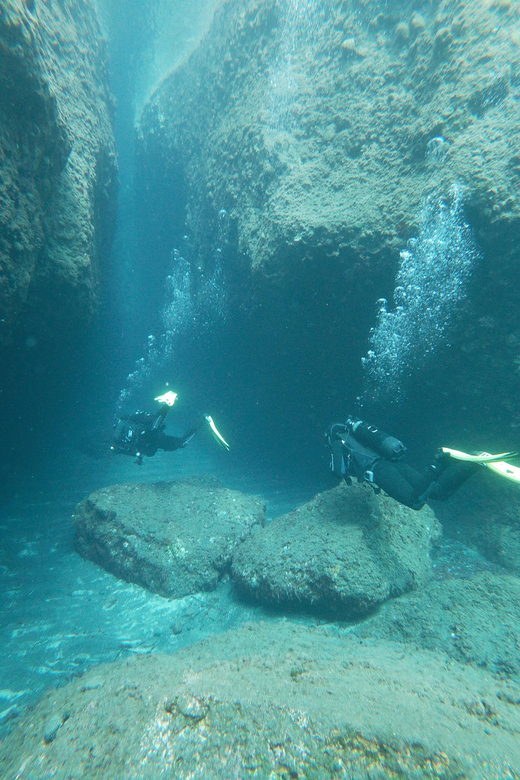
- Volcanic terrain below the caldera: Expect lava formations, caverns, reefs, walls, and other underwater features created by Santorini’s volcanic past.
- A maximum of six participants: Small groups allow the instructors to separate people by certification and comfort level.
- A highly praised safety routine: The safety briefing and pre-session information are handled carefully, while the equipment is kept in good condition.
- Transport by boat or truck: The exact route depends on the chosen sites, with a listed speedboat transfer of about 10 minutes.
- Certification is required: You must bring proof of scuba certification, and the program is not intended for people without experience.
Why Santorini’s volcano matters underwater
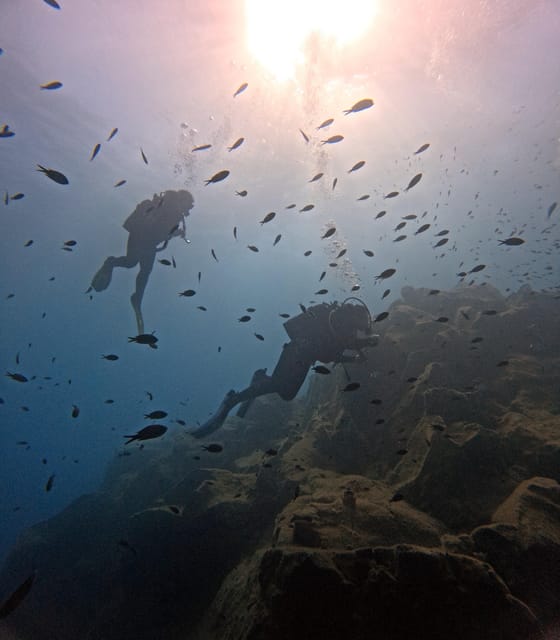
Santorini is famous for its white villages and dramatic caldera, but the same volcanic activity shaped what lies below the surface. A huge eruption around 1628 BC created the caldera and caused part of the island to sink. Today, the sea around Santorini includes steep volcanic walls, lava formations, shallow reefs, and submerged cavities.
That geology gives this experience more variety than a simple swim from a beach. Depending on the conditions and selected site, you might explore a shallow reef, a lava cavern, a wall, a boat-accessed site, or a protected marine area. The exact locations are not fixed in the available details, so you should think of this as a guided exploration of Santorini’s volcanic shoreline rather than a guaranteed visit to one named reef.
The caldera itself reaches more than 400 meters at its deepest point, though the areas used for this program are described as suitable for different levels of certified experience. The south and east sides of Santorini offer shallower sites, which may be useful for divers who want volcanic scenery without an especially demanding profile.
I particularly like the combination of geology and marine life here. The underwater setting is not just a backdrop. Lava created the caves, walls, ledges, and reef shapes you are there to see. The program also points to Posidonia meadows, an important Mediterranean seagrass habitat, along with marine protected areas. That makes the session feel tied to Santorini’s natural setting rather than tacked onto a sightseeing schedule.
A few more dives around Greece worth comparing
- Santorini: Scuba Diving Experience in Caldera for Beginners
★ 4.9 · 597 reviews - Heraklion: Scuba Diving Experience for Beginners _Beach
★ 4.7 · 549 reviews - (Full day)Scuba Diving in Rhodes
★ 5.0 · 466 reviews
Starting at Navy’s Waterworld Dive Center
Your day begins at Navy’s Waterworld Dive Center, a few minutes from a local bus stop. There is no hotel pickup, so you need to arrange your own way there and allow enough time to arrive ready for check-in.
The center provides lockers, a changing room, showers, Wi-Fi, and a lounge area. Those details matter more than they might seem. After a morning in salt water and equipment, having a place to change and rinse off makes the afternoon much easier, especially if you still have other plans in Santorini.
You need to bring beachwear, a change of clothes, and your diving certification. Towels are not included, so pack one. Meals are also not included, though snacks and water are provided between the two underwater sessions.
The staff prepares the equipment before you arrive. Your main job is to try on the wetsuit and boots, complete the briefing, and confirm that your gear fits properly. The equipment is included, along with an instructor or divemaster. One particularly encouraging detail is the emphasis on a clear safety briefing before entering the water. That is not decoration. It helps you understand the plan, signals, hand communication, and what to do if you feel uncomfortable.
The program is offered in English, Greek, French, Italian, Catalan, and Spanish. That broad language range can make the safety instructions easier to follow, though you should still be certain you understand the briefing before setting out.
The 10-minute speedboat ride
The listed route includes a speedboat ride of about 10 minutes. In other cases, the group may travel by truck to a shore-based site. These short transfers are part of the practical appeal of the program: you are not spending most of the morning in transit.
The boat ride also gives the instructors a chance to explain the site and the plan. One strong point noted about the operation is the pleasant boat trip paired with plenty of information from the guide. I would treat that as an important quality marker, especially if this is your first time exploring Santorini by sea.
The transfer may be brief, but the scenery should help place the underwater session in context. You are moving through the volcanic caldera and along shorelines formed by the eruption that shaped the island. Still, this is a scuba outing, not a dedicated sightseeing cruise. The boat is there to get you to the water safely and efficiently.
You should also remember that the exact location can change. The program uses several kinds of sites around the island, including boat, shore, lava, reef, cavern, and marine protected areas. A flexible attitude will serve you better than arriving with a single famous location in mind.
Two sessions among lava, reefs, and caverns
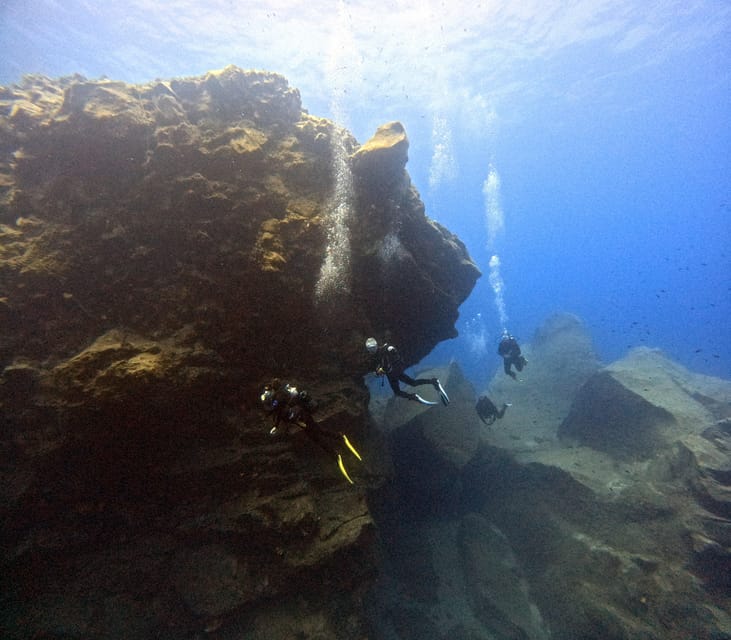
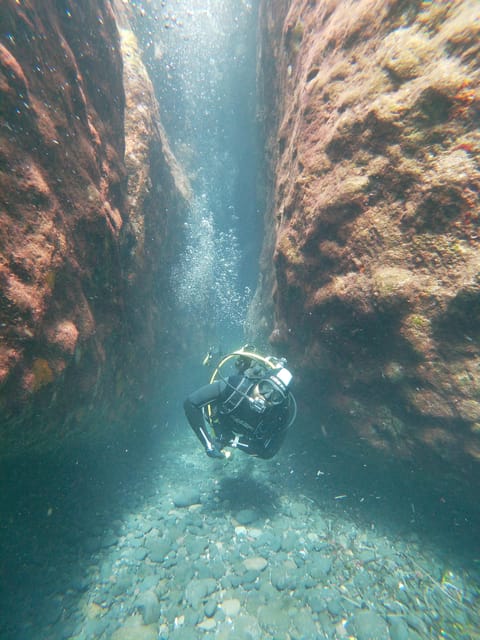
Certified participants complete two underwater sessions during the outing. The variety of volcanic formations is the central attraction. You could encounter a lava cavern, a wall, a reef, or a shallow site shaped by the island’s underwater geology.
The clear water and generally gentle conditions are useful for more than pretty views. Good visibility makes it easier to stay aware of your instructor and group. Limited currents can reduce the amount of effort needed to hold your position. The lack of tides is also described as helping create a relaxed setting.
That does not mean the sea is automatically easy in every circumstance. You still need to be comfortable with your certification level, equipment, and basic underwater skills. If you have not used your certification for a while, ask about a refresher before booking. Private help with a PADI professional can be arranged if you feel rusty or want individual attention.
The group is divided according to level of experience and certification. That is a sensible arrangement. A newly certified diver should not be pushed into the same pace or route as someone with far more experience, and a strong swimmer should not have to wait for a slower group throughout the entire session.
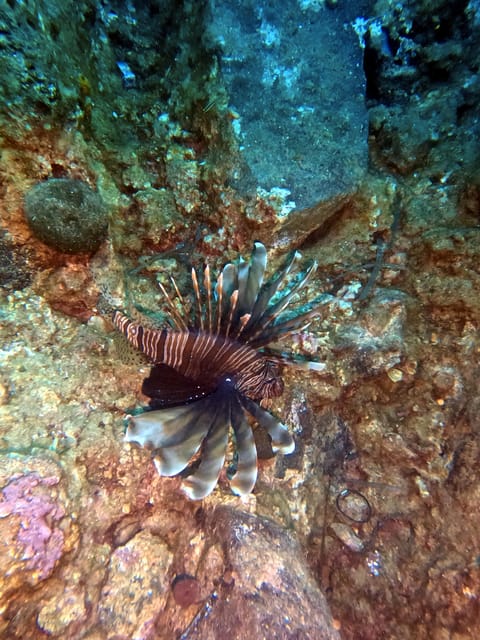
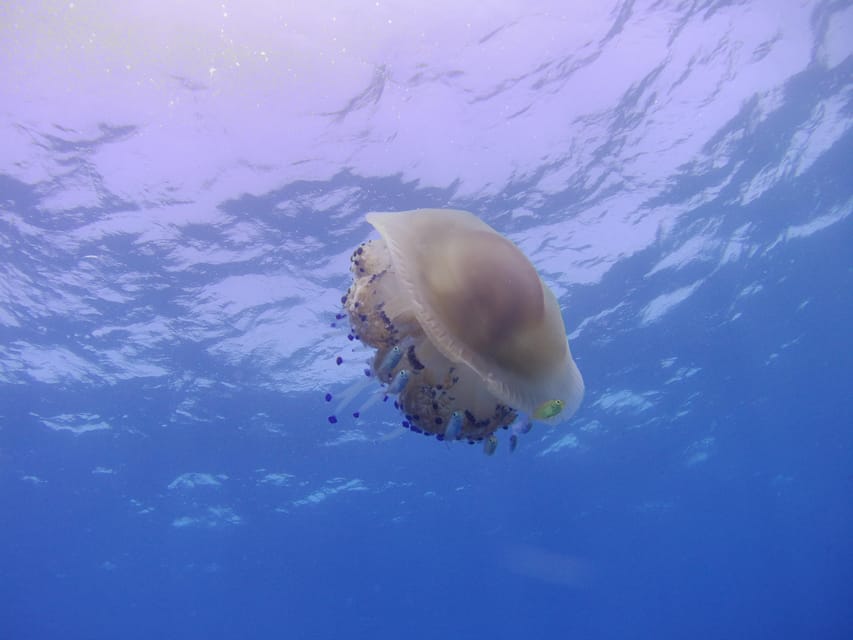
Marine life is another draw. The program describes a mix of superb marine life, reefs, and Posidonia meadows. It does not promise particular species, so I would not book this expecting a specific animal. The better reason to go is the chance to see Mediterranean sea life within a volcanic setting, with the underwater geology doing as much of the visual work as the creatures.
Between the two sessions, snacks and water are provided. That break gives you time to rest, talk through the first session, and prepare for the second. It is a small inclusion, but a useful one during a five-hour morning.
Same coastline, a very different dive:
- Heraklion: Beginner Scuba Diving Lesson with PADI Instructor
★ 4.9 · 355 reviews - Rhodes: Diving Adventure for Beginners and Experts
★ 4.6 · 237 reviews - Try a DIVE, discover scuba diving in Mykonos
★ 5.0 · 216 reviews - Heraklion: Scuba Diving Experience for First-Timers
★ 4.8 · 203 reviews
Safety, equipment, and the value of a small group
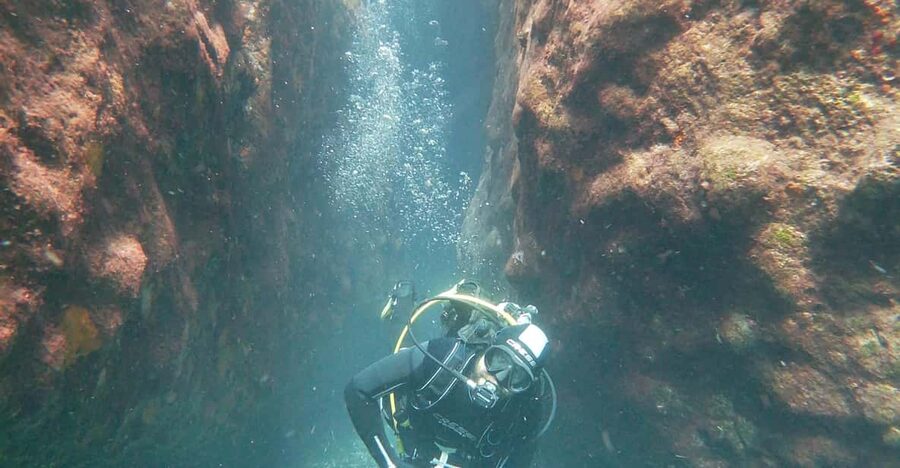
The safety setup is one of the strongest parts of this experience. The equipment is included and described as well maintained. The pre-session information and safety briefing receive especially favorable attention, which should reassure anyone who wants a careful, structured operation rather than a rushed activity.
A six-person maximum is also meaningful. In a large group, an instructor has less time to notice a loose strap, a nervous participant, or a diver who is struggling with buoyancy. With six or fewer people, communication should be more direct, and the staff can better match the group to its ability.
You should still do your own equipment check. Make sure the mask seals, the boots fit, and you understand the weight system and emergency procedures. If something feels wrong, say so before entering the water. A good operator would rather fix a small problem on land than manage it below the surface.
The program is not suitable for people with respiratory issues, recent surgery, or pregnancy. It is also not suitable for children under 10, people without experience, or anyone without scuba certification. These limits are not minor technicalities. Scuba places demands on your breathing, ears, and body, so you should be honest about your health and current ability.
You must wait at least 18 hours after scuba activity before flying. This is one of the most important planning details. Do not schedule this outing on the morning before your flight from Santorini. Build the session into the earlier part of your trip, then leave enough time before air travel.
Is $147 a fair price?
At $147 per person, the price is reasonable if you intend to make full use of the package. You receive full scuba gear, an instructor or divemaster, transport to the site, two underwater sessions, snacks, water, lockers, changing facilities, showers, and access to the center’s lounge and Wi-Fi.
You are not paying only for time in the water. You are also paying for equipment preparation, boat or vehicle transport, site planning, safety supervision, and a small group. Those inclusions make the cost easier to justify than a bare activity that charges separately for every practical extra.
The value is strongest for a certified diver who wants a half-day outing without arranging equipment, transport, and site access independently. It is less attractive if you are not certified, do not want two sessions, or mainly want to see Santorini from above. Beginners should look for a program designed specifically for first-time participants instead.
The reserve-now, pay-later option may help if your schedule is still changing. Free cancellation is available up to 24 hours before the activity for a full refund. Keep in mind that flexibility does not remove the flight rule or the need to bring certification.
Who will enjoy this most?
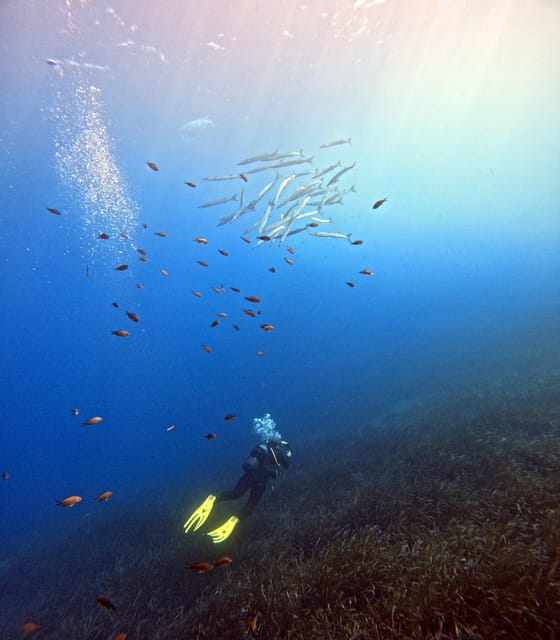
This program suits certified divers who want volcanic scenery, calm water, and a professionally managed morning. It is also a good fit if you value small groups and prefer a center that handles the equipment rather than asking you to organize every part yourself.
It may appeal especially to divers who have already seen standard tropical reef sites and want something shaped by geology. Santorini offers a different visual character: lava walls, cavities, reefs, and shorelines formed by intense volcanic activity.
It is not a good match for a first scuba attempt. It also may not suit someone who dislikes structured instruction, has recent medical concerns, or wants a long, independent underwater session. The operation is designed around safety, group matching, and two planned sessions.
The morning timing works well for a five-hour activity, but you should keep the afternoon reasonably open. The return is expected around 14:00 to 14:30, and the day includes equipment removal, changing, and recovery time. You may be ready for lunch and a quiet afternoon rather than another demanding excursion.
Should you book this Santorini scuba experience?
I would book it if you are certified, comfortable in the water, and interested in Santorini’s volcanic origins as much as its marine life. The best reasons are the clear water, low-current setting, varied lava formations, two sessions, and a maximum of six participants. The careful briefing and well-maintained equipment add useful peace of mind.
I would skip it if you lack certification, have respiratory concerns, recently had surgery, or are flying within 18 hours. Also skip it if your main goal is a relaxed beach swim. For the right participant, though, this is a well-organized way to see a side of Santorini that most people never reach.
FAQ
Where does the experience start?
It starts at Navy’s Waterworld Dive Center, located a few minutes from a local bus stop.
How long does the activity last?
The activity lasts five hours. The usual schedule starts around 9:00 and returns around 14:00 to 14:30, though you should check availability for the exact starting time.
How many underwater sessions are included?
The certified divers program includes two underwater sessions.
Is transportation included?
Transport to the sites is included by boat or truck. One listed speedboat transfer takes about 10 minutes. Hotel pickup is not included.
Is scuba certification required?
Yes. You must bring your diving certification, and the activity is not suitable for people without experience or divers without certification.
What equipment is provided?
Full scuba gear is included, along with an instructor or divemaster. You need to bring beachwear, a change of clothes, and your own towel.
Are snacks and water included?
Yes. Snacks and water are provided between the two underwater sessions. Meals are not included.
Who cannot take part?
The activity is not suitable for children under 10, pregnant women, people with respiratory issues, people with recent surgeries, people without experience, or divers without certification.
How long should I wait before flying?
You must wait at least 18 hours after the scuba activity before taking a flight.
New dives around Greece
- Zakynthos: Scuba Diving Experience with Underwater Photos★ 4.5 · 31 reviews
- Chania: Try Scuba Diving / Discover Scuba Diving★ 5.0 · 17 reviews
- Symi Dive Trip – Half day (2 Dives)★ 5.0 · 10 reviews
- Discover Scuba Diving in Santorini★ 5.0 · 47 reviews
- Rhodes Scuba Diving Experience★ 5.0 · 8 reviews
- SCUBA DIVE: Kallithea’s Underwater Exploration★ 5.0 · 6 reviews
- Scuba Diving for Beginner and Experts in Pefkos Lindos★ 5.0 · 6 reviews
- Private Discover Scuba Diving Experience in Messinia★ 5.0 · 14 reviews
Scuba Diving, compared.
Great Barrier Reef Snorkeling and Diving Cruise from Cairns
Read our review →
First-Time Scuba Diving in Honolulu + Free Videos
Read our review →
Silfra: Diving Between Tectonic Plates – Meet on Location
Read our review →
Ocean Freedom Great Barrier Reef Luxury Snorkel and Dive Cruise
Read our review →
Beginner Scuba Diving with Turtles and Videos, San Juan
Read our review →
Tenerife: Your First Scuba Diving Experience in Turtle Area
Read our review →
Browse the lists this tour appears in